Lawn Care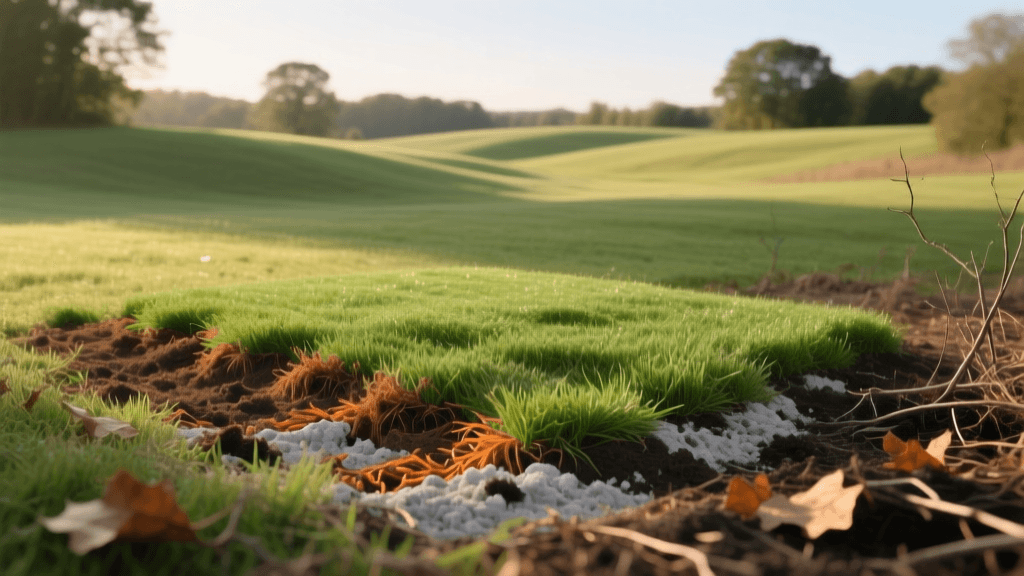
Dog Urine Spot Repair: Gypsum & Fire-Safe Reseeding 2026
The Hidden Wildfire Hazard: Dead Dog Urine Spots
As we navigate the extended dry spells and intense heatwaves characteristic of the 2026 wildfire season, homeowners in fire-prone regions are hyper-focused on creating defensible space. However, one of the most overlooked vulnerabilities in a yard's firebreak is the humble dog urine spot. When a dog relieves itself on the lawn, the high concentration of urea and salts effectively burns the grass, leaving behind circular patches of dead, dry, and highly combustible organic material.
In the context of Cal Fire's Defensible Space guidelines, a well-maintained, irrigated lawn serves as an excellent firebreak in Zone 1 (the first 30 feet around your home). Green, hydrated grass has a high moisture content and will not readily carry a flame. Conversely, the dead, brown tinder created by dog urine spots acts as flash-fuel. An ember landing on a dry urine spot can easily ignite, spreading fire to nearby mulch beds, shrubs, or your home's siding. To maintain a truly fire-resistant landscape in 2026, prompt and scientifically sound repair of these spots is not just an aesthetic choice; it is a critical safety measure.
Why Traditional Nitrogen Fertilizers Increase Fire Risk
The instinctive reaction for many homeowners is to grab a high-nitrogen synthetic fertilizer to force the dead spot to green up quickly. From a fire-safety perspective, this is a dangerous mistake. According to the University of California Integrated Pest Management (UC IPM) program, adding more nitrogen to soil already overloaded with urea from dog urine will only exacerbate the salt burn and kill the remaining root system.
Furthermore, excessive nitrogen promotes rapid, shallow, and weak top-growth. This type of grass requires constant irrigation to survive. If your smart irrigation system misses a cycle during a 2026 summer heat dome, that shallow-rooted, nitrogen-pumped grass will flash-dry into highly flammable tinder within hours. Fire-resistant landscaping requires deep-rooted, drought-tolerant, and moderately fed vegetation that retains its cellular moisture even under environmental stress.
The Fire-Smart Science of Gypsum for Urine Repair
The secret to repairing dog spots without increasing your landscape's combustible fuel load lies in gypsum (calcium sulfate). Gypsum is a mineral compound that works through a process called flocculation and ion exchange. The calcium in gypsum displaces the sodium and excess salts left behind by the dog urine, binding to them so they can be safely flushed deep out of the root zone with water.
Crucially, gypsum contains zero nitrogen. It detoxifies the soil without triggering a surge of weak, flammable top-growth. Additionally, gypsum improves soil structure by breaking up compacted clay, which increases soil porosity. This enhanced porosity allows water to penetrate deeper into the ground, encouraging the new grass seed to develop deep, resilient root systems. Deep roots are the cornerstone of fire-resistant turf, as they can access subsurface moisture long after the topsoil has dried out.
Step-by-Step Dog Spot Repair for Defensible Space
To eliminate these micro-fuel hazards and restore your lawn's integrity as a firebreak, follow this precise repair protocol using gypsum and fire-smart reseeding techniques.
Step 1: Remove the Tinder
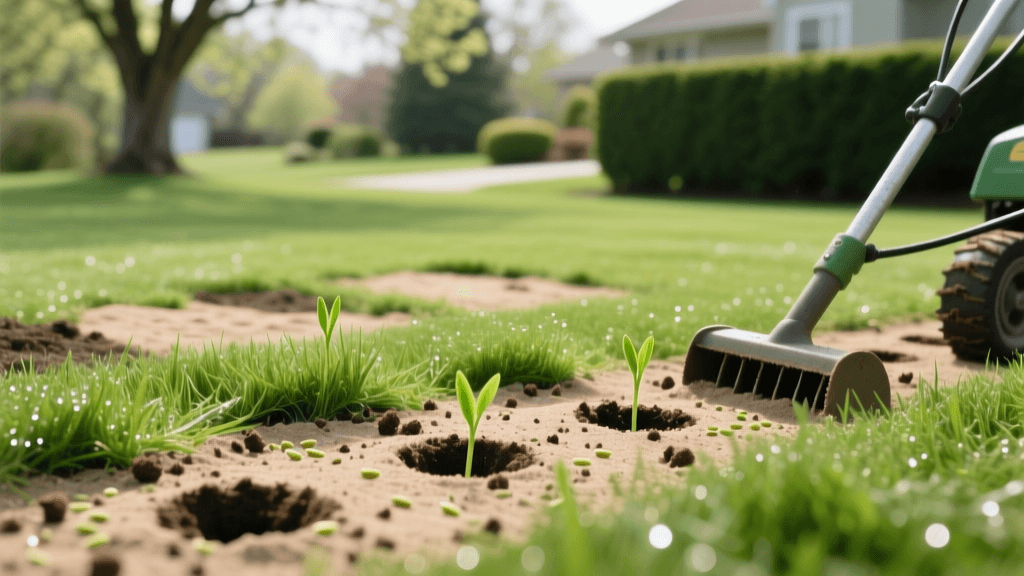
Use a metal thatching rake or a hand cultivator to aggressively rake the dead urine spot. You must remove all dead grass blades, thatch, and loose debris down to the bare soil. Leaving dead organic matter in the hole will create a smoldering hazard and prevent new seed-to-soil contact. Dispose of this dead material in your green waste bin, never in a dry brush pile on your property.
Step 2: Apply and Water in the Gypsum
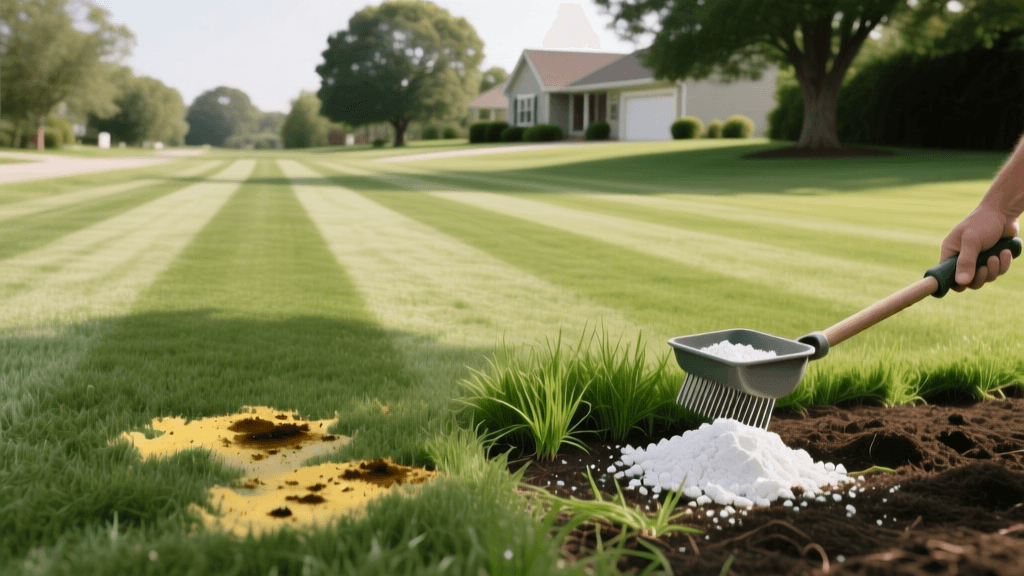
For a standard-sized dog spot (roughly 6 to 8 inches in diameter), apply 1/2 cup of high-quality, pulverized gypsum, such as Espoma Organic Gypsum. Pulverized gypsum dissolves and reacts with the soil much faster than pelletized forms, which is vital for rapid detoxification. Sprinkle the gypsum evenly over the bare soil and lightly scratch it into the top inch using your cultivator. Immediately water the spot deeply with a hose for about 60 seconds to activate the ion exchange and flush the displaced salts below the root zone.
Step 3: Topdress and Reseed
Apply a thin layer (about 1/4 inch) of fully cured, weed-free compost over the spot. Ensure the compost is not fresh or "hot," as decomposing organic matter can generate heat. Next, sow your fire-resistant grass seed at the rate recommended on the bag, usually about 10 to 12 seeds per square inch. Lightly rake the seed into the compost and press it down firmly with the back of a rake or your foot to ensure vital seed-to-soil contact.
Step 4: Hydrate Strategically
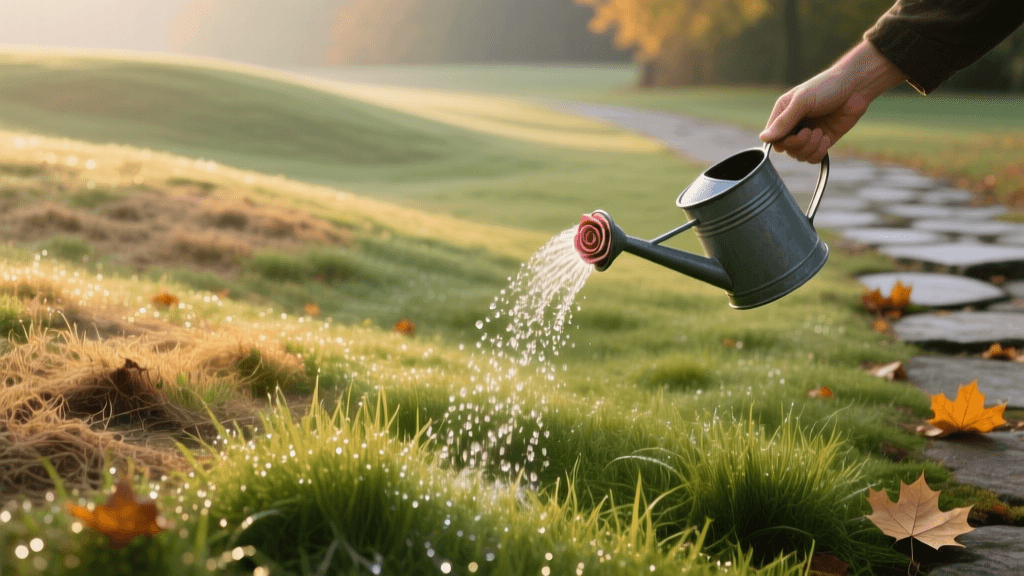
Keep the repaired spot consistently moist but not waterlogged until germination occurs (typically 7 to 14 days). In 2026, utilizing a targeted drip-line or a smart hose timer ensures you are delivering water precisely to the repair zone without wasting water or creating runoff, aligning with modern drought-conscious landscaping practices.
Choosing Fire-Resistant Grass Seed for 2026
Not all grasses are created equal when it comes to fire resistance. The goal is to select a species that stays green with minimal water, features a high moisture-retention capability, and develops deep roots. The National Fire Protection Association (NFPA) through their Firewise USA program emphasizes the use of low-growing, easily maintained, and irrigated groundcovers and turfgrasses in the immediate vicinity of the home to stop radiant heat and ground fires.
For cool-season and transition zones, Tall Fescue blends (like Jonathan Green Black Beauty Ultra) are exceptional choices. They possess a waxy cuticle that locks in cellular moisture and roots that can plunge up to four feet deep. For warm-season and arid zones, Buffalograss or deep-rooted Bermudagrass hybrids provide a dense, low-water carpet that resists drying out into tinder.
| Grass Species | Root Depth | Water Requirement | Fire-Resistance Rating | Best Climate Zone (2026) |
|---|---|---|---|---|
| Tall Fescue (Blend) | 24 - 48 inches | Low to Moderate | Excellent (High moisture retention) | Cool / Transition |
| Kentucky Bluegrass | 4 - 8 inches | High | Poor (Shallow roots, dries fast) | Cool (Not recommended for fire zones) |
| Buffalograss | 12 - 24 inches | Very Low | Very Good (Dense, low thatch) | Warm / Arid |
| Fine Fescue | 12 - 18 inches | Low | Good (Shade tolerant, stays cool) | Cool / Shaded Zones |
Smart Irrigation and Ongoing Maintenance
Repairing the spot is only half the battle; maintaining the hydration of your defensible space is the other. As water restrictions continue to tighten across fire-prone regions in 2026, upgrading to a smart irrigation controller that utilizes local evapotranspiration (ET) data is essential. These controllers ensure your lawn receives exactly the amount of water needed to maintain its fire-resistant cellular turgidity without violating municipal water caps.
Additionally, maintain your mowing height at the higher end of the species' recommended range (e.g., 3.5 to 4 inches for Tall Fescue). Taller grass shades the soil, reducing surface evaporation and keeping the root zone cool and moist. By combining the soil-detoxifying power of gypsum with deep-rooted, fire-smart seed selections and precision irrigation, you transform a hazardous dead spot into a resilient, hydrated shield that protects your home and property from the escalating threats of the 2026 wildfire season.