Lawn Care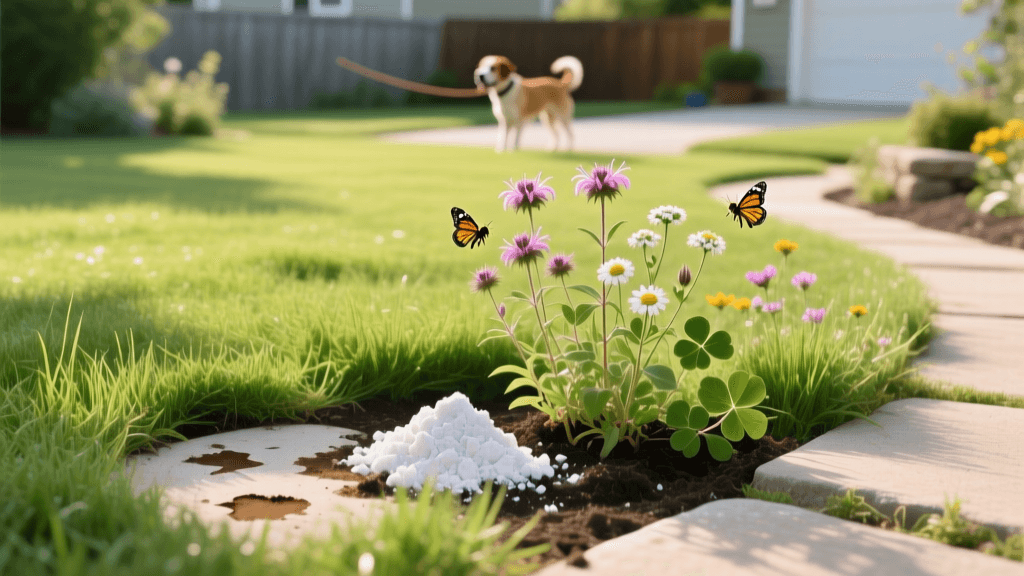
2026 Dog Urine Spot Repair: Gypsum & Pollinator Reseeding
The Intersection of Pet Ownership and Pollinator Conservation in 2026
As we navigate the 2026 gardening season, homeowners are increasingly faced with a unique landscaping challenge: balancing the practical realities of dog ownership with the ecological imperative of pollinator-friendly garden design. Dogs and pollinators share our outdoor spaces, but their needs often clash. Dog urine creates unsightly, nitrogen-burned patches that tempt many homeowners to reach for synthetic chemical neutralizers and high-nitrogen spot fertilizers. However, these conventional treatments are highly detrimental to the soil microbiome, earthworms, and the native bees and butterflies we are trying to protect.
Fortunately, modern eco-lawn care has evolved. Repairing dog urine spots using natural gypsum (calcium sulfate) combined with resilient, pollinator-friendly reseeding offers a scientifically sound, non-toxic solution. This method restores soil health, neutralizes harmful salts, and introduces nectar-rich, dog-tolerant groundcovers that support local ecosystems without sacrificing the aesthetic of your yard.
The Science of Dog Urine Damage and Pollinator Safety
Dog urine is rich in urea, a concentrated form of nitrogen, alongside various salts. While nitrogen is a primary macronutrient for turfgrass, the extreme concentration deposited in a single spot creates a 'fertilizer burn' effect. The salts draw moisture out of the grass roots, leading to rapid desiccation and a characteristic brown spot surrounded by a dark green ring of stimulated growth.
Historically, the lawn care industry recommended alkaline chemicals or synthetic sodium-based neutralizers to counteract urine acidity. According to Penn State Extension, altering soil pH with these harsh amendments often leads to long-term soil compaction and nutrient lockout. More importantly, synthetic chemical treatments and rapid-release nitrogen fertilizers are known to harm ground-nesting bees and disrupt the foraging patterns of beneficial insects. In 2026, the gold standard for eco-conscious lawn repair avoids pH-altering chemicals entirely, focusing instead on salt displacement and biological resilience.
Why Gypsum is the Ultimate Eco-Friendly Fix
Gypsum (calcium sulfate dihydrate) is a naturally occurring mineral that serves as a miracle worker for pet-damaged soil. Unlike lime, gypsum does not alter the soil pH, making it entirely safe for the diverse microbial life required to sustain a pollinator-friendly garden.
When applied to a urine-burned area, the calcium in the gypsum displaces the sodium salts left behind by the dog urine through a process called flocculation. This chemical exchange loosens compacted soil particles, improves water infiltration, and allows the harmful salts to be leached deep below the root zone. By clearing the soil of toxic salt buildup without adding synthetic nitrogen, gypsum creates a clean, fertile seedbed that is safe for pollinators and beneficial soil organisms.
Step-by-Step Gypsum Repair and Pollinator Reseeding Guide
To successfully repair a spot while maintaining your 2026 pollinator habitat goals, follow this precise, chemical-free protocol.
Step 1: Immediate Flushing
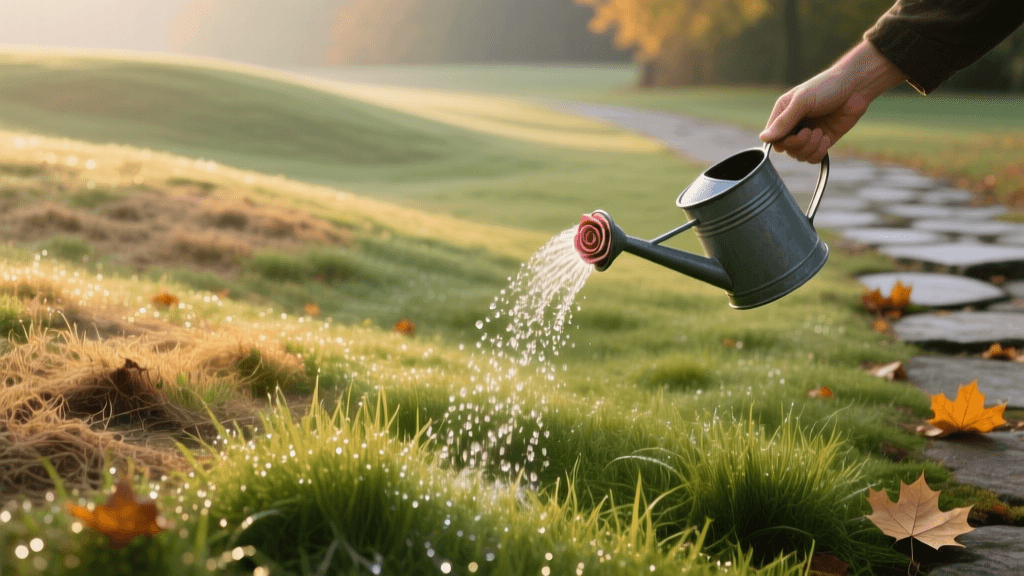
Within 12 hours of your dog urinating, flush the area with at least two gallons of water. This dilutes the urea concentration before it can penetrate deeply into the root zone. Use a watering can or a hose with a gentle spray nozzle to avoid washing away topsoil.
Step 2: Gypsum Application
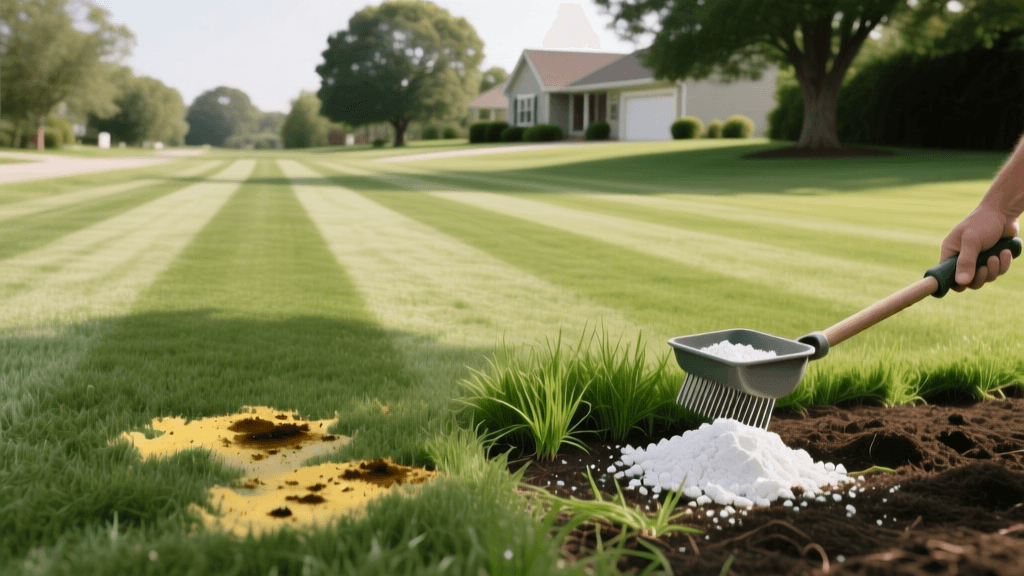
For existing, brown spots, apply pelletized or powdered gypsum at a rate of 1/2 cup per square foot. Use a hand trowel to gently scratch the gypsum into the top one inch of the soil. Water the area deeply immediately after application to activate the calcium exchange and begin leaching the sodium salts. Current 2026 pricing for high-quality, OMRI-listed organic gypsum averages around $15 for a 40-pound bag, which is more than enough to treat dozens of individual spots throughout the season.
Step 3: Soil Preparation and Dethatching
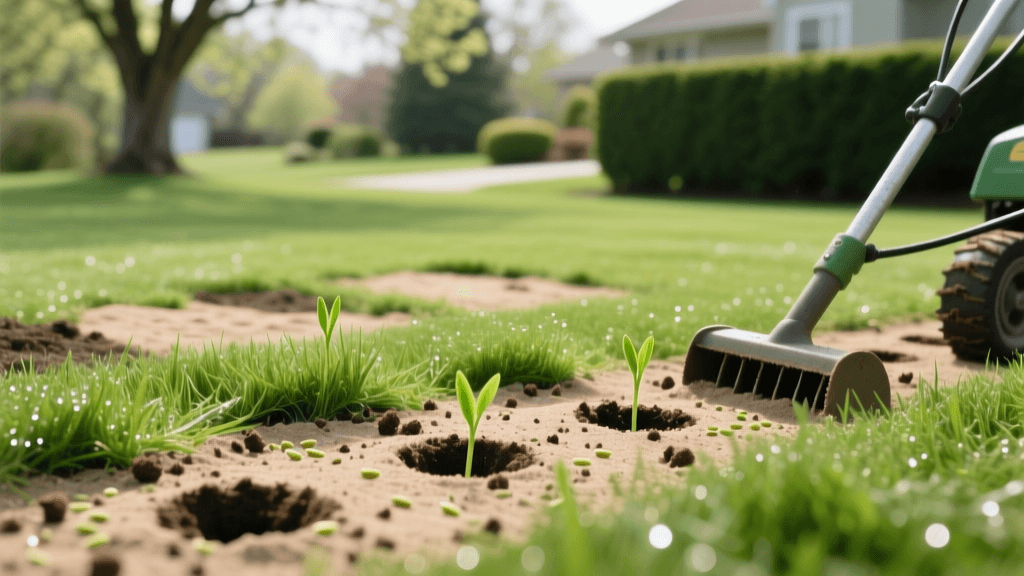
Once the brown grass has died back completely (usually 5 to 7 days after gypsum application), use a steel rake to aggressively remove the dead thatch and loosen the soil surface. Pollinator-friendly seeds require excellent soil-to-seed contact to germinate properly. Rake the area until the soil is loose and crumbly to a depth of about two inches.
Step 4: Pollinator-Friendly Reseeding
Avoid traditional Kentucky Bluegrass or Perennial Ryegrass monocultures, which offer zero ecological value to pollinators and require heavy synthetic feeding. Instead, overseed the repaired spot with a specialized eco-mix. Top the seed with a thin layer (1/4 inch) of organic compost to retain moisture and provide slow-release, natural nutrients.
Selecting the Right 2026 Pollinator Seed Mix for Dog Yards
Not all pollinator plants can withstand the physical traffic and localized nitrogen spikes caused by dogs. When designing a pet-friendly pollinator lawn, you must select species that are both ecologically valuable and physically resilient. According to guidelines from the University of Minnesota Extension, integrating low-growing legumes and fine fescues creates a durable, bee-friendly turf.
- Dutch White Microclover: The undisputed champion of the 2026 eco-lawn. Microclover is highly tolerant of dog traffic, naturally fixes atmospheric nitrogen into the soil (reducing the need for fertilizers), and produces small white flowers that attract honeybees and native solitary bees. It also resists the 'burn' effect of dog urine better than traditional grasses due to its deep taproot system.
- Creeping Red Fescue: A fine-bladed, cool-season grass that thrives in both sun and shade. It requires minimal mowing and provides excellent ground cover that protects soil-dwelling pollinator larvae from extreme heat.
- Yarrow (Achillea millefolium): When mixed into fescue and clover lawns, yarrow acts as a resilient, drought-tolerant groundcover. Its fern-like foliage withstands light foot and paw traffic, while its flat-topped flower clusters serve as vital landing pads for butterflies and predatory wasps that keep garden pests in check.
Seed Mix Comparison for Pet-Friendly Pollinator Lawns
| Seed Variety | Dog Traffic Tolerance | Pollinator Value | Urine Burn Resistance |
|---|---|---|---|
| Dutch White Microclover | High | Excellent (Bees) | Very High |
| Creeping Red Fescue | Moderate to High | Low (Habitat only) | Moderate |
| Yarrow | Moderate | Excellent (Butterflies) | High |
| Kentucky Bluegrass | High | None | Very Low |
Designing Zones: Separating Play Areas from Pollinator Corridors
Even the most resilient microclover and fescue mixes will struggle if subjected to constant, heavy dog traffic in the exact same pathways. A core tenet of 2026 pollinator-friendly garden design is strategic zoning. Designate specific 'potty zones' or high-traffic play areas using durable, non-toxic groundcovers like creeping thyme or even permeable hardscaping like pea gravel.
Reserve the delicate, high-bloom pollinator corridors—featuring native coneflowers, bee balm, and wild indigo—for the perimeter of the yard or fenced-off rain gardens where dogs cannot trample the stems or dig up overwintering bumblebee queens. By training your dog to use specific, easily accessible zones treated with gypsum and microclover, you protect the structural integrity of your primary pollinator habitats.
Watering and Establishment for the 2026 Climate
Successful establishment of pollinator-friendly seed mixes requires careful moisture management. After applying your compost top-dressing, water the repaired spots lightly two to three times a day for the first 14 days to keep the top inch of soil consistently moist. In 2026, utilizing a smart Wi-Fi irrigation controller equipped with local weather data is highly recommended. These systems prevent overwatering, which can wash away fine clover and yarrow seeds, and ensure that water is applied only when natural rainfall is insufficient.
Once the microclover and fescue reach a height of three inches, reduce watering frequency but increase the duration to encourage deep root growth. Deep roots are essential for surviving the increasingly erratic summer heatwaves while continuing to produce nectar for late-season pollinators.
Conclusion
Repairing dog urine spots no longer requires compromising your commitment to environmental stewardship. By utilizing natural gypsum to displace harmful salts and reseeding with resilient, ecologically valuable mixes like microclover and fine fescue, you can maintain a beautiful, functional yard in 2026. This approach not only eliminates unsightly brown patches without toxic chemicals but also actively supports the bees, butterflies, and soil organisms that form the foundation of a thriving garden ecosystem. Embrace the gypsum and pollinator reseeding method, and transform your pet's bathroom breaks into an opportunity for ecological restoration.
For more information on sustainable landscaping and protecting local ecosystems, consult resources from the Xerces Society for Invertebrate Conservation.