Lawn Care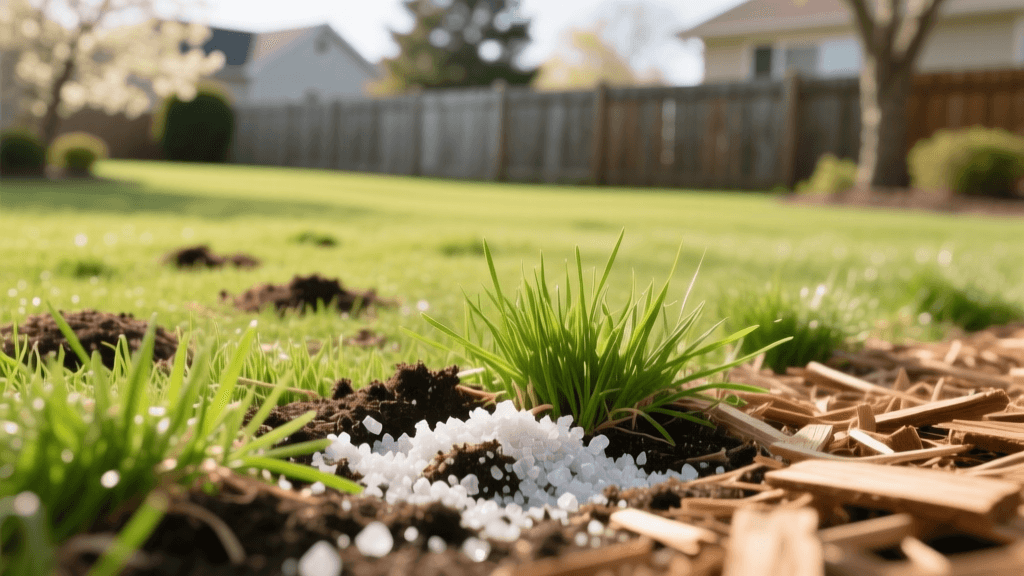
Dog Urine Spot Repair: Gypsum, Reseeding & Mulching 2026
The Rising Challenge of Dog Urine Damage in 2026
As dog ownership continues to reach record highs in 2026, lawn care professionals and homeowners alike are battling an age-old enemy: dog urine spots. These unsightly brown patches surrounded by a halo of dark green grass are not just a cosmetic nuisance; they represent a fundamental disruption to your soil's chemistry and turfgrass health. While many homeowners resort to quick-fix chemical neutralizers that rarely work, the most effective, science-backed protocol involves a triad of treatments: soil amendment with gypsum, strategic reseeding, and the often-overlooked art of spot-specific mulching.
From a mulching methods and materials perspective, repairing a urine spot is not simply about throwing down seed and hoping for rain. The micro-environment of a urine-scorched patch requires careful moisture management, temperature regulation, and soil structure remediation. In this comprehensive 2026 guide, we will break down exactly how to leverage gypsum, modern seed blends, and specialized mulching materials to permanently repair dog urine damage and restore your lawn to its former glory.
The Chemistry of the Burn: Why Gypsum Works
To understand the repair process, we must first debunk a pervasive myth. Many gardeners believe dog urine burns grass because it is highly alkaline. In reality, the primary culprits are nitrogen overload and soluble salts. Dog urine contains high concentrations of urea (a nitrogen compound) and various salts. When deposited in a concentrated area, the nitrogen acts like a massive overdose of synthetic fertilizer, burning the grass blades and roots, while the salts draw moisture out of the plant tissue, causing rapid desiccation.
This is where gypsum (calcium sulfate) becomes indispensable. Gypsum does not alter the soil pH significantly, which is actually a benefit, as drastic pH swings can harm surrounding healthy turf. Instead, gypsum works through a process called cation exchange. The calcium ions in the gypsum displace the sodium ions from the dog urine that have bound to the soil particles. Once displaced, these harmful salts can be easily flushed out of the root zone with water. Furthermore, the sulfate helps to flocculate (clump together) soil particles, improving aeration and drainage in the compacted, damaged area.
According to turfgrass experts at Purdue University's Turfgrass Science program, addressing soil structure and salt displacement is critical before introducing new seed to a damaged area. Without gypsum or a similar calcium-based amendment, new grass roots will simply encounter the same toxic, saline environment that killed the original turf.
Step-by-Step Spot Repair Protocol for 2026
Repairing a urine spot requires a methodical approach. In 2026, the availability of humic-acid-infused pelletized gypsum and bio-tackified mulches has made this process more efficient than ever.
Step 1: Flush and Leach the Area
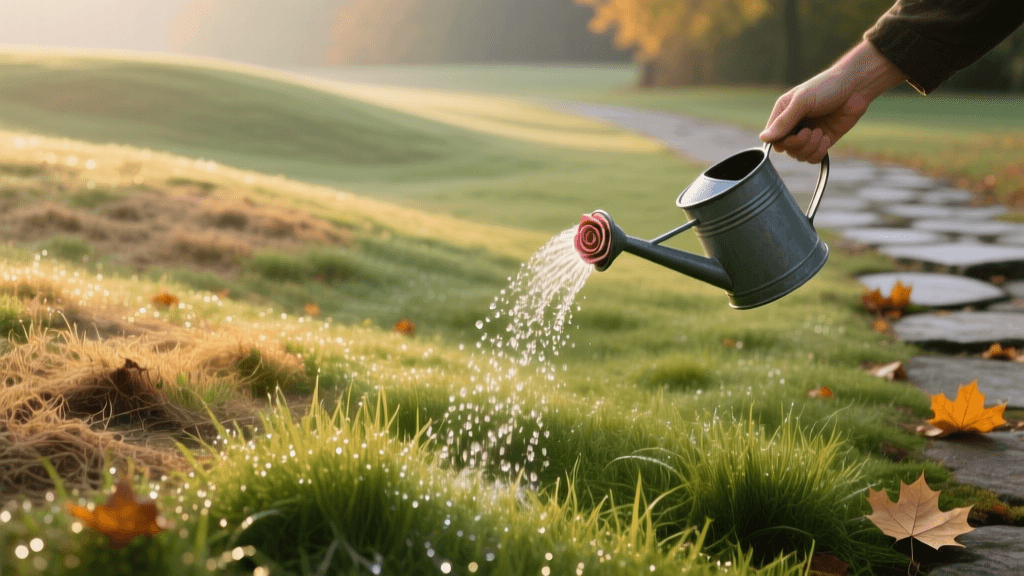
Before applying any amendments, you must dilute the existing salts. Use a garden hose to deeply water the brown spot and the surrounding green halo. Apply at least 2 to 3 gallons of water per square foot. This drives the urea and salts deeper into the soil profile, away from the shallow root zone.
Step 2: Rake and Prep the Soil
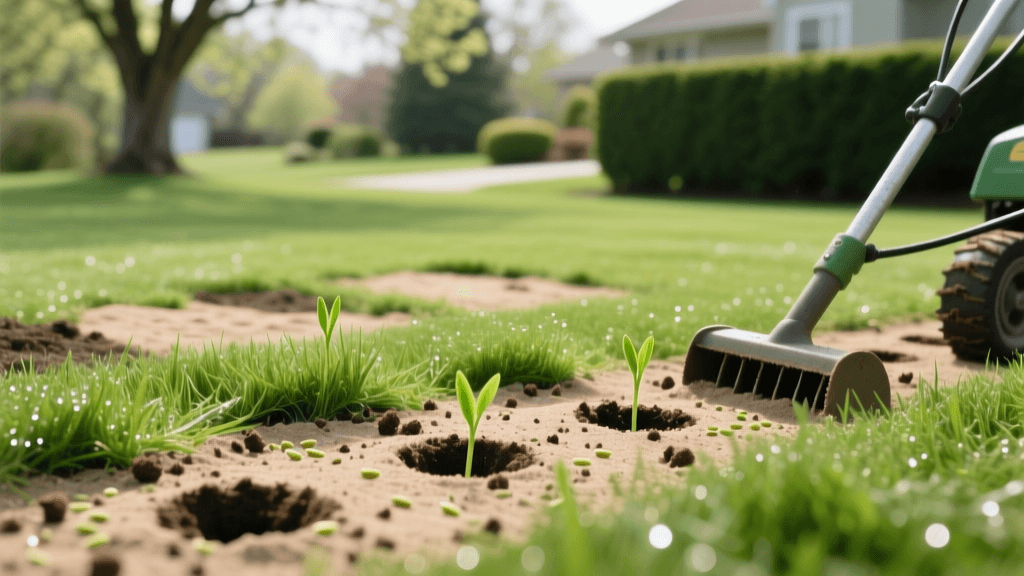
Once the area is dry enough to work without causing compaction, use a steel garden rake to aggressively remove the dead grass blades and thatch. You need to expose bare soil. Scarify the top quarter-inch of soil to create a receptive seedbed.
Step 3: Apply Gypsum
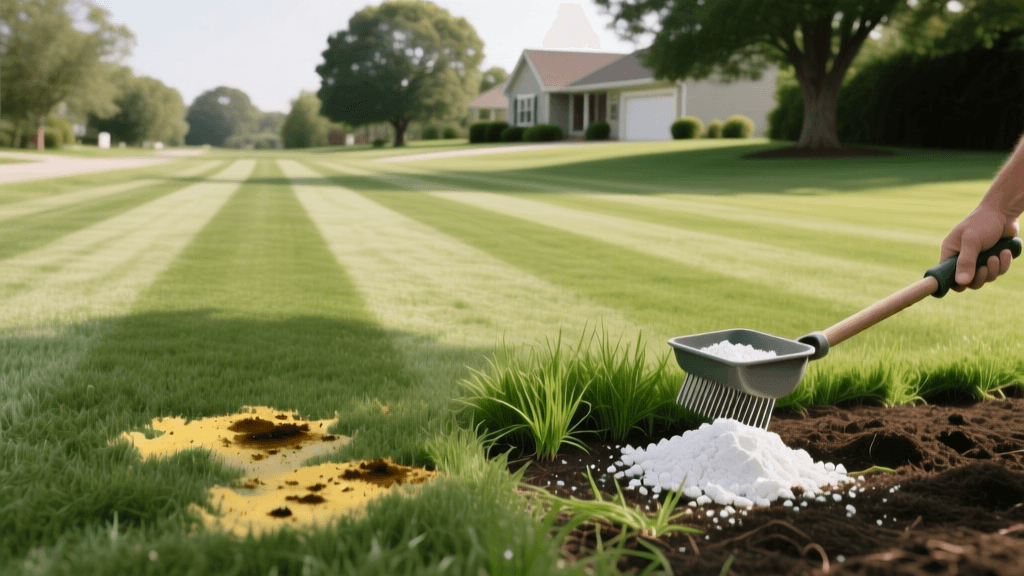
Apply a high-quality, pelletized gypsum product. In 2026, many premium gypsum products also include humic acids to stimulate microbial activity and root growth. Apply at a rate of approximately 5 to 10 pounds per 100 square feet (or a generous handful per individual urine spot). Water the gypsum in lightly so it begins to dissolve and react with the soil.
Step 4: Reseeding with Urine-Tolerant Blends
Select a grass seed that matches your existing lawn but offers high wear and salt tolerance. For cool-season lawns, Perennial Ryegrass and Tall Fescue blends are currently the top performers for spot repairs due to their rapid germination and deep root systems. For warm-season lawns, Bermudagrass sprigs or Zoysia plugs are preferred over seed.
The Mulching Angle: Protecting the Micro-Environment
This is where many DIY repairs fail. Grass seed requires consistent moisture and direct soil contact to germinate. A bare, exposed urine spot in the middle of a lawn will dry out in hours under the 2026 summer sun, killing the germinating seed. Mulching the repair spot is not optional; it is the linchpin of the entire operation.
However, you cannot simply dump standard landscape wood chips or thick pine bark on a grass seed repair. These materials will block sunlight, alter the soil pH, and physically prevent the delicate grass shoots from emerging. Spot repair mulching requires specialized, fine-textured materials that retain moisture while allowing light penetration.
Comparing Mulch Materials for Urine Spot Repairs
The table below outlines the best mulching materials for small-scale turfgrass repairs, evaluating their performance based on current 2026 market availability and efficacy.
| Mulch Material | Moisture Retention | Seed Protection | Estimated Cost (2026) | Verdict for Spot Repair |
|---|---|---|---|---|
| Seed Starter Mulch (Paper/Cellulose) | Excellent | High (often includes tackifiers) | $15 - $22 per 10lb bag | Best Overall. Expands when wet, holds seed in place, and retains moisture perfectly. |
| Screened Compost | Very Good | Moderate | $5 - $8 per cubic foot | Excellent Soil Builder. Adds immediate organic matter and microbes to the gypsum-treated soil. |
| Clean Wheat Straw | Good | Good (if chopped) | $8 - $12 per bale | Good for Large Areas. Can be messy for small, isolated spots; must be weed-free. |
| Coconut Coir Dust | Excellent | Moderate | $12 - $18 per compressed brick | Sustainable Choice. Holds up to 10x its weight in water; great for sandy soils. |
| Peat Moss | Moderate (hydrophobic when dry) | Low | $10 - $15 per bale | Not Recommended. Can repel water if it dries out and blows away easily. |
The Environmental Protection Agency (EPA) heavily advocates for the use of compost in residential landscaping to improve soil water retention and structure. When repairing a urine spot, top-dressing the newly seeded area with a thin layer of finely screened compost serves a dual purpose: it acts as a biological mulch to retain moisture, while simultaneously introducing beneficial microbes that help break down the residual urea in the soil.
Advanced Mulching Application Techniques
To ensure your gypsum and seed investment pays off, follow these precise mulching application methods:
- The 1/4 Inch Rule: Whether you are using seed starter mulch, compost, or coir, never apply more than 1/8 to 1/4 of an inch over the seed. If you apply it too thick, you will smother the seedlings. You should still be able to see about 10% to 20% of the grass seed through the mulch layer.
- Tackifying for Slopes: If the urine spot is on a slope or an area prone to wind, use a mulch that contains a natural bio-tackifier (often derived from plant starches or psyllium husk). This acts as a natural glue, binding the mulch and seed to the soil so they don't wash away during your daily watering routine.
- Pre-Wetting the Mulch: Dry mulch will wick moisture away from the soil and seed. Always pre-wet your compost or coir in a wheelbarrow before applying it to the spot, or water the mulched area immediately and thoroughly after application until it is saturated but not pooling.
Post-Germination Mulch Management and Watering
Once the mulch is applied, the watering schedule becomes critical. As noted by the University of Minnesota Extension, consistent, light moisture is required for seed germination. You must water the mulched spot 2 to 3 times a day for 5 to 10 minutes each session. The mulch's job is to hold this water against the seed.
As the new grass begins to emerge through the mulch layer (usually within 7 to 14 days for ryegrass and fescue), do not attempt to rake or remove the mulch. Materials like seed starter paper, compost, and coir will naturally decompose, adding valuable organic matter back into the soil profile. This decomposition process works in tandem with the gypsum, ensuring the soil remains loose, well-aerated, and resistant to future compaction.
Long-Term Prevention Through Annual Mulching
While gypsum and spot-mulching are excellent reactive measures, proactive lawn care can mitigate the severity of future dog urine damage. Lawns with high organic matter and robust microbial life can process nitrogen and salts much faster than degraded soils.
Consider implementing an annual fall top-dressing routine using finely screened compost. This landscape-scale mulching method builds the soil's Cation Exchange Capacity (CEC), allowing it to buffer against the sudden influx of salts and nitrogen from dog urine. A lawn that is annually mulched with compost will naturally recover from minor urine spots with nothing more than a quick rinse from a garden hose, reserving your heavy-duty gypsum and reseeding protocols for only the most severe damage.
Conclusion
Repairing dog urine spots in 2026 requires moving beyond outdated myths and embracing soil science. By utilizing gypsum to displace harmful sodium salts, selecting resilient turfgrass varieties, and capping the repair with a moisture-retaining, biologically active mulch like screened compost or tackified seed starter, you create the perfect micro-environment for rapid recovery. Your lawn will not only bounce back from the damage, but the targeted mulching and soil amendments will leave the repaired spots healthier and more resilient than the surrounding turf.