
Landscaping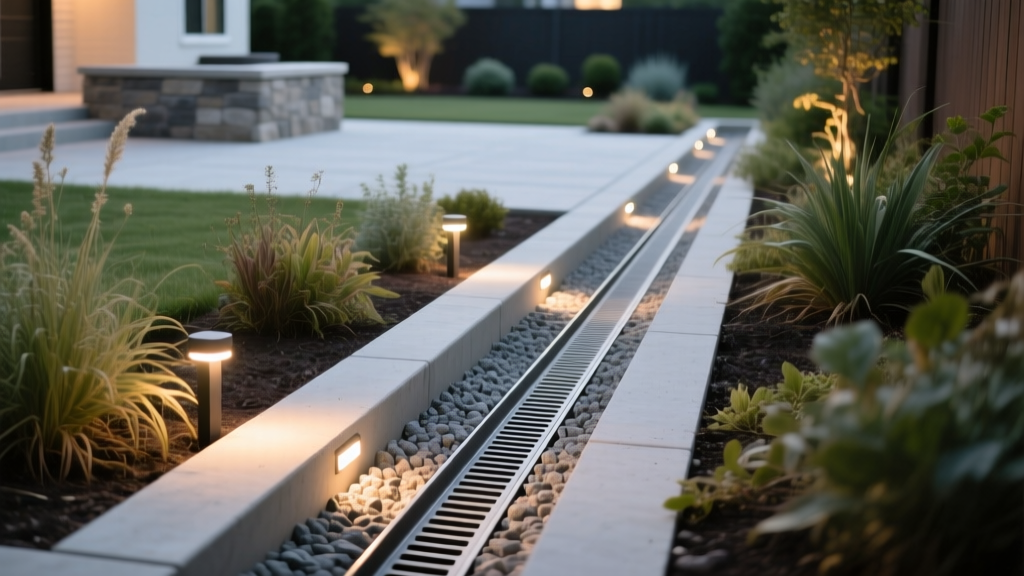
French Drain & Hampton Bay LED Path Lighting Guide 2026
Mike RodriguezPublished
The 2026 Approach to Dual-Purpose Landscaping
In 2026, smart landscape design is all about efficiency, multifunctionality, and minimizing yard disruption. Homeowners and contractors are no longer treating subsurface water management and surface illumination as isolated projects. If your property suffers from poor drainage and you are planning to install a French drain, you already have heavy machinery, trenching tools, and excavated soil on site. This makes it the absolute perfect time to integrate pathway lighting with Hampton Bay low-voltage LED fixtures. By coordinating your French drain installation with your landscape lighting layout, you can save hundreds of dollars in labor, avoid double-trenching, and ensure your electrical components are properly protected from the very moisture your drain is designed to move.
Why Combine French Drains and Pathway Lighting?
A French drain is essentially a gravel-filled trench containing a perforated pipe that redirects surface and groundwater away from your home or low-lying garden beds. According to The Family Handyman's guide on French drain installation, these systems require significant excavation, typically 18 to 24 inches deep and 12 inches wide. Low-voltage landscape lighting, on the other hand, requires a much shallower trench—usually only 6 inches deep. By mapping your Hampton Bay LED pathway lights along the same route as your French drain, you can utilize the open trench to lay your low-voltage wiring before backfilling, saving immense amounts of time and physical labor.
Furthermore, French drains are often installed along the exact pathways where foot traffic occurs, which is precisely where pathway lighting is most needed for safety and curb appeal. Coordinating these projects ensures your yard is safe, dry, and beautifully illuminated by the time the final layer of sod is laid.
Planning the Trench: Depth, Slope, and Wire Routing
The most critical aspect of combining these two systems is understanding the spatial relationship between the drain pipe and the electrical wire. A French drain relies on gravity, requiring a minimum slope of 1% (a 1-inch drop for every 8 feet of pipe). Your low-voltage wiring does not require a slope, but it does require protection from shovel damage and excessive moisture.
- The Drain Bed: The bottom of the trench should be lined with landscape fabric, followed by a base layer of washed #57 gravel. The perforated PVC or corrugated pipe sits on this base.
- The Wire Zone: Never place your Hampton Bay low-voltage wire directly inside the gravel bed of the French drain. The shifting gravel and constant water flow can degrade the wire casing over time. Instead, run the 12-gauge or 14-gauge low-voltage wire along the side wall of the trench, pinned securely above the gravel line, or bury it in a separate 6-inch deep micro-trench adjacent to the main drain trench.
- Fixture Placement: Hampton Bay LED path lights feature stakes that push into the soil. Ensure the stakes do not penetrate deep enough to puncture the landscape fabric or the drain pipe beneath the topsoil.
Selecting the Right Hampton Bay LED Fixtures for Damp Zones
When installing lighting near a French drain, the soil will inherently experience higher moisture fluctuations. In 2026, Hampton Bay offers several low-voltage LED fixtures engineered with enhanced weather resistance, making them ideal for damp landscape zones. The U.S. Department of Energy's outdoor lighting guidelines emphasize using sealed LED fixtures in wet locations to prevent corrosion and electrical shorts.
| Feature | Hampton Bay 12V Cast Aluminum Path Light | Hampton Bay 12V LED Bollard Light |
|---|---|---|
| Material | Cast Aluminum (Powder-Coated) | Polyresin / Metal Composite |
| Wet Location Rating | High (IP65 equivalent sealing) | High (Sealed LED module) |
| Wattage / Output | 2.5W LED (approx. 40 lumens) | 4.0W LED (approx. 70 lumens) |
| Best Drain Zone Placement | Soft soil borders, garden bed edges | Hardscape borders, drain outlet zones |
| 2026 Average Price | $35 - $45 per fixture | $50 - $65 per fixture |
Step-by-Step Installation Guide
Step 1: Utility Marking and Layout
Before any digging begins, always call 811 to have underground utilities marked. Once cleared, use landscaping spray paint to mark the route of your French drain. Mark your Hampton Bay light placements with small flags, keeping them roughly 6 to 8 feet apart along the drain route for optimal illumination overlap.
Step 2: Excavation and Slope Calculation
Dig the main trench to a depth of 18 inches and a width of 12 inches. Use a string line and a line level to ensure your 1% downward slope toward the drainage exit point. As you dig, carve out a small 6-inch deep shelf along one side of the trench wall. This shelf will serve as the dedicated conduit for your Hampton Bay low-voltage wiring.
Step 3: Laying the Drain and Fabric
Line the entire trench with professional-grade woven landscape fabric, allowing excess fabric to drape over the sides. Pour 2 to 3 inches of washed gravel into the bottom. Lay your perforated drain pipe with the holes facing downward (this prevents sediment from clogging the holes as water rises from the bottom up).
Step 4: Running the Low-Voltage Cable
Run your 12-gauge low-voltage wire along the 6-inch shelf you carved into the side wall. Secure the wire with landscape staples so it does not fall into the main gravel bed. Leave loops of extra wire at each flagged location where a Hampton Bay fixture will be installed. This extra slack is crucial for future maintenance and repositioning.
Step 5: Backfilling and Fixture Connection
Cover the drain pipe with more washed gravel until the gravel bed is about 3 inches below the surface grade. Fold the excess landscape fabric over the gravel to create a 'burrito' effect, preventing topsoil from washing into the drain system. Cover the fabric with topsoil or sod. Finally, strip your low-voltage wire at the fixture locations and connect your Hampton Bay LED path lights using waterproof, silicone-filled wire connectors.
Moisture Management and Electrical Safety
Because French drains handle heavy volumes of water during 2026's intense seasonal storms, electrical safety is paramount. While Hampton Bay transformers and fixtures are designed for outdoor use, the wire connections are the most vulnerable point in any low-voltage system. Standard twist-on wire nuts will corrode and fail in damp soil. You must use direct-burial, silicone-filled wire connectors. These connectors encapsulate the copper wire in a waterproof gel, completely blocking moisture intrusion.
Additionally, ensure your Hampton Bay low-voltage transformer is plugged into a GFCI (Ground Fault Circuit Interrupter) outlet. Modern 2026 smart transformers feature built-in photocells and Bluetooth timers, allowing you to adjust your pathway lighting schedules directly from your smartphone without ever needing to access the transformer manually in the rain.
2026 Cost Breakdown and ROI
Combining these projects yields significant financial benefits. If hired separately, a landscaping crew will charge for mobilization, trenching, and backfilling twice. By doing it simultaneously, you consolidate the earthmoving costs.
- French Drain Installation (Materials & Labor): $25 to $35 per linear foot in 2026.
- Hampton Bay LED Path Light Kit (Transformer, Wire, 6 Fixtures): $180 to $240.
- Additional Wiring and Waterproof Connectors: $45.
- Labor Savings: By sharing the trenching phase, homeowners typically save 30% to 40% on the lighting installation labor costs.
Ultimately, integrating Hampton Bay low-voltage LED pathway lighting during a French drain installation is a hallmark of modern, efficient landscaping. It protects your property's foundation from water damage while simultaneously elevating the aesthetic and safety of your outdoor living spaces, proving that the best landscape solutions are those that solve multiple problems at once.

