
Landscaping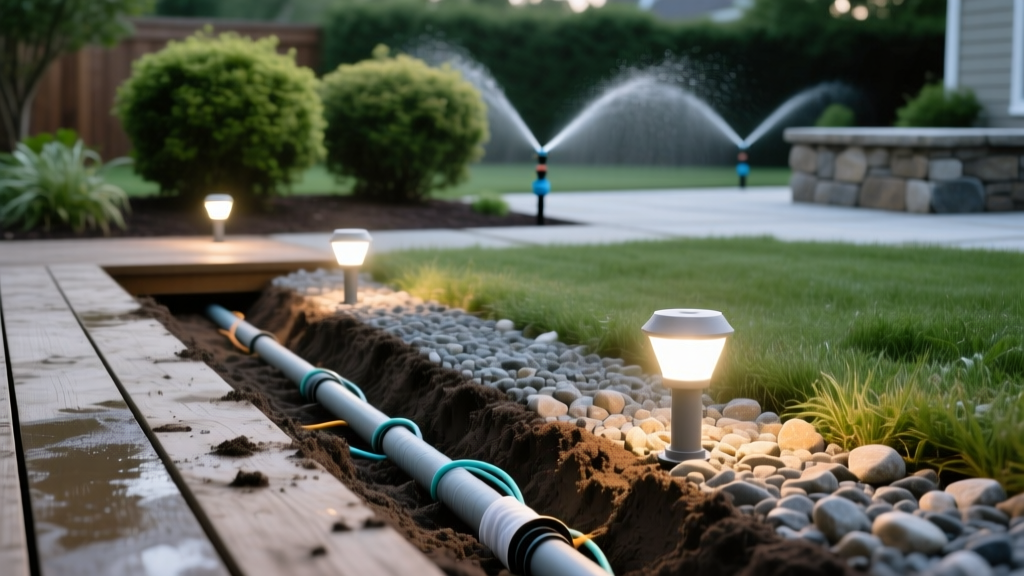
Hampton Bay Path Lights & Irrigation Setup: 2026 Guide
Robert HayesPublished
Integrating Hampton Bay LED Pathway Lighting with Irrigation Systems in 2026
Upgrading your landscape lighting is one of the most effective ways to boost curb appeal, improve safety, and extend the usable hours of your outdoor living spaces. For homeowners utilizing Hampton Bay low-voltage LED pathway fixtures, the installation process is generally straightforward. However, when your yard is already equipped with a complex underground sprinkler and irrigation system, the project introduces a unique set of challenges. Trenching for low-voltage wiring risks severing irrigation lateral lines, and improper fixture placement can lead to constant water bombardment from sprinkler heads, degrading the LED lenses over time.
In 2026, the landscaping industry is heavily focused on the seamless integration of hardscaping, lighting, and water management. With the rise of smart home ecosystems and the Matter protocol, homeowners are now syncing their Hampton Bay smart transformers directly with advanced irrigation controllers like the Rachio 4 or Hunter Hydrawise. This comprehensive guide will walk you through the critical steps of installing Hampton Bay pathway lights without compromising your irrigation infrastructure, ensuring both systems operate efficiently and harmoniously.
The Underground Clash: Wiring vs. Irrigation Piping
The primary concern when installing any low-voltage landscape lighting is digging. Hampton Bay pathway lights typically require a main trunk line of 12-gauge or 14-gauge low-voltage wire buried in a shallow trench, alongside individual stake placements for the fixtures themselves. Meanwhile, your irrigation system relies on a network of PVC or polyethylene pipes buried just beneath the surface to supply water to spray heads, rotary nozzles, and drip zones.
According to the EPA WaterSense program, an efficient residential irrigation system is vital for water conservation, and damaging a lateral line during a lighting install can lead to massive water waste, sinkholes in your lawn, and expensive repairs. Understanding the typical depths of both systems is the first step in avoiding a catastrophic strike with your trenching shovel or edger.
Mapping Your Irrigation Zones Before Digging
Before you unbox your Hampton Bay LED bollards and path lights, you must map your irrigation zones. Do not rely on memory or guesswork. In 2026, many modern irrigation systems were installed with digital as-built maps available through the installer's portal or smart controller app. If you do not have a map, you can manually map the system by running each zone individually and marking the location of every sprinkler head, valve box, and mainline using landscaping flags.
Pay special attention to the areas between the sprinkler heads. This is where the lateral lines run. When planning your Hampton Bay light placement, aim to position the light stakes at least 6 to 12 inches away from the direct line between two sprinkler heads to minimize the risk of driving a metal stake directly through a polyethylene pipe.
Trenching Depths and Separation Guidelines
Proper trenching depth is critical for protecting both your low-voltage wiring and your irrigation pipes. The table below outlines the standard 2026 depth and separation guidelines for integrating these two systems.
| System Component | Standard Depth (2026) | Separation / Safety Notes |
|---|---|---|
| Irrigation Mainline (PVC) | 12 to 18 inches | Usually located near valve boxes; avoid trenching within 2 feet of valves. |
| Irrigation Lateral Lines | 8 to 12 inches | Runs between heads; use a hand trowel near flagged lines. |
| Low-Voltage Trunk Wire | 6 inches | Should ideally cross *over* irrigation lines, never run parallel directly on top. |
| Hampton Bay Light Stakes | Surface to 8 inches | Push stakes in slowly; if resistance is met, stop and excavate manually. |
When your low-voltage wire must cross an irrigation line, always route the wire over the pipe, not under it. This ensures that if the irrigation line ever needs to be excavated for a leak repair in the future, the electrician or irrigation technician will not accidentally cut your lighting wire.
Protecting Hampton Bay LEDs from Sprinkler Overspray
Hampton Bay's 2026 low-voltage LED pathway fixtures are built with durable, weather-resistant materials and typically carry an IP65 or IP67 rating, meaning they can withstand rain and temporary water jets. However, constant, direct bombardment from a sprinkler head is a different story. Municipal water often contains dissolved minerals like calcium and magnesium. When a sprinkler head repeatedly sprays directly onto an LED lens, the water evaporates and leaves behind hard water stains that permanently cloud the polycarbonate or glass lens, severely reducing the lumen output.
To prevent this, you must adjust your irrigation head arcs. If you are using adjustable spray heads, use a flathead screwdriver to reduce the arc so it stops just short of the pathway. For rotary nozzles like the Hunter MP Rotator or Rain Bird R-VAN, utilize the adjustment ring to dial back the radius. The goal is to water the mulch beds and turf right up to the edge of the path, but keep the direct stream off the Hampton Bay fixtures. As noted by the U.S. Department of Energy, maintaining the optical clarity of LED lenses is essential for maximizing the energy efficiency and lifespan of your outdoor lighting investment.
Smart Integration: Syncing Lights and Irrigation via Matter
One of the most exciting landscaping trends in 2026 is the unified smart yard. If you are using a Hampton Bay Smart Wi-Fi Transformer, you can now leverage the Matter smart home protocol to integrate your lighting with your smart irrigation controller. Why would you want them to talk to each other?
- Energy Savings: Program your smart hub to dim the pathway lights by 50% during the hours your irrigation system is scheduled to run (typically between 2:00 AM and 5:00 AM). There is no need to fully illuminate the yard when the sprinklers are watering the lawn.
- Leak Alerts: Some advanced smart irrigation controllers monitor flow rates and can detect broken pipes. You can set up an automation where a detected flow anomaly triggers your Hampton Bay path lights to flash red, alerting you to a potential underground leak before it washes away your garden beds.
- Post-Watering Glow: Program the lights to slowly fade up to 100% brightness 15 minutes after the irrigation cycle finishes, allowing the foliage to drip dry while highlighting the beautiful, glistening wet textures of your landscape.
Step-by-Step Installation Guide
- Call 811: Always have public utility lines marked before digging, even for shallow landscape projects.
- Flag Irrigation Lines: Run your sprinkler zones and flag all heads, valves, and suspected lateral lines.
- Lay Out the Wire: Unspool your low-voltage wire along the planned path, keeping it at least 6 inches away from irrigation heads.
- Dig Shallow Trenches: Use a flat spade or a specialized lawn edger to create a 6-inch deep trench. Use a hand trowel when crossing known irrigation lines.
- Make Connections: Use silicone-filled wire nuts for all Hampton Bay fixture connections to prevent moisture intrusion from the damp soil environment.
- Stake the Fixtures: Push the Hampton Bay stakes into the ground. If you hit hard resistance, do not force it; dig a small pilot hole to ensure you aren't pressing against a PVC pipe.
- Adjust Sprinklers: Turn on the irrigation system one last time to verify that no spray heads are directly hitting the new LED lenses.
Seasonal Maintenance and Winterization
In climates that require winterizing irrigation systems with compressed air blowouts, the vibration and pressure changes can sometimes shift the soil around shallow low-voltage wires. When performing your autumn sprinkler blowout, ensure the air pressure does not exceed 50 PSI to protect both your irrigation pipes and the surrounding landscape wiring. During spring startup, inspect the base of your Hampton Bay path lights. The freeze-thaw cycle can cause frost heave, pushing the light stakes upward and exposing the wire connections to lawn mowers and string trimmers. Simply push the stakes back down to their proper depth and wipe the LED lenses with a mixture of white vinegar and distilled water to remove any winter mineral buildup.
By respecting the underground infrastructure of your irrigation system and carefully managing water exposure, your Hampton Bay low-voltage LED pathway lights will provide brilliant, reliable illumination for years to come, perfectly complementing a lush, well-watered 2026 landscape.

