Lawn Care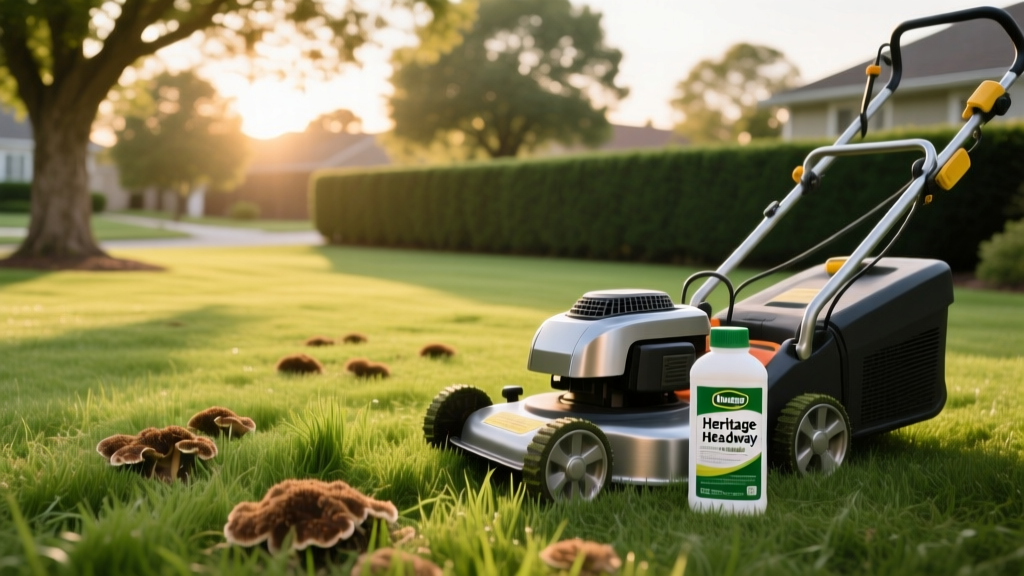
Heritage vs Headway Fungicide: 2026 Mowing Tactics for Brown Patch
David ParkPublished
The 2026 Brown Patch Challenge: Integrating Fungicides and Mowing
Brown patch, caused by the aggressive soil-borne pathogen Rhizoctonia solani, remains one of the most destructive turfgrass diseases affecting both cool-season and warm-season lawns. As we navigate the 2026 growing season, shifting climate patterns have led to prolonged periods of high nighttime humidity and extended dew retention in many transition zones. These conditions create the perfect microclimate for brown patch to devastate Tall Fescue, Kentucky Bluegrass, and Bermudagrass. When homeowners spot the tell-tale 'smoke rings' or irregular brown lesions on their grass blades, the immediate instinct is to reach for a chemical cure. However, turfgrass pathologists consistently warn that fungicides alone cannot save a lawn if the cultural practices—specifically mowing techniques and patterns—continue to foster the disease.
In 2026, the debate among lawn care professionals often centers on two powerhouse fungicides: Heritage SC (azoxystrobin) and Headway SC (azoxystrobin + propiconazole). While both are highly effective, their success is intrinsically tied to how you manage your mower. According to NC State Extension, cultural practices that reduce canopy humidity and prevent physical damage to the grass blade are mandatory for any chemical treatment to work. This guide will break down the differences between Heritage and Headway, and detail the exact mowing strategies you must employ to maximize their efficacy.
Heritage vs. Headway: Choosing the Right Fungicide
Before adjusting your mowing deck, you must understand the chemical tools at your disposal. Heritage and Headway are both manufactured by Syngenta and share the active ingredient azoxystrobin, but their secondary components dictate how and when they should be used.
| Feature | Heritage SC (Azoxystrobin) | Headway SC (Azoxystrobin + Propiconazole) |
|---|---|---|
| Active Ingredients | Azoxystrobin (22.9%) | Azoxystrobin (18.2%) + Propiconazole (18.2%) |
| FRAC Groups | Group 11 (QoI Strobilurin) | Group 11 + Group 3 (DMI Triazole) |
| Primary Action | Preventative & Early Curative | Preventative & Strong Curative |
| Best Use Case | Rotational preventative programs to avoid resistance | Active, severe outbreaks requiring immediate halt |
| 2026 Avg. Cost | ~$4.50 per 1,000 sq ft | ~$6.00 per 1,000 sq ft |
Heritage is a systemic strobilurin that inhibits fungal respiration. It is best used as a preventative barrier. Headway, however, combines that strobilurin with a triazole (propiconazole), which inhibits sterol biosynthesis in the fungus. As noted by Penn State Extension, combining FRAC groups 11 and 3 provides a broader spectrum of control and is the gold standard for knocking down an active brown patch infection. Yet, applying Headway to a lawn that is being improperly mowed is like bailing water out of a sinking boat without plugging the hole.
Why Fungicides Fail: The Mowing Microclimate
Rhizoctonia solani requires free moisture on the leaf surface and high humidity within the turf canopy to germinate and infect. Your mowing habits directly dictate the architecture of this canopy. If your mowing pattern causes the grass to lay flat, or if your mower deck is set incorrectly, you trap moisture at the soil level. This localized humidity overrides the systemic protection provided by Heritage or Headway, allowing the fungus to continue attacking the crown and roots of the turf.
1. Alternating Mowing Patterns to Reduce Canopy Trapping
One of the most overlooked mowing techniques in residential lawn care is the mowing pattern. If you mow in the same direction every week, you create 'grain' in the turf. The grass blades permanently lean in the direction of the mower's discharge chute and wheel travel. This leaning causes the blades to overlap and mat together, severely restricting airflow at the thatch level. When you apply a liquid fungicide like Headway to a matted canopy, the spray cannot penetrate to the crown where the fungus is actively rotting the tissue. Furthermore, the trapped morning dew takes hours longer to evaporate.
The 2026 Tactic: Implement a strict alternating pattern schedule. Mow north-south on week one, east-west on week two, and diagonally on week three. This forces the grass to grow upright, creating vertical channels for air circulation and allowing your fungicide application to reach the soil surface and lower sheaths where brown patch originates.
2. The Critical Role of Blade Sharpness
Brown patch is an opportunistic pathogen. While it can infect intact leaves under severe pressure, it primarily enters through wounds. A dull mower blade does not cut the grass; it shreds and tears the leaf tip. These ragged, shredded tips lose moisture rapidly and provide a massive, open entry point for Rhizoctonia spores. According to Rutgers University, turfgrass that is mechanically damaged by dull blades exhibits significantly higher rates of brown patch severity, even when preventative fungicides are present.
The 2026 Tactic: Sharpen your rotary mower blades every 20 to 25 hours of use. If you are in the middle of an active brown patch outbreak and are relying on Headway to cure the disease, a dull blade will continuously introduce new infection sites faster than the propiconazole can halt them. Consider switching to a reel mower for high-end cool-season lawns, as the scissor-like cutting action leaves a pristine wound that heals rapidly.
3. Clipping Management: Bagging vs. Mulching During Outbreaks
Under normal circumstances, mulching clippings is the best practice for returning nitrogen and organic matter to the soil. However, brown patch changes the rules. The fungus survives in the thatch and on infected leaf tissue as sclerotia (compact masses of mycelium). When you mulch infected clippings, you are actively redistributing the pathogen across the lawn and adding a layer of wet, decaying organic matter that traps humidity.
The 2026 Tactic: If you are treating an active brown patch outbreak with Headway, you must bag your clippings for at least two mowing cycles post-application. Remove the infected biomass from the property entirely. Once the disease is halted and the lawn is on a preventative Heritage schedule, you can safely return to mulching, provided the thatch layer remains below 0.5 inches.
4. Optimizing Mowing Height for Airflow
There is a delicate balance when setting your mower deck during peak brown patch season (typically late June through August). The general rule of thumb is to mow high (3.5 to 4 inches for Tall Fescue) to shade the soil and promote deep roots. However, an excessively tall canopy during periods of 90°F days and 75°F nights acts like a humid greenhouse.
The 2026 Tactic: During peak brown patch season, drop your mowing height by exactly 0.5 inches. If you normally mow at 3.5 inches, drop to 3.0 inches. This slight reduction opens the canopy to morning sun and breezes, accelerating dew drying. Never scalp the lawn below 2.5 inches for cool-season grasses, as the resulting soil heat stress will weaken the plant's natural immune response, rendering your Heritage application useless.
Timing Your Mow Around Fungicide Applications
The physical timing of your mow in relation to your fungicide application is just as critical as the pattern you use. Applying Heritage or Headway to an overgrown lawn results in 'interception'—the fungicide coats the upper third of the grass blade but never reaches the lower sheath, stolons, or thatch layer where the brown patch is actively feeding.
- Pre-Application Mowing: Always mow 12 to 24 hours before applying your fungicide. This removes excess foliage, ensuring the chemical penetrates deep into the canopy. Rake out any remaining thatch or clippings to expose the soil surface.
- Application Day: Apply Headway or Heritage in the early evening or late afternoon. This allows the product to dry on the leaf surface without being immediately degraded by UV light, and it takes advantage of the overnight dew to help the systemic ingredients translocate into the plant tissue.
- Post-Application Wait Time: Do not mow for at least 48 hours after a liquid application of Heritage or Headway. Mowing too soon will physically remove the fungicide from the leaf surface before it has been fully absorbed by the plant's vascular system. When you do resume mowing, ensure your mower wheels are clean to avoid tracking untreated soil into the treated zones.
Integrated Lawn Care: The Winning Strategy
Treating brown patch in 2026 requires a holistic approach that views your mower and your sprayer as equal partners in lawn health. Heritage and Headway are exceptional chemical tools, but they are not magic wands. By alternating your mowing patterns to promote upright growth, maintaining razor-sharp blades to prevent pathogen entry, managing clippings to reduce inoculum spread, and timing your cuts to maximize chemical penetration, you create an environment where Rhizoctonia solani simply cannot survive. Implement these integrated mowing tactics today, and watch your lawn recover its thick, green, and disease-free vitality.