Lawn Care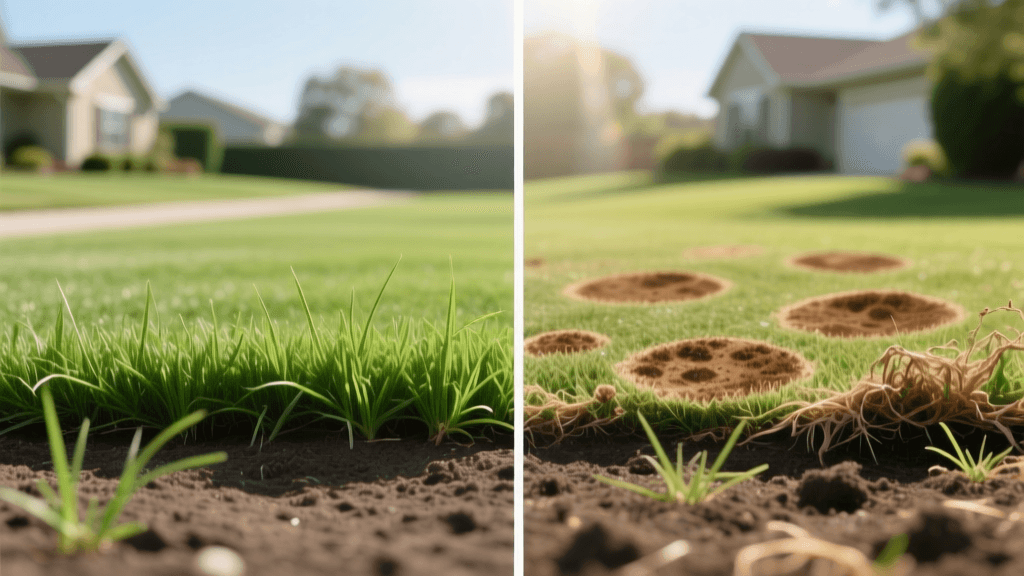
Heritage vs Headway: Brown Patch Fungicide Guide 2026
The Holistic Yard: From Tree Canopy to Turfgrass
In my years specializing in tree web worm control, I have learned a fundamental truth about landscape health: pests and diseases thrive where ecosystems are unbalanced and plants are stressed. Homeowners often panic over the unsightly silk tents of fall webworms in their pecan, persimmon, or oak trees, yet completely ignore the devastating fungal outbreaks happening right beneath their feet in the turfgrass. Just as webworms exploit stressed tree canopies, turf pathogens exploit compromised lawns. In 2026, integrated landscape management means treating your entire yard as a single, interconnected ecosystem. Today, we are bringing our focus down from the branches to the soil line to tackle one of the most destructive turf diseases: brown patch (Rhizoctonia solani).
When it comes to chemical intervention, two powerhouse products from Syngenta dominate the professional and high-end residential market: Heritage and Headway. But which one is right for your lawn? In this comprehensive 2026 guide, we break down the science, application rates, and strategic use cases for Heritage vs. Headway fungicide to help you eradicate brown patch and restore your turf's vitality.
Understanding Brown Patch in 2026
Brown patch is a foliar disease caused by the soil-borne fungus Rhizoctonia solani. It primarily attacks cool-season grasses (like tall fescue, Kentucky bluegrass, and perennial ryegrass) during the hot, humid days of summer, and warm-season grasses (like St. Augustine and zoysia) during the cooler, damp periods of spring and fall. According to NC State TurfFiles, the disease becomes highly active when nighttime temperatures remain above 65°F (18°C) accompanied by high humidity or extended leaf wetness.
In 2026, shifting weather patterns and earlier onsets of humid nights in many transition zones have made brown patch more aggressive than ever. The disease typically manifests as circular, brown-to-tan patches ranging from a few inches to several feet in diameter. A distinctive "smoke ring" of dark, water-soaked mycelium may be visible at the outer edge of the patch during early morning hours. If left untreated, the fungus can destroy large sections of your lawn in a matter of days, leaving the turf vulnerable to secondary weeds and invasive pests.
Heritage Fungicide: The Preventative Standard
Heritage (active ingredient: Azoxystrobin) is a broad-spectrum, systemic fungicide that belongs to the strobilurin class of chemistry. It works by inhibiting fungal respiration, effectively starving the pathogen of energy. Heritage is available in both liquid (Heritage SC) and granular (Heritage G) formulations, making it highly versatile for different application preferences.
Pros of Heritage
- Exceptional Preventative Control: Heritage is unmatched when applied before disease symptoms appear. It creates a protective barrier on the leaf blade and is absorbed into the plant tissue, offering 28 to 35 days of residual control.
- Broad-Spectrum Activity: While we are focusing on brown patch, Heritage also controls dollar spot, leaf spot, melting out, and summer patch, making it a great all-around rotational product.
- Plant Health Benefits: Strobilurins are known to inhibit plant senescence (aging), keeping the grass greener and more photosynthetically active longer, even under environmental stress.
Cons of Heritage
- Limited Curative Action: Once brown patch has actively sporulated and caused significant tissue damage, Heritage alone struggles to halt the disease's progression quickly.
- Resistance Risk: Azoxystrobin is a FRAC Group 11 fungicide. Rhizoctonia solani can develop resistance to Group 11 chemistry if it is used repeatedly without rotation.
Headway Fungicide: The Curative Heavyweight
Headway is a combination product that merges the preventative power of Azoxystrobin (FRAC Group 11) with the strong curative and systemic action of Propiconazole (FRAC Group 3). Propiconazole is a Demethylation Inhibitor (DMI), which works by disrupting the biosynthesis of sterols, essential components of fungal cell membranes. This dual-active-ingredient approach makes Headway one of the most formidable weapons against active brown patch outbreaks.
Pros of Headway
- Superior Curative Control: If you notice brown patch already active in your lawn, Headway is the superior choice. The propiconazole component acts rapidly to stop the fungus from spreading within the plant tissue, often halting disease progression within 24 to 48 hours.
- Built-In Resistance Management: Because it combines two distinct modes of action (Group 11 and Group 3), the likelihood of the fungus developing resistance to Headway is significantly lower than using a single-active-ingredient product.
- Extended Residual: Headway provides robust preventative protection lasting up to 35 days, shielding the turf from subsequent spore germination.
Cons of Headway
- Cost: Headway is generally more expensive per acre/treatment than Heritage due to its complex chemical formulation. In 2026, residential bottles of Headway SC typically retail between $160 and $210, whereas Heritage SC hovers around $130 to $150.
- Phytotoxicity Risks in Heat: DMI fungicides like propiconazole can sometimes cause temporary growth regulation or slight phytotoxicity (leaf tip burn) if applied to cool-season grasses during extreme heat stress (temperatures exceeding 90°F). Careful application timing is required.
Head-to-Head Comparison: Heritage vs. Headway
To help you decide which product fits your current lawn care needs, review the comparison chart below:
| Feature | Heritage (SC / G) | Headway (SC / G) |
|---|---|---|
| Active Ingredients | Azoxystrobin | Azoxystrobin + Propiconazole |
| FRAC Groups | Group 11 (QoI) | Group 11 (QoI) + Group 3 (DMI) |
| Primary Strength | Preventative control & plant health | Curative action & resistance management |
| Application Interval | 14 to 28 days | 14 to 28 days |
| Best Application Timing | 2-3 weeks before disease onset | At first sign of disease or high-risk periods |
| Watering Requirement | Water in granulars lightly | Water in granulars lightly |
| Estimated 2026 Cost | $$ (Moderate) | $$$ (Premium) |
Strategic Application and Resistance Management
As any expert in tree web worm control will tell you, spraying the same chemical repeatedly leads to pest adaptation. The same rule applies to turf pathology. The Fungicide Resistance Action Committee (FRAC) strongly advises rotating modes of action. If you rely solely on Heritage (Group 11) year after year, you risk selecting for resistant strains of Rhizoctonia solani.
The 2026 Brown Patch Protocol:
- Early Spring / Pre-Season: Start your program with a preventative application of Heritage as soil temperatures reach 70°F. This builds systemic protection in the grass blade without overusing DMI chemistry.
- Peak Summer (High Humidity & Heat): When nighttime temperatures stay above 68°F and rain is frequent, switch to Headway. The addition of propiconazole provides the aggressive curative power needed during peak disease pressure and breaks the Group 11 resistance cycle.
- Late Summer / Early Fall: Rotate to a completely different FRAC group, such as a Group 7 (SDHI) like Velista or a Group 1 (Thiophanate-methyl), before considering another strobilurin application.
According to Penn State Extension, proper application techniques are just as critical as the chemical itself. For liquid applications (SC), use a flat-fan nozzle and apply at a volume of 1.5 to 2.0 gallons per 1,000 square feet to ensure thorough leaf coverage. For granular applications (G), ensure uniform spreader calibration and water the product in with 1/8 to 1/4 inch of irrigation immediately after application to move the active ingredients into the thatch layer and onto the lower leaf sheaths where brown patch initiates.
Cultural Controls: The Foundation of Turf Immunity
Just as proper pruning and soil aeration are vital to preventing webworm infestations in trees, cultural practices are your first line of defense against brown patch. Fungicides are not a substitute for poor lawn management. To maximize the efficacy of Heritage and Headway in 2026, implement the following cultural controls:
- Watering Practices: Never water your lawn in the late afternoon or evening. Watering at night extends the leaf wetness period, creating the perfect incubator for Rhizoctonia. Always irrigate deeply and infrequently in the early morning (between 4:00 AM and 6:00 AM).
- Nitrogen Management: Avoid heavy applications of quick-release nitrogen during the summer months for cool-season grasses. Lush, rapid growth produces thin cell walls that are easily penetrated by fungal hyphae.
- Thatch and Aeration: Brown patch thrives in thick thatch layers that trap moisture. Core aeration in the fall or spring improves soil drainage and reduces the microclimate humidity at the turf crown.
- Mowing Height: Raise your mowing height during summer stress. Taller grass shades the soil, reducing soil temperatures and promoting deeper root systems.
Final Verdict for 2026
When managing your landscape holistically—from the highest tree canopy to the densest turfgrass—having the right tools for the right situation is paramount. Heritage remains the gold standard for early-season, preventative brown patch control and overall plant health enhancement. However, when the humid dog days of summer arrive, or when you spot the tell-tale smoke rings of an active infection, Headway is the undisputed champion for curative action and resistance management.
By combining these elite fungicides with rigorous cultural practices, you can maintain a pristine, disease-free lawn that complements the health and beauty of your entire landscape. For more regional data on turfgrass diseases and localized outbreak maps, consult resources like the University of Minnesota Turf Science Lab or your local university extension office. Stay vigilant, rotate your chemistry, and remember that a healthy yard starts from the ground up.