Lawn Care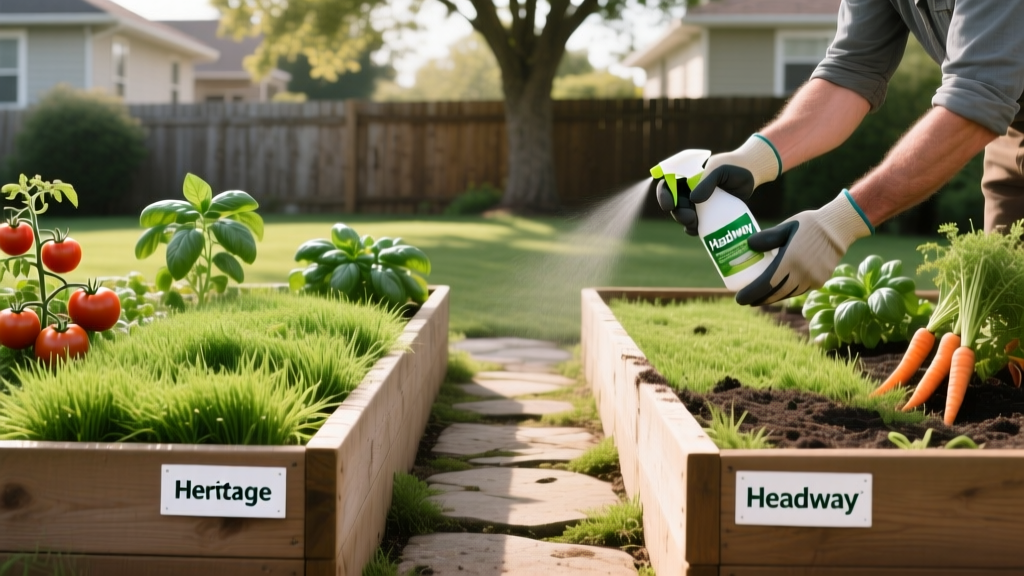
Heritage vs Headway Fungicide: Brown Patch Near Raised Beds 2026
Sarah ChenPublished
The Intersection of Lawn Care and Raised Bed Gardening
For homeowners who invest time and resources into raised bed vegetable gardening, the surrounding lawn is more than just a walking surface; it is an integral part of the garden's ecosystem. However, the very conditions that make raised beds thrive—consistent moisture, rich organic matter, and dense foliage—can create a microclimate that wreaks havoc on adjacent turfgrass. The most notorious culprit in these humid, localized environments is Rhizoctonia solani, the pathogen responsible for brown patch fungus. As we navigate the 2026 growing season, managing this disease effectively without contaminating your edible crops requires a strategic approach, particularly when choosing between top-tier fungicides like Heritage and Headway.
Brown patch typically manifests during the peak heat and humidity of summer, presenting as circular, brownish-yellow patches that can expand rapidly. According to North Carolina State Extension, the fungus thrives when nighttime temperatures remain above 68°F and leaf wetness persists for more than 10 hours. Because raised beds often obstruct airflow and cast long shadows that prolong morning dew on nearby grass, the turf immediately bordering your garden is at a significantly higher risk for severe outbreaks.
Understanding the Pathogen and the Chemical Options
When brown patch threatens the perimeter of your vegetable garden, cultural controls like improving airflow and adjusting irrigation are your first line of defense. However, when environmental conditions are overwhelmingly favorable for the disease, chemical intervention becomes necessary. In 2026, the two most prominent systemic fungicides recommended for turfgrass are Heritage and Headway, both manufactured by Syngenta. While they share a common active ingredient, their formulations, modes of action, and implications for nearby raised beds differ significantly.
Heritage Fungicide (Azoxystrobin)
Heritage is a powerhouse in the strobilurin class of fungicides, relying solely on the active ingredient azoxystrobin. It works by inhibiting fungal respiration, effectively starving the pathogen. Heritage is highly systemic, meaning it is absorbed by the grass blades and translocated throughout the plant tissue, offering excellent preventative and early curative control. Because it contains only one mode of action (FRAC Group 11), turfgrass experts warn against using it consecutively to prevent fungal resistance.
Headway Fungicide (Azoxystrobin + Propiconazole)
Headway combines azoxystrobin (FRAC Group 11) with propiconazole (FRAC Group 3), a demethylation inhibitor (DMI) that disrupts the synthesis of sterols in the fungal cell membrane. This dual-action approach makes Headway a broader-spectrum product that not only combats brown patch but also provides a robust defense against other common turf diseases like dollar spot and leaf spot. More importantly, the combination of two distinct modes of action aligns perfectly with the 2026 Fungicide Resistance Action Committee (FRAC) guidelines for resistance management.
2026 Comparison Chart: Heritage vs. Headway
Choosing the right product requires understanding the practical differences in application, cost, and efficacy. Below is a detailed comparison based on 2026 market data and turf management standards.
| Feature | Heritage (Azoxystrobin) | Headway (Azoxystrobin + Propiconazole) |
|---|---|---|
| Active Ingredients | Azoxystrobin (22.9%) | Azoxystrobin (11.4%) + Propiconazole (18.2%) |
| FRAC Groups | Group 11 | Group 11 + Group 3 |
| Primary Use | Preventative / Early Curative | Preventative / Curative / Broad Spectrum |
| Application Rate | 2-4 oz per 1,000 sq ft | 3-5 oz per 1,000 sq ft |
| 2026 Est. Cost | ~$0.18 per 1,000 sq ft | ~$0.28 per 1,000 sq ft |
| Rainfastness | 1-2 hours | 2-3 hours |
| Resistance Risk | High (if used alone repeatedly) | Low (dual mode of action) |
Safeguarding Your Raised Vegetable Beds
The most critical consideration for raised bed vegetable gardeners is the proximity of these chemical applications to edible crops. Neither Heritage nor Headway is labeled for use on food-producing plants. Therefore, preventing chemical drift, soil leaching, and water runoff into your raised beds is paramount.
Establishing Buffer Zones
When treating brown patch near a garden, establish a strict buffer zone. As noted by Penn State Extension, maintaining a healthy, untreated buffer or using targeted spot-treatments near sensitive areas reduces the risk of non-target exposure. For liquid applications of Heritage or Headway, maintain a minimum 3-to-5-foot buffer zone between the spray swath and the edge of your raised beds. If the grass within this buffer zone is infected, treat it using a localized granular fungicide or a targeted hand-sprayer with a physical drift shield to ensure no droplets reach your vegetable soil.
Managing Runoff and Soil Leaching
Raised beds are often constructed with imported topsoil and compost, which have high water-retention capacities. If you overwater your lawn after applying a systemic fungicide, the chemical can bind to soil particles and migrate laterally into the bed's root zone. To prevent this:
- Water lightly after application: Both Heritage and Headway require a light watering (about 1/8 inch) to wash the product off the grass blades and into the thatch layer where it can be absorbed by the roots. Do not water to the point of runoff.
- Monitor the forecast: Never apply these fungicides if heavy rain is expected within 24 hours. A sudden downpour will wash the chemicals directly into your garden beds and local storm drains.
- Grade the soil: Ensure the lawn slopes gently away from the raised beds. If the turf sits higher than the garden, gravitational runoff will carry fungicide residues directly into your vegetables.
Drift Mitigation Techniques
Wind can carry microscopic fungicide droplets onto the leaves of your tomatoes, peppers, and leafy greens. In 2026, modern sprayer technology offers excellent drift-reduction nozzles, such as air-induction flat fan tips, which produce larger, heavier droplets that fall straight to the turf canopy rather than floating on the breeze. Always spray during the early morning or late evening when winds are calm (under 5 mph) and temperatures are cooler.
Step-by-Step Application Protocol for 2026
To maximize efficacy against Rhizoctonia solani while protecting your garden, follow this precise application protocol:
- Mow the Lawn: Mow the turf to its recommended height (usually 2.5 to 3.5 inches for cool-season grasses) and bag the clippings if brown patch lesions are already visible. This removes infected tissue and allows the fungicide to reach the lower stem and soil surface.
- Calibrate Your Sprayer: Ensure your sprayer is calibrated to deliver the exact volume required. Over-application wastes money and increases the risk of soil saturation and runoff into your raised beds.
- Mix and Apply: Mix Headway or Heritage according to the 2026 label instructions. Apply evenly across the affected lawn areas, stopping well short of your established buffer zone.
- Water In: Apply 1/8 inch of irrigation immediately after spraying to move the active ingredients into the root zone.
- Rotate Chemistry: If using Heritage, you must rotate to a different FRAC group (like a thiophanate-methyl or fluazinam product) for your next application 28 days later to prevent resistance. Headway's dual-action formula offers more flexibility but should still be rotated annually.
Alternative Cultural Controls for the Garden Perimeter
Because chemical options are restricted near edibles, leaning heavily on cultural controls in the buffer zone is a smart, long-term strategy for 2026 and beyond. Consider planting a low-maintenance, drought-tolerant ground cover or installing a physical barrier like a stone walkway or brick edging between the lawn and the raised beds. This not only eliminates the need to spray fungicides near your vegetables but also improves airflow, reducing the humidity that fuels brown patch in the first place.
Additionally, ensure that your lawn's irrigation system is properly zoned. Sprinkler heads should be adjusted so they do not cast water onto the raised beds or the immediate perimeter, as excess moisture on the grass blades is the primary trigger for brown patch germination.
Conclusion
Managing brown patch fungus in a lawn that borders raised vegetable beds requires a delicate balance of aggressive turf disease management and stringent crop safety protocols. While Heritage offers a cost-effective, highly systemic preventative treatment, Headway's dual-active-ingredient formulation provides superior curative power and resistance management for the 2026 season. By understanding the science of Rhizoctonia solani, utilizing modern drift-reduction equipment, and enforcing strict buffer zones, you can maintain a lush, disease-free lawn without compromising the health, safety, or yield of your homegrown vegetables.