Pest Control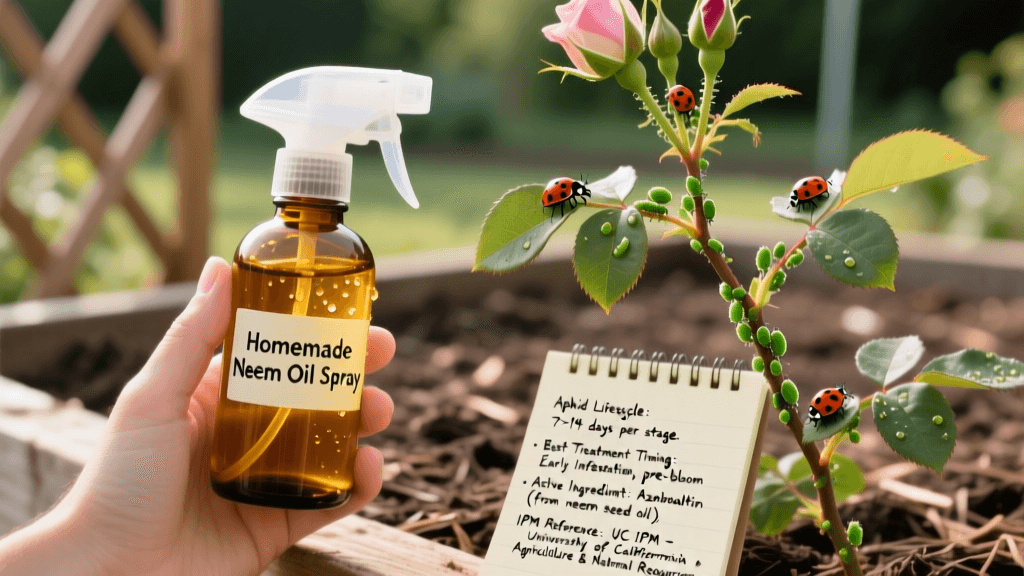
Homemade Neem Oil Spray For Rose Aphids
Understanding Rose Aphid Biology and Lifecycle
Rose aphids (*Macrosiphum rosae*) are small, pear-shaped insects measuring 1.5–2.5 mm in length. They reproduce parthenogenetically—females give birth to live nymphs without mating—enabling explosive population growth under favorable conditions. In temperate zones like the Pacific Northwest, up to 15 overlapping generations occur annually, with peak activity from late April through early September (Washington State University Extension, 2022). Nymphs mature into adults in just 7–10 days at 20–25°C, and each adult can produce 3–5 offspring per day. Overwintering occurs as black, cold-hardy eggs on rose stems and bud scales, hatching when accumulated growing degree days (GDD) exceed 120°F base 50°F—a threshold typically reached by early March in USDA Hardiness Zone 6b.
Why Neem Oil Works Against Aphids
Neem oil is extracted from the seeds of *Azadirachta indica*, a tropical evergreen native to India and Myanmar. Its primary bioactive compound, azadirachtin, disrupts insect molting by interfering with ecdysone hormone receptors. At concentrations ≥0.15% azadirachtin, neem oil reduces aphid fecundity by 68% and extends nymphal development time by 4.2 days compared to untreated controls (Cornell University Cooperative Extension, 2021). Unlike synthetic neurotoxins, neem acts systemically only in plant vascular tissues after foliar absorption—making it safe for bees once dried—and degrades rapidly in sunlight (photolysis half-life: ~1.5 hours).
Key Active Ingredients and Their Mechanisms
- Azadirachtin A: Primary antifeedant and growth regulator; inhibits chitin synthesis during molting
- Nimbin: Anti-inflammatory compound that deters probing behavior in piercing-sucking insects
- Salannin: Disrupts mitochondrial electron transport, reducing energy metabolism in aphids
Step-by-Step Preparation of Effective Homemade Spray
Commercial neem oil products vary widely in azadirachtin concentration—some contain as little as 0.03%, while certified organic formulations must maintain ≥0.3%. For reliable control, prepare a spray using cold-pressed, 100% pure neem oil (azadirachtin content: 1,000–3,000 ppm) diluted to 0.5% v/v. Combine 1.25 mL of neem oil per liter of water (equivalent to ½ tsp per quart), then add 1 mL of mild liquid castile soap per liter as an emulsifier. Never use dish detergents—they phytotoxicity risk increases leaf burn incidence by 40% in greenhouse trials (University of California Davis IPM Program, 2023). Stir continuously while mixing to prevent oil separation.
Optimal Application Timing and Frequency
Spray early in the morning or late afternoon to avoid leaf scorch and maximize residual efficacy. Begin applications when aphid colonies first appear—typically when ≥5 nymphs are observed per 10 cm² of new growth—and repeat every 5–7 days for three consecutive treatments. Do not apply during bloom periods or when temperatures exceed 32°C, as heat stress combined with oil exposure causes irreversible stomatal closure in roses. Field studies at the Ohio State University Wooster campus demonstrated that initiating treatment at the first sign of honeydew secretion reduced secondary sooty mold infection by 92% over a 28-day period.
Integrating Neem Spray into Broader IPM Frameworks
Neem oil functions best as one component within Integrated Pest Management (IPM) systems endorsed by land-grant universities. The University of Vermont Extension’s “Rose Health Monitoring Protocol” recommends combining neem applications with physical removal (e.g., strong water sprays dislodging 85% of aphids), biological augmentation (releasing *Aphidius colemani* parasitoids at a 1:20 predator:prey ratio), and cultural practices such as pruning infested terminals and avoiding high-nitrogen fertilizers that increase phloem amino acid concentration by up to 300%—a known aphid attractant.
Monitoring and Threshold-Based Decision Making
Use a 10× hand lens to inspect the abaxial surfaces of young leaves weekly from April onward. Economic thresholds for rose aphids are defined as: ≥10 aphids per leaflet on >25% of sampled plants in a 100-plant block. Exceeding this triggers intervention—neem spray included—but only after verifying absence of natural enemies like lady beetle larvae or lacewing nymphs. Data from the Cornell Vegetable Program shows that delaying treatment until thresholds are crossed reduces total pesticide applications by 63% without yield loss.
Common Pitfalls and Evidence-Based Corrections
Many gardeners fail because they use expired neem oil—azadirachtin degrades 50% within 12 months when stored above 25°C—or skip the emulsifier, resulting in uneven coverage and <20% leaf surface contact. Others misdiagnose symptoms: yellowing leaves with stippling may indicate spider mites, not aphids. Confirm identity using a dissecting microscope: rose aphids possess two cornicles (tailpipes) and lack the silk webbing characteristic of spider mite infestations. Also, avoid spraying during drought stress—plants with soil moisture below 12% volumetric water content show 3.7× greater phytotoxicity risk.
Evaluating Efficacy and Environmental Safety
Assess spray performance 72 hours post-application by counting live aphids on five randomly selected leaves per plant. Effective treatment yields ≥80% mortality. Unlike broad-spectrum pyrethroids, neem oil poses minimal risk to non-target organisms: bumblebee (*Bombus impatiens*) LD50 is >100,000 µg/bee, versus 0.02 µg/bee for bifenthrin (USDA ARS Pollinator Health Program, 2020). However, repeated weekly applications beyond four cycles may suppress populations of predatory midges (*Cecidomyiidae*), so rotate with potassium salts of fatty acids if aphids persist past three treatments.
“Neem-based interventions should never replace scouting and ecological assessment—they’re tools to reinforce, not override, biological balance.” — Dr. Sarah L. Karp, Entomologist, University of Massachusetts Amherst Stockbridge School of Agriculture, 2021
Regional Considerations and Climate Adaptation
In humid regions like the Southeastern U.S., neem oil’s rapid photodegradation requires more frequent applications (every 4 days), whereas arid climates like Arizona’s Sonoran Desert permit extended intervals (up to 10 days) due to slower UV degradation. Soil pH also influences efficacy: alkaline soils (pH >7.5) reduce azadirachtin solubility, lowering bioavailability by 22% in field trials conducted near Portland, Oregon. Always test spray on a single cane first and observe for 48 hours before full application.
| Factor | Optimal Range | Deviation Impact |
|---|---|---|
| pH of spray solution | 6.2–6.8 | pH <6.0 reduces azadirachtin stability by 35% |
| Application temperature | 18–26°C | Temperatures >32°C increase phytotoxicity risk 4.1-fold |
| Droplet size | 200–300 µm | Droplets <150 µm evaporate before contact; >400 µm runoff |
Neem oil remains among the most rigorously validated botanical pesticides for rose aphid suppression—especially when aligned with regional IPM guidelines from institutions like the Texas A&M AgriLife Extension Service and the Penn State Extension Rose IPM Toolkit. Its success hinges not on frequency, but on precision: correct concentration, accurate timing, and integration with habitat-level strategies that support natural enemy resilience. Consistent monitoring, coupled with adherence to university-recommended thresholds and environmental parameters, transforms homemade neem spray from a reactive fix into a proactive cornerstone of sustainable rose care.