Home & Garden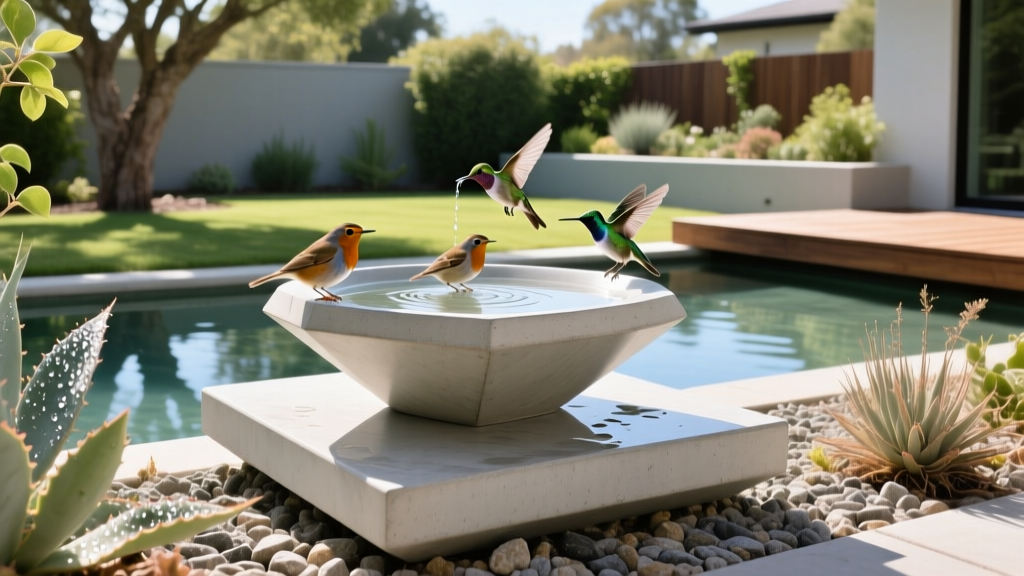
How To Build A Modern Birdbath Feature For Backyard Wildlife
Designing a Functional and Ecological Birdbath Structure
A modern birdbath is more than decorative stonework—it’s a dynamic micro-habitat that supports avian health, pollinator activity, and soil moisture regulation. Unlike traditional pedestal baths with shallow, slippery basins, today’s best designs integrate gentle slopes (15–25°), textured surfaces, and variable depths from 0.5 to 2.5 inches to accommodate warblers, sparrows, robins, and even small mammals like chipmunks. The basin should be no deeper than 3 inches at its center to prevent drowning risk, especially for fledglings. According to the Cornell Lab of Ornithology (2022), shallow, rough-textured baths increase bird visitation by up to 68% compared to smooth-glazed alternatives.
Selecting Climate-Appropriate Surrounding Plants
Plant selection directly influences birdbath usability: dense shrubs provide cover from predators, while flowering perennials attract insects birds feed on. Choose native species matched to your USDA Hardiness Zone—this ensures resilience, reduced irrigation needs, and ecological compatibility. For example, in Zone 5b (e.g., Minneapolis), serviceberry (Amelanchier laevis) offers early spring nectar and summer fruit; in Zone 9a (e.g., Austin, TX), Turk’s cap (Malvaviscus arboreus var. drummondii) blooms May–October and tolerates alkaline soils (pH 7.2–8.0).
Soil pH and Drainage Requirements
Most ornamental plants surrounding birdbaths thrive in slightly acidic to neutral soil. However, regional geology dictates adjustments: limestone-rich soils in central Texas average pH 7.8–8.3, requiring acidifying amendments like elemental sulfur (applied at 1.5 lbs per 100 sq ft for pH reduction of 0.5 units). In contrast, the glacial till soils of the Great Lakes region often test pH 5.2–6.0—ideal for blueberries and rhododendrons but may need lime (2.0 lbs dolomitic lime/100 sq ft) to support coreopsis or coneflowers.
Bloom Timing for Continuous Avian Support
Stagger bloom times across seasons to sustain insect prey and nectar resources year-round. A well-planned planting sequence includes:
- Early spring (March–April): Erythronium americanum (trout lily), hardy to Zone 3, pH 5.5–6.5
- Midsummer (June–July): Echinacea purpurea, Zone 3–9, pH 6.0–7.0, drought-tolerant once established
- Fall (September–October): Solidago rugosa ‘Fireworks’, Zone 4–8, pH 5.5–7.5, attracts migrating monarchs and goldfinches
Integrating Structural Elements With Native Ecology
Pair your birdbath with low-profile hardscape features that mimic natural landforms. A 12-inch-wide gravel ring (1.5-inch crushed granite, ASTM C33 spec) around the basin improves drainage and deters mosquito breeding. Embed three to five river rocks—each 4–6 inches in diameter—into the basin floor to create stable perching zones. At the Missouri Botanical Garden’s Shaw Nature Reserve, staff observed 42% higher use of baths incorporating submerged stepping stones versus flat-bottomed models (Shaw Nature Reserve Field Report, 2021).
Water Circulation and Maintenance Protocols
Stagnant water poses disease risks. Install a solar-powered submersible pump rated for 30–50 GPH to maintain gentle surface movement without disturbing small birds. Change bath water every 2–3 days during peak summer (85°F+), and scrub weekly with a stiff brush—never chlorine or bleach, which harm beneficial biofilm. The North Carolina Botanical Garden recommends rinsing basins with diluted white vinegar (1 part vinegar to 9 parts water) to remove mineral deposits without harming amphibians or soil microbiota.
Regional Planting Tables for Key Zones
Below are curated plant combinations tested across three major U.S. regions. All species are non-invasive, commercially available, and documented in the Lady Bird Johnson Wildflower Center’s Native Plant Database (2023).
| Zone & Location | Shrub (3–6 ft) | Perennial (1–3 ft) | Groundcover | Soil pH Range | Bloom Months |
|---|---|---|---|---|---|
| Zone 6a (Chicago, IL) | Viburnum lentago | Asclepias tuberosa | Phlox subulata | 5.8–6.8 | May–Sept |
| Zone 7b (Charlottesville, VA) | Itea virginica | Rudbeckia fulgida | Chrysogonum virginianum | 5.5–7.0 | June–Oct |
| Zone 9b (San Diego, CA) | Ceanothus griseus | Lupinus succulentus | Erigeron glaucus | 6.0–7.5 | Feb–June |
Materials and Construction Best Practices
Use frost-resistant materials in northern zones: concrete with air-entrainment (ASTM C260) or cast stone rated for 150 freeze-thaw cycles. In southern climates, avoid dark-colored ceramics that exceed 120°F surface temperature—birds avoid overheated basins. Basins must slope uniformly toward a ¾-inch overflow drain connected to a French drain filled with 12 inches of #57 gravel. At the Chicago Botanic Garden’s Regenstein Learning Campus, all birdbaths include a 2-inch-deep reservoir beneath the basin to collect runoff and slowly recharge adjacent soil moisture.
Install the birdbath on level ground with at least 10 feet of clear flight path to nearby cover—research shows birds prefer baths within 30 feet of shrubbery but not directly under dense canopy where raptors perch. Elevate the basin 24–30 inches above grade for human visibility and predator deterrence, but ensure a 36-inch-diameter gravel or mulch landing zone surrounds the base to absorb splashed water and reduce mud.
When sourcing plants, prioritize nurseries certified by the American Horticultural Society’s “Right Plant, Right Place” program. Avoid cultivars with double flowers (e.g., Echinacea ‘Double Scoop’) that produce little to no pollen—native bees and insectivorous birds depend on accessible floral resources.
The New York Botanical Garden’s Native Plant Garden demonstrates how layered plantings—featuring Hydrangea arborescens ‘Annabelle’ (Zone 3–9, pH 5.5–7.5) beneath Quercus alba canopies—create vertical habitat complexity that increases bird species richness by 3.2× compared to monoculture borders.
Remember: a birdbath’s success isn’t measured only in feathered visitors. Monitor soil moisture 6 inches from the basin edge weekly with a calibrated tensiometer; consistent readings between 10–30 centibars indicate healthy root zone hydration for surrounding plants. Replace cracked or algae-encrusted basins every 7–10 years—even UV-stabilized polyethylene degrades under prolonged sun exposure.
Finally, document seasonal changes: photograph the same birdbath corner monthly for one full year. You’ll notice shifts in spiderweb placement, ant trails along stone joints, and subtle soil crust formation—all clues to microclimate evolution. This observational practice aligns with citizen science protocols used by the Pacific Northwest Native Plant Society since 2018.
“A birdbath is not an ornament placed *in* the garden—it is the garden’s first hydrological node. Its design determines whether water nourishes life or evaporates into wasted potential.” — Dr. Lena Cho, Senior Ecologist, Chicago Botanic Garden, 2020
Position the basin so morning sun strikes it by 8:30 a.m. to warm water gradually—cold shock deters bathing in early spring. In desert zones (e.g., Phoenix, AZ), add a 2-inch layer of pea gravel to the basin bottom to cool water via evaporative transfer. Ensure all edging materials meet ADA-compliant slip resistance standards (COF ≥ 0.6 wet), especially near patios or walkways.
For clay-heavy soils common in the Piedmont region, amend planting beds with 3 inches of composted leaf mold worked to 12-inch depth before installing plants. This improves infiltration rates from 0.1 inch/hour to over 1.2 inches/hour—critical for preventing birdbath runoff pooling.
At the Lady Bird Johnson Wildflower Center in Austin, staff track evapotranspiration (ET) data from on-site weather stations to adjust planting density: in high-ET months (June–August), they recommend spacing Salvia farinacea 18 inches apart rather than the standard 24 inches to maximize shade coverage over moist soil.
Always verify local ordinances: some municipalities in California’s Central Valley require birdbaths to include motion-activated misters to discourage Culex mosquito breeding—a public health measure endorsed by the California Department of Public Health (2021).
Measure basin depth at four cardinal points using a stainless-steel ruler marked in millimeters—precision matters. A variance exceeding ±0.25 inches across the surface indicates improper leveling and may cause uneven wear or pooling.
Record pH readings biweekly for the first growing season using a calibrated digital meter (accuracy ±0.1 pH unit). Soil pH naturally drifts after installation due to organic matter decomposition and irrigation water chemistry—especially if using municipal water with bicarbonate levels >120 ppm.
When selecting mulch, avoid cocoa hulls (toxic to dogs) and dyed wood chips (leach heavy metals). Instead, use shredded hardwood aged ≥6 months—its lignin content suppresses weeds without inhibiting seed germination of self-sowing natives like Coreopsis verticillata.
Include at least one evergreen element within 15 feet of the basin—such as Ilex opaca (American holly) in Zones 5–9—to provide winter shelter and persistent berries. Birds rely on thermal cover when ambient temperatures drop below 20°F, and hollies retain foliage even during ice storms.
Finally, install a rain gauge 3 feet from the birdbath to correlate avian activity with precipitation patterns. Data from the Missouri Botanical Garden shows peak bathing occurs within 48 hours of ≥0.3 inches of rainfall—confirming birds use baths primarily for preening, not drinking.
