Gardening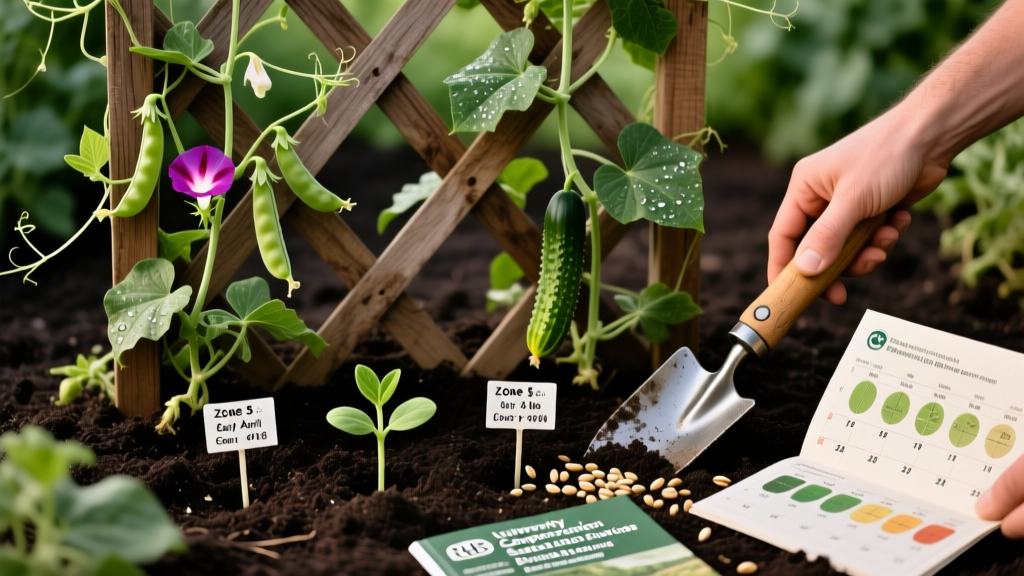
How To Build A Trellis For Climbing Plants
Getting Started with Trellis Building
A well-built trellis turns a flat garden bed into a vertical growing space. It helps plants grow upward instead of sprawling, which means more produce per square foot, better air movement, and easier picking. If you’re growing pole beans, cucumbers, indeterminate tomatoes, or climbing roses, a good support makes a real difference in how healthy the plants stay and how much they yield. The University of California Cooperative Extension found that cucumbers trained vertically can produce up to 20% more fruit per plant than those left on the ground—mostly because they get more light and airflow, which cuts down on fungal problems (UC Cooperative Extension, 2021).
Before cutting wood or setting posts, think about what you’ll be growing all season. A trellis that holds sweet peas fine might sag or collapse under a full-grown butternut squash vine. Picking the right structure for your crop is the first step—and it affects everything from material choice to how far apart you space the supports.
Choosing the Right Materials
Trellis materials generally fall into three groups: wood, metal, and synthetic. Each lasts a different amount of time, costs a different amount, and looks different in the garden. Cedar and redwood are common choices for wooden trellises because their natural oils help them resist rot; untreated pine usually lasts only two or three seasons when in direct contact with soil. Galvanized steel and aluminum can last decades with little upkeep, while PVC pipe is light and cheap but may get brittle after several years in the sun.
For most kitchen gardens, pressure-treated 4×4 posts set at least 24 inches deep, with galvanized wire or nylon mesh stretched between them, strikes a practical balance of strength and cost. The Royal Horticultural Society suggests using wire no thinner than 14 gauge for anything heavier than peas or beans—lighter wire tends to stretch and sag under cucumbers or squash (RHS, 2022).
Wood Selection and Treatment
If you want an all-wood trellis, use cedar, black locust, or redwood for any part that touches the soil. For framing above ground, Douglas fir or pine treated with a water-based preservative works fine. Skip creosote-treated lumber in vegetable gardens—the chemicals can leach into the soil and end up in edible crops.
Standard sizes for a freestanding garden trellis: 4×4 posts for uprights, 2×4 rails for top and bottom horizontals, and 1×2 or 1×3 slats for the lattice. An 8-foot-wide by 6-foot-tall trellis uses about 48 linear feet of 1×2 slat material if spaced 6 inches apart on center.
Wire and Mesh Options
Galvanized welded wire with 4-inch by 4-inch openings is a reliable pick for vegetable gardens. It’s strong enough for tomatoes and cucumbers, and the opening size lets you harvest without yanking fruit off the vine. For peas and beans, a 2-inch by 4-inch mesh—or just jute twine strung horizontally every 6 inches—gives solid support at lower cost.
Cattle panels—16-foot sections of heavy galvanized wire sold at farm supply stores—are popular for both high-tunnel and open-garden trellising. Bend one panel into an arch, and you get a tunnel trellis about 5 feet tall and 4 feet wide. It supports two rows of plants and leaves a shaded walkway underneath. Oregon State University Extension has published step-by-step plans for using cattle-panel arches as low-cost season-extension tools (OSU Extension, 2020).
Planning Placement and Orientation
Which way your trellis faces matters more than many gardeners realize. A north-south orientation lets morning sun hit both sides of the structure. An east-west setup casts shade on the north side—useful for heat-sensitive crops like lettuce in summer. Across most of the continental U.S., north-south works best for trellised vegetables since it catches more light overall.
Space trellis panels based on how wide your crop grows. Cucumbers trained upright need at least 18 inches between panels to keep air moving. Indeterminate tomatoes need 24 to 36 inches between plants along the trellis, and the trellis itself shouldn’t shade nearby low-growing crops for more than two or three hours each day.
"Vertical growing systems consistently outperform horizontal systems in terms of fruit quality and disease incidence for cucurbits and solanums in trials conducted at our research stations. The key variable is not the trellis material but the consistency of training — plants tied or clipped every 6 to 8 inches of new growth show significantly less stem damage and better fruit set." — University of California Cooperative Extension, Vegetable Research and Information Center, 2021
Step-by-Step Construction
This process covers a freestanding wooden trellis with wire infill. It fits a 4-foot by 8-foot raised bed or an in-ground row up to 8 feet long. Adjust post spacing and panel width to match your bed.
- Mark post locations. Drive stakes at each corner of the trellis footprint. For an 8-foot-wide trellis, place posts at 0 feet, 4 feet, and 8 feet to keep unsupported wire spans under 4 feet.
- Dig post holes. Use a post-hole digger or auger to create holes 10 to 12 inches in diameter and 24 to 30 inches deep. In USDA Hardiness Zones 3–5, go to 30 inches to get below the frost line and prevent heaving.
- Set posts in concrete or gravel. For a permanent structure, mix one 50-pound bag of fast-setting concrete per post. For a seasonal structure you want to remove, pack 6 inches of gravel at the base and tamp the surrounding soil firmly.
- Attach top and bottom rails. Use 3-inch exterior screws or galvanized carriage bolts to fasten 2×4 rails flush with the top of the posts and 6 inches above ground level at the bottom.
- Staple or clip wire mesh. Starting at one end post, unroll galvanized welded wire and attach it with fence staples every 6 inches along each post and rail. Keep the wire taut—a wire tensioner or come-along helps on spans over 6 feet.
- Add a top cap. A 1×4 or 2×4 cap rail across the top protects end grain from water infiltration and gives the structure a finished appearance.
Setting Posts Correctly
Post depth is where most homemade trellises fail. A 6-foot post needs at least 24 inches in the ground—one-third of its total length—to hold up against wind and the weight of a mature vine. In sandy or loose soil, go to 30 inches and consider adding a concrete collar. Make sure the post is plumb in both directions—check with a level before the concrete sets.
Let concrete cure for at least 24 hours before attaching rails or loading the structure. Fast-setting concrete firms up in 20 to 40 minutes but doesn’t reach full strength for 24 to 48 hours, depending on temperature and humidity.
Planting by USDA Zone and Crop
Time your planting so the trellis is ready before you put transplants in the ground. Trying to add support around established plants often damages roots and stems.
| Crop | USDA Zones 3–4 (Plant After) | USDA Zones 5–7 (Plant After) | USDA Zones 8–10 (Plant After) | Spacing on Trellis |
|---|---|---|---|---|
| Pole Beans | June 1 | May 15 | March 15 / Aug 15 | 4–6 inches |
| Cucumbers | June 10 | May 20 | March 20 / Aug 20 | 12–18 inches |
| Indeterminate Tomatoes | June 1 | May 10 | Feb 15 / Aug 1 | 24–36 inches |
| Sweet Peas | May 1 | March 15 | Oct 15 (fall/winter) | 6 inches |
| Climbing Roses | May 15 | April 1 | November (bare root) | 18–24 inches |
All dates assume planting after the last expected frost. In Zones 3 and 4, where the frost-free window is short, starting cucumbers and tomatoes indoors 4 to 6 weeks before transplanting is common. Oregon State University Extension recommends direct-seeding pole beans rather than transplanting—they don’t like having their roots disturbed. Sow seeds 1 inch deep and 4 inches apart, then thin to 6 inches once seedlings reach 3 inches tall (OSU Extension, 2020).
Training and Maintaining Climbing Plants
Building the trellis is just the start. Plants won’t climb on their own the way you want them to—especially early on. Guide new growth by tying it loosely to the trellis every 6 to 8 inches using soft plant ties, strips of old t-shirt fabric, or silicone clips. Avoid wire twist ties pressed directly against stems—they can cut into the plant as it thickens.
For indeterminate tomatoes, the single-stem or cordon method works well on a vertical trellis. Pinch off suckers—the shoots that pop up where a branch meets the main stem—to keep the plant to one or two leaders. Tie each leader straight up the wire, let it grow to the top, then cut it off. A single cordon-trained tomato on a 6-foot trellis can yield 15 to 20 pounds of fruit over the season in Zones 5 through 7.
- Check ties weekly and loosen any that start digging into stems.
- Remove dead or diseased leaves right away to stop problems from spreading—don’t compost diseased material.
- After harvest, cut vines at the base instead of pulling them—pulling can disturb roots of nearby plants.
- At season’s end, clean wire mesh with a dilute bleach solution (1 part bleach to 9 parts water) to cut down on overwintering disease spores.
- Look over wooden parts each year for signs of rot, especially where they touch the soil, and treat with a penetrating wood preservative if needed.
Cucumbers respond better to a different approach. Instead of pruning laterals, let them grow—but pinch the tip of each lateral after two leaves. That encourages bushy, even coverage of the trellis. The RHS calls this the “stop and train” method and says it works for greenhouse cucumbers and outdoor varieties alike (RHS, 2022).
Climbing roses need the most hands-on training. In the first year, the long, flexible canes should be spread out horizontally along the wires—not trained straight up. Horizontal canes produce more flowering side shoots than vertical ones—a fact backed by rose cultivation research and shown repeatedly in trials at the RHS Garden Wisley in Surrey, England. Tie canes using figure-eight loops of soft twine, leaving room for the cane to thicken as it grows.
By the second or third year, a well-trained climbing rose on a sturdy trellis will cover an 8-foot span and send up dozens of flowering shoots. At that point, prune once a year in late winter: remove one or two of the oldest canes entirely, and shorten flowering side shoots to two or three buds. This keeps the plant productive and stops the trellis from getting buried.
