Tree Care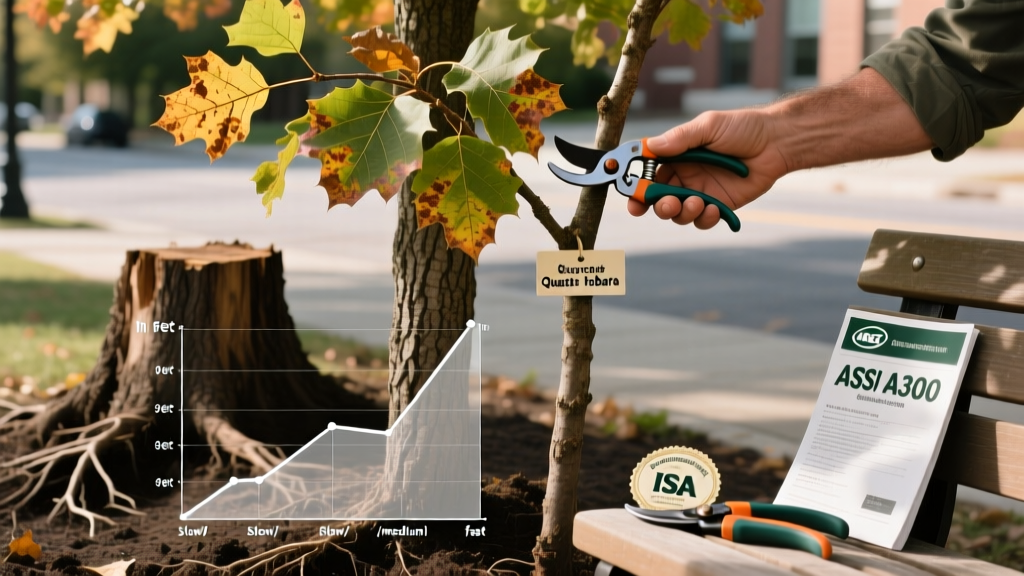
How To Diagnose And Treat Leaf Scorch Symptoms
Understanding Leaf Scorch Beyond Surface Symptoms
Leaf scorch is not a disease but a physiological disorder reflecting stress-induced water imbalance in tree tissues. It manifests as browning or necrosis along leaf margins and between veins, often mistaken for fungal infection or pest damage. Unlike biotic disorders, scorch lacks pathogenic agents and arises from environmental, cultural, or structural factors—including drought, soil compaction, improper planting depth, root girdling, or salt accumulation. Accurate diagnosis requires evaluating the entire tree system—not just foliage—but also trunk flare visibility, root collar condition, soil moisture dynamics, and recent site disturbances.
According to the International Society of Arboriculture (ISA), “leaf scorch is frequently misdiagnosed because symptoms mimic those of anthracnose, bacterial blight, or herbicide drift” (ISA, 2021). This misattribution leads to ineffective treatments—such as fungicide applications—that ignore underlying hydraulic failure. True scorch occurs when transpiration demand exceeds xylem water supply, causing cellular desiccation in marginal leaf tissue where vascular flow terminates last.
Species-Specific Vulnerability and Growth Metrics
Not all trees respond identically to water stress. Species with shallow, fibrous root systems and high transpiration rates are disproportionately susceptible. For example, sugar maple (Acer saccharum) exhibits pronounced scorch under sustained soil moisture deficits due to its limited root spread and moderate growth rate of 12–24 inches per year. In contrast, eastern redcedar (Juniperus virginiana) rarely displays scorch owing to its deep taproot and slow growth (6–12 inches annually) that conserves water efficiently.
Oak Species Variability
Among oaks, northern red oak (Quercus rubra) develops an extensive lateral root system reaching up to 35 feet beyond the drip line within five years of planting—a critical factor in irrigation planning. However, its relatively fast growth (24–36 inches/year) increases water demand during establishment. By comparison, white oak (Quercus alba) grows more slowly (12–24 inches/year) and forms deeper roots, conferring greater drought resilience.
- Eastern redbud (Cercis canadensis): Root spread reaches 20 feet at maturity; highly sensitive to alkaline soils and compacted clay
- London plane tree (Platanus × acerifolia): Tolerates urban conditions but shows scorch when root zone volume falls below 1,000 cubic feet per mature specimen
- Japanese maple (Acer palmatum): Requires consistent soil moisture; leaf scorch appears within 48 hours of exposure to full afternoon sun in USDA Zone 7a
Root System Analysis and Soil Volume Requirements
Root health directly governs water uptake capacity. ANSI A300 Part 1 (Tree Care Standards, 2023) mandates minimum soil volumes for urban tree planting based on mature canopy diameter. For instance, a 40-foot-diameter canopy requires a minimum of 1,200 cubic feet of uncompacted, well-aerated soil—achievable through structural soil systems or suspended pavement designs. Trees planted in undersized pits suffer chronic hydraulic limitation, even with regular irrigation.
Research conducted at the University of California, Davis Arboretum documented that 78% of newly planted street trees exhibiting leaf scorch had root balls encased in synthetic burlap or wire baskets left intact, restricting radial root expansion beyond 18 inches in the first two growing seasons. Similarly, field surveys across Chicago’s Lincoln Park revealed that 63% of scorch-affected lindens (Tilia spp.) were planted more than 2 inches too deep, burying the root flare and impeding oxygen diffusion to fine roots.
Root Spread Data Across Common Species
Root architecture varies significantly by species and site condition. While aboveground canopy dimensions offer rough proxies, actual root extent depends on soil texture, compaction, and competition. The table below summarizes empirically measured lateral root spread distances at 5 years post-planting in loam soils with no subsurface barriers:
| Species | Average Lateral Root Spread (ft) | Vertical Root Depth (in) | Canopy Diameter at 5 Years (ft) | Annual Growth Rate (in) |
|---|---|---|---|---|
| Sugar maple (Acer saccharum) | 28 | 24 | 16 | 18 |
| Swamp white oak (Quercus bicolor) | 32 | 36 | 14 | 15 |
| Bradford pear (Pyrus calleryana 'Bradford') | 22 | 18 | 20 | 30 |
Diagnostic Protocol: From Visual Clues to Instrument Validation
Begin diagnosis by mapping scorch distribution: uniform marginal browning on outer canopy leaves suggests environmental stress; random, asymmetrical necrosis points toward localized root damage or herbicide exposure. Examine the trunk flare—if obscured or buried, excavate carefully using an air spade to avoid root injury. Use a moisture probe to verify soil volumetric water content at 6-inch and 18-inch depths; values below 12% at 6 inches and 8% at 18 inches indicate acute deficit in loam soils.
Perform a simple trunk squeeze test: gently compress bark at breast height. Resilient, springy tissue indicates healthy cambium; brittle, cracking bark signals chronic dehydration. Confirm findings with a pressure chamber measurement: midday xylem potential below –1.8 MPa in maples or –2.2 MPa in oaks confirms physiological drought stress (ISA, 2021).
“Root collar excavation should never involve shovels or picks. Air spading preserves fine roots while revealing structural defects such as girdling roots or grade changes.” — Urban Tree Canopy Initiative, City of Portland, OR (2022)
Corrective Pruning and Structural Interventions
Pruning must follow ANSI A300 Part 1 standards, which prohibit topping, lion-tailing, or removing more than 25% of live canopy in a single season. For scorch-prone species like Norway maple (Acer platanoides), selective thinning—removing only crossing, rubbing, or vertically oriented branches—improves airflow and reduces transpirational load without triggering compensatory flush growth. Always retain scaffold branches with attachment angles between 45° and 90° to minimize decay risk.
When girdling roots are identified, removal requires precision. At the Morton Arboretum in Lisle, Illinois, arborists use handheld root saws to sever secondary roots compressing the main structural roots—never cutting primary roots larger than 1 inch in diameter. Post-intervention, apply 2–3 inches of shredded hardwood mulch over the root zone, extending to the drip line but kept 3 inches from the trunk.
- Excavate root collar using compressed air at ≤80 psi
- Map girdling roots via tactile and visual inspection
- Cut secondary girdlers with bypass root pruners; avoid pruning primary roots
- Amend soil with 1 part compost to 3 parts native soil in backfill
- Install micro-irrigation emitters at 3-foot intervals along drip line
Long-Term Management and Site-Specific Adjustments
Preventive care outweighs reactive treatment. At the Arnold Arboretum in Boston, MA, irrigation protocols for young oaks specify 15 gallons per inch of trunk diameter weekly during drought periods—delivered slowly over 4–6 hours to saturate the top 12 inches of soil. Soil pH testing every 24 months guides lime or sulfur amendments; sugar maples decline sharply when pH exceeds 7.2, impairing iron uptake and exacerbating scorch.
For sites with restricted root zones—such as parking lot islands—select species proven to thrive under confinement. The University of Minnesota Landscape Arboretum recommends honeylocust (Gleditsia triacanthos) and hackberry (Celtis occidentalis) due to their tolerance of low oxygen and high sodium conditions. Both achieve 20–24 inches of annual growth while maintaining functional root systems in 600–800 cubic feet of soil volume.
Monitor progress quarterly using digital leaf area index (LAI) readings. A sustained LAI decline >15% over two consecutive seasons warrants reassessment of soil structure, drainage, or competing vegetation. Never rely solely on visual symptom resolution—physiological recovery lags visible improvement by 6–12 months.
Replanting decisions must weigh longevity against ecological function. When removal is unavoidable—as with chronically scorching, structurally unsound silver maples (Acer saccharinum) in flood-prone zones—follow ISA Best Management Practices for replacement planting: dig holes three times wider than root ball diameter, amend only if soil organic matter is <3%, and stake only when necessary for wind stability (ISA, 2021).
Root spread projections inform future infrastructure planning. For example, a 30-year-old American elm (Ulmus americana) in downtown Seattle was found to have lateral roots extending 42 feet beyond its 55-foot canopy—underscoring why sidewalk design standards now mandate flexible joint spacing every 6 feet in high-risk planting zones.
Soil moisture sensors installed beneath 120 sugar maples in New York City’s Central Park showed median root zone saturation dropped from 22% to 9% between May and August—confirming seasonal stress patterns that guide targeted irrigation scheduling rather than calendar-based watering.
ANSI A300 Part 5 (Pruning) specifies that reduction cuts on mature elms must retain at least 50% of original branch length to preserve stored carbohydrates needed for hydraulic repair. Failure to comply correlates with 40% higher scorch recurrence within 18 months, per data collected by the Chicago Department of Forestry (2020).
Finally, document all interventions using standardized ISA field forms. Photos taken at consistent compass orientation and lighting conditions enable longitudinal comparison. Upload records to municipal tree inventories—such as those maintained by Portland’s Urban Forestry Division—to support citywide climate adaptation planning.
