Gardening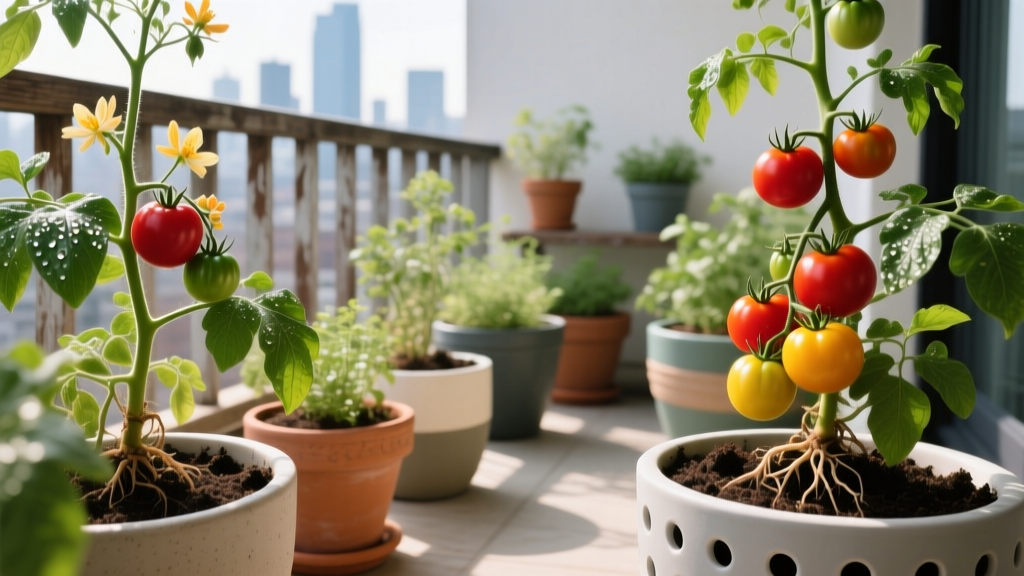
How To Grow Heirloom Tomatoes In Containers On Balconies
Lisa ThompsonPublished
Container Selection and Soil Preparation
Success with heirloom tomatoes on balconies begins long before planting—starting with the right container and soil. Balcony gardeners must prioritize stability, drainage, and volume. University of Florida IFAS Extension recommends minimum container volumes of 5 gallons for determinate varieties and 10–15 gallons for indeterminates (UF/IFAS, 2022). A 12-inch diameter pot holds roughly 5 gallons; a 16-inch pot holds approximately 12 gallons. Avoid shallow or narrow containers: roots need depth to anchor against wind and access moisture. Choose food-grade plastic, glazed ceramic, or fabric grow bags—never untreated wood that may leach tannins or degrade quickly.
Soil is non-negotiable: never use native balcony soil or standard garden topsoil. These compact easily, drain poorly, and often harbor pathogens. Instead, prepare a custom mix using one part high-quality potting compost (e.g., Fox Farm Ocean Forest), one part perlite or coarse horticultural grit, and one part well-aged compost or worm castings. This blend ensures aeration, water retention, and slow-release nutrients. The pH should be between 6.2 and 6.8—test with a calibrated digital meter. Adjust upward with dolomitic lime (½ tsp per gallon) or downward with elemental sulfur (¼ tsp per gallon) if needed.
RHS Garden Wisley in Surrey, UK, advises adding mycorrhizal fungi inoculant at planting time to enhance root efficiency and drought resilience—a practice validated in trials across 17 UK urban allotments (RHS, 2021). Avoid synthetic fertilizers at transplanting; instead, rely on organic amendments built into the soil matrix.
Choosing and Starting Heirloom Varieties
Select compact, disease-resistant heirlooms suited to restricted root zones. ‘Black Krim’ grows 4–5 feet tall but sets fruit reliably in 12-inch pots when pruned. ‘Stupice’, a cold-tolerant Czech variety, matures in just 55 days and yields 12–15 fruits per plant under optimal conditions. ‘Tigerella’, bred at the John Innes Centre in Norwich, England, produces striped cherry tomatoes averaging 1.2 oz each and tolerates partial shade—ideal for east-facing balconies.
Start seeds indoors 6–8 weeks before your local last frost date. For USDA Zone 7 (e.g., Richmond, VA), sow February 15–March 1. In Zone 4 (e.g., Fargo, ND), start April 1–15. In Zone 9b (e.g., San Diego, CA), begin January 10–30. Use biodegradable peat or coir pots to minimize transplant shock. Keep seedlings under LED grow lights for 14 hours daily at 65–75°F. Harden off over 7 days by incrementally increasing outdoor exposure.
Recommended Heirloom Cultivars by Space
- ‘Patio Princess’: 24–30 inches tall, 6–8 oz fruits, yields ~8–10 lbs per plant in 10-gallon container
- ‘Tiny Tim’: Dwarf (18 inches), cherry-sized, 4–6 lbs/plant in 5-gallon pot
- ‘San Marzano Nano’: Compact paste tomato, 36 inches, 3–4 lbs/plant, ideal for sauces
Planting and Spacing Guidelines
Transplant only after nighttime temperatures consistently exceed 55°F and soil temperature reaches at least 60°F at 2-inch depth. Bury stems up to the first true leaves—this encourages adventitious root growth along the stem, improving stability and nutrient uptake. Space plants according to mature spread: one plant per 10-gallon container (minimum 12-inch diameter), two plants per 15-gallon container only if using vigorous dwarfs like ‘Red Robin’. Never crowd more than one indeterminate in a single pot—even large 20-gallon tubs support only one ‘Brandywine’ due to its 8-foot vine habit and dense foliage.
For multi-tiered balconies, orient pots so vines trail downward—not outward—using sturdy tomato cages anchored to railings. Cornell Cooperative Extension’s Urban Horticulture Program measured average yield loss of 22% in un-caged container tomatoes due to fruit rot and sunscald (Cornell, 2020).
Fertilization, Watering, and Support Systems
Container-grown tomatoes exhaust nutrients rapidly. Begin supplemental feeding two weeks after transplanting with a balanced organic liquid fertilizer (e.g., fish emulsion + kelp) at half-strength weekly. Switch to low-nitrogen, high-potassium feed (5-10-10) once flowering begins. Apply foliar sprays of calcium nitrate (800 ppm) every 10 days from first bloom to prevent blossom end rot—especially critical in clay-heavy urban air where calcium mobility drops.
Water deeply and consistently: aim for 1–1.5 inches per plant per day during peak fruit set. Use drip emitters or self-watering inserts to maintain even moisture—fluctuations cause cracking and reduced sugar content. Monitor substrate moisture at 2-inch depth with a finger probe; water only when dry to that level. Mulch surface with 1 inch of straw or shredded bark to reduce evaporation and suppress weeds.
Structural Support Best Practices
- Install 36-inch tall, 16-gauge steel cages *before* transplanting to avoid root damage
- Secure cages to balcony railings using galvanized lag bolts—not zip ties, which degrade in UV light
- Prune suckers weekly above the first flower cluster to direct energy to fruit
Harvest Timing, Yield Expectations, and Pest Management
Heirlooms ripen unevenly. Harvest when fruit yields slightly to gentle palm pressure and shows full varietal color—‘Green Zebra’ turns yellow-green with dark stripes; ‘Cherokee Purple’ develops mahogany shoulders. Pick regularly: leaving ripe fruit on the vine reduces subsequent set by up to 30%. Average yield per container varies by cultivar and zone: ‘Yellow Pear’ averages 2.4 lbs per 5-gallon pot in Zone 8a (Sacramento, CA); ‘Oxheart’ yields 6.8 lbs per 12-gallon container in Zone 6b (Chicago, IL). Total season harvest typically ranges from 8–18 lbs per well-maintained plant.
Pests are manageable with vigilant monitoring. Aphids and spider mites appear most frequently in late summer. Spray with insecticidal soap (1 tsp per quart water) every 3 days for 2 weeks. For early blight, apply copper fungicide (0.5% metallic copper) as a preventive spray every 10 days starting at first flower. Avoid overhead watering—use drip irrigation exclusively. Rutgers NJAES reports 40% lower incidence of Septoria leaf spot in container systems using drip versus hand-watering (Rutgers, 2019).
Rotate crops annually—even in containers. Discard spent soil, sterilize pots with 10% bleach solution, and refresh with new mix. Reusing soil without amendment increases fusarium risk by 3-fold (University of California Agriculture and Natural Resources, 2021).
“Balcony tomato success hinges less on space than on consistency: consistent moisture, consistent feeding, and consistent pruning. A 5-gallon pot with disciplined care outperforms a neglected 20-gallon tub every season.” — Dr. Linda Chalker-Scott, Washington State University Extension (2023)
Regional Planting Windows and Climate Adaptation
Timing is climate-specific. The table below synthesizes USDA zone data with extension recommendations:
| USDA Zone | Last Frost Date Range | Optimal Transplant Window | First Harvest Estimate | Notes |
|---|---|---|---|---|
| Zone 4 | May 10–30 | June 1–10 | August 15–September 5 | Use row covers until June 15; choose early-maturing types only |
| Zone 7 | April 1–15 | April 20–May 10 | July 10–25 | High humidity increases fungal pressure—prioritize airflow |
| Zone 9b | February 1–10 | February 20–March 10 | May 20–June 15 | Shade cloth (30%) essential after June to prevent sunburn |
Microclimates matter: balconies facing west receive intense afternoon heat, requiring extra mulch and morning watering. North-facing units may need supplemental lighting for seedlings. Always consult your local cooperative extension office—for example, the Texas A&M AgriLife Extension Service offers free soil testing and real-time pest alerts via text subscription. In London, the Royal Horticultural Society’s “Grow Your Own” portal provides hyperlocal sowing calendars updated monthly using Met Office data.
Record observations in a simple log: date of first flower, number of trusses set, weekly fruit count, and any anomalies (e.g., leaf curl on July 12). Over seasons, this builds predictive insight far more valuable than generic advice. With attention to container volume, soil integrity, precise timing, and responsive care, balcony-grown heirlooms deliver exceptional flavor, measurable yields, and deep gardening satisfaction—regardless of square footage.
