Pest Control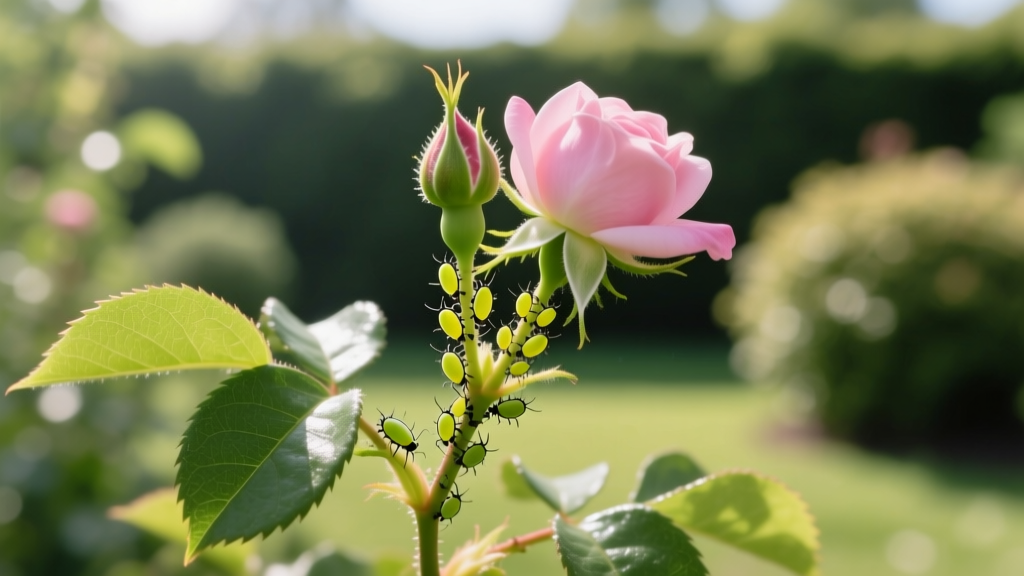
How To Identify And Remove Aphids From Rose Bushes
Rose aphids can destroy a season's blooms in weeks, but you can eliminate them using a simple escalation approach. To get rid of aphids on roses, start by spraying colonies off with a strong stream of water (40–60 PSI), then apply insecticidal soap at 2–5 tablespoons per gallon every 5–7 days. For persistent infestations, use neem oil at 1–2% concentration or introduce predatory insects like ladybugs. This guide is written for home gardeners and rose growers who want safe, effective methods to protect their plants without relying on harsh chemicals.
Below, you will learn how to identify rose aphids early, choose the right treatment based on infestation severity, and implement a prevention plan that reduces reinfestation rates by up to 80%.
Key Takeaways
- Rose aphids (Macrosiphum rosae) cluster on new growth, buds, and tender stems in colonies of 50–500+ individuals.
- The fastest removal method: blast with water, then apply insecticidal soap every 5–7 days until colonies disappear.
- Neem oil at 1–2% concentration kills on contact and deters re-colonization for 7–14 days.
- Beneficial predators (ladybugs, lacewings) consume 50–70 aphids per day per adult insect.
- Early detection in spring when temperatures reach 10°C (50°F) prevents exponential population growth.
How to Identify Rose Aphids
Rose aphid (Macrosiphum rosae): A sap-sucking insect measuring 1.5–3.5 millimeters that specifically targets Rosa species. These pear-shaped pests appear in green, pink, or red colonies on new growth, flower buds, and stems, weakening plants through feeding damage and potentially transmitting viral diseases between rose bushes.
Physical Characteristics of Rose Aphids
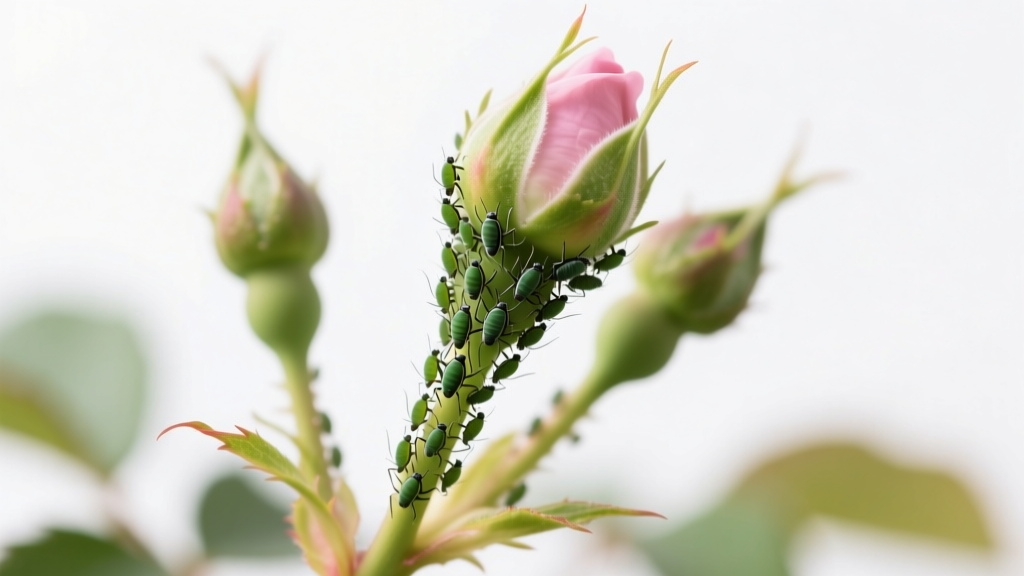
Adult rose aphids measure between 1.5 and 3.5 millimeters in length with soft, pear-shaped bodies. They appear in shades of light green, pinkish-red, or dark brown depending on their life stage and the season. Winged forms develop when colonies become overcrowded, typically when populations exceed 200 individuals per stem cluster.
Look for two distinct tailpipes (cornicles) on the rear abdomen—these are unique to aphids and differentiate them from similar-looking insects such as spider mites or scale insects.
Where to Find Aphids on Rose Bushes
Aphids concentrate on the most tender plant tissue. Check these high-priority zones first:
- Undersides of new leaves emerging in spring
- Flower buds before they open
- Soft green stems within 15 centimeters of growing tips
- Leaf axils where stems meet the main cane
Pro Tip: Inspect your roses weekly from early spring through late autumn. Aphid populations can double every 7–10 days under optimal conditions (18–25°C), making early detection critical for preventing colony explosions.
Signs of Aphid Damage on Rose Bushes
Even small colonies cause measurable harm. A single female aphid produces 50–100 offspring during her 20–30 day lifespan, and feeding damage accumulates rapidly across the colony.
Direct Feeding Damage
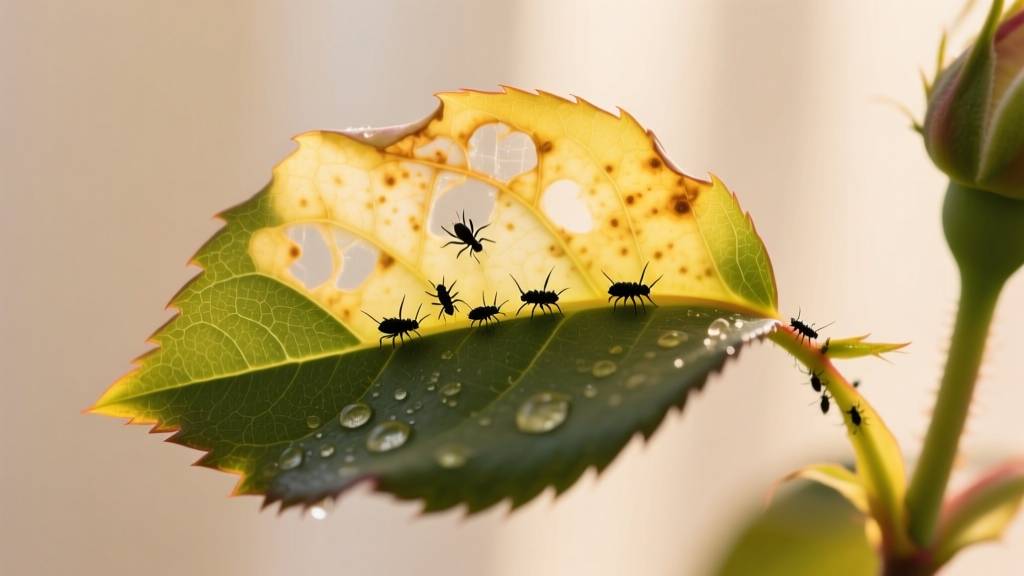
Aphids pierce plant phloem tissue and extract sap, causing leaves to curl, distort, and yellow. Heavy infestations—defined as more than 50 aphids per leaf—stunt new growth and cause flower buds to deform before opening. Research from the Royal Horticultural Society confirms that aphid feeding reduces rose bloom quality and quantity by up to 40% in untreated plants.
Honeydew and Sooty Mold
Aphids excrete a sugary substance called honeydew that coats leaves and stems below the colony. This honeydew attracts ants and promotes the growth of sooty mold (Capnodium species), a black fungal coating that blocks photosynthesis. If you notice a sticky residue on rose leaves or black powdery deposits, aphids are almost certainly present on growth above.
Virus Transmission Risk
Rose aphids can transmit plant viruses between bushes during feeding. While less common than direct feeding damage, viral infections cause mosaic patterns on leaves and permanent plant decline. Removing aphid colonies within 48 hours of detection significantly reduces transmission probability.
How to Get Rid of Aphids on Roses: 5 Proven Methods
Choose your treatment based on infestation severity. Start with the least invasive method and escalate only if colonies persist after two treatment cycles (10–14 days).
Method 1: Water Blast Removal
A strong stream of water physically dislodges aphids from rose stems and leaves. Set your hose nozzle to produce 40–60 PSI of pressure and spray infested areas thoroughly, targeting the undersides of leaves. Most dislodged aphids cannot climb back to the plant before they die of dehydration within 24–48 hours.
This method works best for light infestations (fewer than 30 aphids per stem) and costs nothing beyond your water bill. Repeat every 2–3 days for two weeks to catch newly hatched nymphs.
Method 2: Insecticidal Soap Spray
Insecticidal soap is a potassium-based fatty acid salt solution that kills soft-bodied insects by disrupting cell membranes on contact. Unlike synthetic pesticides, insecticidal soap leaves no toxic residue, making it safe for beneficial insects once dry. Effective concentrations range from 1–3% for rose aphid control.
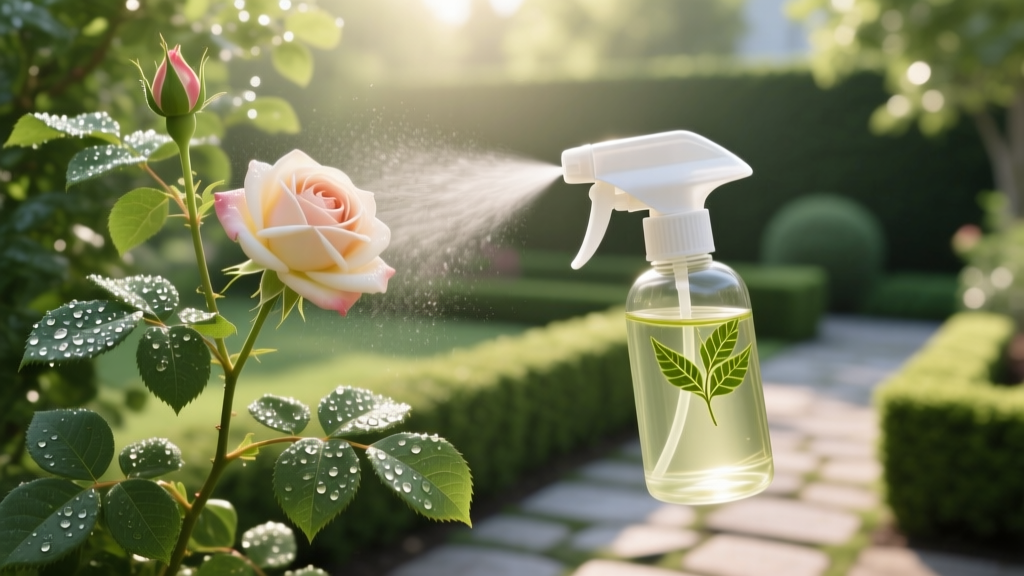
Mix 2–5 tablespoons of pure liquid castile soap (not detergent) per gallon of water. Spray directly on aphid colonies, ensuring thorough coverage. Apply in early morning or late evening when temperatures are below 30°C (86°F) to prevent leaf burn. Reapply every 5–7 days for 2–3 cycles. According to University of Minnesota Extension, insecticidal soap achieves 85–95% kill rates on direct contact with soft-bodied pests.
Method 3: Neem Oil Treatment
Cold-pressed neem oil contains azadirachtin, a compound that disrupts aphid feeding, growth, and reproduction. Mix a 1–2% solution (approximately 2–4 teaspoons per liter of water) with a few drops of liquid soap as an emulsifier. Spray all plant surfaces until dripping.
Neem oil provides 7–14 days of residual protection and costs approximately $12–$18 per 473-milliliter bottle, enough to treat 20–30 rose bushes per application. Avoid applying neem oil when temperatures exceed 32°C (90°F) or when plants are drought-stressed.
Warning: Never mix neem oil with sulfur-based fungicides. The combination can cause severe phytotoxicity (leaf burn) on roses. Wait at least 14 days between applications of these two product types.
Method 4: Beneficial Insect Release
Biological control using predatory insects offers sustainable, long-term aphid management. The most effective predators for rose aphids include:
- Convergent Ladybugs (Hippodamia convergens): Each adult consumes 50–70 aphids daily. Release 1,500–2,000 ladybugs per 100 square meters of garden area in the evening after lightly misting plants.
- Green Lacewings (Chrysoperla carnea): Lacewing larvae (called "aphid lions") eat 200–400 aphids during their 2–3 week larval stage. Purchase eggs or larvae from biological supply companies.
- Parasitic Wasps (Aphidius colemani): These tiny, non-stinging wasps lay eggs inside aphids, killing them within 7–10 days. Most effective in greenhouse or enclosed garden settings.
According to the Old Farmer's Almanac, maintaining diverse flowering companion plants near roses helps sustain beneficial predator populations throughout the growing season, reducing the need for repeated interventions.
Method 5: Systemic Chemical Insecticides (Last Resort)
When organic methods fail after 3–4 treatment cycles, targeted systemic insecticides containing imidacloprid or acetamiprid can eliminate severe infestations. Apply as a soil drench at the base of the rose bush following manufacturer dosage instructions—typically 3–5 milliliters per liter of water for established bushes.
Environmental Warning: Neonicotinoid insecticides harm pollinators including bees and butterflies. Never apply systemic treatments to roses during active blooming. Reserve chemical control for non-flowering periods or severe infestations threatening plant survival.
Treatment Method Comparison Matrix
| Method | Effectiveness | Time to Results | Cost per Application | Pollinator Safe | Best For |
|---|---|---|---|---|---|
| Water Blast | 60–75% | Immediate (temporary) | $0 | Yes | Light infestations, early detection |
| Insecticidal Soap | 85–95% | 1–2 applications (7–14 days) | $2–$5 | Yes (once dry) | Moderate infestations |
| Neem Oil | 80–90% | 2–3 applications (10–21 days) | $3–$6 | Yes (avoid blooms) | Persistent colonies, prevention |
| Beneficial Insects | 70–90% (long-term) | 2–4 weeks to establish | $15–$35 | Yes | Organic gardens, long-term control |
| Systemic Insecticide | 95–99% | 7–14 days after soil drench | $8–$15 | No | Severe infestations, last resort |
Aphid Prevention Checklist for Rose Bushes
Prevention reduces the likelihood of aphid reinfestation by up to 80%. Follow this checklist each growing season to keep your roses protected:
- ☐ Space rose bushes at least 60–90 centimeters apart to ensure airflow that discourages aphid settlement
- ☐ Avoid high-nitrogen fertilizers that promote excessive soft growth attractive to aphids; use balanced 10-10-10 NPK formulations instead
- ☐ Plant companion species such as garlic, chives, or nasturtiums within 30 centimeters of roses to repel aphids naturally
- ☐ Inspect new rose purchases for aphids before introducing them to your garden—quarantine for 14 days minimum
- ☐ Prune and dispose of heavily infested stems immediately; do not compost aphid-infested plant material
- ☐ Encourage natural predators by installing insect hotels and avoiding broad-spectrum pesticide use in your garden
- ☐ Monitor weekly from March through October, checking undersides of leaves and new growth tips systematically
- ☐ Apply dormant horticultural oil in late winter (January–February) to smother overwintering aphid eggs on rose canes
Frequently Asked Questions About Rose Aphids
What kills aphids on roses naturally?
Insecticidal soap, neem oil, and strong water sprays kill aphids on roses without synthetic chemicals. Additionally, natural predators like ladybugs, lacewings, and parasitic wasps consume large numbers of aphids daily. A combination of water blasting followed by soap or neem applications provides the most reliable natural control strategy.
Will soapy water kill aphids on roses?
Yes, soapy water kills aphids on contact by breaking down their protective outer waxy coating. Use 2–5 tablespoons of pure liquid castile soap per gallon of water and spray directly on colonies. Avoid dish detergents or degreasing soaps, which can damage rose foliage. Rinse plants with clean water 2–3 hours after application to prevent soap residue buildup.
What causes aphids on rose bushes?
Aphids are attracted to the tender new growth that roses produce throughout the growing season. Factors that increase aphid vulnerability include excessive nitrogen fertilization, overcrowded planting, poor air circulation, and mild spring temperatures between 18–25°C. Winged aphids also migrate from nearby host plants such as fruit trees and ornamental shrubs.
How do I get rid of aphids on roses without killing ladybugs?
Use water blasting or targeted insecticidal soap sprays applied in the evening when ladybugs are less active. Spot-treat only infested areas rather than spraying entire bushes. Neem oil is relatively safe for ladybugs once dry (after 2–4 hours). Avoid broad-spectrum chemical insecticides, which kill beneficial insects alongside pest species indiscriminately.
How long does it take to get rid of aphids on roses?
Light infestations clear within 7–14 days using water and soap methods applied consistently. Moderate to heavy infestations typically require 3–4 weeks of treatment applied every 5–7 days. Biological control with beneficial insects takes 2–4 weeks to establish populations but provides ongoing protection throughout the remaining growing season.
Conclusion: Your Next Step for Aphid-Free Roses
Rose aphids are manageable when you act quickly and choose the right method for your infestation level. Start today by inspecting your rose bushes—focus on new growth tips, flower buds, and leaf undersides where colonies first establish. If you find aphids, begin with a water blast followed by insecticidal soap applications every 5–7 days until the colonies are gone. For ongoing protection, introduce beneficial insects and follow the prevention checklist above to keep your roses aphid-free throughout the entire growing season.