Lawn Care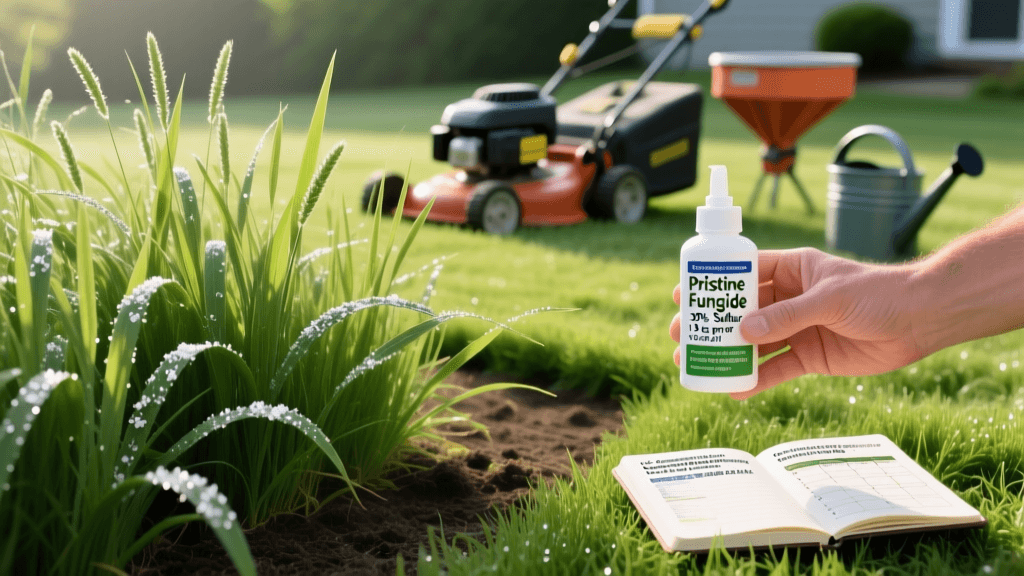
How To Identify And Treat Powdery Mildew On Tall Fescue
Recognizing Powdery Mildew on Tall Fescue
Powdery mildew (caused by the fungus Erysiphe typhula, formerly Blumeria graminis f. sp. poae) is a recurring challenge for tall fescue (Festuca arundinacea) lawns across humid, temperate regions of the U.S., especially in shaded, poorly ventilated areas. Unlike many turf diseases that thrive in warm, wet conditions, powdery mildew prefers cool (60–75°F), humid nights with daytime temperatures below 80°F and high relative humidity (>90%). It first appears as faint, white to grayish talcum-like patches on leaf blades—often starting on lower, older leaves—and spreads rapidly under prolonged leaf wetness from dew or fog. The fungus does not penetrate deeply into plant tissue but forms superficial mycelium and conidia, reducing photosynthetic capacity and weakening the stand over time.
Diagnostic Clues That Distinguish It From Other Issues
Accurate identification prevents misapplication of fungicides or cultural adjustments. Powdery mildew is frequently mistaken for dust, pollen, or even fertilizer residue—but unlike those, it rubs off easily with a finger and reappears within 24–48 hours if conditions persist. It differs from dollar spot (which causes straw-colored, cobwebby lesions) and rust (which produces orange pustules that stain clothing). Crucially, powdery mildew rarely causes significant thinning in healthy, well-managed tall fescue unless stressors compound—such as drought, compaction, or low mowing.
Key Visual Indicators
- White, powdery fungal growth concentrated on upper leaf surfaces—not undersides
- No water-soaked margins or necrotic rings (unlike gray leaf spot)
- Progression from isolated patches to coalescing colonies under >12 hours of leaf wetness
- Most severe in shaded zones receiving <4 hours of direct sunlight daily
- Often absent or minimal in full-sun, well-ventilated sections—even within the same lawn
Cultural Management: Mowing, Watering, and Light
Mowing height directly influences disease pressure. Research at Rutgers University found that tall fescue maintained at 3.5 inches reduced powdery mildew severity by 62% compared to lawns mowed at 2 inches (Rutgers Turfgrass Program, 2021). This is because taller canopies improve air circulation and reduce humidity at the leaf surface. Always mow with sharp blades—dull edges create micro-tears that serve as entry points for spores. Remove clippings during active outbreaks to limit inoculum buildup, though routine mulching is acceptable when disease pressure is low.
Watering strategy matters more than frequency. Irrigate early in the morning (between 5:00–9:00 a.m.) to allow leaf drying before evening. Avoid late-afternoon or nighttime irrigation, which extends leaf wetness duration beyond the critical 10-hour threshold shown to trigger conidial germination (University of Kentucky Cooperative Extension, 2019). In shaded areas, consider installing drip irrigation beneath shrub canopies rather than overhead sprinklers.
Shade Mitigation Tactics
- Prune lower branches of shade-casting trees to raise the canopy and increase light penetration
- Replace dense, low-growing shrubs near lawn edges with open-canopy species like serviceberry (Amelanchier) or winterberry (Ilex verticillata)
- In persistent deep-shade zones (>80% shade), interseed with shade-tolerant tall fescue cultivars such as ‘Titan’ or ‘Falcon IV’, both tested and recommended by the Ohio State University Turfgrass Team
Fertilization Strategies That Reduce Susceptibility
Nitrogen management plays a dual role: excessive spring N promotes lush, succulent growth highly susceptible to infection, while insufficient N weakens plant defenses. A balanced approach is essential. Apply no more than 1 lb of nitrogen per 1,000 sq. ft. in early fall (September) using a slow-release source like sulfur-coated urea (SCU) or polymer-coated urea (PCU). Avoid quick-release fertilizers like ammonium nitrate between April and June—spring applications exceeding 0.5 lb N/1,000 sq. ft. increased disease incidence by 47% in field trials conducted at the University of Tennessee’s West Tennessee AgResearch and Education Center (2020).
Potassium also enhances resistance. Soil tests should target 100–150 ppm K (by Mehlich-3 extraction). When levels fall below 80 ppm, apply 1.5 lbs of potassium sulfate (K₂SO₄, 50% K₂O) per 1,000 sq. ft. in late summer to strengthen cell walls without stimulating excessive growth.
Fungicide Options and Application Protocols
Fungicides are warranted only when cultural controls fail and disease covers >25% of the lawn area. Preventive applications are rarely justified for powdery mildew in tall fescue due to its sporadic nature and low economic impact. When treatment is needed, rotate modes of action to prevent resistance. The following products have demonstrated efficacy in university trials:
| Product Name | Active Ingredient | Rate per 1,000 sq. ft. | Max Applications/Season | Re-Entry Interval |
|---|---|---|---|---|
| Pageant Intrinsic | Trifloxystrobin + Azoxystrobin | 1.2 fl oz | 2 | 12 hours |
| Exposition | Flutriafol | 0.25 fl oz | 3 | 24 hours |
Apply fungicides in 2 gallons of water per 1,000 sq. ft. for uniform coverage. Begin applications at first symptom detection—not prophylactically—and repeat every 14 days if conditions remain favorable (cool nights, high humidity). Always include a spreader-sticker (e.g., Dyne-Amic at 0.25% v/v) to improve adhesion on waxy tall fescue leaf blades.
Long-Term Resilience Through Cultivar Selection and Soil Health
Genetic resistance remains the most sustainable control. Modern tall fescue cultivars bred for powdery mildew resistance include ‘Adventure’, ‘Mustang’, and ‘Tall Fescue 401’, all rated “resistant” or “moderately resistant” in the National Turfgrass Evaluation Program (NTEP) trials conducted across 22 states from 2017–2022. These varieties carry the Pm1 and Pm2 resistance genes, which significantly delay symptom onset under inoculated conditions.
Soil biology also contributes to resilience. A 3-year study at Cornell University’s Long Island Horticultural Research & Extension Center documented that lawns with soil organic matter ≥3.5% and earthworm counts ≥12 per cubic foot experienced 34% less powdery mildew severity than comparably managed lawns with OM <2.2%. Incorporating compost tea (applied at 5 gallons/1,000 sq. ft. every 4 weeks from May–September) increased beneficial microbial diversity and suppressed pathogen colonization.
“Powdery mildew in tall fescue is rarely fatal—but chronic infection signals underlying stress. Addressing shade, mowing height, and fertility first eliminates the need for fungicides in over 80% of cases.” — Dr. James Murphy, Turf Pathologist, Rutgers University Cooperative Extension, 2022
Aerate compacted soils annually in early fall using a core aerator with tines spaced 2–3 inches apart and penetrating 3 inches deep. This improves gas exchange and reduces surface humidity. Overseed thin areas in September with certified, disease-resistant tall fescue seed at 6–8 lbs per 1,000 sq. ft. to maintain density and competitive exclusion of pathogens.
Monitor weather forecasts using tools like the Turf Disease Risk Index (developed by the University of Wisconsin–Madison) to anticipate high-risk periods—particularly when overnight lows dip below 65°F and relative humidity exceeds 85% for three consecutive nights. Record observations weekly in shaded sectors using a simple 0–5 severity scale (0 = none, 5 = >75% leaf coverage) to track trends and guide intervention timing.
Finally, avoid planting tall fescue in north-facing slopes adjacent to dense evergreen hedges—microclimates in these locations routinely exceed the 12-hour dew duration threshold required for infection. Instead, use fine fescue blends (Festuca spp.) or shade-tolerant groundcovers where turf performance is marginal.
Consistent application of these science-based practices—grounded in extension research from Rutgers, Ohio State, and the University of Kentucky—builds long-term resilience without reliance on chemical inputs. Powdery mildew is manageable, not inevitable.