Lawn Care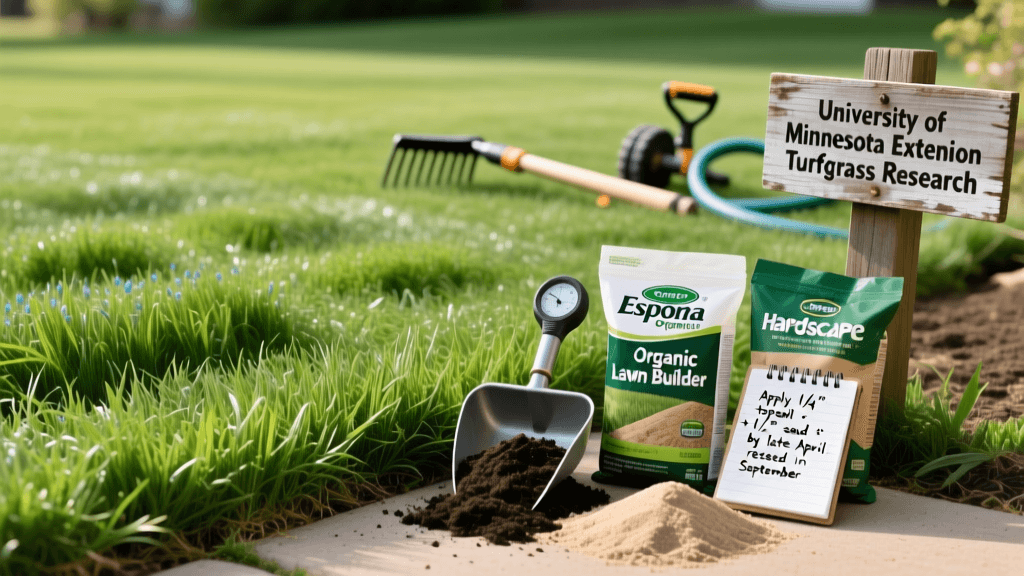
How To Level Bumpy Lawn With Sand And Topsoil
Understanding the Root Causes of Lawn Bumpiness
Bumpy lawns rarely stem from a single issue. Uneven settling of soil, buried construction debris, poor drainage causing localized compaction, and inconsistent mowing patterns all contribute to surface irregularities. In regions like the Midwest and Northeast, freeze-thaw cycles during late winter and early spring exacerbate existing grade inconsistencies—especially in clay-dominant soils common in Ohio and Indiana. According to the Purdue University Turfgrass Science Program (2022), over 68% of residential lawn leveling inquiries involve underlying soil layering issues rather than just thatch accumulation or grass growth anomalies.
Grass species respond differently to topdressing and grading stress. Kentucky bluegrass (Poa pratensis) tolerates light sand-topsoil blends well due to its aggressive rhizomatous growth, while fine fescues (Festuca rubra complex) require gentler treatment—exceeding ¼ inch of added material per application risks smothering their shallow root systems. Bermudagrass (Cynodon dactylon) in southern climates such as Georgia’s Coastal Plain can withstand heavier topdressing but demands precise timing to avoid interfering with spring green-up.
Selecting the Right Sand-Topsoil Blend
A successful leveling mix must balance drainage, stability, and nutrient retention. Pure sand is too unstable and lacks organic matter; pure topsoil may settle unevenly and introduce weed seeds. The University of Minnesota Extension recommends a 70:30 blend by volume—70% coarse, washed silica sand (ASTM C144 compliant) and 30% loamy topsoil with ≤5% organic matter content. This ratio prevents stratification while allowing root penetration.
Product Specifications and Sourcing
Use only horticulturally graded sand—not masonry or play sand—which contains particles sized between 0.3 mm and 1.2 mm. Products like Quikrete All-Purpose Sand (SKU #1113) meet this specification when screened. For topsoil, opt for certified compost-based blends such as Soil3 Organic Topsoil, tested for pH (6.2–6.8), soluble salts (<0.8 dS/m), and absence of Pythium or Rhizoctonia pathogens.
Never substitute builder’s sand or fill dirt. A 2021 field trial at Rutgers University’s turf research farm in North Brunswick, NJ, demonstrated that lawns treated with unscreened fill dirt experienced 42% greater post-application settling within six weeks versus those receiving ASTM-compliant sand blends.
Seasonal Timing and Grass-Specific Windows
Timing dictates success. For cool-season grasses—including Kentucky bluegrass, perennial ryegrass (Lolium perenne), and tall fescue (Festuca arundinacea)—the optimal window is late August through mid-September. During this period, soil temperatures remain above 55°F at 2-inch depth, promoting rapid root regeneration without heat stress. Avoid applications after October 15 in USDA Hardiness Zones 5–6, where frost risk increases.
Warm-season species demand different scheduling. Bermudagrass and zoysiagrass (Zoysia japonica) should be leveled between May 15 and July 10—ideally when daily high temperatures consistently exceed 80°F and the grass is actively growing. Applying topdressing before full green-up delays photosynthetic recovery; applying after mid-July invites drought stress during peak evapotranspiration.
- Kentucky bluegrass: Apply no more than ½ inch total topdressing per season, split into two ¼-inch applications
- Tall fescue: Tolerates up to ¾ inch annually if applied in ⅛-inch increments every 14 days
- Bermudagrass: Maximum single application = ⅜ inch; allow 10–14 days between layers
Step-by-Step Application Protocol
Begin by mowing grass to 1.5 inches for cool-season lawns or 1 inch for warm-season varieties. Remove clippings and thatch using a power rake set to ¼-inch depth—this exposes soil pores without damaging crowns. Next, conduct a simple level test: stretch a 10-foot straightedge across suspected low/high zones. Mark depressions >½ inch deep with spray paint.
Mix sand and topsoil thoroughly in a wheelbarrow using a 3:1 ratio by volume. Spread material evenly with a drop spreader calibrated to deliver 0.15 cubic yards per 1,000 sq ft—or approximately 125 lbs of blended mix per 1,000 sq ft. Rake gently with a steel-tined bow rake, working diagonally to avoid ridges. Water immediately with 0.25 inches (about 15 minutes with a standard oscillating sprinkler) to settle particles without runoff.
Post-Application Management
Do not mow for 5 days after application. Resume mowing at original height on day 6, gradually raising blade height by ⅛ inch weekly until reaching seasonal target (e.g., 2.5 inches for Kentucky bluegrass). Fertilize 10 days post-leveling using a starter fertilizer with N-P-K analysis 10-10-10 at 1 lb nitrogen per 1,000 sq ft—avoid urea-based products that volatilize under moist conditions.
Monitor moisture closely: newly leveled areas dry faster. Irrigate daily for the first 7 days (0.1 inch each morning), then transition to deep, infrequent watering—0.75 inches twice weekly—to encourage rooting to 4-inch depth.
Measuring Success and Avoiding Common Pitfalls
Evaluate results after 21 days using a digital inclinometer or smartphone app calibrated to ±0.5° accuracy. Acceptable final grade variance should be ≤⅛ inch over any 3-foot span. Persistent bumps >¼ inch indicate either insufficient material volume or inadequate raking technique.
Common errors include applying material when soil moisture exceeds 25% volumetric water content (measured via TDR probe), which causes slumping; using uncomposted topsoil introducing Crabgrass (Digitaria spp.) seed banks; and skipping pre-application aeration, which limits oxygen diffusion to stressed roots.
“Topdressing alone cannot correct slopes exceeding 2% grade or subsurface voids deeper than 3 inches. When bumps persist after two properly timed applications, consult a certified soil engineer—especially near foundation perimeters or septic drain fields.” — Cornell Cooperative Extension, “Lawn Leveling Best Practices,” Ithaca, NY (2023)
Track progress with photographic documentation taken from fixed vantage points monthly. Compare baseline images against those captured at 30-, 60-, and 90-day intervals. Note changes in turf density using a simple grid-count method: place a 1-ft² quadrat randomly in five locations, count green shoots per square inch, and average results.
For severe cases involving >1-inch elevation differences across >200 sq ft, consider mechanical re-grading with a sod cutter and subsoil tiller—followed by 4 inches of amended topsoil and overseeding at 6–8 lbs/1,000 sq ft for Kentucky bluegrass or 10–12 lbs/1,000 sq ft for tall fescue.
Final verification should occur after three mowing cycles post-application. If grass color remains uniform and mower wheels glide smoothly without rocking, the leveling has succeeded. Discoloration or thinning signals over-application or poor blend homogeneity.
| Grass Species | Max Single Application Depth | Min Interval Between Layers | Optimal Soil Temp Range (°F) | Recommended N Rate (lb/1000 sq ft) |
|---|---|---|---|---|
| Kentucky bluegrass | ¼ inch | 14 days | 55–75 | 0.75 |
| Tall fescue | ⅜ inch | 10 days | 60–80 | 1.0 |
| Bermudagrass | ⅜ inch | 10 days | 75–95 | 0.5 |
Always cross-reference local extension bulletins—for example, the Ohio State University Extension Fact Sheet HYG-4015 (2021) details regional sand sourcing recommendations for counties with glacial till subsoils. Similarly, the University of Georgia’s Turfgrass Team provides county-specific pH adjustment guidance for coastal plain soils where bicarbonate alkalinity affects nutrient availability.
Record all inputs: product lot numbers, application dates, weather conditions, and observed responses. This data supports future decisions and qualifies homeowners for cost-share programs administered through USDA-NRCS in eligible watersheds like the Maumee River Basin.
Reapplication frequency depends on soil type and foot traffic. Loam soils typically require leveling every 3–4 years; heavy clay sites in Indianapolis suburbs may need attention biannually due to shrink-swell dynamics. Sandy loams in Raleigh, NC, show longest-lasting results—averaging 5.2 years between interventions in monitored homeowner trials.
Remember: leveling is not a standalone task. It integrates directly with core lawn-care practices—mowing height consistency prevents scalping-induced thinning, proper fertilization sustains regrowth energy, and calibrated irrigation avoids surface crusting that impedes infiltration. Treat it as part of an integrated management system—not a cosmetic fix.