Tree Care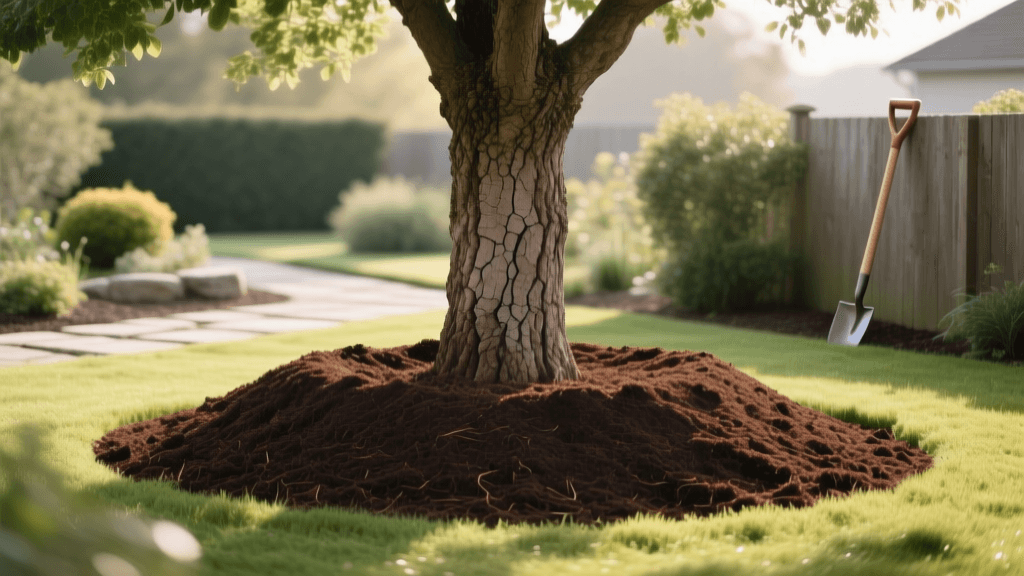
How to Properly Mulch Trees: A Complete Step-by-Step Guide
Why Mulching is Essential for Tree Health
When it comes to professional tree care and landscape maintenance, mulching is arguably one of the most beneficial practices you can implement. In a natural forest ecosystem, trees thrive because they are surrounded by a thick, decomposing layer of organic matter. This natural blanket regulates soil temperature, retains crucial moisture, suppresses competing weeds, and slowly releases vital nutrients into the soil profile. Unfortunately, urban and suburban landscapes rarely replicate this ideal environment. Lawns are routinely raked clean, and soil becomes compacted by foot traffic and construction. By applying a proper layer of organic mulch around your trees, you artificially recreate the forest floor, providing your trees with the foundational support they need to establish robust root systems and resist environmental stressors.
In addition to moisture retention, a properly maintained mulch ring acts as a physical barrier against mechanical damage. String trimmers and lawn mowers are responsible for countless tree deaths each year through a process known as 'mower blight.' When the bark is repeatedly nicked by landscaping equipment, the tree's phloem layer is severed, starving the roots of carbohydrates. A wide, clearly defined mulch bed keeps machinery at a safe distance, eliminating this risk entirely.
The Deadly Threat of Volcano Mulching
Despite its immense benefits, mulching is frequently done incorrectly. The most pervasive and destructive error in modern landscaping is known as 'volcano mulching.' This occurs when mulch is piled high against the trunk of the tree, resembling a volcano. While it may look neat and intentional to the untrained eye, this practice is a slow death sentence for your tree.
According to the University of Massachusetts Amherst Extension, volcano mulching leads to stem girdling roots, trunk decay, and ultimately the premature death of the tree. The trunk bark is not designed to retain moisture like roots are; keeping it constantly damp invites fungal pathogens and boring insects.
Furthermore, piling mulch against the trunk obscures the root flare—the critical transition zone where the trunk widens and enters the soil. When the root flare is buried, the tree may produce adventitious roots that wrap around the main trunk. Over time, these girdling roots strangle the tree's vascular system, cutting off the flow of water and nutrients. To maintain optimal tree health, the root flare must always be visible and exposed to the air.
Choosing the Right Mulch: Organic vs. Inorganic
Not all mulches are created equal. For tree health, organic mulches are vastly superior to inorganic options like gravel or rubber. Organic mulches decompose over time, improving soil structure, increasing microbial activity, and adding essential organic matter to the earth. Below is a comparison of the most common organic mulch materials used in arboriculture.
| Mulch Type | Pros | Cons | Best Application |
|---|---|---|---|
| Shredded Hardwood Bark | Stays in place on slopes, breaks down slowly, adds nutrients, aesthetically pleasing. | Can mat and repel water if applied too thickly or allowed to dry out completely. | Most deciduous trees and formal landscape beds. |
| Pine Needles (Pine Straw) | Excellent aeration, slightly acidifies soil, lightweight, interlocks to prevent washing. | Blows away easily in high winds, highly flammable when dry, breaks down quickly. | Evergreens, pines, and acid-loving trees like dogwoods. |
| Arborist Wood Chips | Often free from local arborists, superior moisture retention, closely mimics the natural forest floor. | Can tie up surface nitrogen temporarily during decomposition, may contain weed seeds. | Large shade trees, rural properties, and woodland edges. |
| Composted Leaf Mold | Rich in nutrients, excellent soil conditioner, very fine texture. | Blows away easily, can compact and form a water-resistant crust if not mixed with coarser material. | Young saplings and delicate ornamental trees. |
Step-by-Step Guide to Proper Tree Mulching
To ensure your trees receive the maximum benefit without risking trunk rot or girdling roots, follow these precise, actionable steps. The International Society of Arboriculture (ISA) recommends the '3-3-3 Rule' as a general guideline for homeowners and landscape professionals alike.
- Step 1: Locate and Expose the Root Flare. Before adding any new mulch, gently brush away existing soil or old mulch from the base of the trunk. You must find the root flare, the point where the trunk expands at the base. If the tree was planted too deeply, you may need to perform root crown excavation using an air spade or careful hand tools.
- Step 2: Clear the Competing Vegetation. Remove all grass and weeds from the area where you plan to mulch. Grass is a fierce competitor for water and nutrients. Use a string trimmer or a sharp spade to cut the sod, being incredibly careful not to nick the tree's bark or slice shallow surface roots.
- Step 3: Measure the Mulch Radius. Ideally, the mulch bed should extend to the tree's drip line (the outer edge of the canopy). However, for practical purposes in a lawn setting, a minimum radius of 3 to 6 feet from the trunk is highly recommended. The larger the mulched area, the faster the tree will grow.
- Step 4: Apply the 3-Inch Depth Rule. Spread your chosen organic mulch evenly across the bed. The layer should be no deeper than 2 to 4 inches. If you use fine mulch like composted leaves, aim for 2 inches. For coarse wood chips, 3 to 4 inches is acceptable. Exceeding 4 inches restricts oxygen exchange to the shallow feeder roots.
- Step 5: Create the Donut Shape. Keep the mulch at least 3 to 6 inches away from the actual trunk of the tree. The center of your mulch bed should look like a donut, not a volcano. The root flare and the bottom few inches of the trunk must remain completely bare and exposed to the air.
Calculating Mulch Volume and Estimated Costs
Buying too much or too little mulch is a common frustration. To calculate the exact volume you need, use the following formula for a circular bed:
Volume (in cubic feet) = 3.14 x Radius² x Depth (in feet)
For example, if you are mulching a circle with a 4-foot radius (8-foot diameter) at a depth of 3 inches (0.25 feet):
3.14 x 16 x 0.25 = 12.56 cubic feet.
Since mulch is often sold in cubic yards (1 cubic yard = 27 cubic feet), you would divide 12.56 by 27, resulting in roughly 0.46 cubic yards. For this single tree, purchasing bags is more economical. However, if you are mulching ten trees, you will need approximately 4.6 cubic yards, making bulk delivery the smarter financial choice.
Cost Estimates:
- Bagged Mulch (2 cubic feet per bag): $4.00 to $7.00 per bag. Best for small jobs, precise applications, and easy transport. For our single tree example, you would need about 6 to 7 bags, costing roughly $30 to $45.
- Bulk Mulch (per cubic yard): $25.00 to $45.00 per cubic yard, plus a delivery fee ranging from $50 to $100. Best for large properties and multiple trees. Requires a wheelbarrow and physical labor to spread.
Seasonal Timing and Ongoing Maintenance
Timing your mulch application correctly maximizes its protective benefits. The ideal time to apply or refresh mulch is in mid-to-late spring, after the soil has had a chance to warm up from the winter freeze. Applying mulch too early in the spring can trap cold temperatures in the soil and delay root growth. Conversely, applying a fresh layer in late autumn helps insulate the root zone against severe winter temperature fluctuations and frost heaving.
Maintenance is equally important. Organic mulch decomposes and settles over time. Each spring, inspect your mulch beds. If the depth has diminished to less than 2 inches, apply a light top-dressing to bring it back to the 3-inch ideal. Never simply add new mulch on top of old, matted mulch year after year without first breaking up the crust. A thick, compacted layer of old mulch becomes hydrophobic, meaning it will repel water and prevent rain from reaching the tree's root zone. Use a steel rake to aggressively fluff and loosen the existing mulch before adding a thin, fresh layer on top.
Furthermore, monitor your mulch beds for signs of fungal fruiting bodies or artillery fungus, which can stain nearby siding and indicate overly wet, anaerobic conditions. If you notice sour-smelling mulch (often resembling vinegar or ammonia), it has undergone anaerobic decomposition due to poor aeration in large bulk piles. Spread it out in the sun for a few days to allow the toxic alcohols and organic acids to off-gas before applying it around your sensitive trees.
By adhering to these practical, science-backed guidelines, you will protect your trees from environmental stress, prevent catastrophic trunk damage, and cultivate a vibrant, thriving landscape for decades to come.