Tree Care
Winter Tree Care: Protecting Young Trees From Frost and Rodents
The Hidden Dangers of Winter for Young Trees
While winter is generally a period of dormancy for your landscape, it presents a unique set of severe environmental hazards for young, recently planted trees. Trees under three years of age have not yet developed the thick, corky outer bark necessary to insulate their sensitive vascular systems. Furthermore, their root systems are still shallow and establishing, making them highly susceptible to temperature fluctuations, freezing winds, and winter starvation. For homeowners and landscaping enthusiasts, proactive seasonal maintenance is not just about aesthetics; it is a critical survival strategy. Without proper winterization, a single harsh season can cause irreversible structural damage, invite fatal diseases, or kill a young tree outright.
Understanding Sunscald and Frost Cracks
One of the most common and misunderstood forms of winter tree damage is sunscald, often referred to as 'southwest injury.' During the winter months, the sun sits low in the sky, beating directly onto the south and southwest-facing sides of tree trunks. On bright, sunny winter days, the bark's surface temperature can rise significantly, sometimes reaching over 100°F even when the ambient air temperature is well below freezing. This localized heating tricks the tree's dormant cambium cells into breaking dormancy and becoming active.
When the sun sets or a cloud passes over, the temperature of the bark plummets rapidly. The newly activated cells freeze and burst, resulting in sunscald. This manifests as elongated, sunken, or discolored patches of bark that eventually peel away, exposing the tree to wood-boring insects and fungal pathogens. Similarly, 'frost cracks' are vertical splits in the trunk caused by the extreme thermal contraction of the wood's outer layers compared to the inner core during sudden nighttime temperature drops. According to the University of Minnesota Extension, thin-barked species such as maple, crabapple, honey locust, linden, and plum are exceptionally vulnerable to these thermal injuries and require physical barriers to survive their first few winters.
Step-by-Step Guide to Wrapping Tree Trunks
To prevent sunscald and frost cracks, you must insulate the trunk using specialized tree wrap. Avoid using plastic wraps or duct tape, as these trap moisture and girdle the tree.
Materials Needed:
- DeWitt or Dalen Crepe Paper Tree Wrap (Typically costs $12 to $18 per 150-foot roll)
- Burlap (For extreme climates or highly sensitive species)
- Twine or specialized tree tape (Do not use wire or zip ties)
Application Timing and Technique:
- Timing: Apply the wrap in late November, immediately after the first hard freeze and once the tree has fully entered dormancy.
- Preparation: Inspect the trunk for any existing wounds or pests. Do not wrap over active fungal infections.
- The Wrapping Process: Start at the very base of the trunk, slightly below the soil line. Wrap the crepe paper upward at a slight angle, overlapping each layer by about one-third to one-half of the wrap's width.
- Stopping Point: Continue wrapping until you reach the first major scaffold branch. This ensures the most vulnerable, smooth-barked sections are fully protected.
- Securing: Tie off the end securely with natural twine or biodegradable tree tape. Ensure it is snug but not tight enough to cut into the bark.
Defending Against Winter Rodents and Voles
When snow covers the ground and natural food sources become scarce, voles, rabbits, and mice turn to the tender, nutrient-rich inner bark (phloem) of young trees. A process known as 'girdling' occurs when rodents chew a continuous ring around the trunk, severing the tree's ability to transport nutrients from the roots to the canopy. This is almost always fatal.
Installing Hardware Cloth Guards:
While paper tree wrap deters some mice, it will not stop determined rabbits or heavy vole pressure. For comprehensive protection, use galvanized hardware cloth.
- Mesh Size: Use 1/4-inch or 1/2-inch galvanized steel mesh. Plastic netting is easily chewed through and degrades in UV light.
- Height: The guard should stand at least 18 to 24 inches above the anticipated snow line to prevent rabbits from reaching over the snowpack.
- Depth: Bury the bottom 2 to 3 inches of the mesh below the soil surface to stop voles from tunneling underneath.
- Diameter: Ensure the cylinder is wide enough to allow for 2 to 3 inches of radial trunk growth. A typical cost is around $25 for a 25-foot roll, which can protect several young trees.
Pro Tip: If you are using both crepe paper wrap for frost protection and hardware cloth for rodent protection, apply the paper wrap first, then place the hardware cloth cylinder over it. Ensure the hardware cloth does not rub directly against the bark, which can cause mechanical abrasion during high winds.
Winterizing Evergreens with Anti-Desiccants
Deciduous trees drop their leaves to conserve water, but broadleaf and needle evergreens continue to lose moisture through transpiration all winter. When the ground is frozen, the roots cannot pull up replacement water, leading to 'winter burn'—characterized by brown, crispy foliage on the windward side of the tree.
To combat this, apply an anti-desiccant spray such as Bonide Wilt Stop or Wilt Pruf. These products coat the foliage in a breathable, biodegradable polymer resin that seals in moisture. Apply the spray in late November or early December when the temperature is above 40°F and no rain is forecasted for 24 hours. A second application in late January is highly recommended for regions with severe, windy winters. A standard 32-ounce ready-to-use bottle costs approximately $15 and is sufficient for treating several small ornamental evergreens.
The 'Donut' Mulching Method for Root Insulation
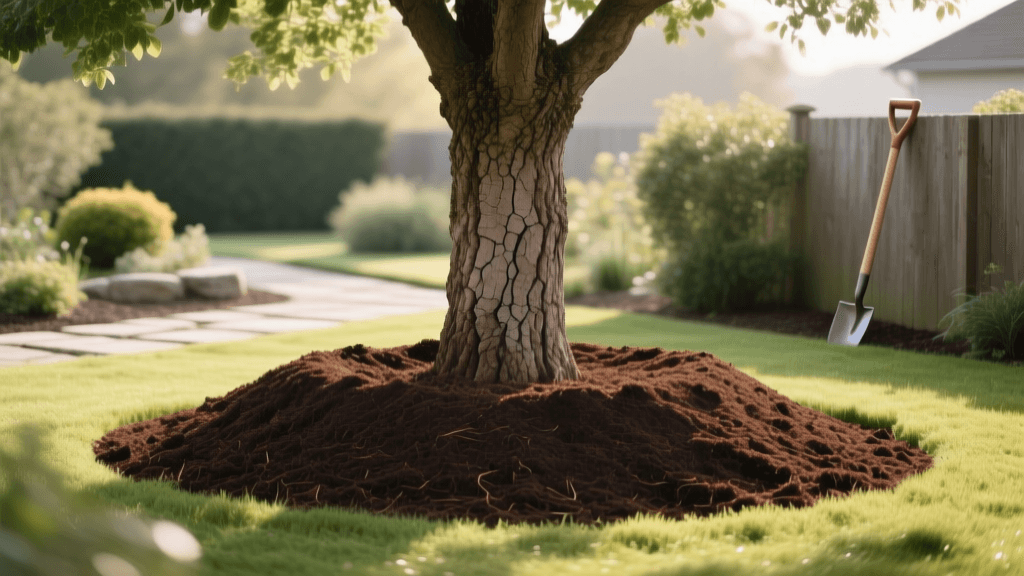
Mulch is essential for regulating soil temperature and retaining moisture, but improper application is a leading cause of tree death. 'Volcano mulching'—piling mulch high against the trunk—traps moisture against the bark, promoting rot and creating a warm winter haven for rodents.
Instead, utilize the 'Donut Method':
- Radius: Spread a layer of organic mulch (such as shredded hardwood or pine bark) in a 3-foot radius around the tree.
- Depth: Maintain a depth of 2 to 4 inches. Any deeper, and you risk suffocating the shallow feeder roots by cutting off oxygen exchange.
- The Hole in the Donut: Keep the mulch at least 3 to 4 inches away from the actual trunk flare. The root flare should be completely exposed to the air.
Winter Watering Schedules and Techniques
A common misconception is that trees do not need water during the winter. In reality, winter drought stress severely compromises a tree's cold hardiness. If your region experiences warm, dry, or windy winter spells, supplemental watering is mandatory.
- Temperature Rule: Only water when the air temperature is above 40°F and the soil is not frozen.
- Volume: Provide approximately 10 gallons of water per inch of trunk caliper (diameter measured at knee height).
- Method: Use a slow-release soil needle or a soaker hose placed at the drip line (the outer edge of the canopy) where the active absorbing roots are located. Avoid watering directly at the trunk.
- Frequency: Water once or twice a month during extended dry periods, preferably in the mid-morning so the water has time to percolate before nighttime freezes.
Winter Tree Protection Materials Comparison
| Material | Primary Purpose | Estimated Cost | Pros & Cons |
|---|---|---|---|
| Crepe Paper Tree Wrap | Preventing sunscald and frost cracks | $12 - $18 per roll | Pros: Breathable, biodegradable, cheap. Cons: Must be removed in spring; offers minimal rodent protection. |
| Galvanized Hardware Cloth | Stopping rabbits and voles | $20 - $30 per roll | Pros: Highly durable, reusable for years, excellent physical barrier. Cons: Requires cutting and shaping; can scratch bark if poorly installed. |
| Anti-Desiccant Spray | Preventing winter burn on evergreens | $15 - $25 per bottle | Pros: Easy to apply, seals in vital moisture. Cons: Degrades over time, requires mid-winter reapplication. |
| White Plastic Tree Guards | Sunscald and minor rodent deterrence | $3 - $6 per guard | Pros: Quick to install, reflects sunlight. Cons: Traps condensation, can harbor insects if not removed promptly. |
Spring Unwrapping and Health Assessment
Equally important to the application of winter protection is its timely removal. Leaving tree wrap on into the late spring is a catastrophic mistake. As temperatures rise and the tree begins its spring growth, trapped moisture beneath the wrap creates a perfect breeding ground for fungal diseases and provides a hidden habitat for insect pests.
Remove all crepe paper wrap, burlap, and plastic guards in early April, or as soon as the threat of hard freezes has passed and the tree is preparing for bud break. Once removed, conduct a thorough health assessment. Inspect the bark for any signs of rodent chewing, fungal fruiting bodies, or mechanical damage. If you notice minor surface scraping from rodents, keep the area clean and allow the tree's natural compartmentalization process (CODIT) to seal the wound. Do not apply pruning sealants or tar, as these impede natural healing. By following this comprehensive seasonal maintenance schedule, you ensure your young trees survive the harsh winter months and emerge vigorous, healthy, and ready for the spring growing season.