Pest Control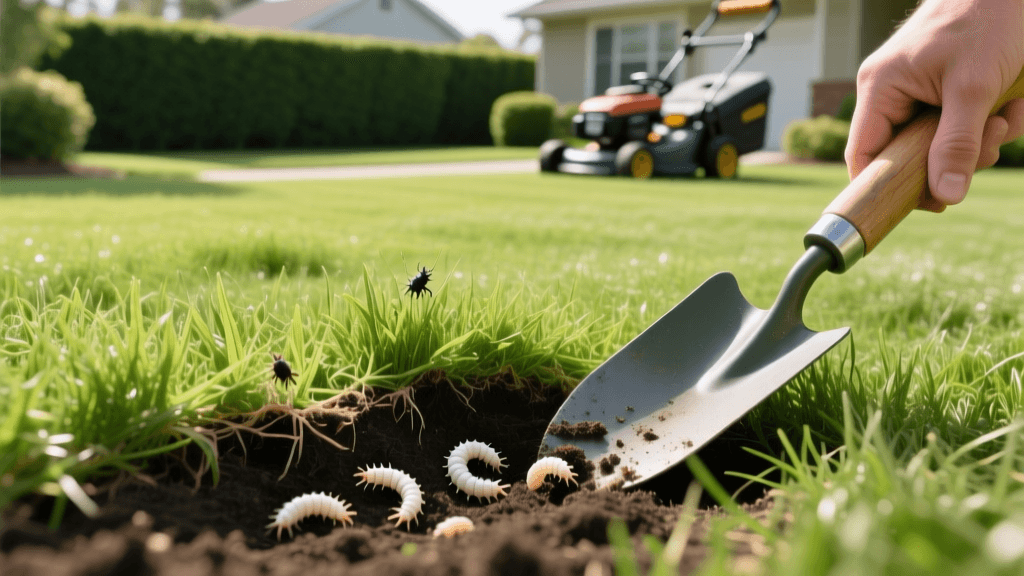
How to Identify and Treat Lawn Grubs: A Step-by-Step Guide
What Are Lawn Grubs and Why Are They Dangerous?
Lawn grubs, commonly known as white grubs, are the larval stage of various scarab beetles, including Japanese beetles, June bugs, and European chafers. These C-shaped, cream-colored pests live just beneath the soil surface and feed aggressively on grassroots. If left unchecked, a severe grub infestation can destroy an entire lawn in a matter of weeks, leaving behind spongy, brown, dead turf that rolls back like a loose carpet.
Beyond the direct damage to your grass, grubs act as a magnet for secondary pests. Skunks, raccoons, crows, and armadillos will actively tear up your lawn to feed on the protein-rich grubs, often causing more aesthetic damage than the insects themselves. According to Penn State Extension, managing these pests requires a strategic approach based on their life cycle, proper identification, and the specific damage thresholds of your lawn.
Understanding the Grub Life Cycle
To effectively treat grubs, you must understand their life cycle, as timing is the most critical factor in pest control. Adult beetles emerge in early summer, mate, and lay eggs in the soil. By mid-to-late summer, these eggs hatch into young grubs that immediately begin feeding on grassroots. As autumn approaches and temperatures drop, the grubs burrow deep into the soil to overwinter. They return to the surface in early spring to feed briefly before pupating into adult beetles, starting the cycle anew.
Because of this cycle, late summer and early fall are when grubs are closest to the surface, most vulnerable, and causing the most visible damage to your turf.
Step 1: How to Identify a Grub Infestation
Before spending money on treatments, confirm that grubs are actually the culprit. Brown patches can also be caused by drought, fungal diseases, or dog urine.
The Tug Test
Walk over to the edge of a brown or spongy patch of grass and grab a handful of turf. Pull gently. If the grass lifts up easily with almost no resistance, the roots have likely been severed by grubs. If the grass holds firm, you may be dealing with a drought or disease issue.
The Square-Foot Dig Test
The most accurate way to identify a grub problem is to count them. Using a flat shovel, cut three sides of a 12-inch by 12-inch square of turf (about 2 to 3 inches deep). Peel back the sod like a carpet and inspect the soil and roots. Count the number of C-shaped grubs you find.
- 0 to 5 grubs per square foot: Normal. No treatment is necessary; your lawn can handle this population.
- 6 to 9 grubs per square foot: Monitor closely. Treatment may be needed if the lawn is stressed or if animals are digging.
- 10 or more grubs per square foot: Severe infestation. Immediate treatment is required to save your lawn.
Step 2: Choose Your Treatment Strategy
Once you have confirmed an infestation, you must decide between organic and chemical controls, as well as preventative and curative approaches. The Michigan State University Extension emphasizes that selecting the right active ingredient for the correct time of year is vital for success.
Grub Treatment Comparison Chart
| Treatment Type | Active Ingredient / Agent | Best Time to Apply | Est. Cost per 1,000 sq ft | Speed of Control |
|---|---|---|---|---|
| Preventative Chemical | Chlorantraniliprole (e.g., Scotts GrubEx) | April - May | $15 - $20 | Slow (Preventative) |
| Preventative Chemical | Imidacloprid (e.g., Merit) | June - July | $10 - $18 | Moderate |
| Curative Chemical | Trichlorfon (e.g., Bayer Advanced 24 Hour) | August - October | $15 - $25 | Fast (24-48 hours) |
| Organic Biological | Beneficial Nematodes (Heterorhabditis bacteriophora) | Late Summer - Early Fall | $20 - $40 | Moderate (3-7 days) |
| Organic Bacterial | Milky Spore Disease (Paenibacillus popilliae) | Spring or Fall | $30 - $50 | Very Slow (1-3 years) |
Step 3: Organic and Biological Control Methods
For homeowners looking to maintain an eco-friendly lawn or those with pets and children, organic controls are highly effective when applied correctly.
Beneficial Nematodes
Beneficial nematodes are microscopic, unsegmented worms that naturally occur in soil. The specific strain Heterorhabditis bacteriophora (Hb) is a lethal parasite to white grubs. You can purchase them online or at garden centers in liquid or sponge formulations. Application tip: Nematodes are living organisms. Apply them in the late afternoon or evening to avoid UV light, and water the lawn immediately before and after application to help them wash into the soil where the grubs live. The soil must remain moist for the next 7 to 10 days.
Milky Spore Disease
Milky Spore is a naturally occurring bacterium that specifically targets Japanese beetle grubs. When a grub ingests the spores, the bacteria multiply, eventually killing the grub and releasing billions of new spores into the soil. While highly effective long-term, it is not a quick fix. It can take 1 to 3 years for the spores to build up to a protective level in the soil. Apply using a drop spreader or a specialized injector tube in a grid pattern across your yard.
Step 4: Chemical Control Methods
When grub populations exceed the threshold and rapid intervention is necessary, synthetic pesticides offer reliable results.
Preventative Chemicals
If you have a history of grub damage, preventative chemicals are the most cost-effective route. Products containing Chlorantraniliprole are highly effective and have a lower toxicity profile for bees and beneficial insects. Apply these in April or May. They take several weeks to break down in the soil, ensuring they are active when eggs hatch in late summer. Alternatively, Imidacloprid should be applied slightly later, in June or early July, just before the eggs hatch.
Curative Chemicals
If you discover an active infestation in late summer or early fall (August through October), preventatives will no longer work. You need a curative product containing Trichlorfon (commonly sold as Dylox or Bayer Advanced 24 Hour Grub Killer Plus). Trichlorfon degrades rapidly in the soil, so it must be applied when grubs are actively feeding near the surface. It works quickly, killing grubs within 24 to 48 hours.
Step 5: Application Best Practices and Lawn Recovery
Regardless of whether you choose organic or chemical treatments, proper application is mandatory. According to the University of Minnesota Extension, granular pesticides and biological agents must be watered into the soil to reach the root zone where grubs feed.
- Watering In: Immediately after applying any grub control product, irrigate the lawn with at least 0.5 inches of water. Use an empty tuna can placed on the lawn to measure when you have reached the half-inch mark.
- Mowing: Mow your lawn right before applying a treatment to remove weed flowers, which protects foraging bees from accidental pesticide exposure.
- Lawn Recovery: After the grubs are eliminated, rake out the dead grass from the damaged patches. Topdress the bare spots with a quarter-inch of compost and overseed with a high-quality grass seed blend. Keep the newly seeded areas consistently moist until the grass reaches 3 inches in height.
Long-Term Prevention Strategies
The best way to handle grubs is to cultivate a lawn that is naturally resilient to them. Beetles prefer to lay their eggs in thin, stressed lawns with compacted soil. By maintaining a thick, healthy turf, you make your yard an uninviting target.
- Mow High: Keep your mower blade set to 3.5 or 4 inches. Taller grass develops deeper, more robust root systems that can tolerate minor grub feeding without showing visible damage.
- Water Deeply and Infrequently: Grub eggs and young larvae require consistent moisture to survive. By watering your lawn deeply (1 inch per week) but infrequently, you allow the top layer of soil to dry out between waterings, which can naturally reduce egg survival rates.
- Choose Resistant Grasses: When overseeding, consider using tall fescue or endophyte-enhanced perennial ryegrass. These grass varieties contain natural fungi that make the blades and roots unpalatable or toxic to surface-feeding insects, indirectly supporting the overall health of the turf against root-feeding pests.
By following this practical, step-by-step guide, you can accurately diagnose a grub problem, select the most appropriate treatment for your lawn care philosophy, and restore your turf to a lush, vibrant state.