Pest Control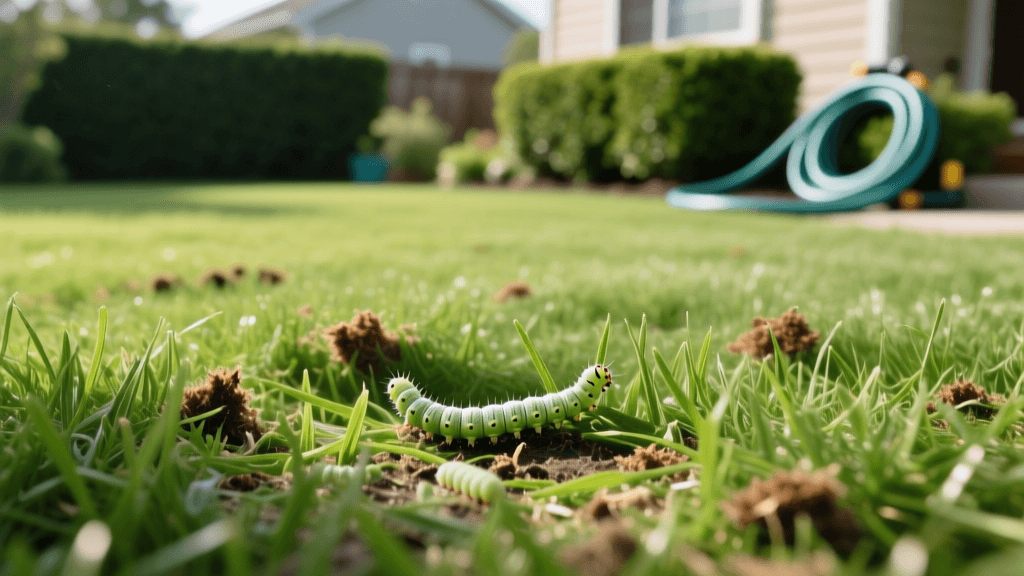
How to Identify and Eliminate Sod Webworms in Lawns
Understanding the Sod Webworm Threat
If you notice irregular brown patches in your lawn, chewed grass blades, and small white moths darting across the turf at dusk, you are likely dealing with a sod webworm infestation. Sod webworms are the larval stage of lawn moths (family Crambidae). While the adult moths do not damage your grass, their voracious caterpillar larvae feed on the leaf blades of turfgrass, causing severe aesthetic and structural damage if left unchecked. According to University of Kentucky Entomology, these pests primarily target cool-season grasses like Kentucky bluegrass, perennial ryegrass, and fescues, though warm-season grasses are also susceptible to specific species like the tropical sod webworm.
This practical, step-by-step guide will walk you through how to definitively identify a webworm infestation, choose between organic and chemical treatments, and restore your lawn to its former glory.
How to Identify a Sod Webworm Infestation
Before applying any treatments, you must confirm that sod webworms are the culprits. Misdiagnosing lawn damage can lead to wasted time, money, and unnecessary chemical applications. Look for the following signs:
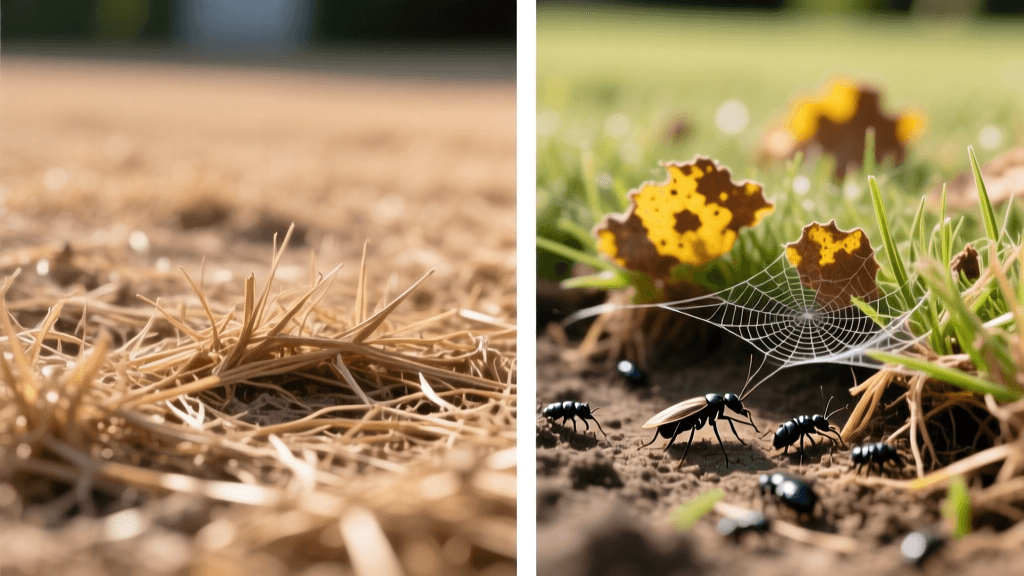
- Chewed Grass Blades: Unlike grubs that eat roots, webworms chew on the leaves. Look for grass blades that appear ragged, notched, or completely sheared off at the surface.
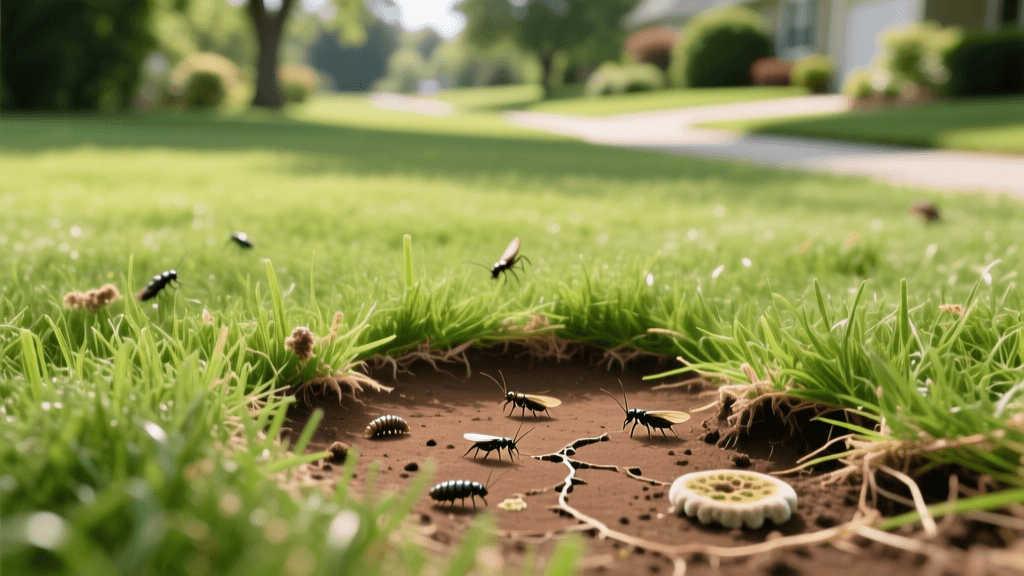
- Silk Tunnels and Frass: Part the grass in the damaged areas. You may see fine silk webbing binding the grass blades together and small green or brown pellets (frass), which is caterpillar excrement.
- Moth Activity: Adult lawn moths have a distinctive zig-zag flight pattern and are most active just after sunset or when the lawn is mowed.
The Soap Flush Test: The Gold Standard for Confirmation
To confirm an active infestation and determine if the population has reached the treatment threshold, perform a soap flush test. According to Penn State Extension, treating your lawn is only economically and ecologically justified when populations are high enough to cause severe damage.
- Mix the Solution: Combine 2 tablespoons of liquid dish soap (such as Dawn or Ivory) with 1 gallon of warm water in a watering can.
- Apply to the Lawn: Slowly pour the soapy mixture over a 1-yard by 1-yard (9 square feet) area at the edge of a damaged brown patch. The soap irritates the larvae, forcing them to the surface.
- Wait and Count: Wait 5 to 10 minutes. Count the number of caterpillars that emerge. Sod webworm larvae are typically grayish-green to brown, covered in dark spots, and measure about 3/4 of an inch long.
- Evaluate the Threshold: If you count 10 to 15 or more larvae per square yard, treatment is highly recommended. If you find fewer, your lawn can likely recover on its own with proper cultural care.
Step-by-Step Treatment Guide: Organic vs. Chemical
Once you have confirmed an infestation that exceeds the threshold, it is time to act. Because sod webworms feed primarily at night, always apply treatments in the late afternoon or early evening. This maximizes the product's contact with the feeding larvae and prevents rapid UV degradation of organic compounds.
Organic and Biological Controls
For environmentally conscious homeowners or those with pets and children who frequently use the lawn, organic treatments are highly effective, especially when targeted at early-stage larvae (instars).
- Bacillus thuringiensis var. kurstaki (Bt): Bt is a naturally occurring soil bacterium that is toxic only to caterpillars. When ingested, it paralyzes the webworm's digestive system. Products like Monterey B.t. or Thuricide are excellent choices. Bt must be ingested, so apply it to the grass blades and do not water it in immediately. It works best on young, small larvae.
- Spinosad: Derived from a soil-dwelling bacterium, Spinosad (found in Captain Jack's Deadbug Brew) is highly effective against both young and older webworm larvae. It has contact and ingestion activity and is OMRI-listed for organic gardening.
- Beneficial Nematodes: Applying Steinernema carpocapsae nematodes is a great biological control. Mix the nematodes with water and apply using a hose-end sprayer. They actively hunt and infect the larvae in the thatch layer. Apply at a rate of roughly 25,000 nematodes per square foot and water the lawn lightly before and after application to ensure they survive the soil transition.
Chemical Controls
For severe infestations or older, larger larvae that have developed resistance to organic methods, synthetic insecticides provide rapid knockdown. In warmer climates, such as those dealing with the tropical sod webworm detailed by University of Florida IFAS, chemical intervention is sometimes necessary to save St. Augustine or Zoysia grass from total defoliation.
- Pyrethroids (Bifenthrin, Cyfluthrin, Lambda-cyhalothrin): Products containing Bifenthrin (like Talstar P or Ortho Home Defense) provide excellent contact kill and leave a residual barrier that lasts up to 30 days. Apply as a liquid spray to the foliage.
- Carbaryl: Found in Sevin dust or liquid concentrates, Carbaryl is a broad-spectrum insecticide that works well on heavy webworm populations. However, it is highly toxic to bees and beneficial insects, so apply it strictly at dusk when pollinators are inactive.
Treatment Comparison Chart
Use the table below to select the right product based on your lawn's specific needs, budget, and environmental considerations.
| Active Ingredient | Product Example | Type | Target Stage | Est. Cost per 1,000 sq ft | Application Notes |
|---|---|---|---|---|---|
| Bt (Bacillus thuringiensis) | Monterey B.t., Thuricide | Organic | Young Larvae | $2.50 - $3.50 | Spray on foliage; do not water in. Reapply after heavy rain. |
| Spinosad | Captain Jack's Deadbug | Organic | All Larvae Stages | $3.00 - $4.00 | Apply at dusk to protect bees while wet. Dries safe. |
| Bifenthrin | Talstar P, Ortho BugClear | Synthetic | All Larvae Stages | $1.50 - $2.50 | Provides 30-day residual. Keep pets off until dry. |
| Carbaryl | Sevin Liquid Concentrate | Synthetic | All Larvae Stages | $2.00 - $3.00 | Fast knockdown. Highly toxic to aquatic life and bees. |
| Beneficial Nematodes | Scanmask, BioLogic | Biological | Larvae in Thatch | $4.00 - $6.00 | Requires moist soil. Apply during cool, overcast evenings. |
Common Mistakes to Avoid
Pro Tip: Never water your lawn immediately after applying a foliar spray for sod webworms. Unlike grub treatments that need to be washed into the soil, webworms live and feed in the thatch and on the grass blades. Watering immediately washes the product away, rendering it useless. Wait at least 24 hours before resuming your normal irrigation schedule.
Another frequent error is applying treatments during the heat of the day. High temperatures and intense UV rays will break down organic options like Bt and Spinosad within hours, and spraying synthetic chemicals on heat-stressed grass can cause severe phytotoxicity (chemical burn).
Prevention and Lawn Recovery
Once the larvae are eliminated, your lawn will need help recovering. Because sod webworms only eat the leaf blades and leave the root system and crown intact, the grass will regrow if properly cared for.
- Fertilize: Apply a balanced, slow-release nitrogen fertilizer (such as a 20-0-10 blend) at a rate of 1 lb of nitrogen per 1,000 square feet to push rapid new leaf growth.
- Water Deeply: Provide 1 to 1.5 inches of water per week to support recovery and reduce drought stress, which makes turf more susceptible to future pest attacks.
- Manage Thatch: Sod webworms thrive in thick thatch layers, which provide them with a protective canopy. If your thatch layer exceeds 1/2 inch, schedule core aeration and dethatching for the appropriate season (early fall for cool-season grasses, late spring for warm-season grasses).
- Proper Mowing: Never scalp your lawn. Keep cool-season grasses at 2.5 to 3.5 inches and warm-season grasses at their recommended heights. Taller grass shades the soil, retains moisture, and promotes deeper roots that can withstand minor pest pressure.
By combining vigilant monitoring with the soap flush test, targeted evening applications, and robust cultural practices, you can successfully eradicate sod webworms and maintain a thick, resilient, and vibrant lawn year after year.