Lawn Care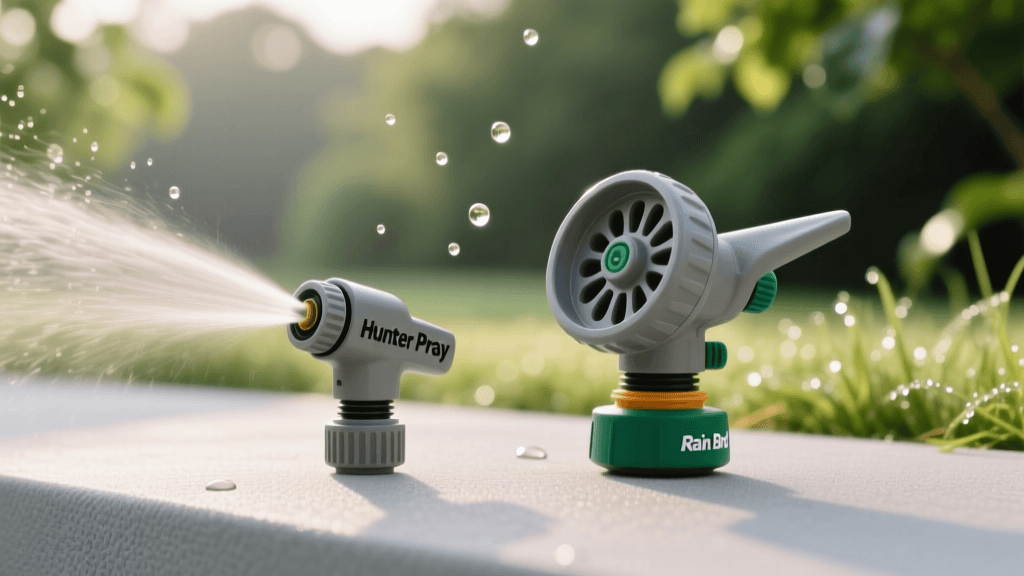
Hunter Pro Spray vs Rain Bird 1800: 2026 Bio-Control Guide
The 2026 Shift Toward Conservation Bio-Control
As we navigate the 2026 lawn care season, the professional and residential landscaping sectors have undergone a massive paradigm shift. Driven by stricter municipal environmental regulations and a deeper understanding of soil ecology, turf managers are rapidly abandoning broad-spectrum synthetic pesticides in favor of conservation bio-control. This approach leverages living organisms—such as entomopathogenic nematodes, predatory mites, ground beetles, and beneficial fungi like Beauveria bassiana—to manage turf pests naturally. However, a critical and often overlooked factor in the success of these biological agents is the irrigation hardware used to maintain the lawn. Specifically, the debate between the Hunter Pro Spray and the Rain Bird 1800 series sprinkler bodies, and their respective nozzle technologies, plays a pivotal role in preserving the delicate micro-ecosystems required for bio-control to thrive.
According to the Xerces Society for Invertebrate Conservation, maintaining optimal soil moisture without causing physical disruption to the soil crust is essential for the survival of ground-dwelling predatory insects. When turf managers fail to match their irrigation nozzle's precipitation rate to the soil's infiltration capacity, the resulting runoff and waterlogging can devastate beneficial insect populations. In this comprehensive 2026 guide, we will compare the Hunter Pro Spray and Rain Bird 1800 systems through the lens of ecological turf management, helping you choose the right hardware to protect your lawn's natural defenders.
Why Irrigation Hardware Dictates Bio-Control Success
To understand why sprinkler nozzles matter to beneficial insects, we must examine the physics of water droplets and soil infiltration. Traditional, low-cost spray nozzles deliver water at a high precipitation rate (often 1.5 to 2.0 inches per hour). Most turf soils, particularly those with high clay content or moderate compaction, have an infiltration rate of less than 0.5 inches per hour. When high-volume nozzles are used, water pools on the surface, leading to two major ecological disasters:
- Soil Sealing and Anaerobic Conditions: Heavy droplets break apart soil aggregates, causing surface sealing. This cuts off oxygen to the thatch and topsoil layers. Aerobic beneficial organisms, such as Steinernema feltiae (a predatory nematode used to control grubs), require oxygen to survive. Waterlogging suffocates these bio-control agents while promoting anaerobic fungal pathogens.
- Physical Displacement: High-velocity water streams physically wash away foliar-applied bio-pesticides (like Bacillus thuringiensis or Spinosad) and displace mobile predators like rove beetles and spiders, forcing them out of the turf canopy and into hardscapes where they perish.
The UC Statewide Integrated Pest Management Program consistently emphasizes that cultural controls, including precise irrigation, form the foundation of any successful bio-control strategy. By upgrading to high-efficiency rotary nozzles that mimic gentle, natural rainfall, turf managers can maintain the precise soil moisture levels that beneficial organisms require without triggering runoff or soil sealing.
Hunter Pro Spray System: Precision for Predators
The Hunter Pro Spray sprinkler body remains a staple in 2026 due to its durable, heavy-duty brass retraction spring and reliable seal mechanism, which prevents soil and debris from entering the riser. However, its true value to the bio-control practitioner lies in its compatibility with the MP Rotator nozzle line. The MP Rotator delivers multiple streams of water at a low precipitation rate (approximately 0.4 inches per hour).
From an ecological perspective, the MP Rotator's larger, heavier water droplets are highly resistant to wind drift, ensuring that water is applied exactly where it is needed. More importantly, the slow application rate allows water to gently percolate into the soil profile. This gentle infiltration is critical when applying live beneficial nematodes via irrigation. The nematodes are carried smoothly into the root zone without being battered by high-pressure spray or washed away into storm drains. Furthermore, the Hunter Pro Spray's integrated check valves prevent low-head drainage, keeping the soil around the sprinkler head from becoming a permanently soggy breeding ground for fungus gnats and pathogenic fungi.
Rain Bird 1800 Series: R-VAN Technology and Soil Health
The Rain Bird 1800 series is the direct competitor to the Hunter Pro Spray, boasting an advanced co-molded wiper seal that handles gritty water and harsh soil conditions exceptionally well. For the eco-conscious lawn care provider in 2026, the 1800 series shines when paired with Rain Bird's R-VAN (Rotary Van) nozzles. The R-VAN technology produces thick, wind-resistant streams that distribute water evenly at a low precipitation rate (roughly 0.6 inches per hour).
The R-VAN's droplet size is particularly beneficial for maintaining the thatch layer's microbiome. Unlike fine misting nozzles that evaporate before reaching the soil or create a humid canopy that encourages foliar diseases (leading to fungicide use that harms beneficials), the R-VAN penetrates the canopy effectively. This targeted delivery ensures that moisture reaches the root zone where predatory mites (Hypoaspis miles) hunt for fungus gnat larvae and thrips pupae. By keeping the thatch consistently moist but not saturated, the Rain Bird 1800 with R-VAN nozzles creates an ideal hunting ground for these microscopic bio-control agents.
Nozzle Comparison Chart: Impact on Beneficial Organisms
When designing an irrigation system specifically to support a bio-control program, the choice of nozzle is just as important as the choice of biological agent. Below is a comparison of how standard spray nozzles compare to the rotary options available for the Hunter Pro Spray and Rain Bird 1800 bodies.
| Feature | Standard Spray Nozzles | Hunter MP Rotator | Rain Bird R-VAN |
|---|---|---|---|
| Precipitation Rate | 1.5 - 2.0 in/hr | 0.4 in/hr | 0.6 in/hr |
| Droplet Size | Fine to Medium (Mist) | Large, Heavy Streams | Thick, Heavy Streams |
| Soil Sealing Risk | High (Destroys soil crust) | Very Low (Preserves structure) | Low (Gentle infiltration) |
| Impact on Nematodes | High wash-off / physical damage | Safe, gentle soil delivery | Safe, effective canopy penetration |
| Foliar Bio-Control Wash-off | Severe (Requires frequent reapplication) | Minimal (Targeted root-zone delivery) | Minimal (Targeted root-zone delivery) |
| Disease Pressure (Fungus) | High (Prolonged leaf wetness) | Low (Reduces canopy humidity) | Low (Reduces canopy humidity) |
Protecting Foliar and Soil Bio-Controls: 2026 Best Practices
Upgrading to a Hunter Pro Spray with MP Rotators or a Rain Bird 1800 with R-VANs is only the first step. To maximize the efficacy of your bio-control program in 2026, you must align your irrigation scheduling with the life cycles of your beneficial organisms. The EPA WaterSense program advocates for 'cycle and soak' methods, which are highly synergistic with bio-control applications.
- Timing Nematode Applications: When applying entomopathogenic nematodes for grub control, do so in the early evening. Program your Hunter or Rain Bird system to run a brief, 10-minute cycle immediately after application. The low precipitation rate of rotary nozzles will gently wash the nematodes off the grass blades and into the soil without causing the runoff associated with standard spray heads.
- Preserving Foliar Sprays: If you are applying foliar bio-fungicides or Bacillus thuringiensis (Bt) to target caterpillars, ensure your irrigation system is set to water deeply and infrequently, preferably in the early morning. This allows the turf canopy to dry rapidly, preserving the biological residue on the leaf surface while preventing the onset of secondary fungal infections.
- Avoiding Mid-Day Irrigation: While watering during the heat of the day is generally discouraged to prevent evaporation, it is especially detrimental to bio-control. Mid-day watering with high-pressure nozzles can shock soil-dwelling predators and disrupt the foraging patterns of beneficial insects like parasitic wasps and ladybugs, which are most active during the cooler morning and evening hours.
- Regular Nozzle Maintenance: Even the best rotary nozzles can become clogged with organic debris or mineral scale, leading to uneven distribution and dry spots. Dry soil conditions will quickly desiccate and kill beneficial nematodes and predatory mites. Inspect and clean your Hunter and Rain Bird nozzles quarterly to ensure uniform precipitation across the entire turf canopy.
Conclusion
The transition to organic, bio-control-based lawn care in 2026 requires a holistic view of the turf ecosystem. The debate between the Hunter Pro Spray and the Rain Bird 1800 series is no longer just about water conservation or uniformity; it is about creating a hospitable environment for the microscopic and macroscopic predators that keep your lawn healthy naturally. By equipping either of these industry-leading sprinkler bodies with low-precipitation rotary nozzles like the MP Rotator or R-VAN, you protect the soil structure, prevent the wash-off of valuable biological agents, and foster a thriving, resilient lawn that defends itself.