Lawn Care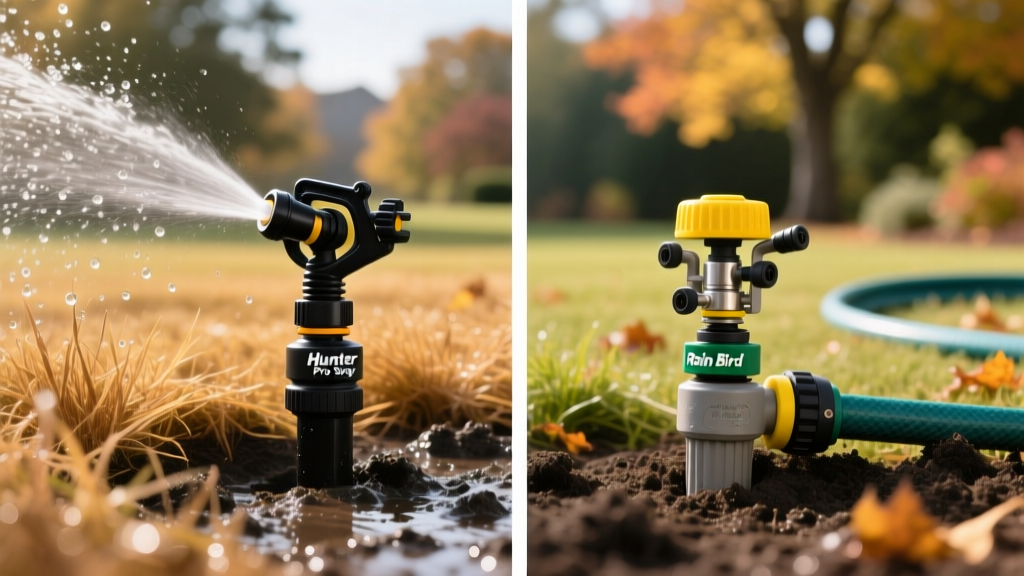
Hunter Pro Spray vs Rain Bird 1800: 2026 Fall Irrigation Guide
Anna KowalskiPublished
Introduction to Fall Irrigation and Sprinkler System Upgrades
As we transition into the fall of 2026, lawn care priorities shift dramatically from promoting rapid top-growth to encouraging deep root development and preparing for winter dormancy. A critical, yet often overlooked, component of autumn lawn maintenance is the irrigation system. Evapotranspiration (ET) rates drop significantly in September and October, meaning your lawn requires far less water. However, this is also the season when your sprinkler bodies and nozzles face unique environmental stressors, from falling debris to the dirt clods created by fall aeration.
For homeowners and landscaping professionals evaluating their systems this autumn, the debate between the Hunter Pro Spray and the Rain Bird 1800 series remains at the forefront of the industry. While the prompt of many discussions centers on nozzle efficiency, it is impossible to separate the nozzle from the sprinkler body that houses it. In this comprehensive 2026 guide, we will compare these two flagship pop-up sprinkler bodies, analyze their respective rotary nozzle ecosystems, and provide actionable fall lawn care routines to ensure your system survives the winter and performs flawlessly next spring.
Hunter Pro Spray vs. Rain Bird 1800: Core Body Differences
Before we discuss the nozzles, we must understand the housing. The sprinkler body dictates the reliability of the seal, the durability of the spring, and the ease of winterization. According to the Irrigation Association, maintaining proper seal integrity is vital to prevent soil intrusion, which is especially common during fall core aeration.
The Hunter Pro Spray
The Hunter Pro Spray is renowned for its rugged, heavy-duty construction. Its standout feature is the co-molded wiper seal, which sits completely flush with the top of the sprinkler cap. This flush-fit design is a massive advantage in the fall; when your lawn is covered with aerated soil plugs and falling leaves, dirt cannot easily work its way down the riser stem. If dirt breaches the seal, the riser will fail to retract, leaving it exposed to freezing temperatures and potential lawnmower damage during late-season mowing.
The Rain Bird 1800 Series
The Rain Bird 1800 series has been a workhorse for decades, and its 2026 iterations continue to feature a patented co-molded wiper seal and a heavy-duty stainless-steel retraction spring. The 1800 series excels in its modularity, particularly with the SAM (Seal-A-Matic) check valve option. In autumn, when you begin shutting down zones or experiencing fluctuating water pressure, low-head drainage can cause water to pool around the sprinkler heads. This pooling can lead to localized soil saturation, promoting fall fungal diseases like snow mold. The 1800 SAM prevents this by holding water in the lateral lines, keeping the head dry when the system is off.
Feature Comparison Chart
| Feature | Hunter Pro Spray | Rain Bird 1800 Series |
|---|---|---|
| Wiper Seal Design | Co-molded, flush-fit cap | Heavy-duty co-molded seal |
| Check Valve Option | Pro-Spray Check Valve | 1800 SAM (Seal-A-Matic) |
| Pressure Regulation | PRS40 (40 PSI) | 1800 PRS (30/45 PSI) |
| Max Operating Pressure | 100 PSI | 100 PSI |
| Fall Debris Resistance | Excellent (Flush Cap) | Very Good |
| Winter Blowout Tolerance | High (Robust internal cap) | High (Reinforced body) |
Nozzle Ecosystems: MP Rotator vs. R-VAN for Autumn Efficiency
When discussing a 'nozzle comparison' between these two brands, we are really comparing their high-efficiency rotary offerings: the Hunter MP Rotator and the Rain Bird R-VAN (Rotary Vanes). In the fall, soil absorption rates change. Cooler soil temperatures and increased autumn rainfall mean the ground is less prone to rapid evaporation but more prone to surface runoff if water is applied too quickly.
The EPA WaterSense program consistently highlights the need for low-precipitation-rate nozzles to match the soil's infiltration rate. Both the MP Rotator and R-VAN deliver water at a fraction of the rate of traditional spray nozzles, but they behave differently in autumn conditions.
- Hunter MP Rotator: Utilizes multi-trajectory streams that are highly resistant to autumn wind distortion. If you live in a region with blustery October winds, the heavier water droplets of the MP Rotator ensure uniform coverage, preventing dry spots that could lead to winter desiccation.
- Rain Bird R-VAN: Features thick, rotating streams that excel at penetrating heavy thatch layers. If you have delayed fall dethatching, the R-VAN's forceful streams can push moisture through the thatch barrier directly to the root zone, which is critical for storing carbohydrates before winter.
Fall Lawn Care: Adjusting Your Sprinkler System for Autumn
Upgrading to a Hunter Pro Spray or Rain Bird 1800 is only half the battle; proper autumn calibration is where water savings and lawn health are truly realized. According to the University of Minnesota Extension, proper fall watering is essential for root survival, but overwatering is a primary cause of winter turf damage.
1. Recalibrate for Lower ET Rates
As of early fall 2026, most smart controllers utilize local weather data to adjust watering schedules automatically. However, if you are running a traditional timer, you must manually reduce your run times. Cut your watering duration by 30% in September and an additional 50% in October. With high-efficiency rotary nozzles, this usually means watering just one or two days a week for 15-20 minutes per zone.
2. Inspect and Clean Wiper Seals
After your fall aeration and overseeding, walk your lawn and inspect every sprinkler head. Wipe the caps of both the Hunter Pro Spray and Rain Bird 1800 with a damp cloth to remove mud and debris. Manually push down on the risers to ensure they retract smoothly. If a riser feels gritty, flush the body by removing the nozzle and turning the zone on for three seconds to blow out trapped soil.
3. Adjust Arc and Radius
Falling leaves can obscure sprinkler heads, making it easy to miss overspray onto hardscapes. Use the adjustment tool to dial back the radius on perimeter heads. Both Hunter and Rain Bird nozzles feature a simple radius reduction screw on top. Turning this clockwise reduces the throw distance, ensuring water stays on the turf and does not contribute to icy sidewalks as nighttime temperatures approach freezing.
Winterizing Your Hunter and Rain Bird Systems
The final and most critical step in fall lawn care is winterization. If water remains inside the sprinkler bodies when temperatures drop below 32°F, the expansion of freezing ice will crack the plastic housing, destroying both the Hunter Pro Spray and the Rain Bird 1800.
The Compressed Air Blowout Method
Using an air compressor to evacuate water from your irrigation lines is the industry standard. However, you must respect the physical limits of these sprinkler bodies. When blowing out a system equipped with MP Rotators or R-VAN nozzles, never exceed 50 PSI at the compressor regulator. High pressure can cause the rotary gears to spin at catastrophic speeds, melting the internal plastics and ruining the nozzle.
- Shut off the main water supply and drain the backflow preventer.
- Connect the air compressor to the system's blowout port.
- Set the regulator to 40-50 PSI.
- Activate one zone at a time via the controller.
- Run the air until only a fine mist is visible from the Hunter or Rain Bird heads.
- Move to the next zone, ensuring you do not overheat the compressor or the PVC lateral lines.
Conclusion
Choosing between the Hunter Pro Spray and the Rain Bird 1800 series in 2026 ultimately comes down to your specific landscape challenges. If your primary concern is keeping dirt and aeration debris out of the sprinkler body, the flush-fit cap of the Hunter Pro Spray is unparalleled. If your landscape features significant slopes and you need to prevent low-head drainage and subsequent autumn pooling, the Rain Bird 1800 SAM is the superior choice. By pairing these robust bodies with high-efficiency rotary nozzles and executing a meticulous fall adjustment and winterization routine, you will protect your investment and ensure a vibrant, healthy lawn when spring returns.