
Lawn Care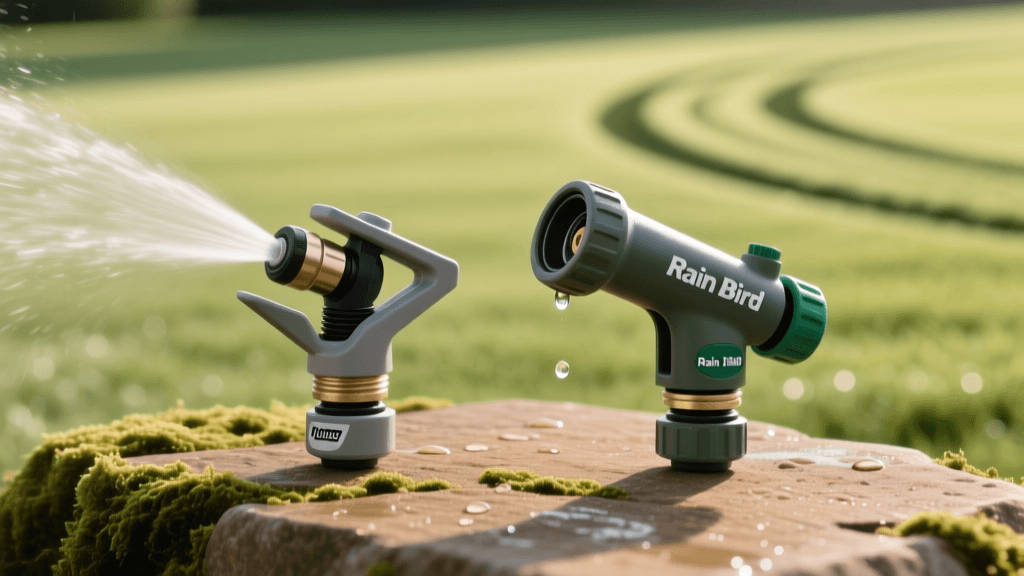
Hunter Pro Spray vs Rain Bird 1800: 2026 Mowing Tips
The Hidden Link Between Irrigation Nozzles and Mowing Mastery
When homeowners and landscaping professionals think about achieving the perfect lawn in 2026, they often obsess over mower deck heights, blade sharpness, and striping kits. However, the foundation of a pristine mowing pattern begins long before the engine starts. The true canvas for your mower is dictated by soil moisture uniformity, which is directly controlled by your irrigation system. Specifically, the ongoing industry debate between the Hunter Pro Spray ecosystem and the Rain Bird 1800 series nozzle lineup is not just a question of water conservation—it is a critical factor in how, when, and where you mow your lawn.
Understanding the intersection of irrigation technology and mowing techniques is essential for modern turf management. If your sprinkler nozzles create uneven moisture zones, puddling, or localized dry spots, your mowing strategy must adapt to prevent scalping, soil compaction, and turf tearing. In this comprehensive 2026 guide, we will compare the flagship nozzle options for the Hunter Pro Spray and Rain Bird 1800 spray bodies, and reveal how to adjust your mowing patterns and techniques to accommodate their unique water distribution footprints.
Hunter Pro Spray vs Rain Bird 1800: The Nozzle Ecosystems
Before diving into mowing patterns, we must clarify a common misconception. The Hunter Pro Spray and the Rain Bird 1800 are technically sprinkler bodies (the plastic housings that pop up from the ground). However, their performance is entirely defined by the nozzles installed within them. In 2026, the standard for both brands has shifted heavily toward high-efficiency rotary nozzles to combat increasingly strict municipal water restrictions.
- Hunter Pro Spray with MP Rotator: The MP Rotator delivers water via multiple, slow-moving streams. This drastically reduces the precipitation rate, allowing water to infiltrate the soil slowly without runoff.
- Rain Bird 1800 with R-VAN (Rotary Van) or HE-VAN: The R-VAN offers a similar multi-stream rotary approach, while the HE-VAN (High-Efficiency Variable Arc) provides a more traditional spray pattern but with improved distribution uniformity and larger droplet sizes to resist wind drift.
According to the EPA WaterSense program, upgrading to high-efficiency rotary nozzles can reduce outdoor water use by up to 30%. But how does this water-saving technology affect the physical act of mowing? The answer lies in soil bearing capacity and turf growth rates.
Precipitation Rates, Soil Moisture, and the Mowing Window
The most significant impact these nozzles have on your mowing routine is the "mowing window"—the time it takes for the soil surface to dry enough to support the weight of a lawn mower without leaving rut marks or causing compaction. Traditional spray nozzles apply water so quickly that they often exceed the soil's infiltration rate, leading to surface puddling. Rotary nozzles apply water slowly, matching the soil's absorption rate.
| Nozzle Type (Body) | Precipitation Rate | Surface Dry-Down Time | Mowing Impact & Technique Adjustment |
|---|---|---|---|
| Hunter MP Rotator (Pro Spray) | Low (0.4" - 0.6"/hr) | Fast (No puddling) | Allows for earlier mowing; prevents wheel ruts and fungal spread from wet grass. |
| Rain Bird R-VAN (1800 Series) | Low (0.5" - 0.8"/hr) | Fast (Minimal runoff) | Excellent for sloped lawns; mower traction is maintained without slipping on mud. |
| Rain Bird HE-VAN (1800 Series) | Medium-High (1.2" - 1.5"/hr) | Moderate (Requires drying) | Delay mowing by 4-6 hours post-cycle to avoid tearing wet turf and compacting soil. |
| Standard Fixed Spray (Either) | High (1.5" - 2.0"+/hr) | Slow (Puddling likely) | High risk of mower scalping in soft spots; requires strict alternating mowing patterns. |
When using high-precipitation nozzles, the soil becomes spongy. If you mow while the ground is in this state, your mower wheels will sink, effectively lowering your cutting height and resulting in severe scalping. Furthermore, mowing wet grass causes the clippings to clump, smothering the turf beneath. By utilizing the slow-precipitation Hunter MP Rotator or Rain Bird R-VAN, the soil structure remains firm, allowing you to execute crisp, clean mowing patterns without damaging the sub-surface.
Adapting Mowing Patterns to Protect Sprinkler Infrastructure
Both the Hunter Pro Spray and Rain Bird 1800 bodies are designed to pop up above the turf canopy to ensure unobstructed water distribution. However, they are still vulnerable to mower damage, particularly from zero-turn mowers or heavy riding tractors. The way you pattern your mowing routes can significantly extend the lifespan of your irrigation hardware.
The Alternating Diamond Pattern
According to turf management guidelines from the University of Minnesota Extension, altering your mowing pattern every time you cut is vital to prevent soil compaction and grain (grass leaning in one direction). When dealing with a dense grid of Pro Spray or 1800 heads, we recommend the Alternating Diamond Pattern. Instead of mowing in straight horizontal or vertical lines that repeatedly track over the same underground lateral pipes and sprinkler heads, mow at 45-degree angles, and switch the direction of the angle the next time you mow.
This technique ensures that the heavy wheels of your mower never repeatedly compact the soil directly adjacent to the sprinkler bodies. Soil compaction around a Rain Bird 1800 or Hunter Pro Spray can cause the body to tilt, ruining the nozzle's distribution uniformity and creating dry arcs that will later require uneven mowing adjustments.
Managing the "Donut Effect" Around Pop-Ups
A common issue in 2026 lawn care is the "donut effect"—a ring of taller, thicker grass immediately surrounding a sprinkler head. This happens because the area directly beneath a pop-up nozzle receives slight overspray and localized humidity, while the wiper seal of the sprinkler body prevents grass from growing directly against the plastic. If you are using standard spray nozzles, this localized wetness causes rapid growth spikes.
Technique Adjustment: When mowing around Hunter Pro Spray or Rain Bird 1800 heads, avoid tight, repetitive turning directly on top of the heads. Zero-turn mowers can easily catch the plastic cap of a 1800 series or shear off the nozzle turret of a Pro Spray if turned sharply while the blade deck is engaged. Approach sprinkler heads at a shallow angle, and use a string trimmer to manage the immediate 3-inch radius around the pop-up to prevent the mower deck from scalping the slightly elevated soil ring that often forms around irrigation bodies.
Distribution Uniformity and the One-Third Mowing Rule
The golden rule of mowing, as cited by the University of Minnesota Extension, is to never remove more than one-third of the grass blade in a single pass. But what happens when your irrigation nozzles fail to provide uniform coverage?
If you are using older, mismatched, or poorly aligned nozzles in your Rain Bird 1800 or Hunter Pro Spray bodies, you will experience poor Distribution Uniformity (DU). In a low-DU system, some areas of the lawn receive 0.5 inches of water, while adjacent zones receive 0.1 inches. The heavily watered zones will grow rapidly, pushing past the 4-inch mark, while the dry zones stall at 2.5 inches.
If you set your mower to 3 inches to follow the one-third rule for the tall grass, you will scalp the dry, slow-growing zones, exposing the soil to weed seeds and sun damage. This is where the 2026 standard of rotary nozzles shines. Both the Hunter MP Rotator and Rain Bird R-VAN are engineered to maintain high DU even at lower pressures. By ensuring every square inch of the lawn receives the exact same amount of moisture, the grass grows at a uniform rate. This uniformity allows you to set your mower deck to a single, optimal height (typically 3 to 3.5 inches for cool-season grasses) and mow in sweeping, confident patterns without constantly adjusting your deck height to compensate for irrigation-induced growth anomalies.
2026 Best Practices for Synchronized Irrigation and Mowing
To perfectly synchronize your Hunter Pro Spray or Rain Bird 1800 system with your mowing routine, follow these actionable steps this season:
- Audit Your Nozzles in Spring: Before the first mow of 2026, run a catch-can test to ensure your MP Rotators or R-VANs are not clogged by winter debris. A clogged nozzle creates a dry spot that will stunt growth and ruin your mowing uniformity.
- Time Your Irrigation Cycles: Program your smart controller to finish watering at least 4 hours before you plan to mow. This allows the grass blades to dry (preventing fungal transmission via the mower deck) while keeping the soil structure firm enough to support mower weight without rutting.
- Keep Blades Razor Sharp: Dull mower blades tear grass, leaving ragged tips that lose moisture rapidly. If your Rain Bird 1800 HE-VAN nozzles are already pushing the limits of your soil's infiltration rate, torn grass will exacerbate drought stress in the dry zones of your spray pattern.
- Utilize Overlapping Passes: When mowing lawns irrigated by rotary nozzles, the distinct "dry edge" of the spray pattern can sometimes result in slightly stunted perimeter growth. Overlap your mower wheel tracks by 2 inches on the outer edges of the lawn to ensure a consistent cut height across the entire turf canopy.
Ultimately, the choice between Hunter Pro Spray and Rain Bird 1800 nozzles extends far beyond water bills. By understanding how precipitation rates and distribution uniformity affect soil bearing capacity and turf growth rates, you can adapt your mowing patterns to protect your irrigation investment while achieving the pristine, golf-course-quality stripes that define a masterfully maintained lawn.