
Lawn Care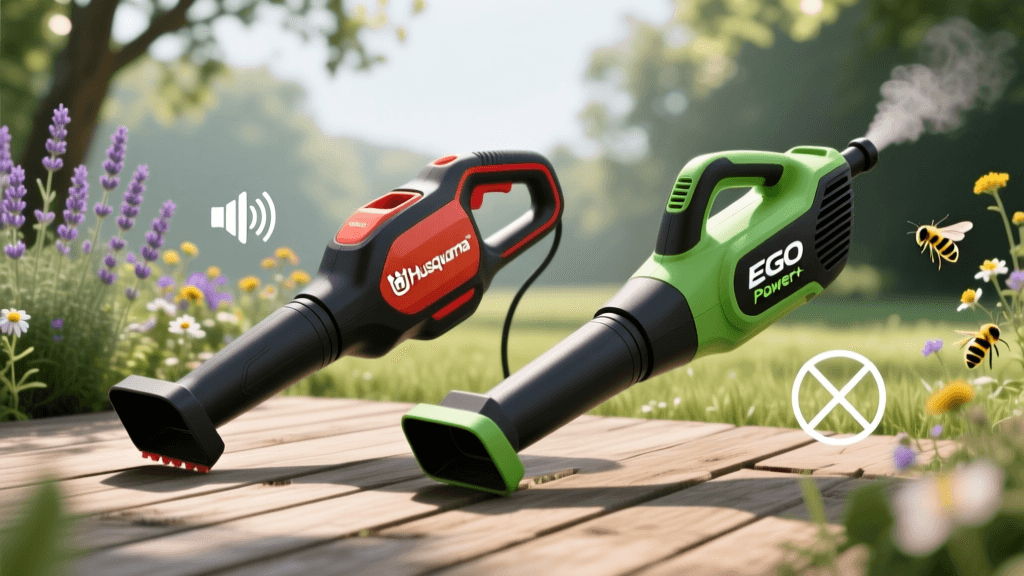
Husqvarna 150BT vs EGO Power+ 2026: Eco-Friendly Blower Test
The Intersection of Lawn Care and Pollinator Health in 2026
As we navigate the 2026 landscaping season, the paradigm of lawn and garden care has shifted dramatically. Homeowners and landscape professionals alike are no longer just asking which tools are the fastest or most powerful; they are increasingly asking which tools are compatible with a thriving, biodiverse ecosystem. Nowhere is this shift more apparent than in the design and maintenance of pollinator-friendly gardens. When you are cultivating a sanctuary for native bees, butterflies, and beneficial insects, every maintenance decision matters—including the leaf blower you choose to clear your hardscapes and manage your turf.
In this comprehensive comparison, we are putting two of the most popular backpack blowers on the market head-to-head: the gas-powered Husqvarna 150BT and the battery-powered EGO Power+ 56V Backpack Blower. While both are exceptional tools for moving debris, their ecological footprints are vastly different. By examining their performance, emissions, and acoustic profiles through the lens of pollinator conservation, we can determine which tool truly belongs in the modern, eco-conscious gardener's arsenal.
The Pollinator-Friendly Garden Philosophy
Before diving into the hardware, it is crucial to understand the core tenets of pollinator-friendly garden design. A pollinator garden is not just a collection of nectar-rich flowers; it is a holistic habitat that provides food, water, shelter, and nesting sites. According to Penn State Extension, maintaining this habitat requires a delicate balance between necessary yard cleanup and preserving the natural debris that overwintering insects rely on for survival.
Furthermore, the sensory environment of your garden is just as important as its physical layout. Pollinators rely heavily on olfactory cues (scent) and acoustic ecology to navigate, forage, and communicate. The tools we use to maintain our yards can directly disrupt these vital biological processes. This is where the debate between gas-powered and battery-powered outdoor power equipment becomes a critical environmental issue.
Husqvarna 150BT: The Gas-Powered Workhorse
The Husqvarna 150BT has long been a staple in the landscaping industry and among serious homeowners. Powered by a 51cc X-Torq engine, this gas backpack blower is designed for heavy-duty, prolonged use. In 2026, it remains a reliable choice for clearing massive properties, wet leaves, and heavy pine needles. It delivers an impressive 490 CFM (Cubic Feet per Minute) and an air speed of 180 MPH.
However, from a pollinator-friendly perspective, the Husqvarna 150BT presents significant challenges. Despite the X-Torq engine's compliance with modern EPA and CARB emission standards, it still combusts fossil fuels. This combustion process releases nitrogen oxides (NOx), carbon monoxide (CO), and volatile organic compounds (VOCs) directly into the garden air. Additionally, the 150BT operates at approximately 94 decibels (dB) at the operator's ear, and the low-frequency rumble of a two-stroke engine carries far across a property, contributing heavily to localized noise pollution.
EGO Power+ 56V Backpack Blower: The Battery-Powered Contender
On the other side of the spectrum is the EGO Power+ 56V ARC Lithium Backpack Blower. EGO has continued to push the boundaries of battery technology in 2026, offering advanced thermal management systems that prevent battery sag during heavy loads. The current iteration of their flagship backpack blower pushes an astonishing 800 CFM and 200 MPH of air velocity, rivaling and even exceeding many mid-tier gas models.
For the pollinator garden enthusiast, the EGO Power+ offers a massive ecological advantage: zero direct emissions. There is no unburned fuel, no exhaust fumes, and no risk of spilling gasoline or oil mix onto your carefully cultivated garden beds. Furthermore, the acoustic profile of the EGO is fundamentally different. While it is not completely silent, it operates at roughly 65 dB on lower settings and peaks around 78 dB on turbo. More importantly, the high-pitched whine of the electric motor dissipates much faster in the environment than the low-frequency, ground-shaking rumble of a gas engine, making it significantly less disruptive to local wildlife.
Head-to-Head Comparison: 2026 Specifications
To visualize how these two powerhouse tools compare for the modern eco-conscious homeowner, review the specification table below:
| Feature | Husqvarna 150BT (Gas) | EGO Power+ 56V (Battery) |
|---|---|---|
| Power Source | 51cc 2-Cycle X-Torq Engine | 56V ARC Lithium-Ion Battery |
| Air Volume (CFM) | 490 CFM | 800 CFM |
| Air Speed (MPH) | 180 MPH | 200 MPH |
| Noise Level (Approx.) | 94 dB (Low-frequency rumble) | 65 - 78 dB (High-frequency whine) |
| Direct Emissions | Yes (NOx, CO, VOCs) | None (Zero direct emissions) |
| Weight (w/ Battery/Fuel) | 22.5 lbs | 21.3 lbs (with 12.0Ah battery) |
| Runtime / Capacity | Unlimited (with refueling) | Up to 90 mins (on low/med) |
| 2026 Est. Price | $229.00 | $399.00 (Kit with 12.0Ah) |
The Hidden Cost of Gas: Emissions and Floral Scent Degradation
One of the most fascinating and under-discussed aspects of pollinator-friendly garden design is how air quality affects insect foraging. Bees, moths, and butterflies do not just use their eyes to find flowers; they rely heavily on their sense of smell. Flowers emit specific plumes of volatile organic compounds (floral VOCs) that act as a scent trail, guiding pollinators directly to nectar and pollen sources.
Research has shown that the exhaust emissions from gas-powered engines—specifically ozone and nitrogen oxides—chemically react with and degrade these floral scent plumes. When you use a gas-powered blower like the Husqvarna 150BT near your blooming garden beds, the exhaust can effectively "mask" the scent of your flowers, making it significantly harder for native bees to locate their food sources. By choosing the zero-emission EGO Power+, you are actively preserving the olfactory map that your local pollinator population depends on for survival.
Acoustic Ecology: Noise Pollution in the Garden
Noise pollution is a recognized environmental hazard that extends far beyond human annoyance. According to the United States Environmental Protection Agency (EPA), chronic noise exposure disrupts wildlife communication, navigation, and predator-prey dynamics. In a garden setting, the 94 dB roar of a gas backpack blower can temporarily deafen birds and disrupt the acoustic signaling of various insects.
While the EGO Power+ is certainly not whisper-quiet at full turbo, its overall sound pressure level is lower, and its frequency profile is less intrusive to the natural rhythms of the garden. For gardeners who practice "mindful maintenance" and wish to minimize their disturbance to nesting birds and foraging insects, the battery-powered option is the undisputed winner.
The 3-Zone Leaf Management Strategy for Pollinator Gardens
Regardless of which blower you choose, how you use it is paramount to pollinator health. The outdated notion of blowing a yard "golf-course clean" is ecologically devastating. Instead, pollinator experts and organizations like The Xerces Society advocate for leaving leaves in place to provide overwintering habitat for bumblebee queens, moth pupae, and butterfly larvae. To balance a tidy landscape with ecological responsibility, implement this 3-Zone Strategy using your blower:
- Zone 1: Hardscapes and Pathways (Blow Clean)
Use your blower (preferably the EGO Power+ on a medium setting) to completely clear patios, driveways, and walkways. This prevents slip hazards and keeps organic matter from staining stonework or clogging drainage systems. - Zone 2: The Turf Lawn (Mulch or Lightly Clear)
Thick layers of wet leaves will smother cool-season and warm-season grasses, leading to fungal diseases and dead patches. Use your blower to move heavy leaf accumulations off the lawn. Alternatively, use a mulching mower to chop the leaves into fine pieces that will decompose and feed the soil without blocking sunlight to the grass. - Zone 3: Garden Beds and Naturalized Areas (Leave the Leaves)
Turn the blower off. Allow leaves to accumulate naturally in your perennial beds, under shrubs, and in naturalized borders. This leaf litter acts as a vital insulating mulch, suppresses weeds, retains soil moisture, and provides essential overwintering habitat for your garden's beneficial insect population.
Final Verdict for the Eco-Conscious Gardener
When comparing the Husqvarna 150BT and the EGO Power+ Backpack Blower for 2026, the traditional gas-powered Husqvarna remains a formidable tool for commercial landscapers who need infinite runtime and raw, unyielding power for massive, non-ecological properties. However, for the homeowner dedicated to pollinator-friendly garden design, the Husqvarna's exhaust emissions and disruptive noise profile make it a poor fit for a biodiverse sanctuary.
The EGO Power+ 56V Backpack Blower is the clear winner for the modern, eco-conscious gardener. Its zero-emission operation protects the delicate floral scent trails that bees rely on, while its reduced acoustic footprint respects the garden's natural wildlife. Combined with its class-leading 800 CFM output and the convenience of instant push-button starts without the hassle of mixing fuel or winterizing carburetors, the EGO Power+ proves that you do not have to sacrifice performance to protect the planet. By pairing this advanced battery technology with a mindful, zone-based leaf management strategy, you can maintain a pristine landscape while ensuring your garden remains a thriving haven for pollinators for years to come.