
Lawn Care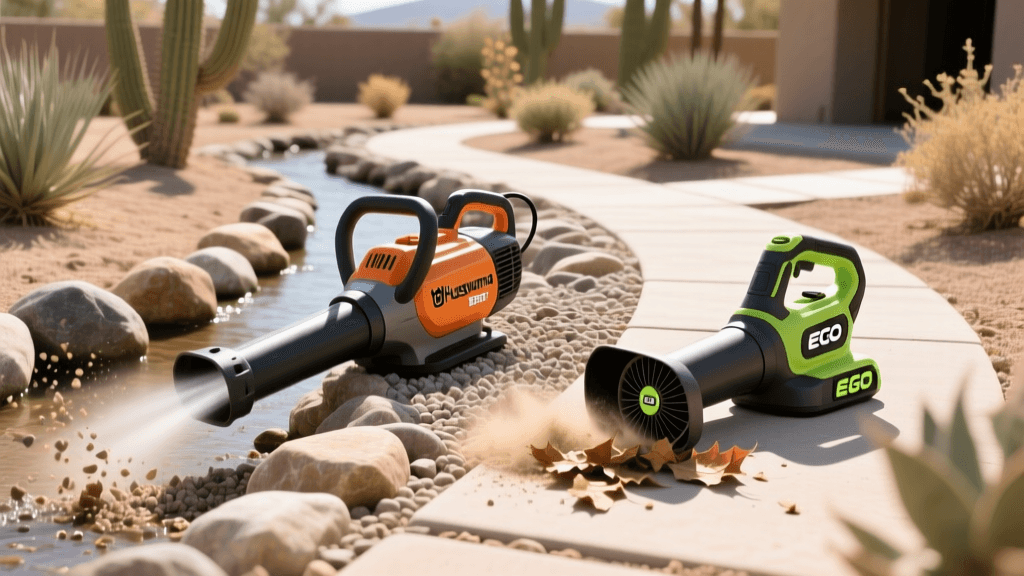
Husqvarna 150BT vs EGO Power+ Blowers: 2026 Xeriscape Guide
The Evolution of Xeriscape Maintenance in 2026
As we navigate the landscaping trends of 2026, xeriscaping and low-water landscaping have moved from niche environmental statements to mainstream necessities. With prolonged drought conditions affecting the Southwest, Mountain West, and even parts of the Southeast, homeowners and commercial property managers are replacing thirsty turfgrass with drought-tolerant alternatives. According to the Southern Nevada Water Authority, replacing traditional lawns with water-smart landscapes can save thousands of gallons of water annually per household. However, maintaining a xeriscape presents unique challenges, particularly when it comes to debris removal.
Unlike traditional turf where a mower mulches leaves, or a traditional garden where a steel rake easily gathers debris, xeriscapes feature delicate groundcovers, shallow-rooted succulents, decomposed granite (DG), river rock, and dry creek beds. Raking these surfaces is disastrous; it tears through weed barriers, disturbs the compacted finish of DG, and damages the fragile root systems of agaves and aloes. This makes the leaf blower an indispensable tool for low-water landscapes. But with tightening emissions regulations and noise ordinances, choosing the right blower is critical. In this guide, we compare two industry heavyweights for xeriscape maintenance: the gas-powered Husqvarna 150BT and the battery-powered EGO Power+ 56V Backpack Blower.
Why Xeriscapes Demand Specialized Debris Removal
Before diving into the hardware, it is essential to understand the physics of a xeriscape. Low-water landscapes rely heavily on inorganic mulches like lava rock, Mexican beach pebbles, and crushed granite. When autumn leaves, pine needles, or windblown trash settle into these rock beds, they cannot simply be raked out. A rake will snag on the rocks, pull up the underlying geotextile weed fabric, and create an uneven, messy appearance.
Furthermore, xeriscape plants are often adapted to arid environments where dust and debris can clog their stomata (the pores on leaves used for gas exchange). A gentle, controlled stream of air is required to lift debris off the rocks and out of the crevices of boulder arrangements without blasting the decorative gravel into the street or damaging the waxy cuticles of desert plants. This requires a blower with excellent variable speed control, a focused nozzle, and manageable weight for precision work.
Husqvarna 150BT: The Gas-Powered Workhorse
The Husqvarna 150BT has long been a staple in the landscaping industry. Powered by a 51.8cc X-Torq engine, this gas backpack blower is designed for heavy-duty, prolonged use. In the context of xeriscaping, the 150BT offers immense raw power, generating up to 494 CFM (Cubic Feet per Minute) and air speeds of 251 MPH.
Pros for Xeriscaping
- Unlimited Runtime: For large, rural xeriscapes or commercial desert properties spanning several acres, the ability to simply refill the fuel tank and keep working is invaluable. There is no waiting for batteries to charge.
- Wet Debris Removal: Xeriscapes in regions that experience sudden monsoon rains often suffer from mud and wet leaves plastered against flagstone patios and dry creek beds. The high torque of the 150BT easily breaks the surface tension of wet debris, blasting it clean off hardscapes.
- Focused Airflow: The narrow, adjustable tube allows operators to get into tight crevices between large boulders and desert willows without needing to move the rocks manually.
Cons for Xeriscaping
- Exhaust and Heat: The 2-stroke engine emits hot exhaust. If you are working near delicate succulents or low-lying groundcovers like creeping thyme, the heat and unburned hydrocarbons can cause localized stress or leaf burn.
- Vibration and Noise: Weighing in at over 22 pounds and producing significant decibels, the 150BT is fatiguing for the precise, slow-paced work often required in intricate rock gardens.
EGO Power+ 56V Backpack Blower: The Cordless Challenger
The EGO Power+ 56V Lithium-Ion Brushless Backpack Blower represents the pinnacle of modern battery-powered outdoor equipment. Utilizing advanced turbine fan technology, it rivals gas blowers with an impressive 800 CFM and 180 MPH, entirely eliminating the need for gas and oil mixes.
Pros for Xeriscaping
- Zero Emissions: According to the California Air Resources Board (CARB), small off-road engines like gas blowers contribute disproportionately to localized air pollution. The EGO produces zero emissions, ensuring that your delicate desert flora are not subjected to exhaust fumes.
- Precision Variable Speed Dial: The EGO features a highly responsive variable speed trigger and a cruise control dial. This is crucial for xeriscaping, allowing you to dial back the power to a gentle breeze when clearing dust off agave leaves, and crank it up to hurricane force when clearing heavy pine needles from a gravel driveway.
- Quiet Operation: Operating at roughly 64 decibels, it is significantly quieter than the Husqvarna. This is vital for suburban xeriscapes where noise ordinances are strictly enforced, and where loud gas engines can disturb local wildlife and neighbors.
Cons for Xeriscaping
- Battery Limits: Even with a high-capacity 5.0Ah or 7.5Ah battery, continuous high-speed use will drain the pack in 45 to 70 minutes. For massive properties, you will need to invest in multiple expensive batteries.
- Less Torque on Wet Debris: While the CFM is massive, battery blowers sometimes struggle with the sheer torque required to peel wet, matted leaves off rough flagstone compared to a gas engine.
2026 Head-to-Head Xeriscape Comparison Table
| Feature | Husqvarna 150BT (Gas) | EGO Power+ 56V Backpack (Battery) |
|---|---|---|
| Air Volume (CFM) | 494 CFM | 800 CFM |
| Air Speed (MPH) | 251 MPH | 180 MPH |
| Weight (w/ battery or empty) | 22.5 lbs | 22.2 lbs (with 5.0Ah battery) |
| Noise Level | ~78 dB (Loud) | ~64 dB (Quiet) |
| Runtime | Unlimited (refill tank) | 45-90 mins (depends on battery) |
| Maintenance | High (spark plugs, fuel lines) | None (brushless motor) |
| Estimated 2026 Price | $399 | $449 (Tool + 5.0Ah Battery) |
Environmental Impact: Emissions and Noise in Low-Water Zones
When designing a low-water landscape, the ethos is typically centered on environmental stewardship and sustainability. The EPA notes that outdoor water use accounts for nearly a third of all residential water use, making xeriscaping a noble pursuit for conservation (see EPA WaterSense). However, maintaining an eco-friendly landscape with a high-emission gas blower can feel counterintuitive.
In 2026, many municipalities that offer rebates for xeriscaping have also enacted strict bans or time-restrictions on gas-powered leaf blowers due to noise pollution and particulate emissions. The EGO Power+ aligns perfectly with the sustainable philosophy of xeriscaping. It eliminates the risk of spilling 2-stroke oil or gasoline onto permeable pavers or into dry creek beds, which could leach into the local water table during a rare but heavy desert downpour.
Pro Tips for Blowing Debris on Decomposed Granite and Gravel
Regardless of whether you choose the Husqvarna or the EGO, technique is everything when working with xeriscape materials. Here are the best practices for 2026:
- The 'Skim' Technique: Never point the nozzle directly down at decomposed granite or pea gravel. The high velocity will create a crater, exposing the weed barrier beneath. Instead, keep the nozzle parallel to the ground, skimming the surface at a 15-degree angle to lift leaves without disturbing the stones.
- Use the Right Nozzle Attachment: For tight spaces around boulders and succulent rosettes, use a narrower, tapered nozzle extension. This increases airspeed without requiring you to open the throttle fully, reducing the risk of blowing away your decorative top-dressing.
- Manage Dust Buildup: Xeriscapes are inherently dusty. When blowing dry leaves off a gravel bed, a cloud of dust will inevitably rise. Wear a high-quality N95 mask and safety glasses. Furthermore, periodically rinse the leaves of your desert plants with a gentle hose setting to remove the dust stirred up by the blower, ensuring they can photosynthesize efficiently.
- Leverage the 'Leaf Pile' Strategy: Because you cannot blow debris onto a lawn to mulch it, you must plan your exit route. Blow debris from the back of the rock beds toward the hardscape edges, then use a heavy-duty tarp to drag the debris to your compost or green waste bin.
Final Verdict: Which Should You Choose?
The choice between the Husqvarna 150BT and the EGO Power+ 56V Backpack Blower ultimately depends on the scale and location of your xeriscape.
Choose the EGO Power+ if: You live in an urban or suburban environment with strict noise ordinances, your xeriscape is under one acre, and you prioritize environmental sustainability. The EGO's precise variable speed control, lack of hot exhaust, and quiet operation make it the undisputed champion for delicate rock gardens, tight courtyard designs, and residential desert landscaping.
Choose the Husqvarna 150BT if: You are maintaining a large, rural property, a commercial desert resort, or an area prone to heavy seasonal mud and wet debris where battery life would be a bottleneck. The raw, unyielding torque of the gas engine is still king for heavy-duty clearing on expansive acreages where the roar of the engine and the smell of exhaust are not a concern.
Ultimately, both tools will save your back and protect your weed barriers far better than a traditional rake. By selecting the right blower for your specific low-water landscape, you ensure that your xeriscape remains pristine, sustainable, and beautiful for years to come.