Lawn Care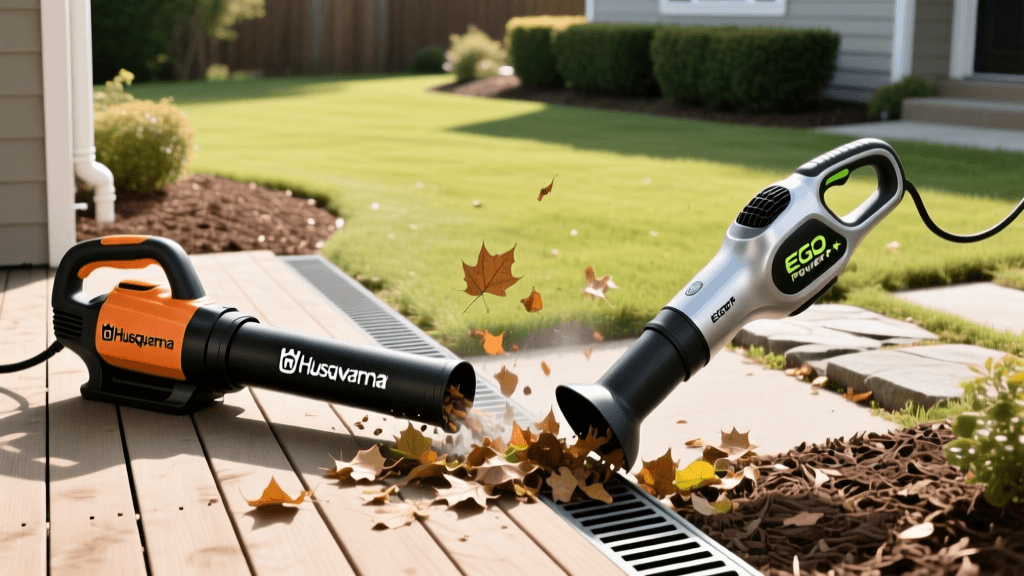
Husqvarna 150BT vs EGO Power+ Blowers for Drainage Care 2026
The Critical Role of Leaf Blowers in Landscape Drainage Maintenance
When designing or maintaining a healthy lawn, managing water runoff is just as important as fertilization or mowing. Landscape drainage pipes—including French drains, corrugated perforated pipes, PVC catch basins, and channel drains—are the unsung heroes of yard health. However, these systems are highly vulnerable to organic debris. Autumn leaves, spring seed pods, and wind-blown thatch can quickly clog drain grates and infiltrate the gravel trenches of French drains, leading to severe yard flooding and soil erosion.
While raking might seem like the obvious solution for yard cleanup, using a metal or plastic rake near landscape drainage pipes is a recipe for disaster. Raking can dislodge the protective gravel from French drains, damage the delicate filters of catch basins, and tear up the turf surrounding channel drains. In 2026, professional landscapers and serious homeowners agree that a high-powered backpack leaf blower is the safest, most efficient tool for clearing debris away from drainage infrastructure. But which power source reigns supreme for this specialized task? In this comprehensive guide, we compare two of the most popular backpack blowers on the market: the gas-powered Husqvarna 150BT and the battery-powered EGO Power+ 765 CFM.
Husqvarna 150BT: The Gas-Powered Workhorse
The Husqvarna 150BT has long been a staple in the landscaping industry. Powered by a 51cc 2-cycle X-Torq engine, this gas backpack blower delivers an impressive 700 CFM (cubic feet per minute) and an air speed of 236 MPH. When it comes to clearing landscape drainage pipes, raw air speed is often more critical than air volume. Wet, matted leaves that have plastered themselves against the plastic grates of a catch basin or wedged into the slats of a trench drain require high-velocity air to break the surface tension and dislodge the muck.
The 150BT excels in these heavy-duty scenarios. Its narrow, concentrated nozzle allows you to direct a laser-focused beam of air into the corners of channel drains without blowing the surrounding decorative river rock out of place. Furthermore, because it runs on a mixed fuel tank, the Husqvarna offers unlimited runtime. If you are managing a multi-acre property with hundreds of feet of perforated corrugated drainage pipes and extensive dry creek beds, you can simply refill the tank and keep working without waiting for batteries to charge.
However, the 150BT is not without its drawbacks. The 2-cycle engine requires regular maintenance, including spark plug replacements, air filter cleaning, and fuel stabilization during the off-season. Additionally, as of 2026, tightening environmental regulations regarding Small Off-Road Engines (SORE) mean that gas-powered equipment faces restrictions in several states, as noted by the California Air Resources Board. Noise pollution is another factor; the 150BT operates at around 94 dB, which can violate local noise ordinances if you are clearing drainage grates near property lines early in the morning.
EGO Power+ 765 CFM Backpack Blower: The Battery-Powered Contender
The EGO Power+ 765 CFM Backpack Blower (model LB7650) represents the pinnacle of 56V ARC Lithium battery technology in 2026. Pushing an industry-leading 765 CFM and reaching speeds up to 200 MPH with the Turbo button engaged, the EGO is designed to compete directly with commercial gas blowers. For landscape drainage maintenance, the EGO’s massive air volume is incredibly effective at sweeping large, dry leaves away from gravel swales and the surface of French drain trenches without disturbing the underlying stones.
One of the EGO’s greatest advantages for drainage maintenance is its precise variable speed dial and responsive turbo button. When working around delicate landscape drainage pipes, such as exposed PVC risers or decorative pop-up emitters, you can feather the throttle to gently move debris without blasting topsoil into the pipe openings. The EGO is also significantly quieter than the Husqvarna, operating at roughly 64 dB on standard settings, allowing you to perform weekend drainage maintenance without disturbing your neighbors.
The primary limitation of the EGO Power+ in a commercial or large-scale residential setting is battery life. Running the blower on high or using the Turbo button to clear wet debris from catch basins will drain a 5.0Ah battery in approximately 20 to 30 minutes. For extensive drainage networks, you will need to invest in multiple high-capacity batteries (such as the 10.0Ah or 12.0Ah models) and a rapid charger to maintain a continuous workflow.
Head-to-Head Comparison: Clearing Landscape Drainage Systems
To help you decide which blower is best suited for your specific landscape drainage pipe setup, we have broken down their performance across key metrics relevant to hardscape and drainage maintenance.
| Feature | Husqvarna 150BT (Gas) | EGO Power+ 765 CFM (Battery) |
|---|---|---|
| Air Volume (CFM) | 700 CFM | 765 CFM |
| Air Speed (MPH) | 236 MPH | 200 MPH (Turbo) |
| Best Drainage Application | Wet, compacted debris on catch basin grates and channel drains. | Dry leaf removal from French drain gravel and broad yard swales. |
| Runtime | Unlimited (refillable tank) | 20-90 mins (depends on battery Ah) |
| Noise Level | ~94 dB (Loud) | ~64 dB (Quiet) |
| 2026 Estimated Price | $429 (Tool + Harness) | $499 (Tool) / $799 (with 5.0Ah) |
Techniques for Blowing Debris Around Landscape Drainage Pipes
Regardless of whether you choose the Husqvarna or the EGO, proper technique is vital to protect your yard's hydrology. According to experts at the University of Minnesota Extension, maintaining the integrity of your soil grading and drainage aggregate is essential for preventing water from pooling near your home's foundation. Here is how to use your blower effectively around these systems:
1. French Drains and Gravel Trenches
French drains rely on a bed of washed gravel to allow water to percolate down to the perforated corrugated pipe below. When blowing leaves off a French drain, keep the blower nozzle parallel to the ground and use a wide, sweeping motion. If you point the nozzle directly down into the gravel, you risk blowing fine topsoil and organic dust deep into the aggregate, which can eventually clog the landscape drainage pipe's perforations and the surrounding geotextile fabric.
2. Catch Basins and Grates
Catch basins are designed to capture large volumes of surface runoff, but their grates are notorious for trapping wet, decaying leaves. Use the Husqvarna 150BT’s high MPH or the EGO’s Turbo button to blast the grate from a 45-degree angle. Always blow debris away from the direction of the yard's natural slope to ensure that the next heavy rain doesn't simply wash the pile of leaves right back over the grate.
3. Channel Drains (Trench Drains)
Often installed across driveways or patios to intercept water before it reaches the garage or foundation, channel drains feature narrow slotted grates. Debris here is usually compacted by foot or tire traffic. Use the crevice tool attachment on your blower to concentrate the airflow directly into the slots, dislodging pine needles and seeds that can block the PVC pipe below.
Environmental Impact and 2026 Regulations
The landscaping industry is undergoing a massive shift toward electrification. Managing stormwater and yard drainage is a core component of environmental stewardship, as proper drainage prevents fertilizer and pesticide runoff from entering local waterways, a concept heavily emphasized by Penn State Extension's stormwater management guidelines. Using zero-emission equipment like the EGO Power+ aligns with this eco-friendly philosophy, eliminating the risk of spilling 2-cycle oil or unburned hydrocarbons onto your lawn and into your drainage system.
Conversely, the Husqvarna 150BT remains a vital tool for rural properties or areas where battery infrastructure is lacking, and where the raw, unyielding power of gas is required to clear heavy, waterlogged debris from critical drainage choke points.
The Final Verdict for 2026
If your property features an extensive network of landscape drainage pipes, French drains, and catch basins, your choice between the Husqvarna 150BT and the EGO Power+ 765 CFM comes down to the type of debris and your local regulations. For suburban lawns where noise restrictions apply, and where dry leaves threaten to smother gravel drainage swales, the EGO Power+ 765 CFM is the superior, modern choice for 2026. Its high air volume and precise throttle control make it incredibly safe and effective for delicate drainage infrastructure.
However, if you manage large, heavily wooded acreage where wet, matted leaves constantly plaster themselves over critical catch basin grates and channel drains, the Husqvarna 150BT remains an undeniable powerhouse. Its 236 MPH air speed will clear stubborn, waterlogged blockages that would stall a battery-powered unit, ensuring your landscape drainage pipes remain clear and your lawn stays perfectly drained year-round.