Lawn Care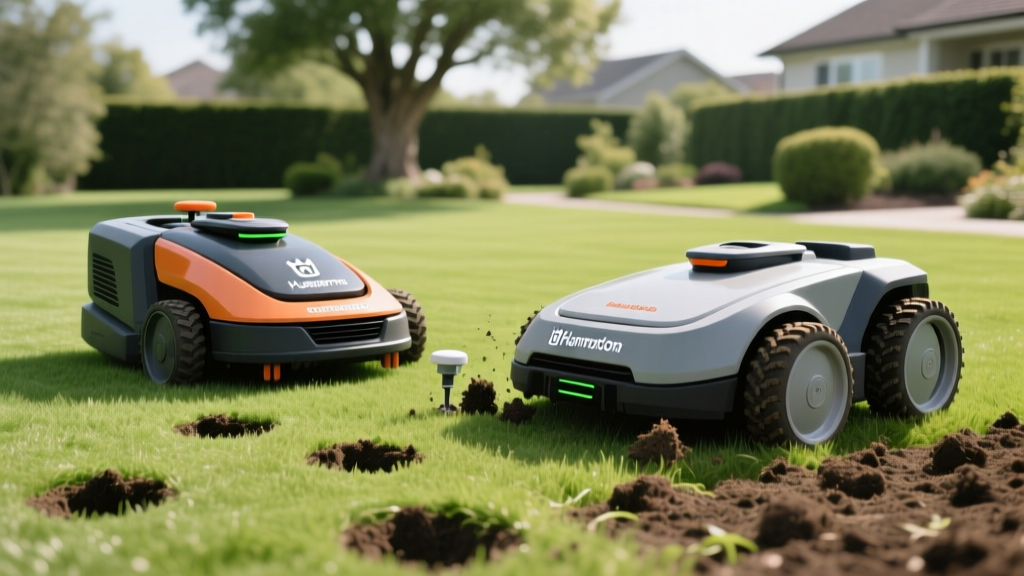
Core Aeration 2026: Husqvarna Automower vs Mammotion Luba
Mike RodriguezPublished
The Intersection of Robotic Mowing and Core Aeration in 2026
As we navigate the 2026 lawn care season, robotic mowers have firmly transitioned from niche gadgets to essential turf management tools. Homeowners are increasingly relying on flagship models like the Husqvarna Automower 550X EPOS and the Mammotion Luba 2 AWD to maintain pristine lawns with minimal manual intervention. However, automated daily mowing does not eliminate the fundamental biological and physical needs of your soil. Core aeration remains a non-negotiable practice for combating soil compaction, improving water infiltration, and facilitating deep root growth.
When you introduce heavy mechanical core aeration into a lawn managed by lightweight, daily-use robotics, unique challenges and opportunities arise. How do these robots handle the freshly punched holes and thousands of soil plugs left behind? Does the daily traffic of a robot mower actually contribute to the compaction that necessitates aeration in the first place? In this comprehensive 2026 guide, we evaluate the Husqvarna Automower and Mammotion Luba ecosystems specifically through the lens of core aeration, soil health, and post-aeration turf recovery.
Soil Compaction Dynamics: Do Daily Mowers Cause Compaction?
One of the most persistent myths in modern lawn care is that switching to a robotic mower eliminates soil compaction. It is true that a 35-pound Husqvarna Automower exerts significantly less ground pressure than a 500-pound traditional gas-powered riding tractor. However, the frequency of robotic mowing introduces a different dynamic: micro-compaction from repetitive daily tracking.
According to turfgrass researchers at the University of Minnesota Extension, soil compaction occurs when soil particles are pressed together, reducing the pore space between them. While a robot mower is light, its tendency to follow similar GPS or boundary-wire patterns day after day can create localized micro-compaction zones, particularly in high-traffic corridors or near the charging station. Core aeration physically fractures these compacted layers by extracting 2-to-3-inch soil cores, allowing oxygen, water, and nutrients to reach the root zone. Therefore, even if you use a state-of-the-art 2026 robotic mower, scheduling annual or bi-annual core aeration is still vital for long-term turf vitality.
Husqvarna Automower vs. Mammotion Luba: Navigating Freshly Aerated Soil
The immediate aftermath of core aeration leaves your lawn looking like a battlefield. The ground is soft, uneven, and littered with thousands of clay and soil plugs. This environment is a rigorous stress test for any robotic mower's traction and navigation systems.
Traction and Suspension on Soft Soil
The Mammotion Luba 2 AWD is purpose-built for rough terrain. Its four-wheel-drive hub motors, aggressive off-road wheel lugs, and independent suspension allow it to crawl over fresh aeration holes without slipping or scalping the lawn. The soft, freshly punctured soil offers little resistance, but the Luba's torque and weight distribution prevent it from sinking into the holes and getting high-centered.
Conversely, the Husqvarna Automower 550X EPOS relies on a traditional two-wheel-drive system with a pivoting rear axle. While incredibly efficient on flat, established turf, the Automower can occasionally struggle with traction in deep, soft aeration holes, especially if the soil is damp. Husqvarna owners in 2026 often need to install the optional traction brush kits on their rear wheels to maintain grip when navigating freshly aerated, uneven ground.
Ground Pressure and Traction Comparison
| Feature | Husqvarna Automower 550X EPOS (2026) | Mammotion Luba 2 AWD 10000 (2026) |
|---|---|---|
| Weight | ~35 lbs (Lighter footprint) | ~65 lbs (Heavier, but distributed) |
| Drive System | 2WD Pivot Rear | 4WD Independent Hub Motors |
| Aeration Plug Handling | Standard Mulching Disc | High-Torque Dual Mulching Blades |
| Navigation Infrastructure | Boundary Wire / EPOS Virtual | RTK GPS (Wire-Free) |
| Soft Soil Traction | Moderate (Traction brushes recommended) | Excellent (Aggressive Tread) |
The Infrastructure Factor: Boundary Wires vs. RTK GPS During Aeration
Perhaps the most critical difference between these two brands when planning a core aeration service is the underlying navigation infrastructure. Mechanical core aerators use heavy, hollow steel tines that penetrate 3 to 4 inches into the soil. If you have a traditional perimeter wire installed for a Husqvarna Automower, running a mechanical aerator over your lawn poses a severe risk of severing the boundary wire or damaging shallow guide wires.
While Husqvarna's EPOS (Exact Positioning Operating System) plug-in kit offers wire-free virtual boundaries for certain 2026 models, many homeowners still rely on physical perimeter wires for older or standard Automower installations. If you must aerate a wired lawn, you are forced to manually mark the wire path with paint flags or use a manual, handheld aerator near the edges to avoid costly wire breaks and signal loss.
The Mammotion Luba series, utilizing RTK (Real-Time Kinematic) GPS satellite positioning, requires absolutely no buried or surface wires. This wire-free architecture is a massive advantage during seasonal lawn renovations. You can rent a heavy-duty walk-behind core aerator and cover the entire property without a single thought about severing navigation cables. This freedom allows for deeper, more aggressive aeration passes without the anxiety of damaging your robot's infrastructure.
Managing Aeration Plugs and Overseeding with Robots
After the aerator passes, your lawn will be covered in soil plugs. Turfgrass experts at the University of Wisconsin-Madison Extension recommend leaving these plugs on the lawn to break down naturally, as they contain beneficial microorganisms and help topdress the thatch layer. Both the Husqvarna and Mammotion robots are designed as mulching mowers, meaning they will eventually chop these plugs up, but their approaches differ.
The Mammotion Luba features a high-RPM dual-blade deck that acts almost like a vacuum, lifting and pulverizing dry soil plugs rapidly. If you choose to overseed immediately after aeration—a highly recommended 2026 practice for thickening cool-season turf—the Luba's aggressive mulching can sometimes disturb the freshly laid seedbed if the cutting height is dropped too low. It is crucial to raise the Luba's cutting height to its maximum setting (up to 4 inches) for the first two weeks post-aeration to protect the germinating seed.
The Husqvarna Automower uses a razor-blade disc system that is gentler on the turf. It slices the grass cleanly and will slowly wear down the aeration plugs over successive daily mowings. Because the Automower is lighter, it is less likely to press freshly broadcast grass seed deep into the mud, which can sometimes hinder germination. However, Husqvarna owners must ensure their blades are freshly sharpened or replaced before the aeration season; dull blades will tear at the plugs rather than mulching them, leaving an unsightly, messy lawn.
2026 Step-by-Step Aeration Schedule for Robot Mower Owners
To maximize the health of your lawn and protect your robotic investment, follow this optimized scheduling protocol for the 2026 season:
- Step 1: Pre-Aeration Prep (Late August / Early September for Cool-Season Grasses): Stop the robot mower 24 hours before aeration. Allow the grass to grow slightly taller to protect the crown during the aeration process. Water the lawn deeply two days prior to ensure the soil is moist enough for the aerator tines to pull deep, intact cores.
- Step 2: Mark Infrastructure: If using a Husqvarna with a boundary wire, mark the wire path and all shallow sprinkler heads with high-visibility flags. Mammotion Luba users can skip wire marking but should still flag sprinkler heads.
- Step 3: Execute Aeration and Overseeding: Run the aerator in two perpendicular passes. Broadcast your 2026-certified grass seed and apply a starter fertilizer immediately after.
- Step 4: The Robot Quarantine Period: Do NOT deploy your robotic mower for 10 to 14 days post-aeration. The soil needs time to settle, and the seed needs undisturbed contact with the soil to germinate. Daily robot traffic will uproot fragile new seedlings.
- Step 5: Gradual Reintegration: Once the new grass reaches 3 inches and the aeration plugs have mostly dried and shattered, resume robot mowing. Set the cutting height high (3 to 3.5 inches) and ensure the robot's traction wheels are clean of mud to prevent slipping on the soft terrain.
Final Thoughts for the 2026 Season
Core aeration and robotic mowing are highly complementary practices when managed correctly. The Mammotion Luba 2 AWD offers undeniable advantages in terms of post-aeration traction and wire-free operational safety, making it a favorite for homeowners who heavily renovate their lawns each fall. The Husqvarna Automower remains a masterclass in gentle, consistent turf maintenance, provided owners take the necessary precautions to protect boundary wires and manage traction on soft soils. By understanding the physical interactions between your robot and your soil, you can achieve a deeply rooted, compaction-free lawn that looks pristine year-round.