Lawn Care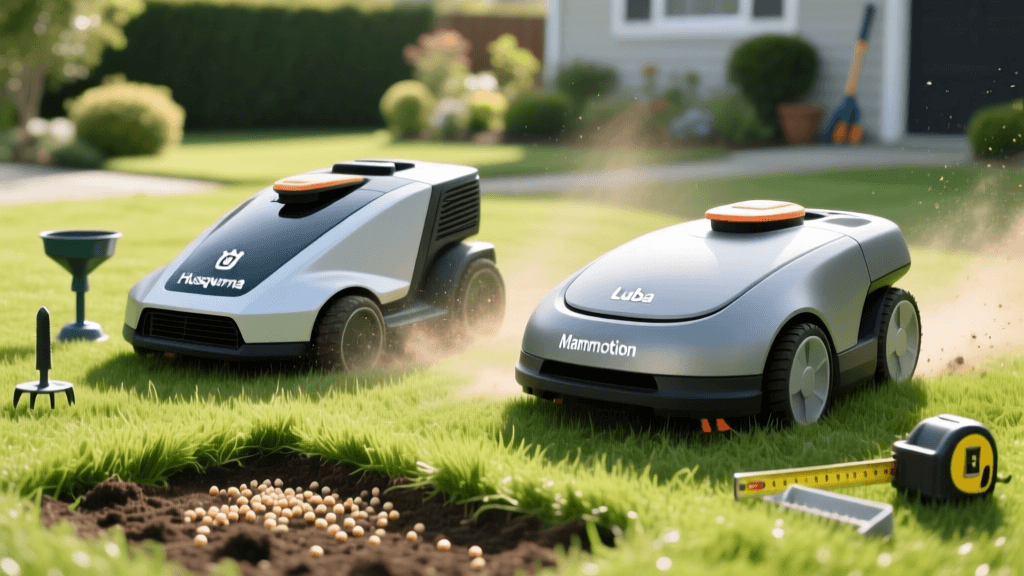
Automower vs Mammotion Luba: 2026 Aeration and Seeding Guide
The 2026 Robotic Mowing Landscape: Aeration and Seeding Challenges
As we navigate the 2026 lawn care season, robotic mowers have transitioned from luxury gadgets to essential turf management tools. The two undisputed titans of the industry are the Husqvarna Automower series and the Mammotion Luba lineup. While both machines excel at maintaining a pristine carpet of grass through daily micro-mulching, seasonal turf renovation tasks—specifically core aeration and overseeding—present unique challenges for robot owners. Aeration and seeding are critical for relieving soil compaction, managing thatch, and introducing improved grass cultivars to your lawn. However, the physical mechanics of these robots, their navigation systems, and their cutting methodologies require a strategic approach when renovating your turf.
In this comprehensive guide, we will compare how the Husqvarna Automower and Mammotion Luba handle the rigors of aeration and seeding in 2026. We will explore navigation vulnerabilities, traction in wet seedbeds, mulching dynamics, and provide a step-by-step protocol to ensure your new grass establishes perfectly without disrupting your automated mowing schedule.
The Core Aeration Dilemma: Boundary Wires vs. RTK GPS
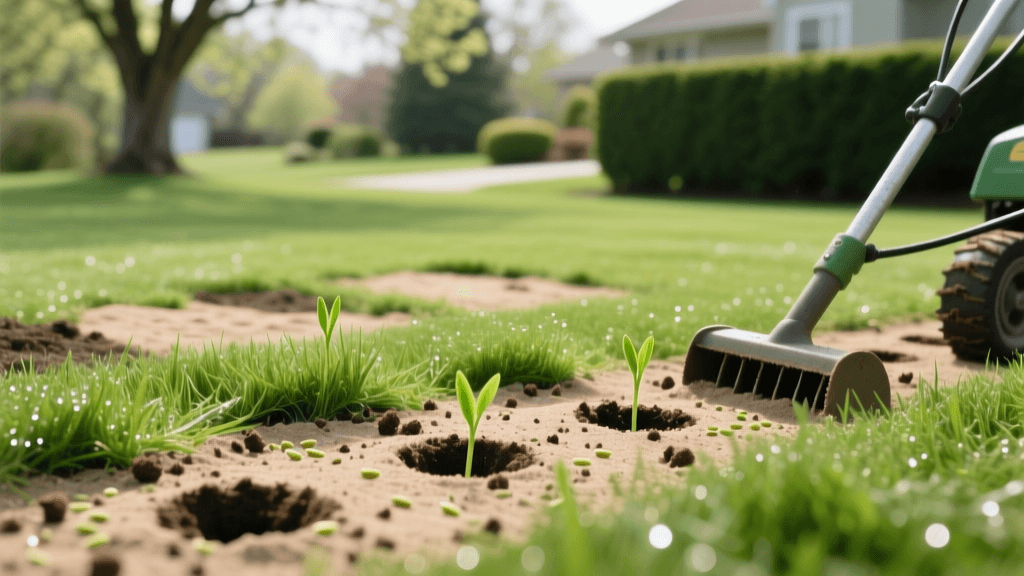
Core aeration involves using a mechanical machine to pull 2-to-3-inch plugs of soil from your lawn, creating channels for oxygen, water, and nutrients to reach the root zone. According to the University of Minnesota Turfgrass Science program, core aeration is the most effective method for alleviating heavy clay soil compaction and promoting deep root growth. However, the physical act of punching tines into the earth poses a massive risk to traditional robotic mower infrastructure.
Husqvarna Automower: The Wire Vulnerability
While Husqvarna has made massive strides in 2026 with their EPOS (Exact Positioning Operating System) wire-free technology, millions of lawns still rely on traditional perimeter boundary wires and guide wires. If you are operating a wire-dependent Automower, core aeration is a high-stakes gamble. A single misaligned tine from a walk-behind or tow-behind aerator can easily sever the boundary wire buried just beneath the soil surface. A severed wire means your Automower will immediately halt, display a 'Loop Signal Fault,' and require tedious manual splicing to resume operation. To mitigate this, owners of wired Automowers must either map their wire layout with extreme precision and flag every inch, opt for less effective liquid aeration alternatives, or hire professional aerators who can manually avoid the perimeter.
Mammotion Luba: The Wire-Free Advantage
The Mammotion Luba 2 AWD, utilizing advanced RTK-GPS (Real-Time Kinematic) satellite navigation, completely eliminates the underground wire dilemma. Because the Luba relies on centimeter-level GPS accuracy and virtual boundaries set via the smartphone app, you can aggressively core aerate the entirety of your lawn—including the extreme edges—without any fear of severing navigation infrastructure. For homeowners who prioritize annual, heavy-duty core aeration, the Luba’s wire-free architecture provides unparalleled peace of mind and operational efficiency during the fall and spring renovation seasons.
Overseeding and the Mulching Factor
Overseeding requires intimate seed-to-soil contact, adequate moisture, and unfiltered sunlight to trigger germination. The Penn State Extension emphasizes that seeds resting on top of thick thatch or clippings often fail to establish, drying out before their radicles can penetrate the soil. This biological requirement clashes directly with the fundamental design of robotic mowers: they are mulchers.
Neither the Husqvarna Automower nor the Mammotion Luba features a grass collection bag. They are designed to cut tiny amounts of grass daily and drop the fine clippings back onto the turf bed. If you overseed and immediately resume robotic mowing, the vortex of air created by the spinning blades can physically displace lightweight grass seeds, blowing them into garden beds or driveway cracks. Furthermore, the continuous layer of mulched clippings can act as a barrier, shading the soil and preventing the tiny seedlings from receiving the sunlight they need during their fragile first two weeks of life.
The 2026 Solution: Both Husqvarna and Mammotion apps now feature advanced 'Zone Suspension' and 'Seasonal Scheduling.' The best practice for both brands is to completely suspend mowing in the seeded zones for a minimum of 10 to 14 days, or until the new grass reaches a height of 3.5 inches. The Luba’s multi-zone management allows you to continue mowing the unseeded front yard while the backyard seedbed remains completely undisturbed, a feature that gives it a slight edge in complex, multi-zone properties.
Traction, Mud, and Irrigation Schedules
Successful seed germination requires the top inch of soil to remain consistently moist, necessitating multiple shallow watering cycles per day. This creates a perpetually damp, soft, and sometimes muddy lawn surface. How your robot handles wet soil is a major differentiator.
The Husqvarna Automower (specifically the popular 450X and 430X NERA models) utilizes a rear-wheel-drive system with pivoting front casters. While excellent for dry, sloped terrain, RWD robots are notorious for leaving deep, unsightly ruts in soft, freshly seeded mud. The pivoting front wheels can dig into the soft topsoil, uprooting fragile new seedlings and creating uneven terrain that will plague your lawn for months.
Conversely, the Mammotion Luba 2 AWD boasts a true All-Wheel-Drive system with aggressive, deeply treaded tires. Originally designed to tackle 80% slopes, this AWD system provides exceptional traction in wet, muddy conditions. The Luba distributes its weight more evenly and powers through soft seedbeds with significantly less wheel slip and rutting than its RWD competitors. If your aeration and seeding schedule coincides with heavy autumn rains, the Luba’s AWD system is vastly superior for maintaining traction without destroying the seedbed.
2026 Specifications Comparison: Aeration and Seeding Readiness
| Feature | Husqvarna Automower 450X NERA | Mammotion Luba 2 AWD |
|---|---|---|
| Navigation Tech | EPOS (Wire-free) / Boundary Wire | RTK-GPS (Wire-free) |
| Aeration Risk | High (if wired), Low (EPOS) | None (Virtual Boundaries) |
| Drive System | Rear-Wheel Drive (RWD) | All-Wheel Drive (AWD) |
| Wet Soil Traction | Moderate (prone to slipping/rutting) | Excellent (superior mud traction) |
| Cutting Height Range | 0.8 - 3.6 inches | 1.0 - 4.0 inches |
| Multi-Zone Pausing | Yes (via Automower Connect) | Yes (via Mammotion App) |
| Blade Vortex Risk | High (3 pivoting razor blades) | Moderate (Heavy-duty star blades) |
Step-by-Step 2026 Aeration and Seeding Protocol for Robot Owners
To maximize the benefits of your turf renovation while protecting your expensive robotic equipment, follow this optimized protocol tailored for the 2026 season.
Phase 1: Preparation and Aeration
- Map and Flag (Husqvarna Wire Owners): If you are not using EPOS, use a wire locator tool to map your boundary wire. Place physical flags every 3 feet along the perimeter and around island beds to guide the aerator operator.
- Mow Low: Drop your robot’s cutting height to its lowest setting (1.0 inch for Luba, 0.8 inch for Automower) two days before aeration. This ensures the aerator tines penetrate the soil easily and the seed will reach the dirt.
- Aerate: Perform core aeration, ensuring you pull plugs at a density of 20-40 holes per square foot. Leave the plugs on the lawn to break down naturally.
Phase 2: Seeding and Suspension
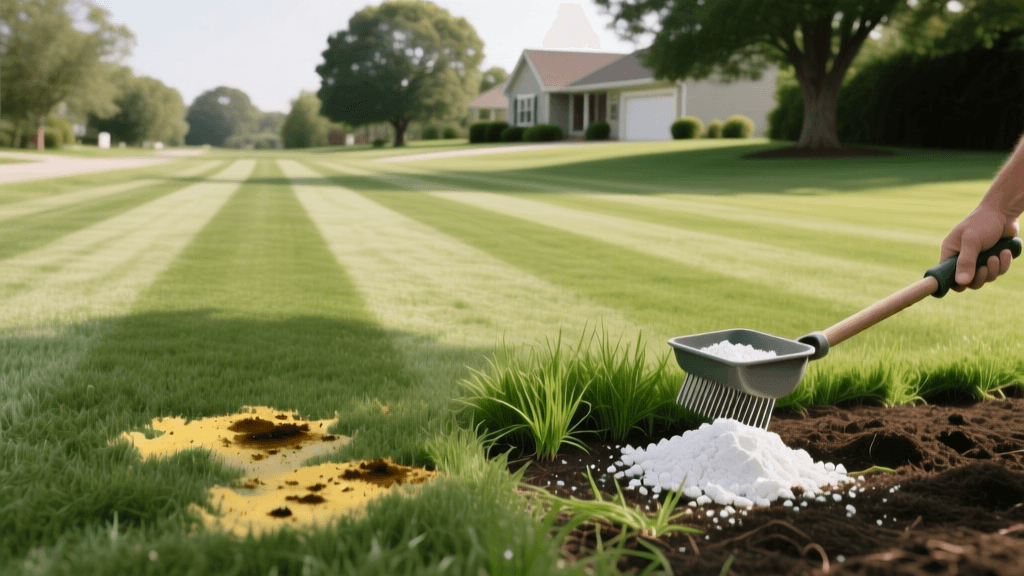
- Apply Seed and Starter Fertilizer: Use a broadcast spreader to apply your chosen cool-season or warm-season cultivar.
- Establish Virtual No-Go Zones: Open your Husqvarna or Mammotion app and draw temporary 'Stay-Out' zones over the heavily seeded areas, or simply pause the mowing schedule entirely for the affected zones.
- The 14-Day Pause: Keep the robots docked or restricted from the seedbeds for 10 to 14 days. This prevents the blade vortex from displacing seeds and stops the wheels from rutting the mud and crushing germinating radicles.
Phase 3: The First Cut and Gradual Reduction
- Wait for 3.5 Inches: Do not let the robot out until the new grass has been mowed at least once with a traditional lightweight push mower, or until it reaches 3.5 inches in height.
- Resume at Maximum Height: Set your Automower or Luba to its maximum cutting height (3.6 or 4.0 inches). This ensures the robot only nips the very top of the new grass, reducing stress on the shallow root systems.
- Step-Down Schedule: Over the next three weeks, lower the cutting height by 0.5 inches per week until you reach your desired 2026 maintenance height of 2.5 to 3.0 inches.
Conclusion
Integrating core aeration and overseeding into a lawn maintained by robotic mowers requires foresight, but the results are well worth the effort. The Mammotion Luba 2 AWD holds a distinct advantage in 2026 for renovation-heavy lawns due to its wire-free RTK navigation and all-wheel-drive traction in muddy seedbeds. However, the Husqvarna Automower NERA series remains a formidable contender, provided owners utilize the EPOS wire-free system to avoid the catastrophic boundary wire cuts associated with mechanical aeration. By respecting the biological needs of germinating seed and leveraging the advanced zone-management apps of these 2026 models, you can achieve a thick, vibrant, and perfectly automated lawn.