Lawn Care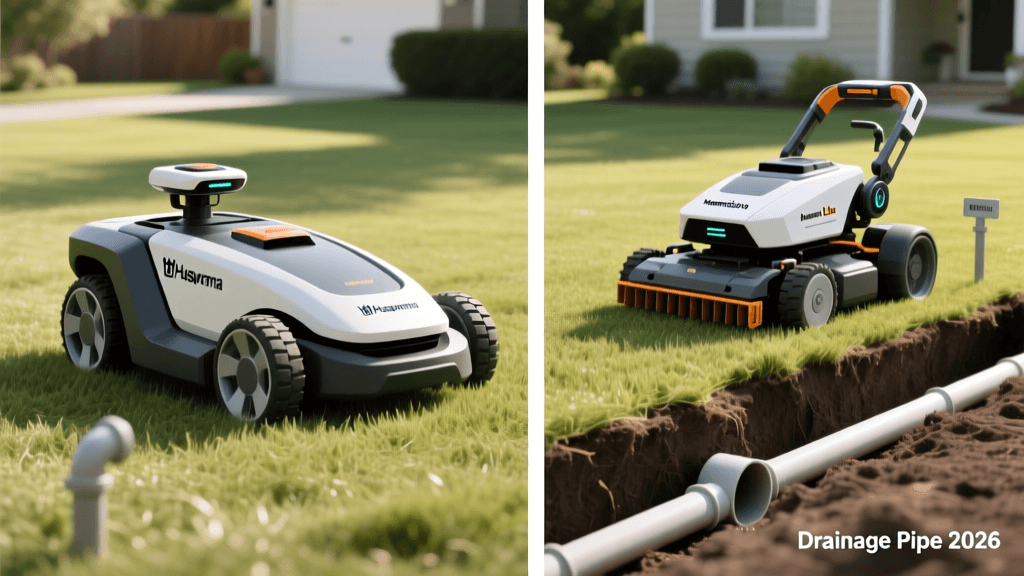
Husqvarna vs Mammotion Luba: Mowing Over Drainage Pipes 2026
The Subsurface Challenge: Robotic Mowers and Landscape Drainage Pipes
Homeowners who invest in comprehensive landscape drainage pipe systems do so to protect their foundations, eliminate soggy turf, and manage stormwater runoff. Whether you have installed a network of corrugated HDPE French drains, rigid PVC catch basins, or deep trench dry wells, your subsurface infrastructure is a vital asset. However, as we move through the 2026 landscaping season, maintaining these lawns introduces a complex new variable: heavy, autonomous robotic mowers.
When a robotic mower repeatedly traverses a shallow trench filled with gravel and a perforated pipe, soil compaction, vibration transfer, and navigation become real concerns. The two undisputed heavyweights of the 2026 robotic mowing market are the Husqvarna Automower NERA series and the Mammotion Luba 2 AWD. But how do these advanced machines interact with yards that rely on extensive subsurface drainage networks? In this guide, we evaluate the Husqvarna Automower versus the Mammotion Luba specifically from the perspective of landscape drainage pipe safety, installation logistics, and long-term turf health over graded swales.
The Hidden Vulnerability of Buried Drainage Networks
To understand how robotic mowers affect your yard, we must first look at what lies beneath the grass. According to landscaping experts at Family Handyman, a standard French drain consists of a perforated pipe surrounded by a gravel envelope, buried anywhere from 8 to 24 inches beneath the surface. The soil layered on top of this gravel trench is naturally prone to settling and compaction.
When a robotic mower drives over these zones, three things happen:
- Dynamic Loading: The weight of the mower, combined with the downward force of its drive wheels, compresses the topsoil into the gravel envelope.
- Vibration Transfer: High-frequency vibrations from the mower's motors and blades can cause the surrounding backfill to settle further, potentially creating depressions above the drainage pipe.
- Traction Shearing: Aggressive tire treads can tear the turf above shallow drainage trenches, especially when the soil is damp and the subsurface pipe is actively moving water.
The University of Minnesota Extension notes that soil compaction severely restricts water infiltration, which ironically defeats the purpose of having a landscape drainage system in the first place if the surface water cannot reach the subsurface gravel.
Husqvarna Automower NERA Series: Lightweight Precision
For 2026, Husqvarna's flagship lineup centers around the Automower NERA series, which utilizes the EPOS wire-free satellite navigation system. The Automower 430X NERA, for example, weighs approximately 35 pounds. From a drainage pipe perspective, this relatively lightweight footprint is a significant advantage.
Ground Pressure and Pipe Integrity
The Husqvarna Automower distributes its weight across four relatively narrow but smooth-treaded wheels. Because the overall mass is low, the dynamic ground pressure exerted on the soil above a buried PVC or HDPE pipe is minimal. This reduces the risk of crushing shallow landscape drainage pipes, particularly the flexible corrugated varieties that are vulnerable to point-loads.
Wire-Free Navigation Over Trenches
Historically, installing a boundary wire for a robotic mower meant using a trenching machine or a manual edger to bury the wire 2 inches deep. In yards with complex landscape drainage pipe networks, trenching is a massive liability; it is incredibly easy to accidentally slice into a shallow French drain or a pop-up emitter line. The 2026 Husqvarna NERA series eliminates this risk entirely. By using RTK (Real-Time Kinematic) satellite positioning, the Automower maps the yard without requiring any subsurface wire installation, keeping your drainage infrastructure completely untouched.
Mammotion Luba 2 AWD: Heavy-Duty Traction vs. Subsurface Risks
On the other side of the spectrum is the Mammotion Luba 2 AWD, a powerhouse designed for steep slopes and rough terrain. Weighing in at over 55 pounds, the Luba 2 is noticeably heavier than its Husqvarna counterpart. It features aggressive, deep-lug tires designed to grip wet grass and climb inclines of up to 80% (38 degrees).
The Weight and Traction Dilemma
While the Luba 2's AWD system is phenomenal for navigating the steep sides of drainage swales and graded berms, its aggressive tires can be harsh on the turf directly above subsurface pipes. When the Luba pivots or corrects its path over a gravel-filled drainage trench, the shearing force of the tires can uproot the grass. Furthermore, the heavier weight means that if a landscape drainage pipe was buried too shallowly (less than 6 inches of cover), the repeated passes of the Luba 2 could eventually deform softer corrugated HDPE pipes.
Trenchless RTK Mapping
Like the Husqvarna NERA, the 2026 Mammotion Luba 2 relies on RTK GPS and virtual boundaries. This is a massive benefit for properties with extensive drainage systems. You will not need to risk cutting into your catch basin lines or dry well feeds to lay a physical perimeter wire. The virtual mapping allows you to easily create 'exclusion zones' over sensitive drainage grates, trench drains, or delicate pop-up emitters that might be damaged by any mower's wheels.
Head-to-Head Comparison: Drainage Pipe Yard Performance
Below is a structured comparison of how the 2026 models interact with lawns featuring extensive subsurface drainage infrastructure.
| Feature | Husqvarna Automower 430X NERA | Mammotion Luba 2 AWD |
|---|---|---|
| Mower Weight | ~35 lbs (Lighter) | ~55 lbs (Heavier) |
| Ground Pressure | Low (Safe for shallow pipes) | Moderate to High (Risk to shallow HDPE) |
| Tire Tread | Mild (Low turf shear over trenches) | Aggressive (High shear on wet swales) |
| Navigation | EPOS RTK (No trenching required) | RTK GPS (No trenching required) |
| Slope Handling | Good (Up to 40% / 22 degrees) | Exceptional (Up to 80% / 38 degrees) |
| Exclusion Zones | App-based virtual zones | App-based virtual zones |
Managing Slopes, Swales, and Surface Grading
Landscape drainage pipes are rarely installed in flat yards; they are part of a broader grading strategy that includes swales, berms, and sloped channels designed to direct water away from the home. This topography creates unique challenges for robotic mowers.
The Environmental Protection Agency (EPA) emphasizes the importance of maintaining proper yard grading and permeable surfaces to manage stormwater effectively. If your drainage system relies on surface swales to feed into a catch basin, the mower must be able to navigate these sloped channels without getting stuck or scalping the grass.
The Mammotion Luba 2 AWD excels in these scenarios. Its four-wheel-drive system and articulated chassis allow it to traverse deep drainage swales and steeply graded berms without slipping. The Husqvarna Automower, while lighter and safer for the pipes directly beneath the soil, may struggle with the steep, wet slopes often found near drainage outfalls and may require you to set up virtual exclusion zones around the steepest parts of your drainage swales.
Best Practices for Mowing Over Drainage Zones in 2026
Regardless of whether you choose the Husqvarna or the Mammotion, adhering to best practices will protect both your investment in the robot and your investment in your landscape drainage pipes.
- Map Exclusion Zones Over Grates: Both the Husqvarna and Mammotion apps allow you to draw virtual boundaries. Always map exclusion zones over metal or plastic drainage grates, trench drains, and pop-up emitters. Mower wheels can easily slip into these gaps, causing damage to the mower's chassis or the drainage fixture.
- Monitor Soil Settling: After the spring thaw, walk your drainage lines. If you notice depressions forming above the gravel trenches, add topsoil and overseed. Allowing a mower to repeatedly drive into a depression will cause the blades to scalp the turf and put uneven stress on the pipe below.
- Adjust Cutting Heights in Swales: Grass growing in drainage swales is often thicker and more prone to fungal diseases due to moisture. Raise the cutting height on your robotic mower when it enters these virtual zones to promote deeper root growth and prevent the mower from bogging down in damp, heavy grass.
- Aerate Carefully: When performing annual lawn aeration over your drainage lines, use a core aerator rather than a spike aerator. Spike aerators can push soil directly into the gravel envelope of your French drain, clogging the system, while core aerators relieve the compaction caused by the robotic mower's wheels.
The Expert Verdict for Drainage Pipe Yards
When evaluating the Husqvarna Automower versus the Mammotion Luba for properties with extensive landscape drainage pipe systems, the decision ultimately comes down to your yard's topography and the depth of your buried pipes.
If your yard features shallow drainage trenches, delicate corrugated HDPE pipes, and relatively gentle slopes, the Husqvarna Automower NERA series is the superior choice for 2026. Its lighter weight and lower ground pressure ensure that your subsurface infrastructure remains uncompromised, while its wire-free EPOS system eliminates the risk of trenching into your pipes during installation.
However, if your drainage system is integrated into steep swales, heavily graded berms, and deep ravines where water rapidly collects, the Mammotion Luba 2 AWD is unmatched. While you must ensure your pipes are buried with adequate soil cover (at least 8 to 12 inches) to handle the Luba's heavier weight and aggressive tires, its ability to navigate wet, sloped drainage channels without slipping makes it an indispensable tool for complex, water-managed landscapes.