Lawn Care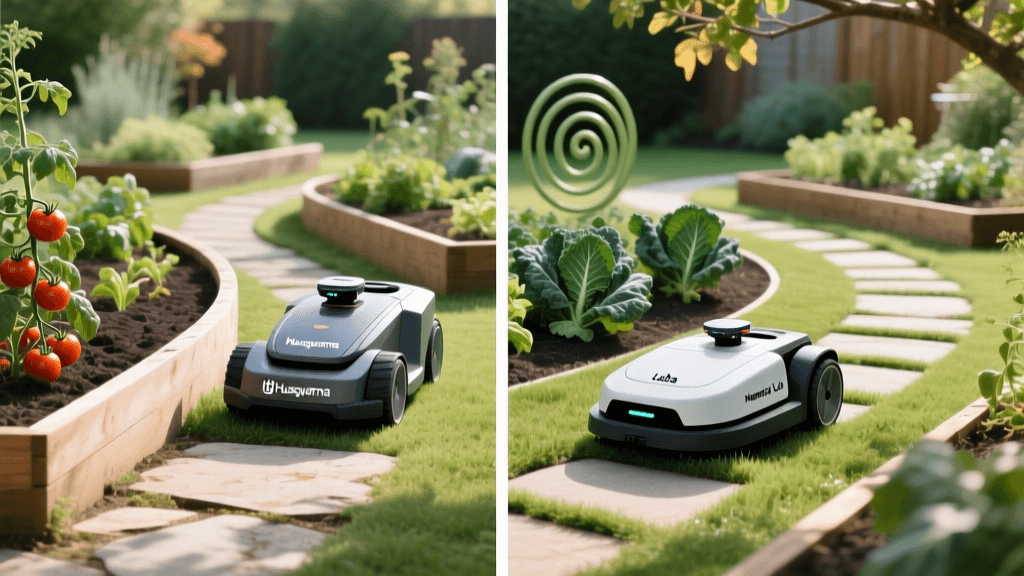
Husqvarna Automower vs Mammotion Luba: 2026 Foodscaping Guide
The Rise of Foodscaping: Why Your Mower Matters in 2026
Foodscaping—the art of integrating edible plants like fruit trees, berry bushes, raised vegetable beds, and herb borders into traditional lawn spaces—has completely transformed modern landscape design. As we move through 2026, homeowners are no longer satisfied with sterile, ornamental-only yards. They want landscapes that yield harvests while maintaining the lush, manicured aesthetic of a premium turfgrass lawn. However, maintaining the turf surrounding these complex, irregularly shaped edible zones presents a unique set of challenges. This is where the debate between the two leading robotic mowers of the year, the Husqvarna Automower and the Mammotion Luba, becomes critical for edible landscaping enthusiasts.
Standard mowing routines often fail in foodscapes. You are dealing with delicate low-lying groundcovers like creeping thyme, seasonal expansion of pumpkin vines, heavy fruit drops from plum and mulberry trees, and highly irrigated transition zones near raised beds. Choosing the right robotic mower is no longer just about cutting grass; it is about precision navigation, obstacle avoidance, and soil health management. In this comprehensive 2026 guide, we break down how the Husqvarna Automower (specifically the NERA and EPOS lines) and the Mammotion Luba (AWD and Vision editions) perform in the nuanced world of edible landscaping.
Husqvarna Automower (2026 NERA & EPOS Series): The Precision Veteran
Husqvarna has long been the gold standard in robotic lawn care, and their 2026 lineup reflects a deep understanding of complex yard topographies. For foodscaping, the wire-free NERA series equipped with the EPOS (Exact Positioning System) plug-in is a game-changer. EPOS utilizes RTK (Real-Time Kinematic) GPS technology to provide centimeter-level accuracy, allowing you to map virtual boundaries around intricate raised beds, spiral herb gardens, and delicate strawberry patches without laying a single inch of physical boundary wire.
The standout feature for edible landscapes in 2026 is Husqvarna's AI-driven camera and ultrasonic sensor suite. Foodscapes are dynamic; a zucchini plant might encroach onto the lawn by three feet in a single week. The Automower's advanced object recognition identifies broad leaves, encroaching vines, and fallen fruit, gently navigating around them rather than blindly bumping into them and damaging your crops. Furthermore, Husqvarna's targeted edge-cutting algorithms allow the mower to trim right up to the boundary of a hardscaped raised bed, reducing the need for manual string trimming near your edible soils.
Mammotion Luba (2026 AWD & Vision Editions): The Wire-Free Challenger
Mammotion disrupted the market by making wire-free RTK navigation accessible, and the 2026 Luba models continue to push the envelope, particularly in challenging terrain. Many edible landscapes utilize terracing, slopes, and swales for passive water harvesting and irrigation management. The Luba's legendary All-Wheel Drive (AWD) system and aggressive tread patterns allow it to conquer slopes up to 80% (38 degrees), making it the undisputed king of terraced foodscapes where Husqvarna's standard 2WD models might slip or lose traction.
The 2026 Luba Vision models also incorporate advanced multi-sensor fusion, combining RTK GPS with 3D vision cameras. This is particularly useful for avoiding the sudden obstacles common in foodscapes, such as garden hoses, temporary trellises, and harvesting baskets left on the lawn. However, RTK GPS requires a clear line of sight to satellites. In mature foodscapes with large, sprawling fruit tree canopies (like mature apple or walnut trees), the Luba can occasionally experience signal dropout, requiring its vision system to take over, which can sometimes result in less precise boundary adherence under heavy shade.
Head-to-Head Comparison: Foodscaping Performance
| Feature | Husqvarna Automower (NERA/EPOS) | Mammotion Luba (AWD/Vision) |
|---|---|---|
| Navigation Technology | RTK GPS + AI Camera + Ultrasonic | RTK GPS + 3D Vision + IMU |
| Obstacle Avoidance (Vines/Fruit) | Excellent (AI recognizes organic shapes) | Good (Vision relies on contrast/depth) |
| Slope Handling (Terraced Beds) | Moderate (Up to 70% with AWD models) | Superior (Up to 80% with standard AWD) |
| Exclusion Zone Setup | Highly precise, app-based virtual fences | Precise, but requires satellite visibility |
| Canopy Signal Reliability | High (Multi-sensor redundancy) | Moderate (RTK drops under thick leaves) |
| 2026 Estimated Price Range | $3,200 - $5,500+ | $2,400 - $3,800 |
Navigating the Unique Challenges of Edible Landscapes
Fallen Fruit and Tree Canopies
In late summer and early autumn, fruit trees drop produce. Plums, mulberries, and crabapples can create a minefield for robotic mowers. If a mower runs over soft fruit, it creates a sticky, fermenting mess that stains the turf, kills the grass beneath, and attracts wasps—a major hazard for outdoor dining areas near your foodscape. According to turf management experts at the University of Minnesota Extension, maintaining clean turf around fruiting trees is essential for both lawn health and pest management. Husqvarna's 2026 ultrasonic sensors detect the density of fruit piles and steer the mower away, whereas the Luba relies more on its bump-and-turn mechanics or vision cameras, which can struggle to distinguish dark plums from dark soil in dappled shade.
Raised Beds and Complex Exclusion Zones
Foodscaping relies heavily on raised cedar beds, hugelkultur mounds, and keyhole garden designs. These create highly irregular lawn perimeters. Laying physical boundary wire around a dozen raised beds is a labor-intensive nightmare that often results in cut wires from seasonal soil shifting and aeration. Both the Husqvarna EPOS and Mammotion Luba eliminate this via RTK GPS. However, Husqvarna's app interface for drawing complex, multi-point exclusion zones remains slightly more intuitive for gardeners who frequently redesign their edible layouts from season to season.
Herb Borders and Low-Lying Groundcovers
Many edible landscapes replace traditional lawn edges with creeping thyme, oregano, or alpine strawberries. These low-growing edibles are easily scalped by aggressive edge-cutting routines. The Mammotion Luba allows you to set variable cutting heights for specific zones via the app, meaning you can instruct the mower to raise its deck by an inch when trimming the perimeter near your herb borders, protecting your edible groundcovers from accidental decapitation.
Micro-Mulching and Soil Health in the Foodscape
One of the most significant, yet overlooked, benefits of using a robotic mower in an edible landscape is the continuous micro-mulching effect. Because robotic mowers cut daily, they remove only a millimeter or two of grass at a time. These tiny clippings decompose almost instantly, returning vital nitrogen, potassium, and organic matter directly to the soil ecosystem.
The National Gardening Association emphasizes that returning fine organic matter to the soil is a cornerstone of sustainable edible landscaping. In a foodscape, the turf often borders nutrient-hungry vegetable beds. The constant recycling of grass clippings by the Automower or Luba builds a rich, loamy topsoil layer that supports the mycorrhizal fungal networks essential for the health of adjacent fruit trees and berry bushes. Furthermore, because both mowers are fully electric, they produce zero localized emissions, ensuring that your organic vegetable patches are not subjected to the exhaust fumes associated with gas-powered commercial mowers.
When managing soil health and pests organically, integrating smart mowing with broader ecological practices is vital. The Environmental Protection Agency (EPA) advocates for Integrated Pest Management (IPM) principles, which include maintaining healthy, vigorously growing turf through proper mowing and mulching to naturally outcompete weeds without relying on synthetic herbicides that could leach into your edible garden beds.
Actionable Setup Tips for Foodscaping with Robot Mowers
- Buffer Your Exclusion Zones: When mapping virtual boundaries around raised vegetable beds, set the exclusion zone at least 6 to 12 inches beyond the physical edge of the bed. This prevents the mower's wheels from eroding the soil base of your raised beds during wet spring conditions.
- Adjust for Irrigation Schedules: Edible landscapes require heavy, frequent watering. Schedule your robotic mower to run during the driest part of the afternoon. Mowing over saturated transition zones between the lawn and your vegetable patches can lead to soil compaction and turf tearing, especially with heavier models like the Luba AWD.
- Sanitize the Undercarriage: If your mower transitions between a traditional ornamental lawn and an edible foodscape, clean the mower's deck and blades weekly during the growing season. This prevents the accidental transfer of turf fungal spores (like brown patch or dollar spot) into the microclimates of your delicate edible borders.
- Utilize Zone-Specific Cutting Heights: Set the cutting height higher (around 3 to 3.5 inches) in turf zones adjacent to sun-loving vegetable beds. Taller grass shades the soil, reducing moisture evaporation and lowering the ambient temperature around the base of your heat-sensitive crops like lettuce and spinach during the peak of summer.
Final Verdict for 2026
Choosing between the Husqvarna Automower and the Mammotion Luba for your edible landscape ultimately depends on your specific topography and canopy cover. If your foodscape features flat to moderately sloped terrain, complex raised beds, and mature fruit trees with heavy canopies, the Husqvarna Automower NERA/EPOS is the superior choice. Its AI object recognition and multi-sensor redundancy ensure it navigates fallen fruit and vine encroachments with unmatched precision, protecting your harvest.
Conversely, if your edible landscape is built on steep terraces, swales, or heavily contoured permaculture designs, the Mammotion Luba AWD is an absolute necessity. Its traction and slope-handling capabilities are unmatched in 2026, ensuring that even the most aggressively sloped foodscapes remain perfectly manicured without the risk of the mower sliding into your delicate herb spirals. Whichever you choose, embracing robotic mowing technology is a massive step toward a healthier, more sustainable, and highly productive edible landscape.