Lawn Care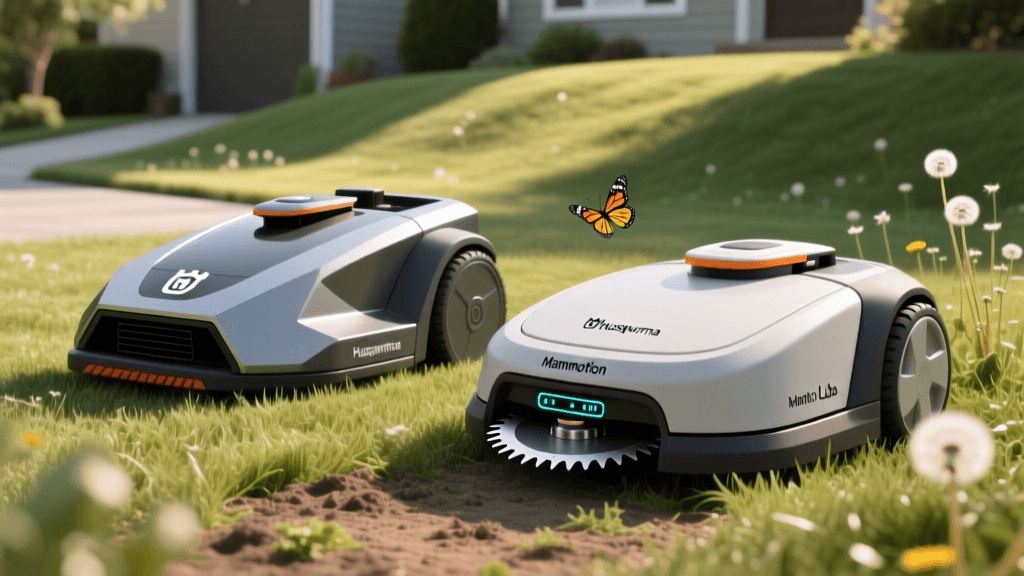
Husqvarna Automower vs Mammotion Luba: 2026 Wildlife Guide
The Intersection of Lawn Automation and Backyard Ecology
As we navigate the 2026 landscaping season, the robotic lawn mower market has reached unprecedented levels of sophistication. Homeowners are increasingly trading their gas-powered push mowers for autonomous alternatives, reclaiming their weekends while maintaining pristine turf. However, as these machines become ubiquitous, a critical ecological conversation has emerged regarding their impact on local wildlife. For those practicing active Wildlife & Yard Animal Management, choosing the right robotic mower is no longer just about cutting patterns or battery life; it is about safeguarding the hedgehogs, box turtles, amphibians, and ground-nesting birds that share our outdoor spaces.
Two titans currently dominate the premium robotic mower market: the Husqvarna Automower NERA series and the Mammotion Luba lineup (including the Luba 2 AWD and the newly refined Luba 3). Both offer wire-free navigation and advanced obstacle avoidance, but their underlying engineering philosophies result in vastly different ecological footprints. In this comprehensive 2026 guide, we will evaluate the Husqvarna Automower and Mammotion Luba through the lens of wildlife conservation, helping you manage your yard's ecosystem without sacrificing lawn health.
Understanding the Threat to Yard Wildlife
Before diving into specific models, it is essential to understand how automated mowing disrupts backyard ecosystems. Traditional mowing is a loud, brief disturbance. Robotic mowers, conversely, represent a persistent, low-level presence. According to the National Wildlife Federation's Garden for Wildlife program, habitat fragmentation and continuous mechanical disturbance are leading stressors for urban and suburban wildlife.
The primary casualties of robotic mowers are nocturnal foragers and slow-moving amphibians. Hedgehogs (in applicable regions), toads, salamanders, and box turtles often rest in the cool, damp grass during the day or forage at night. When a heavy machine with spinning blades encounters them, the results can be fatal. Furthermore, the acoustic footprint of a mower running daily can interfere with avian communication, masking the mating calls and predator warnings of local bird species. The University of Minnesota Extension emphasizes that balancing turfgrass maintenance with ecological stewardship requires intentional scheduling and the preservation of undisturbed micro-habitats. How do our two leading contenders address these biological realities?
Husqvarna Automower NERA Series: Floating Blades and Ultrasonics
Husqvarna has long been the pioneer of robotic mowing, and their 2026 Automower NERA series (utilizing the EPOS wire-free satellite system) brings specific advantages to wildlife management. The most critical feature for animal safety is Husqvarna's signature floating razor blade system. Unlike heavy, fixed metal blades, Husqvarna uses lightweight, pivoting razor blades mounted on a spinning disc. If the disc strikes a solid object—such as a tree root, a garden gnome, or a resting box turtle—the blades instantly retract into the housing. This design drastically reduces the severity of impact, often preventing the deep lacerations associated with traditional mower blades.
Additionally, the 2026 NERA models are equipped with advanced ultrasonic sensors and GPS-assisted navigation. While ultrasonic sensors are primarily designed to detect large obstacles like fences or patio furniture, they contribute to a 'bounce' behavior that prevents the mower from endlessly grinding against a single area where a small animal might be cornered. However, Husqvarna's historical reliance on random or semi-random mowing patterns means the machine spends more total hours on the lawn to achieve a complete cut. This extended operational window increases the statistical probability of an encounter with a diurnal amphibian or a ground-nesting bird.
Mammotion Luba 2 and 3: AI Vision and Systematic Mowing
Mammotion has disrupted the market with the Luba series, leaning heavily into RTK (Real-Time Kinematic) GPS and AI-driven vision systems. The Luba 2 AWD and the 2026 Luba 3 models utilize systematic, overlapping mowing patterns. From a wildlife perspective, this efficiency is a massive advantage. Because the Luba maps the yard and mows in precise, methodical lines, it completes its cutting cycle in a fraction of the time required by older random-pattern mowers. Less time on the lawn means less noise pollution and fewer hours of mechanical disturbance for local fauna.
The standout feature for animal management is the Luba's AI Vision obstacle avoidance. The front-facing cameras and neural processing units are trained to recognize and halt for pets, children, and large debris. However, wildlife managers must note a critical limitation: AI vision systems in 2026 still struggle with camouflaged, low-profile wildlife. A green toad resting on a patch of clover, or a juvenile turtle blending into the thatch, may not trigger the AI's obstacle threshold. Furthermore, the Luba utilizes heavy-duty fixed star blades to tackle thick, overgrown grass and steep inclines. While these blades are excellent for turf health and cutting through dense weeds, they do not retract upon impact, posing a higher risk of blunt force trauma to small mammals and reptiles that the AI fails to detect.
2026 Wildlife Safety Comparison Matrix
To help you make an informed decision for your specific yard ecosystem, we have compiled a direct comparison of the wildlife-relevant features of the 2026 flagship models from both brands.
| Feature | Husqvarna Automower 430X NERA | Mammotion Luba 3 AWD |
|---|---|---|
| Blade Type | Floating Razor Discs (Retractable) | Fixed Star Blades (Heavy Duty) |
| Obstacle Avoidance | Ultrasonic Sensors & Bump | AI Vision Camera & RTK GPS |
| Mowing Pattern | Guided Random / Zone Control | Systematic Overlapping Lines |
| Acoustic Footprint | ~60 dB (Quieter, less avian disruption) | ~65 dB (AWD motors are louder) |
| Boundary System | Wireless EPOS Satellite | Virtual RTK Boundaries |
| Wildlife Safe Zones | App-based Exclusions | App-based No-Go Zones |
| Best Ecological Use | Yards with high amphibian/mammal traffic | Large yards needing rapid, efficient cuts |
Actionable Wildlife Management Strategies
Regardless of whether you choose the Husqvarna Automower or the Mammotion Luba, the machine itself is only one part of your yard's ecological management plan. Implementing the following strategies will ensure your lawn remains pristine while your local wildlife thrives.
1. Enforce the 'Daylight Only' Rule
The single most effective way to protect wildlife is to restrict your robotic mower's operating hours. Hedgehogs, toads, and salamanders are predominantly nocturnal. By configuring your mower's schedule via the companion app to operate strictly between 10:00 AM and 4:00 PM, you eliminate the vast majority of fatal encounters. Both Husqvarna and Mammotion allow for granular scheduling; use it to your ecological advantage. Never allow your mower to run at night or during the twilight hours of dawn and dusk.
2. Establish Untouchable Micro-Habitats
Both the Husqvarna EPOS system and the Mammotion RTK app allow you to draw virtual 'No-Go' zones. Use this technology to carve out wild spaces. According to The Wildlife Trusts, leaving even a small percentage of your lawn unmowed provides crucial refuge for insects, amphibians, and small mammals. Identify the damp, shaded corners of your yard where toads and salamanders naturally congregate, and draw a strict virtual boundary around these areas. Allow the grass and native clovers in these zones to grow tall, creating a permanent sanctuary that the mower will never breach.
3. Manage Lawn Perimeters and Hardscape Edges
Amphibians and reptiles often use the edges of the lawn, where the grass meets garden beds or retaining walls, as travel corridors. When installing your RTK base station or mapping your boundaries, pull the virtual mowing line back at least six inches from your garden beds and wooded borders. This prevents the mower from trapping slow-moving animals against physical barriers and gives them a safe, unmowed transit route around the perimeter of your property.
4. Monitor and Adapt to Nesting Seasons
During the spring and early summer, ground-nesting birds and native pollinators are highly vulnerable. If you notice increased bird activity or spot native bees nesting in ground cavities, temporarily expand your virtual No-Go zones to encompass these areas. The flexibility of wire-free 2026 models means your lawn care routine can adapt dynamically to the biological rhythms of your yard.
Conclusion
The debate between the Husqvarna Automower and the Mammotion Luba in 2026 ultimately comes down to the specific ecological profile of your yard. If your property is a known haven for small amphibians, box turtles, and ground-foraging mammals, the Husqvarna's floating blade system and quieter acoustic profile offer a vital layer of physical protection. Conversely, if you manage a larger property and your primary goal is to minimize the overall time the machine spends disturbing the landscape, the Mammotion Luba's systematic mowing efficiency and AI vision provide a compelling, modern solution. By pairing the right technology with intentional, wildlife-first scheduling and virtual safe zones, you can achieve a flawless lawn while remaining a dedicated steward of your local ecosystem.