Gardening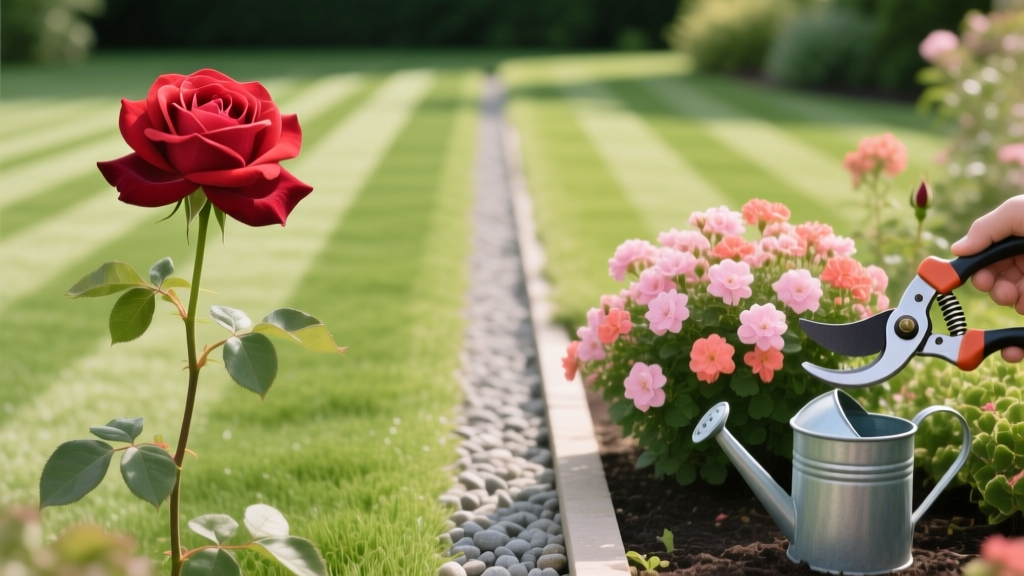
2026 Rose Care: Hybrid Tea vs Floribunda Pruning & Feeding
Sarah ChenPublished
The Art of the Border: Framing Striped Lawns with Roses
When you invest time in creating crisp, professional-grade lawn stripes using a mower roller or striping kit, the surrounding landscape must match that level of manicured precision. A wildly overgrown or poorly maintained garden border will instantly detract from the geometric beauty of your turf. In 2026, landscape designers are increasingly turning to roses to frame striped lawns, utilizing their structured growth habits and vibrant blooms to create a stunning visual contrast against alternating light and dark grass bands. However, not all roses serve the same aesthetic purpose, nor do they share the same maintenance requirements. The two most popular choices for formal and semi-formal lawn borders are Hybrid Tea and Floribunda roses. Understanding the distinct pruning and feeding needs of these two varieties is essential for maintaining a cohesive, high-end landscape design that complements your meticulously striped lawn.
The Aesthetic Role of Roses in Striped Lawn Designs
Before grabbing your pruning shears, it is vital to understand how these roses function within a striped lawn layout. Hybrid Tea roses are known for their upright, somewhat rigid growth habit and their production of single, large, elegant blooms on long stems. In a landscape design, they act as architectural pillars. If you are mowing a diamond or checkerboard stripe pattern, Hybrid Teas are best placed at the corners or as focal points along the central axis of the lawn, drawing the eye upward and providing a formal, structured boundary.
Conversely, Floribunda roses are bushier, more compact, and produce massive clusters of blooms continuously throughout the season. They are the ultimate 'line drawers' of the garden. Floribundas are ideal for planting in continuous borders that trace the perimeter of your striped lawn. Their dense foliage and relentless color provide a solid, unbroken visual wall that contains the lawn stripes and prevents the landscape from looking visually fragmented. To maintain these distinct aesthetic roles, their pruning and feeding regimens must be tailored to their specific growth habits.
Hybrid Tea Roses: Pruning for Architectural Form
To maintain the upright, formal structure required for focal points in a striped lawn design, Hybrid Teas require a more severe and precise pruning approach. According to the Royal Horticultural Society (RHS), the goal of pruning Hybrid Teas is to create an open, vase-like shape that promotes air circulation and directs the plant's energy into producing those long-stemmed, exhibition-quality blooms.
Timing and Technique for 2026
In early spring, just as the leaf buds begin to swell but before they fully open (often coinciding with the blooming of Forsythia in many temperate zones), begin your pruning. First, remove any dead, diseased, or damaged wood. Next, identify the 3 to 5 healthiest, strongest canes that are growing outward. Remove any canes that cross through the center of the plant or grow inward, as these will ruin the open vase shape and invite fungal diseases.
Cut the remaining canes back to about 12 to 18 inches from the ground. Make your cuts at a 45-degree angle, exactly 1/4 inch above an outward-facing bud. This angle prevents water from pooling on the cut surface, which is especially important given the unpredictable, heavy spring rains we have seen across many climate zones in 2026. Seal the cuts with a dab of pruning sealer or white glue to prevent cane borers from entering.
Floribunda Roses: Pruning for Mass Color Impact
Because Floribundas are meant to provide a continuous, dense wall of color along the edges of your striped lawn, they require a less severe pruning approach. The objective here is not to produce long stems, but to encourage a bushy, multi-branched structure that can support heavy clusters of flowers.
Shaping the Perimeter Border
As noted by the University of Minnesota Extension, Floribundas should be pruned to maintain a uniform height, especially when used as a formal hedge bordering a lawn. Begin by clearing out dead or spindly wood, just as you would with a Hybrid Tea. However, instead of reducing the plant to just 3 to 5 canes, leave 5 to 7 healthy canes to ensure a thicker bush.
Cut the canes back to about 18 to 24 inches, which is slightly higher than the Hybrid Tea. You want to encourage lateral branching rather than just vertical growth. If your Floribunda border runs parallel to your primary lawn stripes, use string lines to guide your pruning cuts so the top of the hedge remains perfectly level. This geometric precision will mirror the straight lines of your mowed grass, creating a deeply satisfying aesthetic harmony between the turf and the garden bed.
2026 Feeding Strategies: Fueling the Border
A beautifully pruned rose border will quickly lose its luster if it lacks the nutrients required to push out new growth and vibrant blooms. In 2026, the horticultural industry has seen a massive shift toward biochar-infused organic fertilizers and slow-release microbial blends, which improve soil structure while feeding the plant. The RHS Feeding Guide emphasizes that consistent, balanced nutrition is the key to preventing the yellowing foliage that can ruin the crisp contrast of a formal garden border.
Hybrid Tea Feeding Schedule
Hybrid Teas are notoriously heavy feeders. Because they are pushing out large, energy-intensive blooms on long stems, they require a steady supply of nitrogen, phosphorus, and potassium.
- Early Spring (Post-Pruning): Apply a balanced, slow-release granular fertilizer (such as a 10-10-10 NPK or a specialized organic rose tone like Espoma Rose-tone 4-3-2). Apply 1/2 cup per plant, scratching it gently into the top inch of the soil, and water deeply.
- Early Summer (First Bloom Cycle): After the first flush of blooms fades, apply a liquid kelp or fish emulsion fertilizer to provide a quick trace-mineral boost, encouraging rapid development of the next flowering laterals.
- Mid-to-Late Summer: Switch to a low-nitrogen, high-potassium fertilizer (like a 5-10-15 blend) to harden off the canes for winter. Stop feeding entirely 6 to 8 weeks before your region's first expected frost.
Floribunda Feeding Schedule
Floribundas bloom continuously, meaning they are in a constant state of energy expenditure. They benefit greatly from a steady, uninterrupted nutrient supply rather than heavy, sporadic doses.
- Spring and Summer: Use a continuous-release granular fertilizer formulated specifically for shrub roses. A single application of a high-quality 2026 biochar-blended rose food in early spring will slowly release nutrients over 4 to 6 months, perfectly matching the Floribunda's continuous blooming habit.
- Mulching: Maintain a 2-inch layer of organic compost or shredded bark mulch around the base of the border. This not only suppresses weeds that could disrupt the clean lines of your lawn edge but also breaks down slowly, providing a constant micro-dose of nutrients to the shallow rose roots.
Comparison Chart: Hybrid Tea vs. Floribunda
To help you plan your lawn border and maintenance schedule, refer to the comparison table below:
| Feature | Hybrid Tea | Floribunda |
|---|---|---|
| Primary Aesthetic Role | Architectural focal points, corners, formal pillars | Continuous perimeter borders, mass color hedges |
| Bloom Habit | Single, large blooms on long, upright stems | Large clusters of smaller blooms on bushy stems |
| Pruning Severity | Severe (cut back to 12-18 inches, leave 3-5 canes) | Moderate (cut back to 18-24 inches, leave 5-7 canes) |
| Pruning Goal | Open vase shape, promote long stem growth | Bushy, uniform hedge shape, promote lateral branching |
| Feeding Requirement | Heavy feeder; requires multiple targeted applications | Moderate/Steady feeder; thrives on continuous slow-release |
| Disease Resistance | Moderate; requires strict air circulation pruning | Generally higher; dense foliage requires base watering |
Integrating Rose Borders with Lawn Striping Kits
The ultimate goal of combining lawn striping with rose borders is to create a unified, estate-like landscape. When you attach a striping kit to your mower, you are bending the grass blades to reflect light differently. Dark stripes reflect light away from the viewer, while light stripes reflect it back. For this optical illusion to work perfectly, the backdrop must be equally deliberate.
Ensure that your mulch beds are edged with a sharp, 90-degree trench or a flush hardscape edging material. This prevents the Floribunda or Hybrid Tea root zones from encroaching on the turf, which would blur the sharp lines of your outermost lawn stripe. Furthermore, when deadheading your Floribundas along the border, drop the spent blooms into a bucket rather than letting them fall onto the grass, where they can smother the turf and disrupt the visual clarity of your stripes.
By mastering the specific pruning and feeding requirements of Hybrid Tea and Floribunda roses in 2026, you elevate your garden from a simple collection of plants to a masterclass in landscape geometry. The structured elegance of the roses will serve as the perfect, vibrant frame for the meticulously striped canvas of your lawn, ensuring your outdoor space remains the envy of the neighborhood throughout the entire growing season.
