Gardening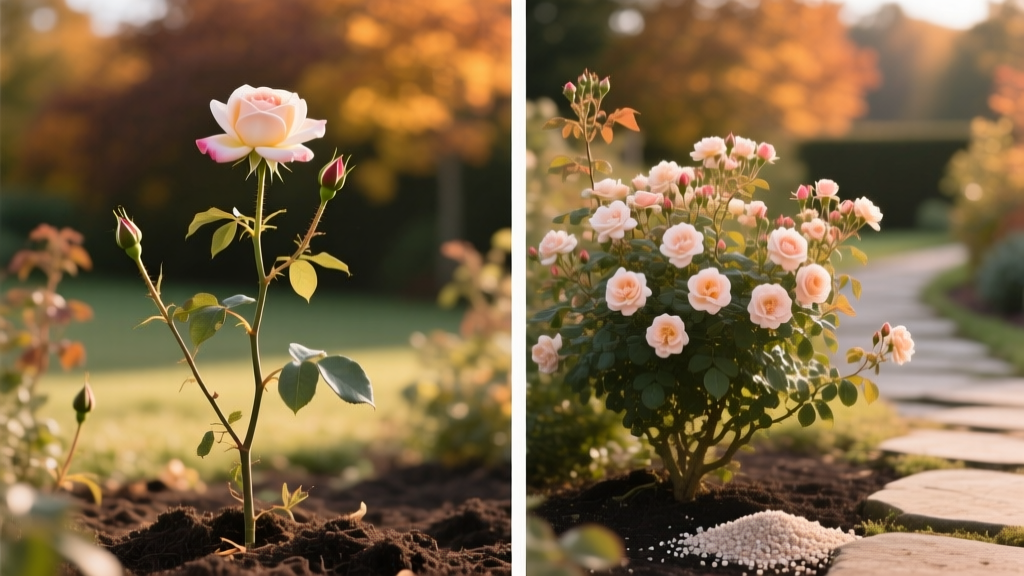
Fall Rose Care 2026: Hybrid Tea vs Floribunda Pruning & Feeding
James MillerPublished
The Intersection of Fall Lawn Care and Rose Bed Maintenance
When homeowners think of fall lawn care, the mind immediately jumps to core aeration, turf overseeding, and managing the deluge of autumn leaves. However, a truly pristine landscape in 2026 requires a holistic approach that bridges turf management with ornamental garden care. As you wrap up your final mowing and leaf mulching routines, your rose beds require equal attention. Preparing your roses for winter dormancy is just as critical as winterizing your irrigation system or applying late-season lawn fertilizers. The transition into autumn dictates the vigor of your spring blooms, and the strategies you employ must be tailored to the specific genetics of your roses. Specifically, understanding the distinct differences between Hybrid Tea and Floribunda roses is paramount for effective fall pruning and feeding.
Botanical Profiles: Hybrid Tea vs. Floribunda
Before grabbing your bypass pruners, it is essential to understand what you are working with. Hybrid Teas and Floribundas dominate the modern rose market, but their growth habits dictate entirely different maintenance schedules.
- Hybrid Tea Roses: Known for their classic, high-centered blooms borne on long, single stems. They typically grow taller (3 to 6 feet), possess a more open, V-shaped canopy, and are highly prized for cut flower arrangements. Because they push energy into large, singular blooms, their overall wood structure can be more spindly and susceptible to winter wind damage.
- Floribunda Roses: Bred by crossing Hybrid Teas with Polyanthas, Floribundas produce massive clusters of smaller blooms. They are generally bushier, more compact (2 to 4 feet), and exhibit a denser canopy. They are often favored in modern landscaping for their continuous color and robust disease resistance, but their dense growth requires specific fall thinning to prevent fungal overwintering.
The Philosophy of Fall Pruning: Why Less is More
A common misconception among novice gardeners is that fall is the time for heavy, structural pruning. According to horticultural experts, heavy pruning should be reserved for early spring just as the buds begin to swell. Fall pruning is strictly about damage prevention and sanitation. As the Royal Horticultural Society advises, late-season pruning is focused on reducing "wind-rock"—the phenomenon where tall, unpruned canes are caught by winter gales, rocking the plant at its base and tearing the delicate root system away from the surrounding soil.
Fall Pruning Steps for Hybrid Teas
Because Hybrid Teas grow tall and feature long, heavy canes, they are the primary victims of wind-rock. In late autumn, after the first hard frost has signaled the plant to enter dormancy, follow these steps:
- Reduce Height: Cut the tallest canes back by one-third to one-half, usually leaving them around 24 to 30 inches tall. This lowers the center of gravity and prevents the winter winds from leveraging the plant out of the ground.
- Remove Spindly Growth: Any cane thinner than the diameter of a standard wooden pencil should be removed entirely at the base. These thin canes will not survive the winter and will only serve as entry points for cane borers and fungal pathogens.
- Clean the Center: Remove any canes that are crossing or rubbing against one another to maintain a slight V-shape, which will promote better air circulation next spring.
Fall Pruning Steps for Floribundas
Floribundas are naturally bushier and lower to the ground, meaning wind-rock is less of a concern. However, their dense foliage creates a microclimate perfect for overwintering fungal spores like black spot and powdery mildew.
- Hedge and Shape: Rather than selectively pruning individual canes, treat the Floribunda like a hedge. Use sharp, sterilized loppers to reduce the overall height of the bush by about one-third, creating a uniform, rounded shape.
- Thin the Interior: Reach into the center of the bush and remove 20% to 30% of the oldest, thickest, and most congested canes right down to the bud union. This opens the core of the plant to winter sunlight and freezing temperatures, which naturally kills dormant fungal spores.
- Strip Remaining Foliage: Unlike some garden plants where foliage provides winter protection, rose leaves left on the plant or fallen on the soil harbor disease. Strip any remaining leaves from the canes and remove them from the garden.
The 2026 Fall Feeding Strategy: Shifting the NPK Ratio
Just as you would apply a high-potassium winterizer to your turfgrass to promote root hardiness, your roses require a specific nutritional shift in the fall. Throughout the spring and summer, roses rely on high-nitrogen fertilizers (the "N" in NPK) to push vegetative growth and continuous blooming. However, applying nitrogen in the fall is a catastrophic mistake. Nitrogen stimulates soft, tender new growth that will be immediately obliterated by the first hard freeze, draining the plant's stored energy reserves and causing severe dieback.
In the autumn of 2026, the industry standard has shifted heavily toward organic, slow-release soil amendments that focus on root development and cellular fortification. You want to emphasize Phosphorus (P) for root expansion and Potassium (K) for overall winter hardiness and disease resistance.
- Timing: Apply your fall winterizer fertilizer roughly 4 to 6 weeks before your region's historical first hard frost date. This allows the roots to absorb the nutrients without triggering top growth.
- Product Recommendations: Look for organic blends with an NPK ratio heavily skewed toward P and K, such as a 0-10-10 or a specialized organic rose food like Espoma Rose-tone (4-3-2), supplemented with a cup of kelp meal and bone meal per plant. Kelp meal is particularly rich in trace minerals and natural growth hormones that help roses mitigate cold stress.
- Application Method: Scratch the fertilizer gently into the top inch of the soil around the drip line of the rose bush, being careful not to disturb the shallow feeder roots. Water deeply immediately after application to activate the organic microbes in the soil.
Comparative Fall Care Chart
To simplify your weekend landscape maintenance, refer to the table below for a quick comparison of fall care protocols.
| Care Aspect | Hybrid Tea Roses | Floribunda Roses |
|---|---|---|
| Primary Fall Goal | Prevent wind-rock and cane breakage. | Improve airflow and remove disease-harboring density. |
| Pruning Method | Selective cane reduction (cut tall canes by 1/3). | Hedging and interior thinning (remove 20% of core canes). |
| Target Fall Height | 24 to 30 inches. | 18 to 24 inches. |
| Winter Mounding | Crucial: Mound 10-12 inches of soil over the graft union. | Important: Mound 8-10 inches (many are own-root, but grafts still need care). |
| Fall Feeding Focus | High Potassium for cane cellular strength. | High Phosphorus for dense root network expansion. |
Winterizing: The Mounding Technique
Once the ground has frozen and the roses are fully dormant, it is time to protect the critical bud union—the knobby graft point where the desired rose cultivar is attached to the hardy rootstock. According to the University of Minnesota Extension, the "Minnesota Tip" or simple soil mounding is the most reliable way to protect roses from the lethal freeze-thaw cycles that heave plants out of the ground.
Do not use mulch, straw, or leaves from your fall lawn cleanup to mound directly over the crown. These materials hold excess moisture, retain fungal spores, and provide a warm, inviting nesting ground for rodents that will chew through your rose bark in the dead of winter. Instead, use clean topsoil or well-aged compost. Mound the soil 10 to 12 inches high over the base of Hybrid Teas, and slightly less for compact Floribundas. Once the soil mound freezes solid, you can then cover it with a layer of evergreen boughs or straw to insulate it against the sun's warming rays, which can trick the plant into breaking dormancy too early in late winter.
Sanitation: Tying Rose Care to Lawn Health
Finally, the intersection of lawn care and rose care culminates in sanitation. The fallen leaves from your rose bushes are likely covered in microscopic spores of black spot, rust, and powdery mildew. If left on the soil, these spores will overwinter and immediately reinfect the new spring foliage. While you might be mulching your oak and maple leaves directly into your lawn to add organic matter to the turf, never mulch rose leaves. Rake them up meticulously, bag them, and dispose of them in the municipal yard waste bin. A clean garden bed in November guarantees a significantly healthier, more vibrant rose garden in May.
Conclusion
Integrating rose care into your broader fall lawn maintenance schedule ensures that every square inch of your landscape is prepared for the rigors of winter. By respecting the unique architectural differences between Hybrid Teas and Floribundas, adjusting your NPK fertilization to favor root and cellular hardiness, and practicing rigorous sanitation, you set the stage for a spectacular 2027 blooming season. Grab your pruners, sterilize your blades, and give your roses the autumn send-off they deserve.
