Pest Control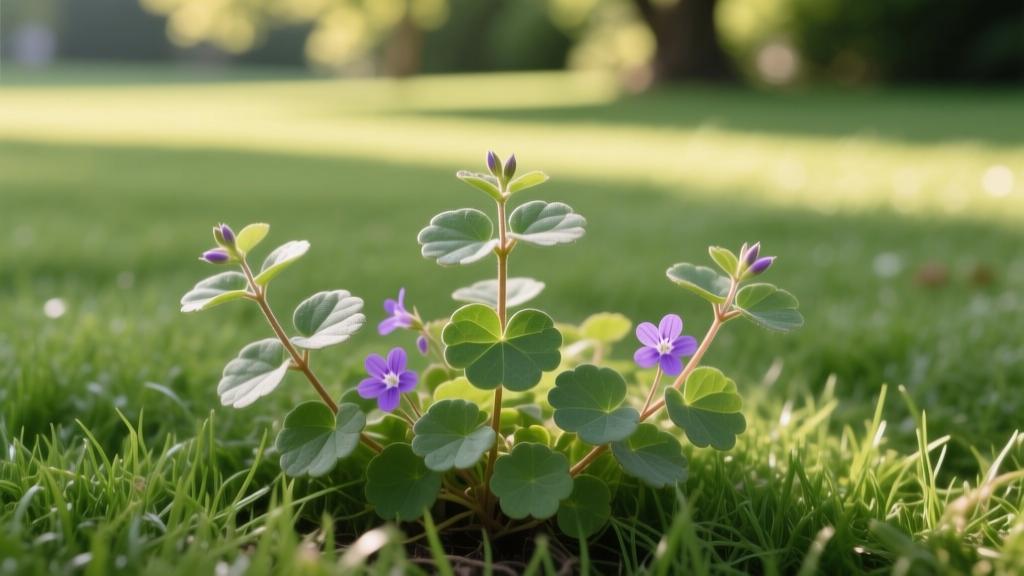
How to Identify and Eradicate Creeping Charlie Weed
James MillerPublished
The Ultimate Guide to Creeping Charlie Identification and Removal
If you have ever walked across your lawn in the early spring and noticed a dense carpet of small, scalloped leaves taking over your turfgrass, you are likely dealing with one of the most notorious broadleaf weeds in North America: Creeping Charlie. Scientifically known as Glechoma hederacea, this aggressive perennial weed is a member of the mint family. It is also commonly referred to as ground ivy, gill-over-the-ground, or creeping Jenny. For homeowners and lawn care professionals alike, creeping Charlie represents a unique challenge because of its rapid growth habit, shade tolerance, and remarkable ability to regenerate from tiny fragments of its root system.
Unlike annual weeds that die off with the changing seasons, creeping Charlie is a persistent perennial that actively steals nutrients, water, and sunlight from your desirable turfgrass. In this comprehensive guide, we will explore exactly how to identify this invasive plant, compare it to common look-alikes, and break down the most effective organic and chemical eradication strategies to reclaim your lawn.
Identifying the Invader: What Does Creeping Charlie Look Like?
Accurate identification is the first and most critical step in any integrated pest management (IPM) strategy. Misidentifying a weed can lead to the application of the wrong herbicide, wasting time, money, and potentially harming your lawn. According to the University of Minnesota Extension, creeping Charlie possesses several distinct morphological features that make it identifiable year-round.
- Leaves: The leaves are typically round to kidney-shaped with distinct scalloped or crenate edges. They grow in opposite pairs along the stem and often have a slightly puckered or wrinkled texture. When crushed, the leaves emit a strong, distinct minty or musky odor.
- Stems: The stems are square (a hallmark of the mint family) and grow horizontally along the ground. These creeping stems, known as stolons, can reach several feet in length and will root at every node (the joint where leaves attach to the stem) that touches the soil.
- Flowers: In mid-to-late spring, creeping Charlie produces small, funnel-shaped flowers that range in color from pale blue to deep purple. These flowers grow in clusters of three or more in the leaf axils.
- Root System: While it has a shallow fibrous root system, the real danger lies in the nodes along the stolons, which anchor the plant deeply and store energy for rapid regrowth.
Weed Comparison Chart: Creeping Charlie vs. Look-Alikes
Homeowners frequently confuse creeping Charlie with other common spring weeds, such as henbit and speedwell. Using the wrong treatment for these look-alikes will yield poor results. Below is a structured comparison to help you confirm your weed identification.
| Feature | Creeping Charlie (Ground Ivy) | Henbit | Common Speedwell |
|---|---|---|---|
| Leaf Shape | Round/Kidney-shaped, scalloped edges | Round but deeply lobed/cut, clasping stem | Small, oval, serrated edges |
| Stem Structure | Square, creeping, roots at nodes | Square, upright, does not creep | Round, creeping but finer texture |
| Scent | Strong mint/musky odor when crushed | Earthy, faint scent | No distinct odor |
| Flowers | Blue/Purple, funnel-shaped | Pink/Purple, tubular | Tiny, bright blue with white center |
| Life Cycle | Perennial | Winter Annual | Perennial / Winter Annual |
The Biology of a Lawn Nightmare
Why is creeping Charlie so difficult to kill? The answer lies in its reproductive biology. The University of Wisconsin-Madison Division of Extension notes that creeping Charlie spreads via both seeds and stolons. However, the stolon growth is what makes it a true nightmare for turf managers. Every single node along the creeping stem has the potential to develop its own root system and shoot network. If you attempt to pull the weed by hand and accidentally snap the stem, leaving even a fraction of an inch of a node in the soil, the plant will simply regenerate and continue its invasion. This vegetative reproduction allows it to form dense, impenetrable mats that choke out desirable grass species, particularly in shaded, moist areas where cool-season turfgrasses already struggle to thrive.
Manual and Organic Eradication Methods
For homeowners who prefer to avoid synthetic chemicals, or those dealing with small, localized patches of creeping Charlie in garden beds or isolated lawn spots, manual and organic methods can be effective. However, they require immense diligence and physical effort.
Hand-Pulling and Raking
Manual removal is most effective in early spring or late fall when the soil is heavily saturated with moisture. Wet soil reduces the friction around the root nodes, allowing you to pull the stolon out in longer, continuous pieces. Using a specialized weeding tool, such as a dandelion digger or a hand cultivator, carefully loosen the soil beneath the nodes. Never simply yank the vine, as this guarantees the stem will break. For larger patches, a heavy-duty thatching rake can be used to aggressively tear up the mats of ground ivy, followed by meticulous hand-removal of the remaining root fragments.
Smothering and Solarization
If creeping Charlie has invaded a garden bed or an area where you plan to start fresh, smothering is a highly effective organic tactic. Cover the affected area with overlapping layers of thick corrugated cardboard, then top it with three to four inches of organic mulch or compost. Leave this barrier in place for an entire growing season. The lack of sunlight and physical barrier will eventually starve and suffocate the weed without the use of a single drop of herbicide.
The Borax Myth: A Warning to Homeowners
Stop using Borax on your lawn! For decades, an internet myth circulated claiming that mixing common household Borax (sodium borate) with water and spraying it on creeping Charlie would selectively kill the weed. While it is true that creeping Charlie is sensitive to boron, turfgrass is also highly sensitive to it. Applying borax creates localized soil toxicity, resulting in dead patches of grass where the weed used to be. The Iowa State University Extension and other major agricultural institutions strongly advise against this method, as the boron does not break down easily and can render the soil barren for years.
Chemical Control: Herbicides That Actually Work
When creeping Charlie has established a widespread presence across your lawn, manual removal becomes practically impossible. In these cases, targeted chemical control using selective broadleaf herbicides is the most practical and effective solution. Standard 'Weed and Feed' products containing only 2,4-D are largely ineffective against mature creeping Charlie because the plant's waxy leaf cuticle repels the chemical, and its extensive root system requires a more systemic approach.
Selecting the Right Active Ingredients
To successfully eradicate creeping Charlie, you must use a herbicide that contains specific active ingredients known to translocate down into the root nodes. Look for liquid concentrate herbicides containing one or a combination of the following:
- Triclopyr: This is widely considered the gold standard for controlling ground ivy. It mimics plant growth hormones, causing the weed to grow itself to death. Products containing Triclopyr are highly effective on tough, waxy broadleaf weeds.
- Dicamba: Often combined with 2,4-D and MCPP in three-way herbicide blends, Dicamba provides excellent systemic control and helps prevent resistance.
- Quinclorac: While primarily known for crabgrass control, Quinclorac also exhibits strong activity against creeping Charlie when mixed with other broadleaf herbicides.
Application Timing and Technique
Timing is everything when applying herbicides to perennial weeds. The absolute best time to treat creeping Charlie is in the early fall (late September through October). During the fall, the plant is actively pulling nutrients down into its root system to store for the winter. When you apply a systemic herbicide like Triclopyr during this window, the plant eagerly pulls the poison down into the nodes and roots, ensuring a complete kill. Spring applications are secondary and often only result in 'top burn,' where the leaves die back but the roots survive and resprout weeks later.
Pro-Tip for Application: Because creeping Charlie leaves are covered in a protective waxy layer, you must add a non-ionic surfactant to your herbicide tank mix. The surfactant breaks the surface tension of the water, allowing the chemical to spread evenly across the leaf and penetrate the cuticle. Always apply herbicides when daytime temperatures are between 65°F and 80°F, and avoid spraying if rain is expected within 24 hours.
Long-Term Prevention and Lawn Recovery
Eradicating the weed is only half the battle. Creeping Charlie is an opportunistic invader that exploits weak, thin, and poorly maintained turf. If you kill the weed but do not fix the underlying environmental conditions, it will inevitably return. To prevent future outbreaks, implement the following cultural practices:
- Improve Drainage and Reduce Shade: Creeping Charlie thrives in moist, compacted, and shaded soils. Prune tree canopies to allow more sunlight to reach the turf, and consider core aeration to alleviate soil compaction and improve water infiltration.
- Adjust Mowing Height: Mow your cool-season turfgrass at a minimum height of 3 to 3.5 inches. Taller grass develops deeper root systems and creates a dense canopy that shades out weed seeds, preventing them from germinating.
- Overseed Bare Patches: Whenever you successfully kill a patch of creeping Charlie, immediately rake the dead debris, loosen the topsoil, and overseed the area with a high-quality, shade-tolerant turfgrass blend. Leaving bare soil exposed is an open invitation for new weed seeds to take root.
- Maintain a Strict Fertilization Schedule: A thick, vigorously growing lawn is your best natural defense against weeds. Conduct a soil test and apply the appropriate ratios of nitrogen, phosphorus, and potassium to keep your turf competitive.
By combining accurate identification, strategic chemical or manual removal, and proactive lawn care practices, you can successfully evict creeping Charlie from your property and restore a thick, healthy, and vibrant turfgrass lawn.