Pest Control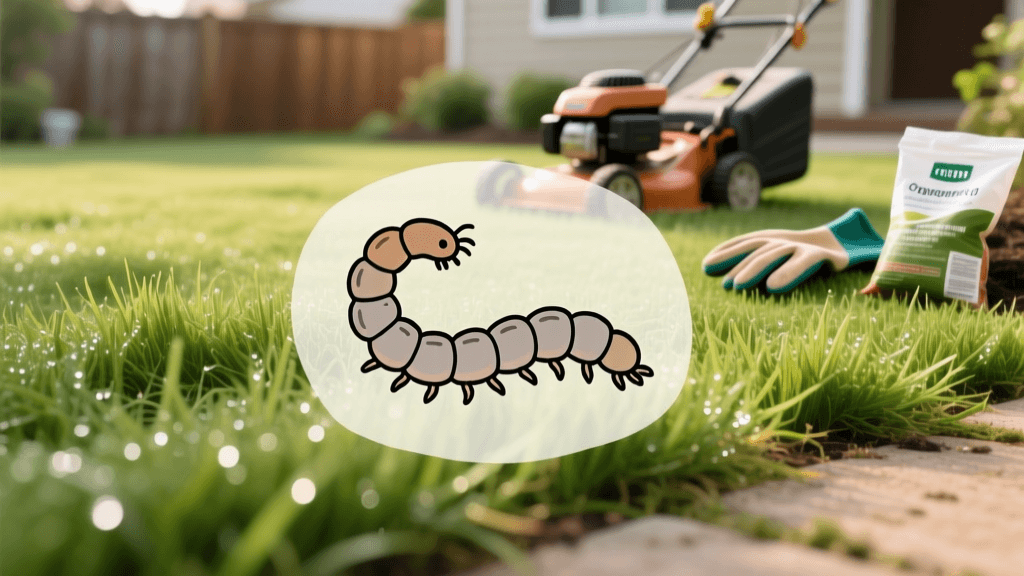
A Practical Guide to Identifying and Treating Lawn Grubs
What Are Lawn Grubs and Why Are They Dangerous?
Lawn grubs are the larval stage of various scarab beetles, including the Japanese beetle, European chafer, and June bug. These C-shaped, cream-colored larvae live just beneath the soil surface, feasting on the roots of your turfgrass. As they sever the root system, the grass loses its ability to absorb water and nutrients, leading to irregular brown patches that can easily be rolled back like a carpet. If left unchecked, a severe grub infestation will destroy large sections of your lawn, leaving the soil bare and vulnerable to invasive weeds. Furthermore, grubs attract secondary pests such as skunks, raccoons, and crows, which will tear up your turf in search of a protein-rich meal. Understanding the lifecycle of these pests is the foundation of effective Integrated Pest Management (IPM). Grubs typically hatch in mid-to-late summer, feed aggressively in the early fall, burrow deep into the soil to overwinter, and resume feeding in the spring before pupating into adult beetles.
Step 1: How to Identify a Grub Infestation
Before spending money on treatments, you must confirm that grubs are the actual culprit causing your lawn damage. Drought stress, fungal diseases, and dog urine can mimic grub damage. Use these two practical diagnostic methods to confirm their presence.
The Tug Test
Walk out to the margin where the brown, dying grass meets the healthy, green grass. Grab a handful of the damaged turf and pull gently. If the grass pulls up effortlessly with little to no root resistance, grubs have likely severed the root system. Peel back the sod and inspect the top two inches of soil for C-shaped white larvae.
The Soap Flush Test
If you want to draw grubs to the surface without destroying your turf, mix two tablespoons of liquid dish soap with two gallons of water in a watering can. Drench a one-square-foot section of the lawn's edge. Wait about ten minutes. If grubs are present, the soapy water will irritate them, causing them to surface. This method is highly effective for early detection.
Grub Species Identification and Lifecycle Chart
Different grub species have slightly different life cycles, which dictates your treatment window. Use the table below to identify your local threat and plan accordingly.
| Grub Species | Adult Stage | Peak Egg Hatch | Best Preventative Window |
|---|---|---|---|
| Japanese Beetle | Japanese Beetle | Late July - August | Mid-June to Mid-July |
| European Chafer | European Chafer | Late June - July | Mid-June to Mid-July |
| June Bug | June Beetle | May - June | Early to Mid-May |
| Oriental Beetle | Oriental Beetle | July | Mid-June to Mid-July |
Step 2: Determine the Treatment Threshold
According to Penn State Extension, not all grubs require immediate chemical intervention. A healthy, well-established lawn can tolerate a low population of grubs without showing visible damage. The general rule of thumb is the 'threshold of five to ten'. Dig up a one-square-foot section of your lawn and count the grubs. If you find fewer than 5 grubs per square foot, your lawn can handle the feeding, and treatment is unnecessary. If you find 5 to 10 grubs per square foot, monitor the lawn closely and consider treatment if the turf is already stressed by drought or heat. If you count more than 10 grubs per square foot, immediate curative or preventative action is required to save your turf.
Step 3: Choose Your Treatment Method
When treating grubs, you must decide between biological/organic controls and synthetic chemical controls. Your choice depends on the current season, the severity of the infestation, and your personal landscaping philosophy.
Biological and Organic Controls
Beneficial Nematodes: Specifically, the species Heterorhabditis bacteriophora (Hb) are microscopic worms that actively seek out and infect grub larvae with a lethal bacteria. They are completely safe for humans, pets, and earthworms. Apply them in late summer when young grubs are actively feeding near the surface. Cost: Approximately $30 to $45 per 10,000 square feet. Note that nematodes are living organisms; they must be kept refrigerated before use and applied in the early morning or late evening to avoid UV degradation.
Milky Spore Disease: This is a naturally occurring bacterium (Paenibacillus popilliae) that specifically targets Japanese beetle grubs. It is applied as a powder or granule and can remain effective in the soil for 10 to 15 years. However, it takes 2 to 3 years to build up enough spores in the soil to provide significant control, making it a long-term IPM strategy rather than a quick fix. Cost: $40 to $60 per 10,000 square feet.
Chemical Preventatives
Preventative insecticides are designed to be applied before the eggs hatch. They linger in the soil and kill young grubs as they begin to feed. The gold standard active ingredient for prevention is Chlorantraniliprole (widely available in consumer products like Scotts GrubEx1). It is highly effective, has a low toxicity profile for bees and mammals, and provides season-long control. Apply between mid-June and mid-July. Cost: Roughly $25 per 10,000 square feet. Another preventative option is Imidacloprid, though it carries higher risks for pollinators and should be avoided if your lawn is intermixed with flowering clover or weeds.
Chemical Curatives
If you missed the preventative window and discover an active, damaging infestation in late August or September, you need a fast-acting curative. Trichlorfon (found in products like Bayer Advanced 24 Hour Grub Killer or Dylox) is a fast-acting nerve agent that kills mature grubs within 24 hours of contact. It degrades rapidly in the soil, meaning it won't provide long-term protection, but it will stop immediate damage. Cost: Approximately $30 per 10,000 square feet. Carbaryl is another curative option, though it is highly toxic to beneficial insects and earthworms, and should be used only as a last resort.
Step 4: Application Timing and Best Practices
Proper application is just as important as choosing the right product. According to research published by UMass Extension Turf Program, failure to water in granular treatments is the number one reason for grub control failure.
- Mow First: Mow your lawn and remove any thick thatch layer. Thatch acts as a sponge, trapping the pesticide or nematodes before they reach the soil where the grubs live.
- Apply Evenly: Use a calibrated broadcast spreader for granular chemicals to ensure even coverage. Overlapping passes can lead to chemical burn, while gaps will leave grubs unharmed.
- Water Immediately: You must apply at least 1/2 inch of water immediately after applying any granular preventative or curative. This washes the active ingredient off the grass blades and into the top two inches of the soil profile where the grubs are feeding.
- Safety Precautions: Always wear long pants, closed-toe shoes, and chemical-resistant gloves when handling synthetic pesticides. Keep children and pets off the treated lawn until the grass is completely dry.
Step 5: Lawn Recovery and Future Prevention
Once the grubs have been eradicated, your lawn will need help recovering from the root damage. Rake out the dead, loose grass in the damaged patches to expose the soil. Spread a thin layer (1/4 inch) of compost or topsoil over the bare spots to improve seed-to-soil contact. Overseed the damaged areas with a turfgrass blend suited to your region, such as a mix of Kentucky bluegrass and perennial ryegrass for cool-season climates, or Bermuda grass for warm-season zones. Keep the newly seeded areas consistently moist for the first 14 days to ensure proper germination.
To prevent future outbreaks, focus on building a resilient lawn. According to Ohio State University Extension, grubs prefer to lay their eggs in thin, weak lawns with short root systems. By maintaining a proper mowing height (never cutting more than 1/3 of the grass blade), deep and infrequent watering (1 inch per week), and annual core aeration, you encourage deep, robust root systems that can easily outgrow and tolerate minor grub feeding without showing surface damage.