Home & Garden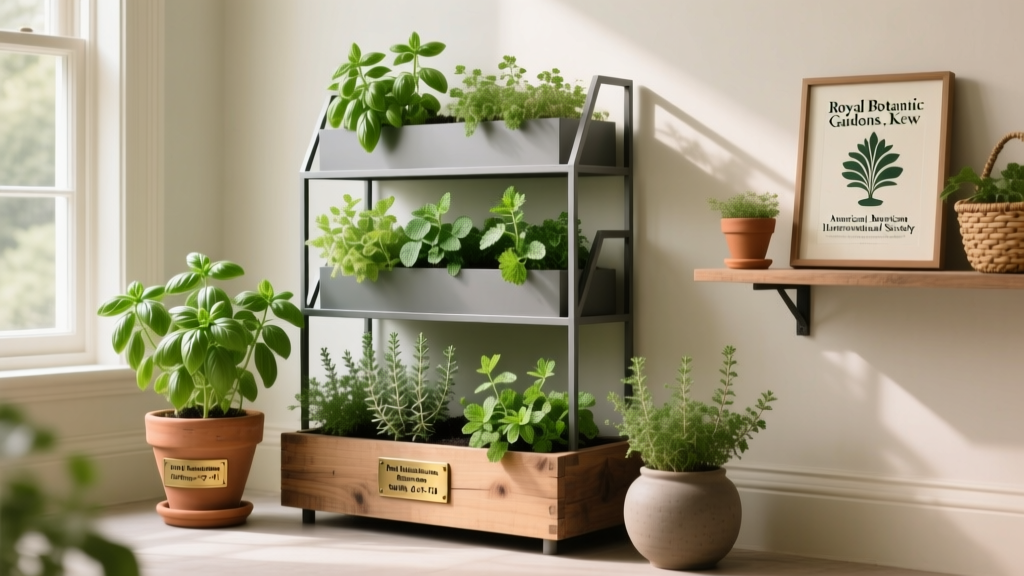
Indoor Herb Garden Lighting And Watering Tips
Optimal Light Conditions for Indoor Herb Gardens
Indoor herb gardens thrive when light intensity, duration, and spectrum closely mimic natural sunlight. Most culinary herbs—including basil, parsley, cilantro, and mint—require a minimum of 6–8 hours of direct or equivalent artificial light daily. For supplemental lighting, full-spectrum LED grow lights emitting between 400–700 nm (photosynthetically active radiation) are ideal. The American Horticultural Society recommends maintaining photosynthetic photon flux density (PPFD) levels of 200–400 µmol/m²/s for leafy herbs during vegetative growth. A study conducted at the Missouri Botanical Garden in 2021 found that basil grown under LEDs delivering 350 µmol/m²/s produced 27% more essential oil than those under fluorescent tubes at 180 µmol/m²/s.
Positioning matters: place herbs within 12–18 inches of LED fixtures to avoid stretching or etiolation. South-facing windows provide the strongest natural light in the Northern Hemisphere; however, only 30–40% of outdoor irradiance reaches interior spaces—even on clear days. In Chicago (USDA Hardiness Zone 5b), winter daylight averages just 9.2 hours per day in December, necessitating consistent supplementation. Rotate plants weekly to ensure even exposure, especially when using single-directional fixtures.
Matching Light to Herb Species
- Basil: Requires ≥6 hours of direct sun or 14–16 hours under 300–400 µmol/m²/s PPFD
- Rosemary: Needs ≥8 hours of intense light; tolerates drier conditions but suffers under low PPFD (<200 µmol/m²/s)
- Chives: Thrives at 250–350 µmol/m²/s with 12-hour photoperiods; blooms May–June in Zones 3–9
- Thyme: Prefers full sun and performs best with 320 µmol/m²/s over 14-hour cycles
- Oregano: Grows well at 280–360 µmol/m²/s; peak flowering occurs June–August across Zones 5–9
Watering Precision and Root Health
Overwatering remains the leading cause of indoor herb mortality. Unlike outdoor gardens, indoor containers lack natural drainage gradients and evaporative cooling, increasing root rot risk—especially for Mediterranean herbs like rosemary and thyme. Soil moisture sensors calibrated to volumetric water content (VWC) offer reliable guidance: basil prefers VWC 35–45%, while sage tolerates as low as 20–25%. The Royal Horticultural Society (2022) advises checking soil 1 inch below surface before watering—dry to the touch indicates readiness.
Water quality significantly impacts herb vitality. Municipal tap water often contains chlorine, fluoride, and sodium levels exceeding safe thresholds for sensitive species. At the Brooklyn Botanic Garden, staff observed chlorosis in parsley seedlings exposed to tap water with >0.5 mg/L free chlorine over 10 consecutive days. Letting water sit uncovered for 24 hours reduces chlorine volatility; for fluoride-sensitive herbs like mint, use rainwater or reverse-osmosis filtered water.
Soil pH and Nutrient Availability
Most culinary herbs perform optimally in slightly acidic to neutral soils. A precise pH range ensures micronutrient solubility and prevents toxic buildup. Basil and chives flourish between pH 6.0–6.8, whereas oregano and thyme tolerate broader ranges (6.0–7.5). Soil testing kits calibrated to ±0.1 pH units confirm suitability; University of Vermont Extension’s 2020 trial showed parsley yield dropped 33% when grown in pH 7.9 versus pH 6.4.
Container soil must balance aeration, moisture retention, and nutrient exchange. A recommended blend includes 40% screened compost, 30% perlite, 20% coconut coir, and 10% worm castings by volume. Avoid garden soil—it compacts indoors and may introduce pathogens. Sterilize reused pots with 10% bleach solution for 10 minutes to prevent fungal carryover.
Hardiness Zone Considerations for Indoor Transitions
While indoor environments buffer seasonal extremes, understanding USDA hardiness zones informs selection and timing. Herbs native to warmer zones—like lemon balm (Zones 4–9) or stevia (Zones 9–11)—require careful acclimation when moved outdoors in spring. In Portland, Oregon (Zone 8b), growers successfully transition potted rosemary outdoors after mid-May when nighttime lows consistently exceed 45°F. Conversely, tender annuals such as cilantro (Zones 2–11 as annual) benefit from staggered sowing every 14 days to extend harvest through summer heat stress.
Zone-specific bloom times guide pruning schedules. Chives flower earliest—typically late April in Zone 6a (e.g., Cleveland, Ohio)—and their lavender blooms attract pollinators when placed near open windows. Removing spent flowers extends vegetative growth and delays bolting. For perennial herbs like mint, dividing rootstock every 2–3 years maintains vigor, especially in high-humidity microclimates common in basements or bathrooms.
Garden Structures and Spatial Integration
Vertical herb towers, tiered shelving units, and wall-mounted planters maximize limited square footage without compromising airflow. Structures should allow ≥3 inches clearance between pots to reduce foliar disease transmission. At Longwood Gardens in Kennett Square, Pennsylvania, designers use powder-coated aluminum frames with integrated drip irrigation channels—reducing manual watering frequency by 60% compared to standard trays.
Material choice affects thermal regulation: terra cotta wicks moisture efficiently but cools rapidly; glazed ceramic retains warmth longer but requires vigilant monitoring. For north-facing apartments in Boston (Zone 6a), insulated grow cabinets with thermostatically controlled heating pads maintain root-zone temperatures above 65°F—critical for basil germination, which stalls below 60°F.
Monitoring Tools and Data-Driven Adjustments
Digital hygrometers with ±2% RH accuracy and logging capability reveal microclimate fluctuations invisible to casual observation. A 2023 pilot at the Chicago Botanic Garden tracked relative humidity dips to 28% during winter furnace operation—triggering leaf curl in basil despite adequate watering. Installing ultrasonic humidifiers set to 45–55% RH stabilized transpiration rates.
Light meters calibrated in PPFD—not lux—are indispensable. Lux readings misrepresent usable light for photosynthesis; a lux meter may read 10,000 lux under cool-white LEDs while PPFD measures only 120 µmol/m²/s—insufficient for robust growth. Cross-reference measurements against published horticultural standards:
“Consistent PPFD delivery above 250 µmol/m²/s during 14-hour photoperiods supports sustained leaf expansion and secondary metabolite synthesis in most Lamiaceae and Apiaceae herbs.” — American Society for Horticultural Science, 2020
| Herb | Optimal pH | Zones (Perennial) | Bloom Period | Min. Root Temp (°F) |
|---|---|---|---|---|
| Basil | 6.0–6.8 | 10–11 | July–September | 60 |
| Thyme | 6.0–7.5 | 5–9 | May–July | 55 |
| Chives | 6.0–7.0 | 3–9 | May–June | 45 |
Calibrate tools seasonally: PPFD output degrades 15–20% annually in uncooled LED fixtures. Replace diodes every 24 months or after 10,000 operational hours. Record observations biweekly—soil moisture depth, leaf color shifts, internode length—to detect stress before visible symptoms emerge.
Group herbs by water affinity: pair drought-tolerant rosemary and oregano on upper shelves where evaporation is greatest; position moisture-loving parsley and mint on lower tiers with humidity-trapping trays. This mimics natural microhabitats and simplifies maintenance routines.
Avoid overhead misting for fuzzy-leaved herbs like lamb’s ear or certain sage cultivars—it encourages powdery mildew. Instead, increase ambient humidity via pebble trays filled with water and inert gravel, ensuring pot bases remain above water level.
Pruning frequency correlates directly with light intensity. Under optimal PPFD, basil responds to weekly pinching above the third node—stimulating lateral branching and delaying flowering. Delayed pruning under low light leads to spindly growth and reduced essential oil concentration.
When selecting cultivars, prioritize disease-resistant lines developed through public breeding programs. ‘Nufar’ basil resists downy mildew (Peronospora belbahrii), a pathogen prevalent in high-humidity indoor settings. Similarly, ‘Mighty Midget’ chives exhibit enhanced tolerance to root-knot nematodes (Meloidogyne spp.), verified in trials at Cornell University’s Long Island Horticultural Research & Extension Center.
Monitor electrical conductivity (EC) of leachate monthly—ideal range is 1.0–2.0 dS/m for most herbs. EC >2.5 dS/m signals salt accumulation, requiring flush irrigation with three times the pot volume in low-EC water.
Use organic slow-release fertilizers with N-P-K ratios of 5-5-5 or 3-4-4, applied at half label rate every 6–8 weeks. Excess nitrogen promotes leggy growth at the expense of flavor compounds—particularly critical for culinary applications.
Label all containers with planting date, cultivar name, and last fertilization date. This simple practice enables tracking of varietal performance across seasons and informs future selections based on empirical yield and resilience data.