Gardening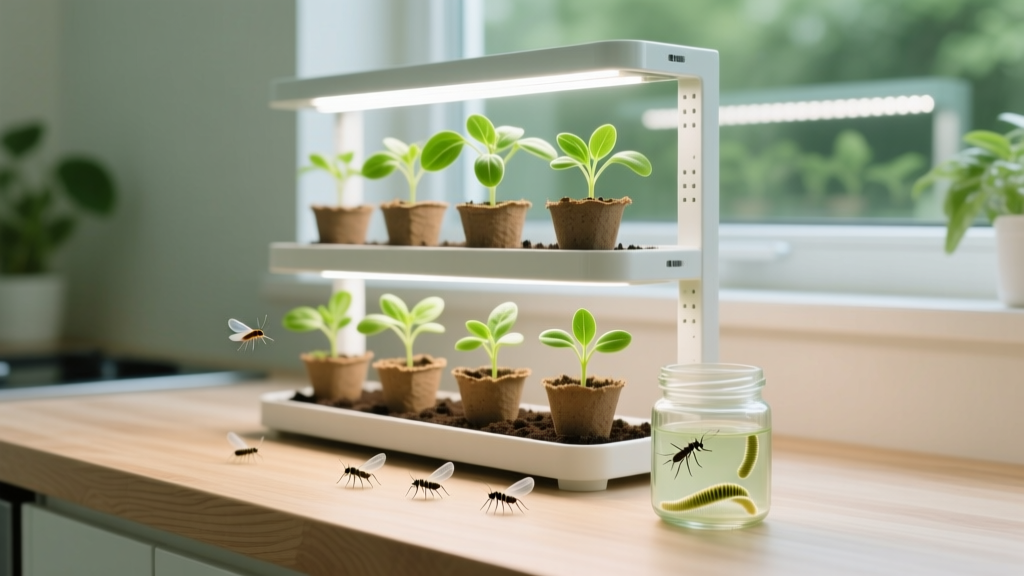
2026 LED Seed Starting & Beneficial Insect Bio-Control
Robert HayesPublished
The Evolution of Indoor Seed Starting in 2026
As we navigate the 2026 growing season, indoor seed starting has evolved far beyond simple fluorescent tubes and chemical sprays. Today, the most successful home gardeners and small-scale market growers are combining high-efficiency LED grow light schedules with integrated bio-control strategies. By introducing beneficial insects directly into the indoor seedling environment, growers can completely eliminate the need for toxic pesticides, ensuring that transplants are robust, pest-free, and ready to thrive the moment they are moved outdoors.
The intersection of advanced horticultural lighting and entomology is the frontier of modern organic gardening. In this comprehensive guide, we will explore exactly how to schedule your LED grow lights for optimal seedling development while simultaneously cultivating a thriving population of predatory insects to defend your tender young plants.
Optimal 2026 LED Grow Light Schedules for Seedlings
Modern full-spectrum LED grow lights, such as the latest 2026 models from Spider Farmer and Mars Hydro, offer unprecedented energy efficiency and spectral tuning. For seed starting, the goal is to provide a Daily Light Integral (DLI) of 12 to 16 mol/m²/d without causing light stress or excessive stretching.
The 16/8 Seedling Schedule
For the vast majority of vegetable and flower seedlings—including tomatoes, peppers, brassicas, and zinnias—a 16 hours on / 8 hours off schedule remains the gold standard in 2026. This schedule mimics long summer days, promoting rapid vegetative growth while giving the plants a necessary dark period for cellular respiration and root development.
- Seed Germination (Days 1-7): Keep lights off or on a dim 12-hour cycle until the cotyledons break the soil surface. Maintain ambient temperatures between 75°F and 80°F using seedling heat mats.
- Early Seedling Stage (Days 8-21): Ramp up to 16 hours of light. Position LEDs 18 to 24 inches above the canopy. Target a PPFD (Photosynthetic Photon Flux Density) of 200-300 µmol/m²/s.
- True Leaf Stage (Days 22+): Lower lights to 12-18 inches to achieve 300-400 µmol/m²/s as the plants develop their first true leaves and require more energy for structural growth.
According to Penn State Extension's research on indoor lighting, providing adequate blue light spectrum during the seedling phase is critical to prevent hypocotyl elongation (stretching). Fortunately, the latest generation of white diode LEDs naturally emit a heavy blue spectrum, eliminating the need for separate blue-light supplemental fixtures.
The Bio-Control Advantage: Ditching Chemical Sprays
Why integrate beneficial insects indoors? The warm, humid environment required for seed germination is also the perfect breeding ground for common indoor pests, most notably fungus gnats (Bradysia spp.) and aphids. In the past, gardeners relied on neem oil, insecticidal soaps, or synthetic chemicals. However, these can cause phytotoxicity (leaf burn) on tender seedlings, especially under intense LED lighting.
Biological pest control utilizes natural predators to manage pest populations. As highlighted by the EPA's guidelines on biological pest control, introducing natural enemies reduces chemical residues, prevents pest resistance, and creates a balanced micro-ecosystem. In 2026, sourcing commercial beneficial insects is easier and more affordable than ever, with specialized overnight shipping ensuring predators arrive vibrant and ready to hunt.
Managing Fungus Gnats with Beneficial Predators
Fungus gnats are the undisputed nemeses of the indoor seed starting tray. The adult gnats are a nuisance, but their larvae live in the moist seed-starting mix, feeding on organic matter and chewing on the delicate root hairs of young seedlings, which can lead to damping-off and stunted growth. The University of Minnesota Extension emphasizes that controlling the larval stage in the soil is the most effective way to break the gnat life cycle.
Instead of letting the soil dry out—which can kill young seedlings—we deploy soil-dwelling predatory insects and nematodes.
Table: Top Bio-Control Agents for Indoor Seedling Trays
| Target Pest | Beneficial Agent | Application Rate (per 10 sq ft) | Optimal Soil Temp | 2026 Avg. Cost |
|---|---|---|---|---|
| Fungus Gnat Larvae | Stratiolaelaps scimitus (Predatory Mite) | 2,500 mites | 60°F - 80°F | $28.00 / bottle |
| Fungus Gnat Larvae | Steinernema feltiae (Beneficial Nematodes) | 1 million nematodes | 55°F - 75°F | $18.00 / pack |
| Aphids / Thrips | Dalotia coriaria (Rove Beetle) | 100 adults | 65°F - 85°F | $45.00 / vial |
| Aphids (Foliage) | Aphidius colemani (Parasitic Wasp) | 500 mummies | 68°F - 77°F | $35.00 / bottle |
How LED Light Spectrums Affect Beneficial Insects
One of the most frequently asked questions in 2026 is whether high-intensity LED grow lights harm beneficial insects. The short answer is no, but spectrum and photoperiod do influence their behavior.
Many predatory insects, such as the Dalotia coriaria rove beetle, are nocturnal or crepuscular hunters. They rely on the dark period to actively patrol the soil surface and lower plant stems. If you run your LEDs on a 24-hour cycle (which is sometimes mistakenly recommended for cannabis or specific hydroponic setups), you will severely disrupt the hunting patterns of your bio-control agents. The 16/8 schedule provides the perfect 8-hour window of darkness for these predators to feed and reproduce.
Furthermore, while seedlings benefit from the UV and deep-blue spectrums provided by modern diodes, excessive UV can deter some soft-bodied beneficials. Fortunately, standard full-spectrum horticultural LEDs emit negligible UV radiation, making them perfectly safe for predatory mites and parasitic wasps.
Step-by-Step Implementation Guide
To successfully merge your LED lighting schedule with a bio-control protocol, follow this chronological timeline for your 2026 seed starting season.
Step 1: Prepare the Substrate and Apply Nematodes (Day 0)
Begin with a high-quality, sterile peat or coco-coir based seed starting mix. Moisten the mix thoroughly before sowing your seeds. Immediately after watering in your seeds, apply Steinernema feltiae beneficial nematodes. Mix the nematode powder into a watering can of room-temperature water and drench the trays. The nematodes will immediately begin hunting any fungus gnat larvae that may have been introduced via the environment.
Step 2: Germination and LED Activation (Days 1-7)
Place your trays under humidity domes and set your LED timer to 12 hours on / 12 hours off at a low intensity. Once the seeds sprout and push through the soil, remove the humidity domes to increase airflow and lower surface humidity, which naturally discourages adult gnats from laying eggs.
Step 3: Introduce Predatory Mites (Day 10)
Once the seedlings have established their cotyledons and the soil surface is slightly less saturated (though still moist), it is time to introduce Stratiolaelaps scimitus. Sprinkle the mite-and-vermiculite mixture directly onto the surface of the seed starting mix around the base of the seedlings. These mites will establish a permanent breeding colony in your trays, patrolling the top inch of soil for the remainder of the indoor growing cycle.
Step 4: Ramp Up Light Intensity (Days 14-30)
As true leaves emerge, increase your LED schedule to 16 hours on / 8 hours off and lower the fixture to increase PPFD. Turn on small oscillating fans to strengthen the seedling stems. The airflow will also disrupt the flight paths of any rogue adult fungus gnats, preventing them from mating and laying new eggs.
Step 5: Scout for Foliage Pests (Days 30+)
While soil pests are managed by mites and nematodes, aphids can occasionally hitchhike into your grow room on clothing or pets. Inspect the undersides of leaves weekly. If you spot aphids, release Aphidius colemani parasitic wasps. These tiny, non-stinging wasps will lay their eggs inside the aphids, turning them into golden 'mummies' and eradicating the infestation within a week.
Conclusion
Starting seeds indoors in 2026 is a highly optimized science. By pairing a strict 16/8 LED grow light schedule with a proactive bio-control strategy, you create a resilient, chemical-free nursery. Beneficial insects like Stratiolaelaps scimitus and Steinernema feltiae act as your microscopic security team, ensuring that your seedlings develop massive, undamaged root systems. When it is finally time to transplant your seedlings into the outdoor garden, they will transition with vigor, already acclimated to a thriving, natural ecosystem.
