Home & Garden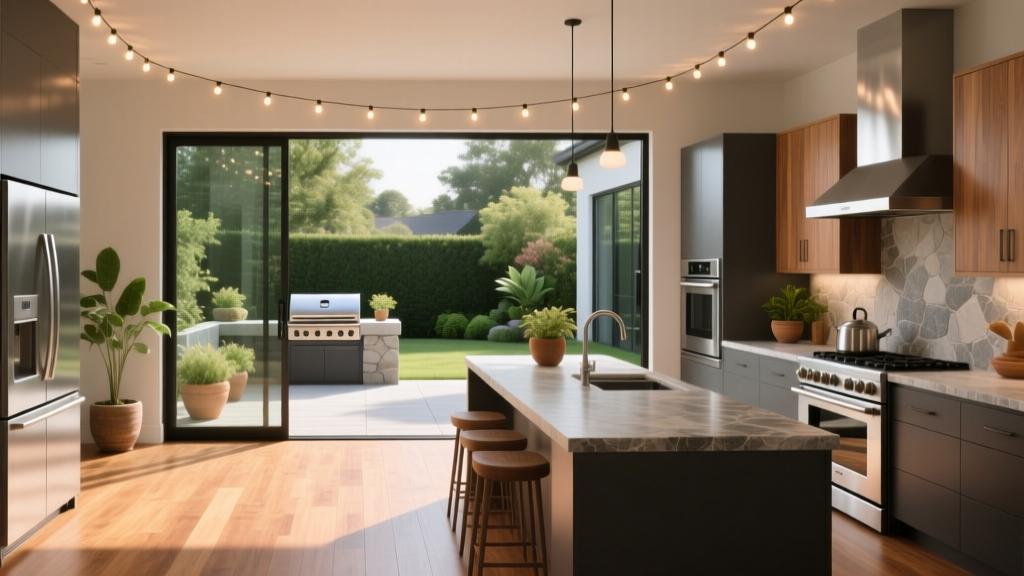
Planning Your Seamless Indoor-Outdoor Kitchen Design
Robert HayesPublished
The Rise of the Unified Living Space
The concept of the modern home has fundamentally shifted over the last decade. No longer are the interior kitchen and the exterior patio treated as separate, isolated entities. Today’s premier home design focuses on erasing the physical and visual boundaries between the indoors and the outdoors, creating a unified, expansive living environment. Planning a seamless indoor-outdoor kitchen requires meticulous attention to architectural flow, material continuity, and functional zoning. Whether you are undertaking a full-scale structural remodel or reconfiguring your existing footprint, this guide will walk you through the essential design ideas and planning strategies needed to bring your ultimate outdoor living vision to life.
According to the American Institute of Architects (AIA) Home Design Trends Survey, outdoor living spaces and specialized kitchen layouts consistently rank among the most popular homeowner requests. This is not merely an aesthetic preference; it is a lifestyle upgrade that increases usable square footage, promotes well-being, and significantly enhances property value. By thoughtfully planning the transition zones, you can create a space that is as functional for a quiet morning coffee as it is for hosting a large summer evening gathering.
Structural Openings: Erasing the Boundary
The cornerstone of any indoor-outdoor kitchen is the structural opening that connects the two spaces. While traditional sliding glass doors offer a basic connection, they inherently limit the flow of traffic and leave bulky frames in the way. To achieve a truly seamless transition, architects and designers heavily rely on folding glass wall systems or multi-slide pocket doors.
Premium brands like NanaWall and LaCantina offer aluminum-framed folding glass walls (such as the NanaWall SL70) that can span up to 40 feet wide. When fully opened, these panels fold and stack neatly to the side, completely eliminating the barrier between your interior kitchen island and your exterior patio dining area. This creates a massive, contiguous space ideal for entertaining.
Planning Considerations for Structural Openings
- Structural Engineering: Removing a section of an exterior load-bearing wall requires a structural engineer to design an appropriate header, typically a steel I-beam or engineered lumber (LVL), to support the roof load. Expect to pay between $500 and $1,500 for engineering plans and permits.
- Flush Track Systems: For a true seamless effect, specify a flush sill track. This allows the interior flooring and exterior paving to meet at the exact same elevation, eliminating tripping hazards, ensuring ADA compliance, and creating a continuous visual plane.
- Cost Estimates: High-performance folding glass walls generally cost between $1,000 and $1,500 per linear foot, including professional installation. For a standard 12-foot opening, budget approximately $12,000 to $18,000.
Flooring Transitions: Creating Visual Continuity
To make the outdoor patio feel like a natural extension of the indoor kitchen, the flooring must transition smoothly. While you cannot use interior hardwood outside due to moisture and UV damage, you can achieve visual continuity by selecting exterior materials that mimic the interior finishes. Large-format porcelain pavers are currently the gold standard for outdoor kitchen flooring because they can be manufactured to perfectly replicate the grain of interior oak or walnut hardwood, or the veining of interior marble.
When planning the transition, use a minimal metal threshold strip (such as a Schluter profile) to separate the materials while maintaining a flush, zero-step elevation. Below is a comparison of popular flooring strategies for unified living spaces.
| Material Strategy | Best Application | Avg. Cost (Installed) | Maintenance Level |
|---|---|---|---|
| Wood-Look Porcelain Pavers | Patios, Covered Lanais | $12 - $22 per sq. ft. | Very Low |
| Composite Decking (e.g., Trex) | Elevated Decks, Uncovered Zones | $15 - $25 per sq. ft. | Low |
| Natural Stone (Travertine/Slate) | Ground-Level Patios, Poolside | $18 - $30 per sq. ft. | Moderate (Sealing) |
| Poured Concrete (Stamped) | Budget-Friendly Large Areas | $8 - $15 per sq. ft. | Moderate (Sealing) |
Dual-Zone Layouts and Appliance Planning
A successful indoor-outdoor kitchen relies on the "Dual-Zone" layout concept. Rather than duplicating every appliance outdoors, the design should create a symbiotic relationship between the interior prep zone and the exterior cooking and serving zones. The interior kitchen handles heavy prep, refrigeration, and cleanup, while the exterior kitchen focuses on grilling, pizza making, and beverage service.
The National Association of Realtors (NAR) Remodeling Impact Report highlights that outdoor kitchen upgrades and patio additions consistently yield high returns on investment and dramatically increase homeowner satisfaction. To maximize this ROI, incorporate a "pass-through" servery window or a shared peninsula island that straddles the threshold.
Essential Outdoor Kitchen Measurements
- Counter Height: Maintain a standard 36-inch counter height for prep areas, but consider a 42-inch bar-height tier for outdoor seating to block wind and conceal cooking clutter.
- Walkway Clearance: Ensure a minimum of 42 inches of clearance between parallel counters, and 48 inches if multiple cooks will be working in the space simultaneously.
- The Landing Zone: Always include at least 12 inches of heat-proof landing space (such as granite or stainless steel) on either side of an outdoor grill or pizza oven for resting hot platters.
For cabinetry, avoid interior wood or MDF. Instead, specify marine-grade polymer cabinets or powder-coated 304 stainless steel (like those from Coyote Outdoor Living or Kalamazoo), which are engineered to withstand rain, humidity, and extreme temperature fluctuations without warping or rusting.
Smart Home Integration for Outdoor Ambiance
Bridging the indoor and outdoor experience extends beyond physical materials; it includes digital integration. Smart home technology allows you to control the outdoor environment with the same ease as your living room.
Start with lighting. According to the ENERGY STAR program, upgrading to certified smart LED fixtures can reduce outdoor lighting energy consumption by up to 75%. Integrate a system like Lutron Caseta or Philips Hue Outdoor, which allows you to create "Entertaining" scenes that simultaneously dim the interior pendants, brighten the outdoor task lighting over the grill, and turn on the landscape pathway lights.
"The best outdoor kitchens feel like a natural exhale of the indoor space. When lighting, audio, and climate control are automated and unified across the threshold, the homeowner stops thinking about where the house ends and the yard begins."
Additionally, consider integrating automated louvered pergolas (such as those by StruXure). These structures feature built-in rain sensors that automatically close the aluminum louvers when precipitation is detected, protecting your outdoor dining furniture and allowing the party to continue uninterrupted.
Project Phasing and Budget Breakdown
Planning a project of this magnitude requires a realistic timeline and budget. A full indoor-outdoor kitchen remodel typically takes between 4 to 8 months from initial design to final punch list. Below is a structured breakdown of the phases and associated costs for a mid-to-high-end project featuring a 12-foot folding glass wall and a 10-foot outdoor kitchen island.
- Phase 1: Design and Engineering (Months 1-2)
Cost: $3,000 - $7,000
Includes architectural drawings, structural engineering, 3D renderings, and permitting. - Phase 2: Demolition and Structural Framing (Month 3)
Cost: $8,000 - $15,000
Includes removing the existing exterior wall, installing the structural header, and pouring new concrete footings for the outdoor patio and kitchen island. - Phase 3: Systems and Enclosure (Months 4-5)
Cost: $15,000 - $25,000
Includes running gas, water, and electrical lines to the exterior, installing the folding glass wall system, and framing the pergola or roof extension. - Phase 4: Finishes, Cabinetry, and Appliances (Months 6-7)
Cost: $25,000 - $45,000
Includes laying the porcelain pavers, installing stainless steel outdoor cabinetry, setting stone countertops, and hooking up the grill, sink, and smart lighting systems.
Final Thoughts on Your Design
Creating a seamless indoor-outdoor kitchen is an investment in your home’s architecture and your family’s lifestyle. By prioritizing flush structural transitions, matching visual material cues, and integrating smart technology, you can design a space that defies the traditional limitations of the exterior wall. Take the time to plan your zones carefully, consult with structural professionals early in the process, and select materials built to endure the elements while maintaining their indoor-level elegance.
