Tree Care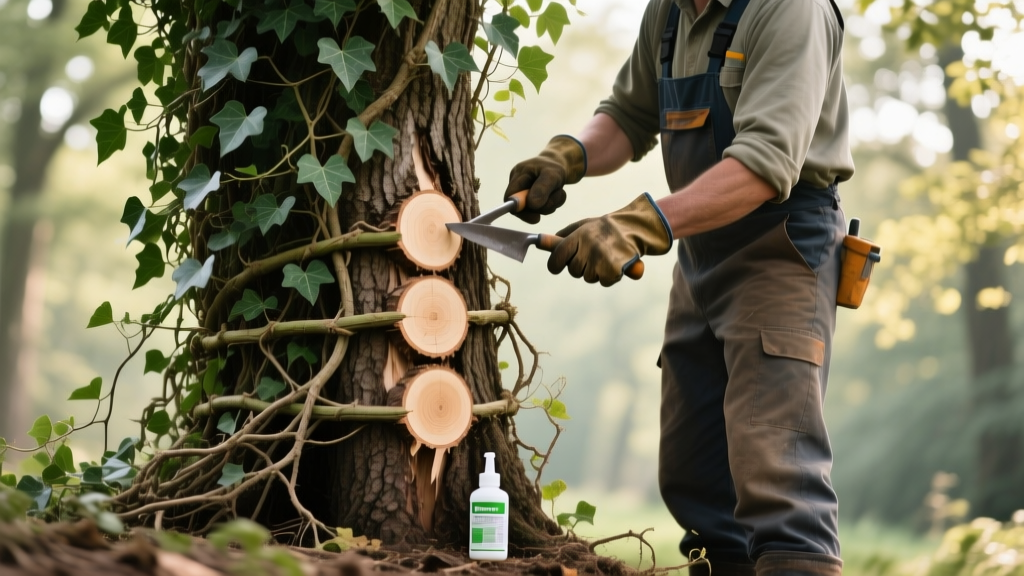
Invasive Vines on Trees: Identification and Removal
Lisa ThompsonPublished
The Hidden Danger of Invasive Vines and Weeds
Trees in residential landscapes face numerous threats, from soil compaction to seasonal droughts. However, one of the most insidious and frequently overlooked dangers is the slow, creeping invasion of aggressive weeds and woody vines. While common turf weeds primarily compete with young saplings for water and soil nutrients, invasive vines like English Ivy, Kudzu, and Wintercreeper pose a direct physical threat to mature trees. These aggressive climbers can strangle trunks, smother canopies, and add immense structural weight that leads to catastrophic failure during storms. Understanding how to identify these destructive plants and safely remove them is a critical component of comprehensive tree care.
How Vines and Weeds Damage Tree Health
The damage caused by invasive vines occurs both above and below ground. Below ground, aggressive weed and vine root systems outcompete tree feeder roots for essential moisture and nutrients. Above ground, the damage is far more visible and destructive. Vines that wrap tightly around a tree trunk can cause 'girdling,' a process where the vine's growth compresses the tree's vascular system, effectively choking off the flow of water and sugars. Furthermore, when vines reach the tree's canopy, they act as a solar umbrella, blocking the host tree's leaves from receiving the sunlight required for photosynthesis. Finally, the sheer weight of mature vine systems, especially when holding rainwater or ice, drastically increases the risk of limb breakage and uprooting.
Top 3 Invasive Vines That Threaten Trees
English Ivy (Hedera helix)
English Ivy is a pervasive evergreen vine that is notorious for destroying mature hardwoods. According to the North Carolina State Extension plant database, English Ivy utilizes small aerial rootlets to cling to tree bark, allowing it to climb hundreds of feet into the canopy. The leaves are distinctly lobed on juvenile climbing stems but become unlobed and oval-shaped on mature, reproductive stems. Ivy forms dense, heavy mats that trap moisture against the tree bark, creating an ideal environment for fungal pathogens and wood-decaying organisms.
Kudzu (Pueraria montana var. lobata)
Often referred to as 'the vine that ate the South,' Kudzu is a fast-growing, deciduous legume that can grow up to a foot per day during peak summer months. The NC State Extension notes that Kudzu features large, alternate, compound leaves with three broad leaflets that are often hairy on the underside. Kudzu does not typically climb using aerial rootlets; instead, it twines around tree trunks and branches, crushing bark and snapping smaller limbs under its aggressive, heavy growth.
Wintercreeper (Euonymus fortunei)
Wintercreeper is an evergreen vine that behaves similarly to English Ivy but features opposite, toothed leaves and distinctive pink or orange seed capsules (arils) in the autumn. It climbs tree trunks using adhesive aerial roots and can quickly transition from a groundcover weed to a canopy-smothering threat if left unmanaged near the base of trees.
Comparison Chart: Invasive Tree Vines
| Vine Species | Leaf Arrangement | Climbing Mechanism | Primary Threat to Trees |
|---|---|---|---|
| English Ivy | Alternate, Lobed/Unlobed | Aerial Rootlets | Bark decay, Canopy smothering |
| Kudzu | Alternate, Compound (3 leaflets) | Twining Stems | Structural crushing, Rapid shading |
| Wintercreeper | Opposite, Toothed margins | Aerial Rootlets | Girdling, Moisture trapping |
Essential Equipment and Safety Gear
Before attempting to remove established vines, gather the proper tools to ensure both your safety and the health of the tree. Pulling vines directly off a tree trunk is a common mistake that strips the tree's protective bark and opens it up to disease.
- Heavy-Duty Loppers: For cutting vines up to 1.5 inches in diameter.
- Pruning Saw or Bow Saw: Necessary for thick, mature trunks of English Ivy or Wisteria.
- Leather Gauntlet Gloves: Essential for protecting your hands from thorns, irritating sap, and hidden pests like spiders or wasps nesting in the vine mats.
- Safety Goggles: To protect your eyes from snapping vines and falling debris.
- Paintbrush and Herbicide: For targeted cut-stump treatment (if using chemical control).
Step-by-Step Removal: The 'Window Cut' Method
The most arborist-recommended technique for removing vines from trees without damaging the bark is the 'Window Cut' or 'Life Ring' method. This technique severs the vine's vascular system at the base, causing the upper portions to die and eventually fall off the tree naturally.
- Clear the Base: Use a hand trowel or garden knife to gently clear away mulch, soil, and ground-crawling weeds from the base of the tree to expose the root flare and the bottom of the vine trunks.
- Make the First Cut: Using your loppers or saw, make a clean cut through the vine at ground level.
- Make the Second Cut: Measure approximately 3 to 4 feet up the tree trunk and make a second cut through the vine.
- Remove the Window: Carefully pry the 3-to-4-foot section of vine away from the trunk. If the vine is tightly adhered via aerial rootlets, use a flathead screwdriver or a specialized weeding tool to gently pop the vine off the bark. Never yank or pull the vine forcefully, as this will rip the tree's living cambium layer.
- Leave the Canopy Vines: Do not attempt to pull the dead vines out of the tree's canopy. As they die, they will turn brittle and safely drop to the ground over the next few months, or can be safely removed by a certified arborist during routine pruning.
Targeted Herbicide Application for Stumps
For highly aggressive species like Kudzu or thick English Ivy, simply cutting the vine may result in vigorous resprouting from the root system. To prevent regrowth, a targeted 'cut-stump' herbicide application is highly effective and minimizes environmental impact compared to foliar spraying.
Within 15 minutes of making the ground-level cut, apply a systemic herbicide directly to the freshly exposed outer ring (the cambium) of the severed vine stump. Products containing Triclopyr (such as Garlon 4 or Ortho Brush-B-Gon) or Glyphosate (such as Roundup Pro) are the industry standards for woody vine control. For cut-stump applications, a concentrated solution of 20% to 30% active ingredient mixed with water and a surfactant is typically required. Use a small foam paintbrush to dab the chemical precisely onto the vine stump, avoiding any contact with the tree's bark or surrounding soil.
Preventative Tree Ring Maintenance and Mulching
Once the vines are removed, maintaining a clean, weed-free tree ring is vital to prevent reinvasion and protect the tree's root zone. The United States Forest Service emphasizes that proper site maintenance is the best defense against invasive plant establishment.
Establish a mulch ring that extends at least 3 feet from the trunk of the tree. Apply 2 to 4 inches of coarse arborist wood chips, which naturally suppress weed seed germination and retain soil moisture. Crucially, practice proper mulching techniques: never pile mulch against the tree trunk in a 'volcano' shape, as this traps moisture, invites fungal rot, and encourages the growth of adventitious roots. Keep the mulch 3 to 5 inches away from the actual bark of the tree. By combining the window-cut removal method with strategic mulching and targeted stump treatment, you can effectively reclaim your trees from invasive weeds and vines, ensuring their long-term health and structural integrity.