Lawn Care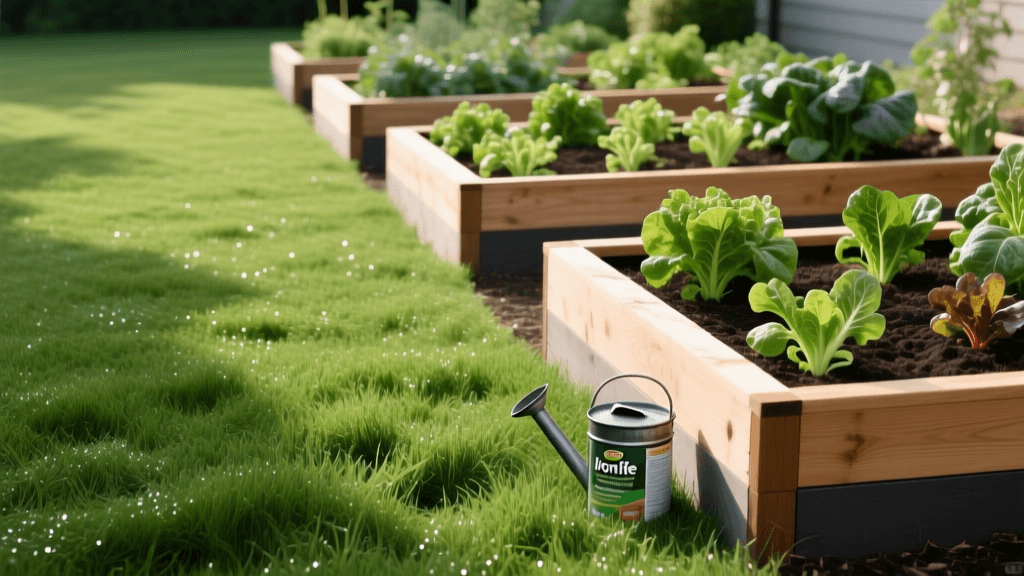
Ironite Lawn Supplement 2026: Deep Green Grass Near Raised Beds
The Homesteader’s Dilemma: Lush Lawns and Safe Veggies
As a dedicated raised bed vegetable gardener, your primary focus is likely on the health, yield, and organic integrity of your tomatoes, peppers, brassicas, and leafy greens. However, the aesthetic appeal of your outdoor space matters just as much. The visual contrast of a vibrant, deep green lawn surrounding your cedar, composite, or galvanized raised beds creates a stunning, professional-looking landscape. Achieving that rich, dark green grass color often requires specific micronutrients, and in 2026, Ironite remains one of the most popular lawn supplements for this exact purpose.
But when your pristine turfgrass borders your edible garden plots, a critical question arises: Is it safe to use lawn-specific iron supplements near your vegetables? Gardeners are rightfully hyper-aware of soil contamination, heavy metals, and nutrient runoff. This comprehensive guide explores how to utilize Ironite lawn supplement for deep green grass color while strictly protecting the soil ecology and safety of your adjacent raised bed vegetable gardens.
What is Ironite and Why Does It Create Deep Green Grass?
To understand how to use Ironite safely, you must first understand what it is. Standard lawn fertilizers rely heavily on nitrogen to promote rapid, upward blade growth. However, excessive nitrogen can lead to pale, yellowing grass if the soil lacks the micronutrients required for chlorophyll synthesis. Ironite, specifically the widely used Pennington Ironite Mineral Supplement 1-0-1, is formulated to deliver a massive dose of soluble iron, manganese, and other trace minerals without the growth surge associated with high-nitrogen fertilizers.
When turfgrass absorbs this soluble iron, chlorophyll production accelerates, resulting in a remarkably deep, dark green color. For the raised bed gardener who wants their lawn to act as a lush, dark green carpet framing their vibrant vegetable beds, Ironite is a highly effective tool. Furthermore, because it contains very little nitrogen (usually a 1-0-1 NPK ratio), it won't cause your lawn to grow so fast that you are mowing every three days, saving you time to tend to your vegetable crops.
The 2026 Formulations: What Raised Bed Gardeners Must Know
In the past, some mineral-based lawn supplements carried trace amounts of heavy metals like arsenic or lead, which naturally occur in mined iron ores. This was a massive red flag for organic vegetable gardeners. Fortunately, the agricultural and landscaping industry has evolved significantly. By 2026, strict environmental regulations and advanced purification processes ensure that major brands like Pennington heavily test and filter their products to meet rigorous safety standards for residential use.
However, while the heavy metal concern is largely mitigated in modern 2026 formulations, the concentration of iron and manganese remains a factor. Ironite is engineered for the robust root systems of turfgrass. If granular Ironite accidentally bounces into your raised beds, or if iron-rich runoff wicks into your vegetable soil, the sheer volume of iron can cause nutrient lockout. According to research on soil nutrient interactions, excess iron can bind with phosphorus and zinc, making them unavailable to your vegetable crops and leading to stunted growth or poor fruit set.
Protecting Your Raised Beds from Lawn Runoff
The primary risk to your raised beds is not the Ironite itself, but how water moves it through the landscape. When you apply granular Ironite and water it in, the dissolved iron can travel via surface runoff or capillary action. If your raised beds are built directly on the soil without proper bottom barriers, or if the lawn slopes toward your garden, your vegetables could absorb excess iron.
To mitigate this, the EPA's guidelines on safe lawn care emphasize targeted application and managing water runoff to protect adjacent edible landscapes and waterways. Here are the best practices for creating a safe buffer:
- Establish a 12-to-18-Inch Buffer Zone: Never apply granular Ironite within 18 inches of your raised bed walls. Use a hand-spreader or a liquid iron alternative for the perimeter grass.
- Install Physical Edging: Deep metal or heavy-duty plastic landscape edging sunk at least 6 inches into the ground between the lawn and the raised beds will prevent subsurface iron migration.
- Grade Away from Beds: Ensure your lawn slopes slightly away from your vegetable beds so that heavy rainfall carries dissolved minerals away from your root zones, not toward them.
Comparison Chart: Ironite vs. Garden-Safe Iron Alternatives
If you are uncomfortable using a lawn-specific product near your vegetables, or if you need to treat the grass immediately adjacent to your beds, consider this comparison of 2026 iron supplements:
| Product Type | Primary Use | Iron Source | Raised Bed Safety | Estimated 2026 Cost |
|---|---|---|---|---|
| Pennington Ironite 1-0-1 | Lawns (Mid-yard) | Iron Sulfate / Minerals | Moderate (Keep 18in away) | $15 per 10 lbs |
| Liquid Chelated Iron | Lawns & Garden Edges | Chelated Iron (EDTA) | High (Precise application) | $22 per 32 oz |
| Greensand | Raised Bed Veggies | Glauconite (Slow release) | Very High (Organic safe) | $18 per 5 lbs |
| Blood Meal | Heavy Feeding Veggies | Organic Nitrogen & Iron | Very High (Organic safe) | $20 per 5 lbs |
Step-by-Step Application Guide for the Vegetable Gardener
To achieve that deep green grass color without compromising your vegetable harvest, follow this precise application routine tailored for homesteaders and raised bed enthusiasts.
Step 1: Conduct a Dual-Soil Test
Before applying any micronutrients, test both your lawn soil and your raised bed soil. As noted by the University of Minnesota Extension on soil test interpretations, understanding your baseline pH and iron levels is crucial. Iron becomes unavailable to plants in high-pH (alkaline) soils. If your lawn pH is above 7.0, standard Ironite may not green up the grass effectively, and you may need a chelated iron product instead.
Step 2: Choose the Right Weather Window
Apply granular Ironite when the wind is completely calm to prevent granules from blowing into your raised beds. Furthermore, apply it when the forecast predicts light, steady rain or when you have time to water it in gently with a hose, avoiding high-pressure sprinklers that cause surface runoff into the garden.
Step 3: Calibrate Your Spreader
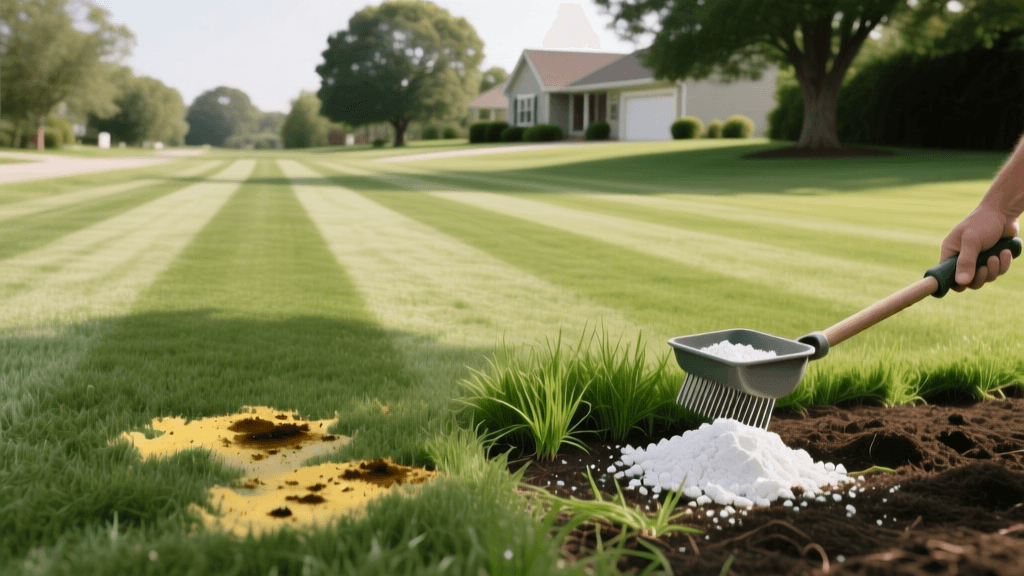
Set your rotary spreader to the manufacturer's recommended setting (usually delivering about 1 pound of product per 100 square feet). When you approach the 18-inch buffer zone near your raised beds, close the spreader hopper and switch to a handheld broadcast spreader or a targeted liquid spray to ensure zero overlap into the vegetable soil.
Step 4: Water and Monitor
Water the lawn immediately after application to dissolve the granules and wash them off the grass blades, preventing foliar burn. Monitor your raised bed vegetables over the next two weeks. If you notice the interveinal tissue of young tomato or pepper leaves turning yellow while the veins remain green, this is a sign of iron chlorosis, which, ironically, can be caused by too much iron or manganese in the soil locking out other nutrients.
Expert Insights on Iron Toxicity in Edible Gardens
'While iron is an essential micronutrient for vegetable crops, the threshold for toxicity is much lower in confined raised bed environments than in expansive turf lawns. Gardeners must treat lawn iron supplements with the same caution as synthetic herbicides when working near edible root zones.' — 2026 Urban Agriculture & Soil Health Report
If you suspect that Ironite runoff has entered your raised beds, the immediate remedy is to apply a heavy layer of organic compost and a phosphorus-rich amendment like bone meal. Phosphorus binds with excess iron in the soil, rendering it insoluble and preventing the vegetable roots from absorbing toxic levels. Additionally, mulching the surface of your raised beds with straw or wood chips can help buffer the soil from future splash-back during heavy lawn watering sessions.
Conclusion: Balancing Aesthetics and Edible Safety
Achieving a deep, dark green lawn that perfectly complements your raised bed vegetable garden is entirely possible in 2026, provided you approach lawn care with a gardener's mindset. Ironite lawn supplement remains a powerhouse for correcting turf chlorosis and delivering that coveted deep green grass color without excessive nitrogen growth. However, the proximity of your edible crops demands respect for buffer zones, precise application techniques, and an understanding of soil nutrient interactions.
By utilizing physical edging, maintaining an 18-inch application buffer, and relying on targeted liquid iron treatments near the garden borders, you can protect your organic vegetable harvest while enjoying a flawless, resort-quality lawn. Always let your soil test results guide your micronutrient strategy, ensuring both your turf and your tomatoes thrive in perfect harmony.
For more information on managing micronutrient deficiencies across different plant species, consult your local cooperative extension or review the Texas A&M AgriLife Extension's comprehensive guide on iron chlorosis, which offers excellent insights into how iron behaves in both turf and garden ecosystems.