Lawn Care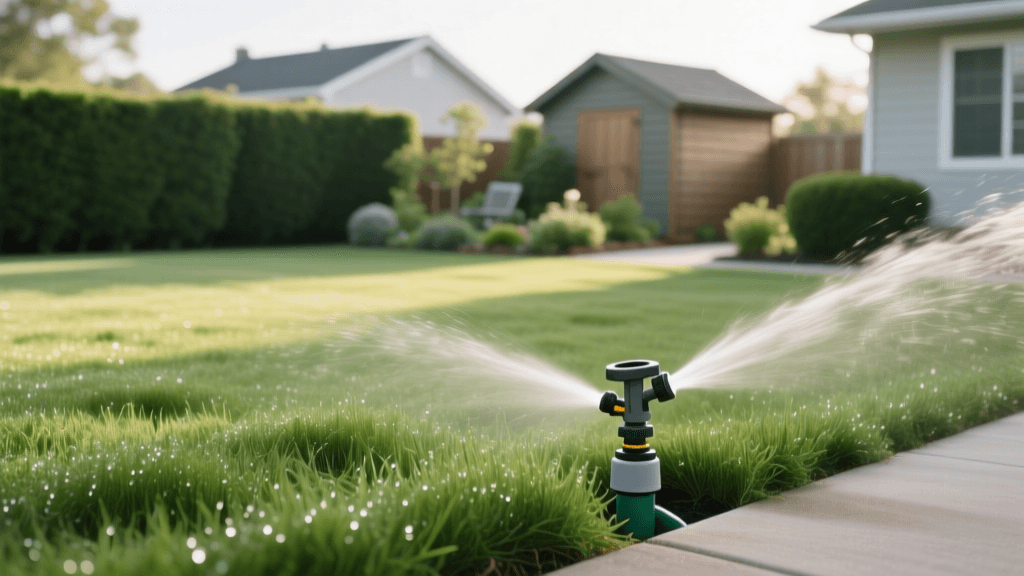
Ironite Lawn Supplement 2026: Sprinkler & Irrigation Guide
Mastering Ironite Application Through Your Sprinkler System in 2026
Achieving a deep, emerald-green lawn without triggering excessive top growth is the ultimate goal for modern turfgrass management. In 2026, Ironite lawn supplement remains a premier choice for homeowners seeking to correct iron chlorosis and deepen grass color. However, because Ironite relies heavily on oxidation and soil moisture to become bioavailable, your sprinkler and irrigation system plays a pivotal role in its success and in preventing costly property damage.
Whether you are utilizing a traditional rotor system, a modern drip network, or a 2026 smart Wi-Fi controller, understanding the intersection of iron supplements and irrigation is critical. This guide covers the precise watering schedules, stain-prevention techniques, and smart-controller programming required to safely and effectively apply Ironite to your lawn.
Granular vs. Liquid Ironite: Irrigation Compatibility
Before programming your irrigation controller, you must identify which form of Ironite you are applying. The brand offers both granular (typically a 1-0-1 NPK ratio with iron and manganese) and liquid formulations. Each interacts with your sprinkler system differently.
| Feature | Granular Ironite (1-0-1) | Liquid Ironite / Chelated Iron |
|---|---|---|
| Irrigation Requirement | Must be watered in immediately to activate and prevent foliar burn. | Absorbs foliarly; light irrigation 24 hours later helps soil penetration. |
| Stain Risk | Extremely High. Wet granules on concrete cause permanent rust stains. | Low to Moderate. Overspray can stain if not rinsed immediately. |
| Sprinkler Adjustment | Requires sweeping/blowing hardscapes BEFORE turning on sprinklers. | Requires adjusting sprinkler throw radius to avoid hardscape overspray. |
| Best Irrigation Method | Cycle-and-Soak smart schedule to prevent runoff. | Hose-end sprayer attached to impact sprinkler, or fertigation injection. |
The Stain Hazard: Protecting Hardscapes During Sprinkler Cycles
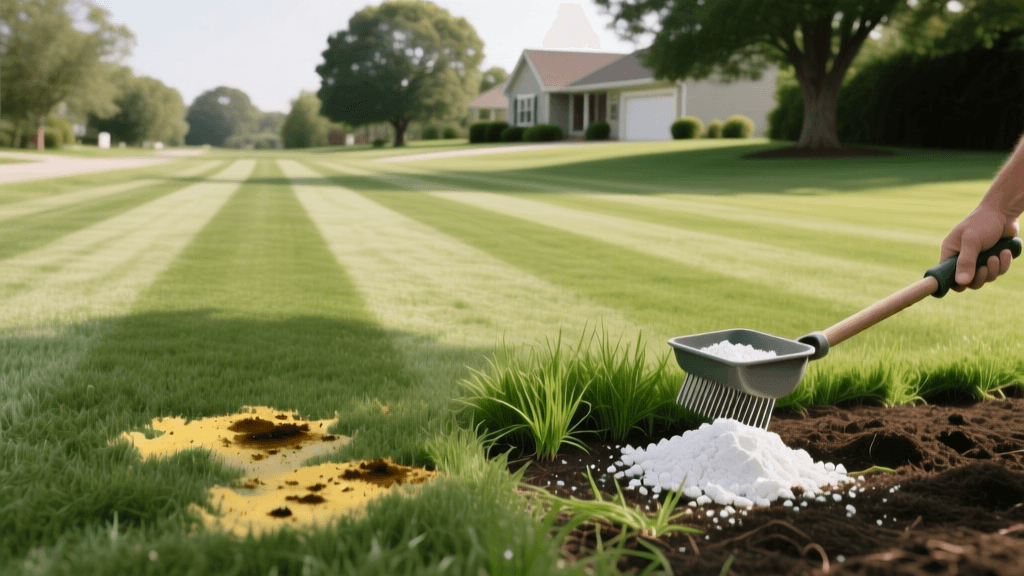
The most notorious drawback of granular Ironite is its tendency to stain concrete, natural stone, and brick. Ironite contains ferrous sulfate and other iron compounds that rapidly oxidize when exposed to water. If your sprinkler system wets a single granule resting on your driveway, it will leave a rust-colored blemish that is nearly impossible to remove.
Pre-Irrigation Cleanup Protocol
Never use your sprinkler system to wash granular Ironite off your hardscapes and into the lawn. This guarantees staining. Instead, follow this strict protocol before your irrigation cycle begins:
- Step 1: Apply the granular Ironite using a broadcast spreader equipped with a side-edge guard to minimize hardscape overlap.
- Step 2: Use a stiff bristle broom or a gas-powered leaf blower to physically remove every granule from driveways, sidewalks, and patios.
- Step 3: Inspect the edges of your lawn where sprinkler heads are located. Ensure no granules are trapped in the concrete expansion joints.
- Step 4: Only after the hardscapes are completely clear should you activate your sprinkler system.
Adjusting Sprinkler Head Throw Radii
In 2026, most premium rotor and spray heads feature tool-less radius adjustment screws. Use a small flathead screwdriver or the manufacturer's key to dial back the throw distance of boundary heads by 10% to 15%. This prevents the wind from carrying Ironite-laced water droplets onto adjacent stonework, mitigating secondary staining risks.
Programming Your Smart Controller for Ironite Water-In
Granular Ironite requires approximately 1/4 to 1/2 inch of irrigation to dissolve the prills, wash the iron into the soil profile, and prevent the salts from burning the grass blades. However, applying 1/2 inch of water in a single continuous cycle often leads to runoff, especially on compacted or sloped lawns. Runoff carries your expensive supplement into storm drains rather than the root zone.
To solve this, utilize the EPA WaterSense smart irrigation protocols by programming a Cycle and Soak schedule on your 2026 Wi-Fi controller (like the Rachio 4 or Hunter Hydrawise).
How to Set Up a Cycle and Soak for Ironite
- Determine Total Runtime: Perform a catch-cup test to determine how long your sprinklers take to output 1/2 inch of water. Let us assume it takes 30 minutes.
- Divide the Cycles: Instead of one 30-minute run, create three separate 10-minute cycles.
- Set the Soak Delay: Program a 45-minute to 1-hour delay between each cycle. This allows the initial water and dissolved iron to percolate into the soil, opening up pore space for the next cycle.
- Override Weather Skip: Ensure your smart controller's rain-skip feature is temporarily overridden for this specific water-in event, as the Ironite must be watered in immediately after application to prevent foliar burn.
Liquid Iron and Hose-End Sprinkler Attachments
If you prefer to avoid the hardscape staining risks of granular products, liquid iron supplements (including liquid Ironite or generic chelated iron) are an excellent alternative. In 2026, many homeowners are integrating liquid iron directly into their sprinkler routines using hose-end sprayers attached to oscillating or impact sprinklers.
When using a hose-end proportioner attached to a standard garden sprinkler, the water pressure draws the liquid iron from the reservoir and mixes it into the spray pattern. This provides a dual-action application: foliar feeding and soil drenching simultaneously.
Calibrating Your Sprinkler for Liquid Application
According to turfgrass management guidelines from Penn State Extension, uniform application is critical to avoid streaking (dark green strips alternating with yellowing grass). To ensure your sprinkler distributes the liquid iron evenly:
- Set your hose-end sprayer dial to the manufacturer's recommended rate (typically 1 to 2 ounces per gallon of output).
- Use an impact sprinkler on a tripod rather than an underground pop-up system. Tripod impact sprinklers provide a more consistent, measurable application rate for liquid mixing.
- Walk the hose and sprinkler across the lawn in a grid pattern, matching the spray diameter to ensure 50% overlap between passes.
- Do not irrigate with your main underground system for at least 24 hours after liquid application to allow the iron to absorb through the grass blades.
Soil pH, Irrigation Water Quality, and Chelation
A common frustration among homeowners is applying Ironite, watering it in with their sprinkler system, and seeing no change in grass color. This is frequently tied to soil pH and irrigation water quality.
Iron becomes chemically locked up and unavailable to grass roots in alkaline soils (pH above 7.0). Furthermore, if your municipal water supply or well water is hard (high in calcium carbonate and alkaline), your sprinkler system is essentially watering your lawn with liquid limestone, gradually raising the soil pH over time.
The 2026 Solution: Chelated Iron and Acidifying Agents
If a soil test reveals a pH above 7.2, standard ferrous sulfate-based Ironite will be ineffective. You must switch to a chelated iron product (such as Fe-EDDHA), which protects the iron molecule from binding with soil minerals. Additionally, turfgrass experts at Michigan State University Extension note that managing irrigation water alkalinity is vital for long-term micronutrient availability. Consider installing an inline fertilizer injector (fertigation system) on your main irrigation line to periodically apply soil-acidifying agents like ammonium sulfate, which will lower the pH and free up native iron in the soil.
Seasonal Timing for Irrigation and Ironite
The timing of your Ironite application must align with your seasonal irrigation schedule to maximize uptake and minimize environmental waste.
Cool-Season Grasses (Kentucky Bluegrass, Fescue, Ryegrass)
- Spring (April - May): Apply Ironite as the soil warms and spring rains begin. Use your smart controller's seasonal shift feature to provide a moderate water-in cycle.
- Early Fall (September): The most critical application. Pair Ironite with your fall aeration and overseeding. Program your sprinklers for frequent, short bursts to keep new seed moist while simultaneously washing the Ironite into the aeration holes.
Warm-Season Grasses (Bermuda, Zoysia, Centipede)
- Late Spring (May - June): Apply after the grass has fully greened up and your summer irrigation schedule is active. Ensure deep, infrequent watering cycles to push the iron deep into the root zone.
- Mid-Summer (August): A light application of liquid iron can help combat summer chlorosis caused by heat stress. Apply in the early morning via hose-end sprinkler before the daily evaporation rates peak.
Conclusion
Integrating Ironite lawn supplement into your 2026 sprinkler and irrigation routine requires more than just turning on the water. By understanding the stain risks of granular iron, utilizing cycle-and-soak smart controller programming, and accounting for your irrigation water's pH, you can safely unlock the deep, dark green color your lawn deserves. Always prioritize hardscape protection, calibrate your equipment, and let your smart irrigation technology do the heavy lifting for precise, runoff-free watering.