Pest Control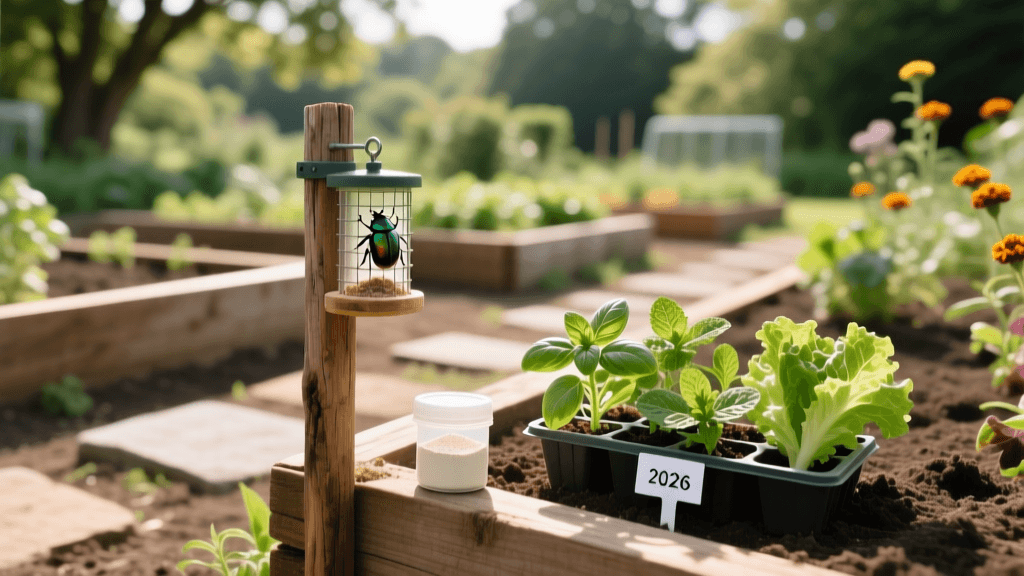
Japanese Beetle Traps & Milky Spore For Edibles In 2026
The 2026 Foodscape: Why Japanese Beetles Target Your Edibles
As edible landscaping and foodscaping continue to dominate garden design in 2026, homeowners are increasingly replacing ornamental shrubs with blueberry bushes, raspberry canes, and asparagus ferns. However, this shift has inadvertently created a buffet for one of North America's most destructive pests: the Japanese beetle (Popillia japonica). These metallic green and copper invaders are highly attracted to the very plants that make up a productive foodscape, particularly grapes, raspberries, and asparagus.
In an edible landscape, the traditional approach of spraying broad-spectrum chemical insecticides is entirely off the table. You cannot harvest safe, organic fruit if your plants are drenched in synthetic neurotoxins. Therefore, mastering integrated pest management (IPM) is critical. For the 2026 growing season, the most effective, non-toxic strategy relies on a two-pronged approach: precise Japanese beetle trap placement and the long-term biological warfare of milky spore.
The Trap Placement Paradox: Don't Invite Them to Dinner
One of the most common and devastating mistakes made by novice foodscape gardeners is placing Japanese beetle traps directly inside or immediately adjacent to their edible garden. Commercial traps, such as the popular Rescue Japanese Beetle Trap or Bag-a-Bug, utilize a powerful combination of a female sex pheromone and a sweet floral lure (often combining phenethyl propionate, eugenol, and geraniol). These lures are designed to attract beetles from miles away.
If you hang a trap on the edge of your raspberry patch, you are essentially broadcasting a dinner invitation to every beetle in your neighborhood, drawing them directly to your most vulnerable crops. According to Penn State Extension, traps placed too close to susceptible plants often result in increased defoliation because the lures attract more beetles than the trap can actually catch.
Exact Placement Guidelines for 2026
To use traps effectively in an edible landscape without sabotaging your harvest, follow these strict placement rules:
- Distance: Place traps at least 30 to 50 feet away from your edible garden, fruit trees, and ornamental rose bushes.
- Wind Direction: Position the traps downwind from your garden. The prevailing breeze should carry the scent of the lure away from your edibles, intercepting beetles before they reach your property.
- Sacrificial Zones: Hang traps near non-edible, sacrificial plants or along the far property line. Wild brambles or non-fruiting ornamental trees make excellent decoy zones.
- Maintenance: Empty the catch bags every morning. A bag full of decaying beetles emits an ammonia-like odor that actually repels new beetles, rendering your trap useless and driving the pests back toward your food crops.
Milky Spore: The Ultimate Biological Control for Edibles
While traps deal with adult beetles above ground, the real battle for a sustainable foodscape happens below the soil. Japanese beetle grubs spend ten months of the year underground, feeding on grassroots. In 2026, the gold standard for organic grub control in edible landscapes remains milky spore disease (Paenibacillus popilliae).
Milky spore is a naturally occurring, host-specific bacterium. When applied to the soil, Japanese beetle grubs ingest the spores while feeding on roots. The spores multiply inside the grub, eventually killing it and turning its internal fluids a milky white. As the dead grub decomposes, it releases billions of new spores into the surrounding soil, creating a self-sustaining biological defense network.
Crucially for foodscapers, the EPA notes that biological controls like milky spore are highly targeted. It is completely harmless to humans, pets, earthworms, pollinators, and beneficial nematodes. It leaves zero chemical residue on your root vegetables, strawberries, or leafy greens, making it perfectly safe for immediate harvest.
Application Rates, Timing, and Costs
Applying milky spore requires patience and precision. It is not a quick-fix spray; it is a long-term soil inoculation. Here is how to apply it to your 2026 edible landscape:
- The Grid Method: Apply one teaspoon of milky spore powder every four feet in a grid pattern across your lawn and garden beds. Use a specialized drop tube applicator for accuracy.
- Watering In: Immediately after application, water the area gently for 15 to 20 minutes to wash the spores off the grass blades and into the soil where the grubs live. Do not use high-pressure sprinklers that might wash the spores away.
- Soil Temperature: Apply only when soil temperatures are consistently above 65°F (18°C), typically in late summer or early fall when grubs are actively feeding near the surface.
- Timeline and Cost: Milky spore takes two to three years to fully establish and spread through the soil ecosystem. However, once established, it provides 15 to 20 years of protection. In 2026, a 10-ounce box (treating 2,500 square feet) costs approximately $45 to $55, making it a highly cost-effective long-term investment for your foodscape.
Comparing Pest Control Methods for the Foodscape
When managing an edible landscape, every intervention must be weighed against its impact on soil health and food safety. Below is a comparison of common Japanese beetle controls evaluated for foodscaping environments.
| Control Method | Target Life Stage | Edible Safety Profile | Longevity & Cost |
|---|---|---|---|
| Properly Placed Traps | Adults | Excellent (Zero contact with food) | Seasonal ($15-$25 per year) |
| Milky Spore (Biological) | Grubs (Larvae) | Excellent (OMRI Listed, safe for soil) | 15-20 years ($45-$55 per 2,500 sq ft) |
| Neem Oil (Organic Spray) | Adults (Repellent) | Good (Requires washing, harvest intervals) | Short-term ($20 per season) |
| Broad-Spectrum Chemicals | Adults & Grubs | Poor (Toxic residue, harms pollinators) | Not recommended for edibles |
Integrating IPM: Hand-Picking and Row Covers
Even with traps drawing adults away and milky spore decimating the grub population, a robust 2026 IPM strategy for edibles should include physical barriers and manual removal. The University of Minnesota Extension recommends hand-picking as a highly effective, non-toxic method for small-scale foodscapes.
Japanese beetles are sluggish in the early morning when temperatures are cool. Take a bucket of soapy water into your garden at dawn. Hold the bucket beneath the beetle-infested leaves of your grapevines or raspberry canes and give the branches a gentle shake. The beetles will drop into the soapy water and drown. This daily ritual can drastically reduce localized feeding damage without introducing any foreign substances to your food.
For high-value, vulnerable crops like young asparagus spears or ripening blueberries, lightweight floating row covers (spunbond polypropylene) provide an impenetrable physical barrier. Install the covers in late June before the primary beetle emergence and secure the edges with soil or landscape staples. Remember to remove the covers if you are growing crops that require insect pollination, or hand-pollinate beneath the covers.
Conclusion: A Resilient, Chemical-Free Harvest
Protecting your edible landscape from Japanese beetles in 2026 does not require compromising your commitment to organic, safe food production. By understanding the behavioral science behind pheromone trap placement and harnessing the enduring power of milky spore biological control, you can break the beetle's life cycle above and below ground. Combine these strategies with diligent morning hand-picking, and your foodscape will thrive, yielding a bountiful, pest-free harvest for decades to come.