Pest Control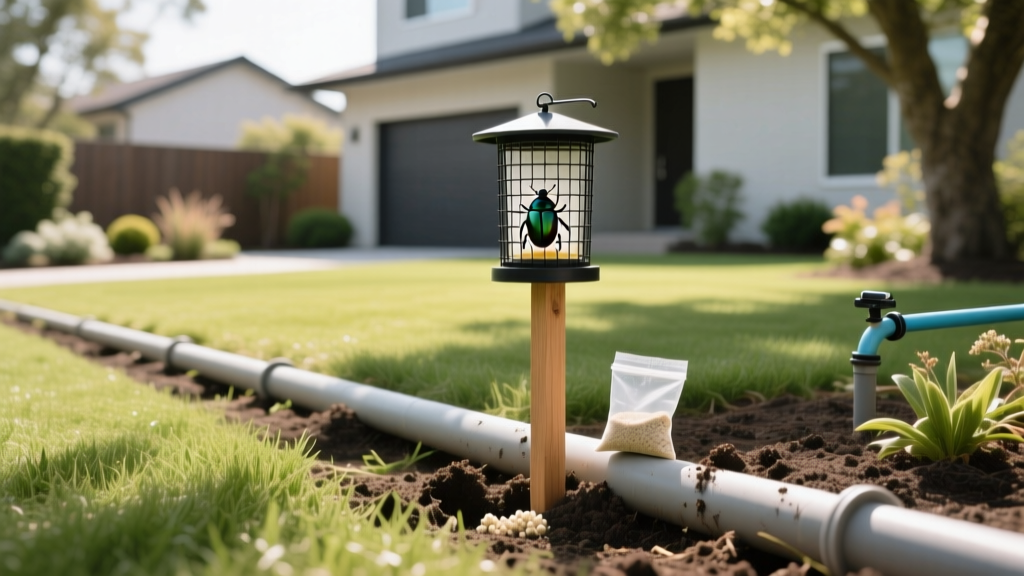
Japanese Beetle Traps & Milky Spore Near Drain Pipes 2026
Mike RodriguezPublished
The Hidden Link Between Landscape Drainage Pipes and Japanese Beetles
As we navigate the 2026 lawn care season, managing the Japanese beetle (Popillia japonica) remains a top priority for turfgrass enthusiasts and landscaping professionals alike. However, homeowners who have invested in comprehensive landscape drainage systems—such as French drains, NDS corrugated pipe networks, and dry wells—face a unique set of challenges. While these drainage pipes are essential for preventing waterlogging and protecting your foundation, they inadvertently create microclimates that can attract and sustain destructive grub populations.
Understanding the intersection of subsurface water management and integrated pest management (IPM) is critical. According to Penn State Extension, Japanese beetle grubs thrive in well-aerated, moist soil profiles where turfgrass roots are abundant. When you introduce landscape drainage pipes into your yard, you alter the soil structure, moisture retention, and root growth patterns. This guide will explore how to effectively deploy milky spore biological controls and strategically place Japanese beetle traps in yards heavily modified by drainage infrastructure.
Why Grubs Thrive Near Drainage Trenches
To effectively combat grubs, you must first understand why they are drawn to the soil above and adjacent to your drainage pipes. When a French drain or perforated corrugated pipe is installed, the trench is typically backfilled with a mix of washed gravel, sand, and topsoil. This backfill process creates a zone of soil that is significantly looser and more aerated than the surrounding compacted earth.
The Moisture and Root Interface
Female Japanese beetles seek out loose, aerated soil to lay their eggs in mid-to-late summer. The soil directly above a drainage trench is often the most attractive real estate in your yard for egg-laying. Furthermore, the capillary action at the interface between the topsoil and the gravel drainage bed keeps the grass roots in these zones exceptionally lush and hydrated, even during dry spells. This provides an all-you-can-eat buffet for emerging grubs. If left untreated, the turf directly above your drainage lines will be the first to show signs of severe grub damage, often peeling back like loose carpet by early autumn.
Milky Spore Biological Control: Navigating Drainage Zones
Milky spore (Paenibacillus popilliae) is a naturally occurring bacterium that specifically targets Japanese beetle grubs, causing a fatal milky disease that releases billions of new spores into the soil. In 2026, products like St. Gabriel Organics MilkySpore remain the gold standard for long-term, organic grub control. However, applying milky spore in a yard with extensive drainage pipes requires careful timing and technique to prevent the spores from being washed away into the stormwater system.
Avoiding the 'Flush Out' Effect
The primary risk when applying biological controls near French drains and catch basins is the 'flush out' effect. If you apply milky spore powder or granules immediately before a heavy rainstorm, the rapid accumulation of water will activate your drainage pipes. The high-velocity water moving through the perforated pipes and gravel trenches can wash the freshly applied spores out of the soil profile and into the municipal storm drains before they have a chance to integrate into the thatch and root zone.
- Timing is Everything: Apply milky spore when the soil is already moist, but the 48-hour forecast predicts dry weather. This allows the spores to bind to the soil particles and organic matter above the drainage bed.
- Granular vs. Powder: For yards with surface catch basins and exposed drain cleanouts, use the granular form of milky spore applied via a broadcast spreader. Granules are heavier and less likely to be blown into open drain grates or washed away during the initial watering-in process compared to fine powders.
- Target the Margins: Concentrate your heaviest applications on the turf margins immediately adjacent to the drainage trenches, where the soil transitions from gravel backfill to native earth.
Strategic Japanese Beetle Trap Placement in 2026
Japanese beetle traps utilize a combination of floral lures (like phenylethyl propionate) and sex pheromones to attract adult beetles. While traps are highly effective at capturing adults, they are notorious for attracting more beetles to your property than they actually catch. Therefore, placement is the single most important factor in their success, especially in yards with complex drainage outflows.
Keep Traps Away from Drain Outflows and Catch Basins
A common mistake homeowners make is placing traps near the lowest points of their yard, which is exactly where landscape drainage pipes typically discharge. Drain outflows, pop-up emitters, and catch basins are already attractive to beetles due to the higher ambient moisture and lush vegetation. If you hang a pheromone trap directly over a drain outflow, you are concentrating thousands of destructive beetles in an area where the soil is already highly susceptible to egg-laying.
Expert consensus from the University of Kentucky Entomology department emphasizes that traps should be placed at least 30 to 50 feet away from the main lawn and prized ornamental plants to draw beetles away from, rather than toward, your vulnerable turf.
Optimal Placement Strategy for Drainage Landscapes
- Identify the Perimeter: Locate the property line farthest from your main living areas and primary drainage outflows.
- Elevate Properly: Hang traps like the 2026 model Rescue Japanese Beetle Trap at a height of 4 to 5 feet. This catches beetles in their natural flight path without interfering with ground-level drainage maintenance access.
- Protect Drain Cleanouts: Never hang traps on the PVC risers or markers used for drain cleanouts. Maintenance crews need unobstructed access to snake and flush drainage pipes, and the beetles congregating around the trap will drop feces and debris into the cleanout grates.
- Wind Direction: Place traps downwind from your home and main garden beds. The pheromone plume should blow toward the trap, not across your lawn.
Comparison Table: Grub Treatments for Drainage-Heavy Yards
When managing grubs above subsurface drainage systems, not all treatments perform equally. The table below compares popular 2026 grub control methods based on their efficacy and risks near French drains and corrugated pipe networks.
| Treatment Type | Efficacy Near Drain Pipes | Application Method | Washout Risk | Est. Cost (per 1,000 sq ft) |
|---|---|---|---|---|
| Milky Spore Granules | High (Long-term) | Broadcast Spreader | Low | $45 - $55 |
| Beneficial Nematodes (Hb) | Moderate | Hose-end Sprayer | High | $30 - $40 |
| Chlorantraniliprole | High (Preventative) | Granular / Liquid | Moderate | $60 - $75 |
| Neem Oil Drench | Low | Watering Can / Sprayer | High | $20 - $25 |
Step-by-Step IPM Plan for Drainage Landscapes
To maintain a pristine lawn over your drainage infrastructure, follow this integrated pest management timeline tailored for the 2026 season:
Spring: Inspection and Preparation
Before the beetles emerge, inspect all landscape drainage pipe outflows, catch basins, and French drain gravel interfaces. Remove winter debris and ensure water flows freely. If you notice areas where the topsoil above the drainage trench has settled or sunk, top-dress with compost and reseed. A dense, healthy turf canopy makes it harder for female beetles to reach the soil to lay eggs.
Early Summer: Trap Deployment
As soon as you spot the first adult Japanese beetles (usually late June to early July), deploy your pheromone traps. Remember to place them on the far perimeter of your property, safely away from your drainage outflows and pop-up emitters. Empty the trap bags every 2 to 3 days; a bag full of decaying beetles can tear and spill into your yard, and the ammonia smell can actually deter new beetles from entering the trap.
Mid-to-Late Summer: Biological Control Application
When grubs are small and actively feeding near the surface (typically August), apply your milky spore granules. Water the granules in gently with a sprinkler for about 15 minutes—just enough to move the spores into the thatch layer, but not so heavily that you trigger a massive flow through your subsurface drainage pipes. Once established, milky spore can remain effective in the soil above your drainage trenches for 10 to 15 years, providing a long-lasting biological shield that requires zero disruption to your underground infrastructure.
Conclusion
Managing Japanese beetles in a yard equipped with landscape drainage pipes requires a thoughtful approach that respects both the biology of the pest and the physics of your water management system. By avoiding the flush-out of milky spore during heavy rains, keeping pheromone traps far away from moist drain outflows, and understanding how gravel backfill attracts egg-laying females, you can protect your turf without compromising your drainage infrastructure. Implement these strategies in 2026 to ensure a healthy, grub-free lawn that drains beautifully year-round.