
Landscaping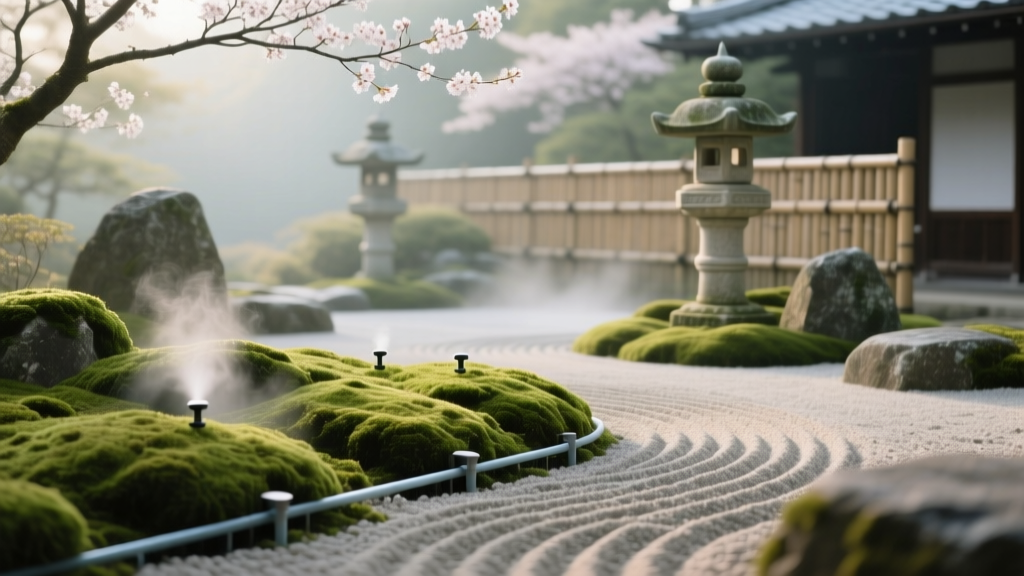
Smart Irrigation For Zen Garden Moss And Gravel 2026
Lisa ThompsonPublished
The Paradox of the Zen Garden: Dry Aesthetics, Thirsty Moss
The Japanese zen garden, or Karesansui (dry landscape), is a masterclass in minimalism and symbolism. Raked gravel represents flowing water or oceans, while carefully placed stones symbolize mountains or islands. Moss, often used to border stones or carpet shaded areas, represents ancient forests and landmasses. Visually, the garden is designed to look arid, serene, and untouched. However, the biological reality of maintaining a lush, vibrant zen garden in 2026 requires a highly sophisticated approach to moisture management.
The paradox lies in the fact that while the raked gravel must remain perfectly dry to maintain its crisp, meditative patterns, the moss and perimeter plantings (like Japanese maples and azaleas) require consistent, precise moisture. Moss, unlike vascular plants, lacks a true root system and absorbs water directly through its leaves. If it dries out, it turns brittle and brown; if it sits in waterlogged soil, it rots. Achieving this delicate balance requires abandoning traditional sprinkler systems in favor of modern, hidden irrigation technologies.
Why Traditional Overhead Sprinklers Ruin Karesansui Designs
Using standard overhead rotary sprinklers or spray heads in a zen garden is a catastrophic design error for several reasons:
- Disruption of Raked Patterns: The force of overhead water droplets will immediately obliterate the samon (raked gravel patterns), turning your meditative landscape into a muddy, chaotic mess.
- Algae and Mold Growth: Overhead watering coats the decorative stones and gravel in moisture, promoting unsightly green algae and black mold, which ruins the stark contrast essential to zen aesthetics.
- Water Waste and Evaporation: Spraying water over dry gravel leads to massive evaporation losses. According to the EPA's Smartscape tips, targeting water only where it is needed is a cornerstone of sustainable landscaping, reducing runoff and waste.
- Uneven Moss Hydration: Moss requires high ambient humidity and gentle surface moisture, not the heavy, soil-soaking drenching provided by standard lawn sprinklers.
The 2026 Irrigation Strategy: Subsurface Drip and Micro-Misting
To maintain a pristine zen garden in 2026, landscape architects and irrigation specialists rely on a dual-zone approach: subsurface drip irrigation for structural plants and micro-foggers for moss cultivation. This ensures that water is delivered exactly where it is needed without ever disturbing the surface gravel.
Subsurface Drip for Perimeter and Island Plantings
For the trees, shrubs, and groundcovers that anchor the garden, subsurface drip irrigation is mandatory. Products like Netafim Techline CV feature integrated check valves that prevent debris and soil from being sucked into the emitters when the system shuts off. These lines are buried beneath the soil layer and the geotextile fabric, delivering water directly to the root zones of your Japanese maples and pines. Because the water never reaches the surface, the overlying gravel remains bone-dry and perfectly rakeable.
Micro-Foggers for Moss (Shinobu-goke) Cultivation
Moss thrives in environments with high humidity and filtered light. Instead of soaking the soil beneath the moss, the goal is to create a localized microclimate. In 2026, low-volume micro-foggers and misting nozzles are the industry standard for moss care. These tiny emitters can be concealed within rock crevices, mounted on low bamboo stakes, or hidden in the canopy of nearby trees. They emit a fine, gentle mist that settles onto the moss fronds, providing the exact hydration required without displacing the moss or washing away the underlying soil.
2026 Component Comparison Chart
Selecting the right components is critical for a hidden, effective system. Below is a comparison of the top-tier irrigation components used by professionals in 2026 for zen garden installations.
| Component Type | Recommended 2026 Product | Application in Zen Garden | Est. Cost (2026) |
|---|---|---|---|
| Subsurface Drip Line | Netafim Techline CV (17mm) | Root watering for maples, pines, and azaleas beneath gravel. | $0.45 / ft |
| Micro-Fogger | DIG Corporation Micro-Spray (360°) | Creating ambient humidity for moss beds and stone borders. | $3.50 / unit |
| Smart Controller | Rachio 4 Smart Sprinkler Controller | Managing multiple micro-zones with weather and soil data. | $279.00 |
| Soil Moisture Sensor | Hunter Soil-Clik Wireless Sensor | Preventing overwatering of deep-rooted perimeter plants. | $85.00 |
| Pressure Regulator | Rain Bird 30 PSI Drip Regulator | Protecting delicate micro-foggers and drip lines from high pressure. | $12.00 |
Smart Controllers: The Brains Behind the Tranquility
Moss requires frequent, short bursts of water—sometimes up to three or four times a day during the heat of summer, for just two to three minutes per cycle. Traditional timers cannot handle this level of granularity efficiently. The 2026 lineup of smart irrigation controllers, such as the Rachio 4 and Hunter Hydrawise systems, utilize hyper-local weather data and Wi-Fi 7 connectivity to adjust watering schedules in real-time.
By integrating wireless soil moisture sensors into the perimeter planting zones, the controller can bypass scheduled watering if the deep soil is already saturated, while still triggering the micro-foggers for the moss based on ambient humidity and temperature thresholds. According to the EPA WaterSense program, upgrading to a smart irrigation controller can save the average home thousands of gallons of water annually, making it an essential investment for eco-conscious landscaping in 2026.
Step-by-Step Installation Guide for Gravel and Moss
Installing an irrigation system in a zen garden requires meticulous planning to ensure no wires, pipes, or emitters are visible once the gravel is laid.
Step 1: Grading and Trenching
Begin by grading the native soil to ensure a slight slope (1-2%) for drainage. Dig shallow trenches for your mainline poly tubing and valve manifolds, routing them along the absolute edges of the garden or beneath large, immovable boulders where maintenance access is possible without disturbing the main gravel expanse.
Step 2: Laying Subsurface Drip Lines
Install the subsurface drip lines in the planting pockets designated for trees and shrubs. Secure the lines with landscape staples. Ensure the emitters are positioned directly over the root balls. Do not lay drip lines beneath areas that will be exclusively covered in gravel, as this can lead to trapped moisture and anaerobic soil conditions.
Step 3: Installing the Geotextile Separator
This is the most crucial step for preserving the raked gravel. Lay a high-quality, permeable geotextile fabric over the entire soil surface. This fabric prevents the gravel from sinking into the soil over time and stops soil from splashing up onto the gravel during heavy rains. Cut precise X-slits in the fabric to plant your trees and shrubs, and run your micro-fogger risers through these slits.
Step 4: Hardscaping and Concealing Emitters
Place your primary stones (ishi). If you are using micro-foggers to water moss that grows on or around these stones, route the 1/4-inch micro-tubing along the back or shaded side of the rocks. Use stone-colored silicone or natural rock putty to camouflage the tubing and the emitter heads.
Step 5: Moss Planting and Gravel Application
Plant your moss sheets, pressing them firmly into the prepared, slightly acidic soil beds. Once the moss and plants are established, spread your Shirakawa-suna (white river gravel) to a depth of 2 to 3 inches over the geotextile fabric. Rake the gravel into your desired patterns. The irrigation system is now completely invisible.
Maintenance and Seasonal Adjustments
Even the most advanced 2026 irrigation systems require seasonal maintenance. In the autumn, falling leaves can clog micro-foggers. It is essential to gently blow leaves off the moss beds using a low-speed electric blower, taking care not to disturb the gravel patterns. Before the first hard freeze of winter, the entire system must be blown out with compressed air. Subsurface drip lines and micro-tubing hold small amounts of water that can expand and crack the fittings when frozen. By dedicating time to proper winterization, your zen garden will emerge in the spring perfectly hydrated, tranquil, and ready for meditation.

