
Landscaping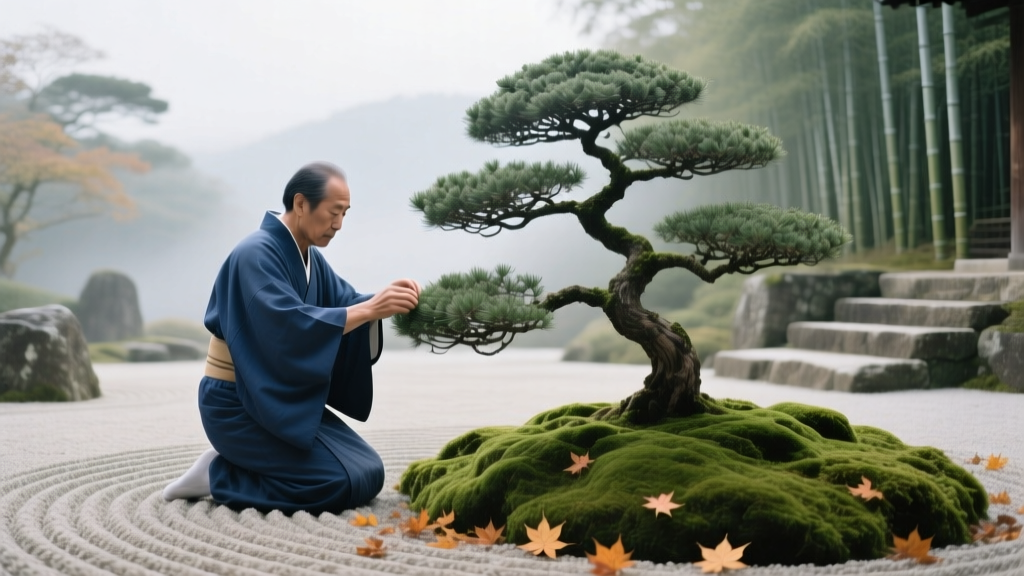
Japanese Zen Garden Pruning 2026: Niwaki & Moss Care
Anna KowalskiPublished
The Art of Karesansui: Pruning for Illusion and Balance
The Japanese dry landscape garden, known as Karesansui, relies on the stark, poetic contrast between raked gravel and meticulously maintained flora. In these spaces, the raked gravel (samon) represents the ocean or flowing water, while the moss beds and strategically placed stones represent islands, mountains, or landmasses. As we navigate the 2026 landscaping season, the trend in sustainable, low-water garden design has brought a renewed interest in these zen spaces. However, the true magic of a Karesansui garden lies not just in the hardscaping, but in the rigorous, meditative pruning methods required to maintain the softscape elements.
Pruning in a Japanese zen garden is fundamentally different from standard Western landscaping. It is not merely about plant health or size control; it is about sculpting living elements to mimic ancient, wind-swept trees or rolling clouds. According to the North American Japanese Garden Association (NAJGA), the philosophy of Niwaki (garden trees) requires an understanding of negative space, asymmetry, and the passage of time. This guide will walk you through the precise pruning methods, seasonal timing, and moss-grooming techniques necessary to maintain a flawless raked gravel and moss zen garden in 2026.
Niwaki: Cloud Pruning Pines and Shrubs
Niwaki translates literally to "garden trees," but it refers to the technique of pruning and training trees to look like mature, weathered specimens found in nature. In a zen garden, Japanese Black Pines (Pinus thunbergii) and Azaleas (Rhododendron indicum) are the primary candidates for this sculptural pruning.
Candle Pinching (Mekiri) for Pines
To maintain the delicate, cloud-like foliage pads (edamaki) on a Japanese Black Pine, you must master the art of mekiri, or candle pinching. In mid-spring, the pine produces new growth shoots called "candles." If left alone, these candles will elongate, ruining the tight, miniature illusion of the tree.
- Identify Vigor: Examine the candles. Strong candles are thick and long; weak candles are short and thin.
- Pinching Technique: Using your thumb and forefinger (or precision bonsai shears), break the strong candles by one-half to two-thirds of their length. Leave the weak candles entirely intact.
- Timing: This must be done before the needles begin to open and shed their sheaths, typically in May for most temperate zones in 2026.
- Thinning: In late autumn, you will return to thin the needles, removing older inner needles to allow light and air to reach the interior branches, promoting back-budding.
Shearing Azaleas into Tamamono
Azaleas are pruned into tamamono—low, rounded, boulder-like shapes that mimic stones or rolling hills emerging from the raked gravel. Immediately after they finish blooming in early summer, use hedge shears to clip the new growth, shaping the shrub into a smooth, asymmetrical dome. Avoid perfect spheres; nature is rarely perfectly round. The base of the azalea should be slightly wider than the top to ensure sunlight reaches the lower leaves.
Structural Pruning for Japanese Maples
Japanese Maples (Acer palmatum) are often used as the singular, towering focal point in a zen garden, their delicate branches reaching out over the raked gravel. The goal of pruning a maple in this setting is to create "windows" within the canopy, allowing the viewer to see the intricate gravel patterns through the tree.
According to experts at the Brooklyn Botanic Garden, structural pruning of Japanese maples should be performed in late winter while the tree is fully dormant. This allows you to see the branch architecture clearly without leaves obscuring your view.
- Remove the Three Ds: Start by removing Dead, Damaged, or Diseased wood.
- Eliminate Crossing Branches: Remove branches that rub against one another, which can create wounds and invite pathogens.
- Create Negative Space: Thin out dense clusters of twigs. Imagine a bird flying through the canopy; there should be enough space for it to pass without touching the branches.
- Avoid Lion's Tailing: Never strip the inner lateral branches and leave a tuft of leaves only at the very end of a branch. This weakens the limb and ruins the natural, cascading aesthetic of the maple.
During the summer of 2026, you may perform light "pinching" of soft new growth to control the tree's vigor and maintain the refined silhouette, but heavy cuts should be strictly reserved for winter to prevent excessive sap bleeding.
Seasonal Pruning and Maintenance Calendar
Maintaining a zen garden requires strict adherence to seasonal rhythms. The following table outlines the 2026 maintenance schedule for the core elements of a Karesansui landscape.
| Plant / Element | Pruning / Grooming Method | Optimal 2026 Timing | Primary Objective |
|---|---|---|---|
| Japanese Black Pine | Candle Pinching (Mekiri) | Mid-Spring (May) | Control shoot elongation, balance vigor |
| Japanese Black Pine | Needle Thinning | Late Fall (November) | Increase light penetration, encourage budding |
| Japanese Maple | Structural Thinning | Late Winter (February) | Reveal architecture, create canopy windows |
| Azalea (Tsutsuji) | Shearing / Hand Pruning | Early Summer (June) | Maintain rounded tamamono landmass shape |
| Moss Beds | Edging and Debris Grooming | Monthly (Year-round) | Maintain crisp borders against raked gravel |
Moss Grooming and Gravel Line Maintenance
While moss is not "pruned" with shears, it requires meticulous grooming to maintain its role as the "landmass" in your dry landscape. In 2026, the most popular moss varieties for zen gardens remain Leucobryum glaucum (cushion moss) and Ceratodon purpureus for their drought tolerance and rich, velvety textures.
The greatest threat to a moss island is the encroachment of the surrounding gravel. If gravel washes or is raked into the moss, it will smother the plants, alter the soil pH, and ruin the visual boundary.
The Art of the Moss Edge
To "prune" the edge of the moss, you must maintain a crisp, deliberate trench between the green moss and the white or grey gravel. 1. Slicing the Edge: Once a month, use a sharp Hori Hori knife or a half-moon edger to slice a clean, 1-inch deep trench along the perimeter of the moss bed. 2. Removing Creepers: Pull away any moss rhizomes that have crossed the trench into the gravel zone. 3. Gravel Sweeping: Use a soft-bristled bamboo broom or a specialized moss brush to gently sweep stray gravel pebbles off the surface of the moss. Never use a metal rake on moss, as it will tear the delicate top layer and expose the soil to desiccation.
Weeding is also a form of pruning the space. Any broadleaf weed or rogue grass emerging from the moss must be extracted by the root immediately. The University of Minnesota Extension notes that maintaining strict boundaries in landscape beds reduces competition for moisture, which is vital for shallow-rooted mosses during the hotter summer months.
Essential Pruning Tools for 2026
The precision required for Niwaki and delicate maple thinning demands high-quality tools. In 2026, the industry standard remains firmly rooted in Japanese forged steel, though modern ergonomic advancements have made these tools more accessible.
- Okatsune 103 Hedge Shears: Forged from Izumo Yasugi steel, these are the gold standard for shearing azaleas into tamamono. Their razor-sharp blades make clean cuts that heal quickly, preventing dieback on the shrub's surface.
- Silky Katanaboy 500 Folding Saw: When removing larger, structural limbs from a Japanese Maple or Pine, a folding saw with a curved blade allows for precise, flush cuts without damaging the surrounding bark.
- ARS LP-170F Long-Reach Pruner: For thinning the high canopy of a weeping maple without dragging a ladder across your meticulously raked gravel (which would ruin the samon patterns), a lightweight carbon-fiber extension pruner is essential.
- Hori Hori Knife: Indispensable for weeding moss beds, slicing trenches, and maintaining the gravel-to-moss boundary.
Pro-Tip: Always sterilize your blades with a 70% isopropyl alcohol solution between plants. Zen gardens are highly curated environments; introducing a fungal pathogen to a 50-year-old Niwaki pine via dirty shears can be catastrophic.
Conclusion
Pruning a Japanese zen garden is a dialogue between the gardener, the plant, and the surrounding hardscape. By mastering the timing of pine candling, the structural thinning of maples, and the rigorous edge-grooming of moss beds, you ensure that your raked gravel landscape remains a tranquil, flawless representation of nature in miniature. As you step into your garden this 2026 season, let the rhythmic snip of your shears and the sweep of your bamboo brush become a meditative practice, honoring the centuries-old traditions of Karesansui design.

