Lawn Care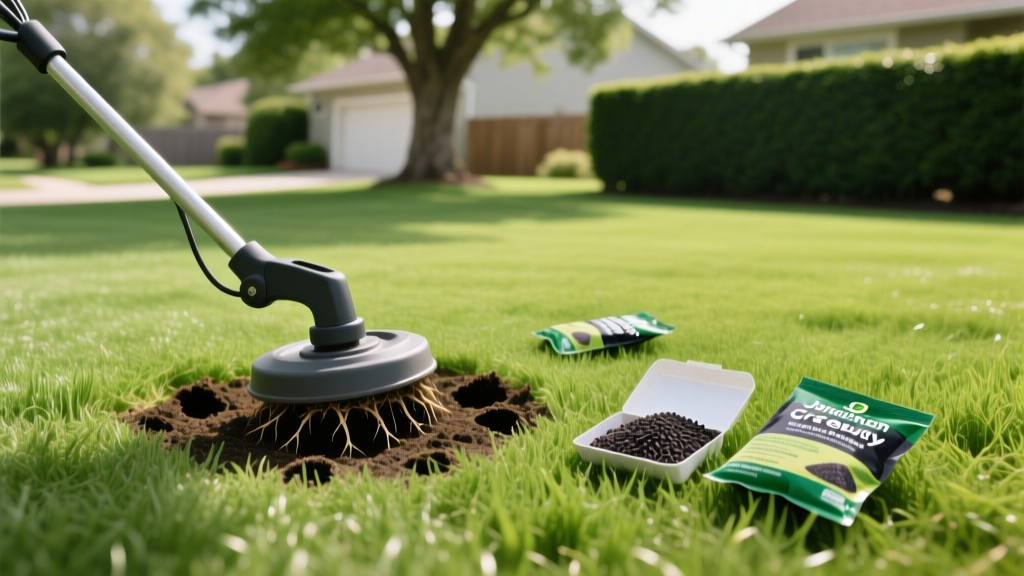
Core Aeration & Jonathan Green Black Beauty Overseeding Guide 2026
Lisa ThompsonPublished
Transforming Thin Spots: The Power of Core Aeration and Black Beauty Seed
If your lawn is suffering from bare patches, high-traffic wear, or general thinning, simply throwing grass seed on top of the existing turf is a recipe for disappointment. As we navigate the 2026 growing season, soil compaction remains one of the primary enemies of a thick, vibrant lawn. To truly revitalize your yard, you need to combine mechanical soil relief with premium genetics. This is where core aeration paired with Jonathan Green Black Beauty grass seed becomes the ultimate lawn care strategy.
Jonathan Green's Black Beauty line has long been a favorite among turf professionals and dedicated homeowners. Known for its deep-rooting capabilities (reaching up to four feet into the soil) and its signature dark-green color, this seed blend thrives when given proper soil access. By utilizing core aeration to prepare the seedbed, you are guaranteeing the seed-to-soil contact necessary for maximum germination and long-term drought resistance.
The Science Behind Core Aeration and Seed-to-Soil Contact
Core aeration involves using a machine to physically remove small plugs of soil and thatch from your lawn. According to the University of Minnesota Extension, this process alleviates soil compaction, enhances water infiltration, and creates micro-environments perfect for seed germination. When you overseede immediately after aerating, the Black Beauty seeds fall directly into the aeration holes and the loose soil cores left on the surface.
This direct contact with the soil protects the seed from being washed away by heavy rain or eaten by birds. Furthermore, the University of Maryland Extension notes that tall fescue blends—like the primary cultivars found in Black Beauty—require loose soil structures to establish their famously deep root systems. Without aeration, compacted soil forces roots to grow horizontally near the surface, making your lawn highly susceptible to the heat stress and drought conditions we continue to see in 2026.
When to Aerate and Overseede in 2026
Timing is everything. Because Jonathan Green Black Beauty is predominantly a cool-season grass blend (featuring elite Tall Fescue, Kentucky Bluegrass, and Perennial Ryegrass), the absolute best time to perform core aeration and overseeding is in the early fall. Aim for late August through mid-October, depending on your specific hardiness zone. During this window, soil temperatures are still warm enough to encourage rapid germination, while the cooler autumn air reduces heat stress on delicate seedlings and minimizes weed competition.
Spring overseeding is generally discouraged because the emerging grass will immediately face the brutal heat of summer, and spring pre-emergent crabgrass preventers will kill your new grass seed before it sprouts.
Step-by-Step: Aerating and Seeding Thin Spots
Step 1: Soil Testing and Preparation
Before renting your aerator, conduct a soil test. In 2026, digital soil test kits and rapid mail-in lab services make it easier than ever to check your pH. Black Beauty grass prefers a soil pH between 6.0 and 7.0. If your soil is highly acidic, apply pelletized lime a few weeks prior. If your soil is heavy clay, consider applying Jonathan Green Love Your Soil to help loosen the ground organically over time. Mow your existing lawn very short (around 1.5 to 2 inches) and bag the clippings to expose the soil surface.
Step 2: Perform Deep Core Aeration
Rent a commercial-grade walk-behind core aerator. In 2026, expect to pay between $90 and $130 for a half-day rental. Avoid spike aerators, as they merely punch holes and can actually increase compaction along the sides of the spikes. You want a machine that pulls 2-inch to 3-inch deep plugs. Run the aerator over your lawn in two perpendicular directions (a crisscross pattern) to ensure you are pulling enough cores. Leave the extracted soil plugs on the lawn; they will break down naturally with rain and mowing, returning valuable microbes to the thatch layer.
Step 3: Apply Jonathan Green Black Beauty Seed
Immediately after aerating, while the holes are open and the soil is disturbed, spread your seed. You can use either the Original Black Beauty or the Black Beauty Ultra (which includes Kentucky Bluegrass for enhanced rhizome spreading and lateral repair). Use a rotary broadcast spreader for even distribution, splitting your seed application into two passes in perpendicular directions.
Step 4: Topdress and Fertilize
For severely thin spots, apply a thin layer (about 1/4 inch) of organic compost or peat moss over the seeded areas to retain moisture. Follow up immediately with a starter fertilizer. Jonathan Green New Seeding Lawn Fertilizer is formulated specifically to provide the phosphorus needed for explosive root development in new seedlings without burning them.
Jonathan Green Black Beauty Seeding Rates & Spreader Settings
Applying the correct amount of seed is vital. Too little seed will leave thin spots vulnerable to weeds, while too much seed will cause seedlings to choke each other out for nutrients and water. Below are the 2026 manufacturer recommendations for Jonathan Green Black Beauty:
| Application Type | Seeding Rate (lbs / 1,000 sq ft) | Scotts Rotary Spreader Setting | Jonathan Green Spreader Setting |
|---|---|---|---|
| Overseeding Thin Spots | 5 - 8 lbs | 5.5 | 4.5 |
| New Lawn Establishment | 10 - 15 lbs | 8.0 | 6.5 |
| Repairing Bare Patches | 8 - 10 lbs | 7.0 | 5.5 |
Note: Always check the back of your specific seed bag, as Jonathan Green Official occasionally updates spreader calibration charts based on new seed coating technologies.
Post-Overseeding Watering and Maintenance
The most critical phase of overseeding is the first 21 days. Grass seed must remain consistently moist to germinate. If the seed dries out even once during the germination process, the sprout will die.
- Weeks 1-2: Water lightly 2 to 3 times per day for 10-15 minutes per zone. The goal is to keep the top inch of soil damp, not soggy. If it rains, skip a manual watering cycle.
- Weeks 3-4: As seedlings reach 1 inch tall, reduce watering frequency to once a day, but increase the duration to encourage deeper root growth.
- Week 5 and Beyond: Transition to a standard deep-and-infrequent watering schedule (about 1 to 1.5 inches of water per week, including rainfall).
When to Mow After Overseeding
Patience is required when mowing a newly aerated and overseeded lawn. Do not mow until the new Black Beauty grass reaches a height of at least 3.5 to 4 inches. When you do mow for the first time, ensure your mower blade is razor-sharp to prevent tearing the delicate new seedlings out of the ground. Set your mower deck to 3 inches and only remove the top third of the grass blade. Never bag the clippings during this establishment phase; let them decompose and return nitrogen to the soil.
Common Mistakes to Avoid in 2026
- Using Pre-Emergents: Never apply a crabgrass preventer in the fall before or after overseeding. Pre-emergents cannot distinguish between weed seeds and your expensive Black Beauty seed.
- Burying the Seed: Grass seed needs sunlight and soil contact to germinate. If you topdress with compost, ensure the layer is no thicker than 1/4 inch. Burying the seed under an inch of soil will suffocate it.
- Ignoring Soil pH: Even the most advanced 2026 turf genetics will fail in highly acidic or alkaline soil. A $15 soil test can save you hundreds of dollars in wasted seed and fertilizer.
- Traffic Stress: Keep pets, children, and heavy foot traffic off the lawn for at least four weeks after overseeding to allow the fragile root systems to anchor into the aeration holes.
Conclusion
Fixing thin spots and building a resilient, dark-green lawn requires a strategic approach. By combining the physical soil decompaction of core aeration with the elite genetics of Jonathan Green Black Beauty seed, you are setting your lawn up for decades of success. Follow these 2026 best practices, maintain your watering schedule, and enjoy the thick, luxurious turf that comes from doing the job right the first time.