Lawn Care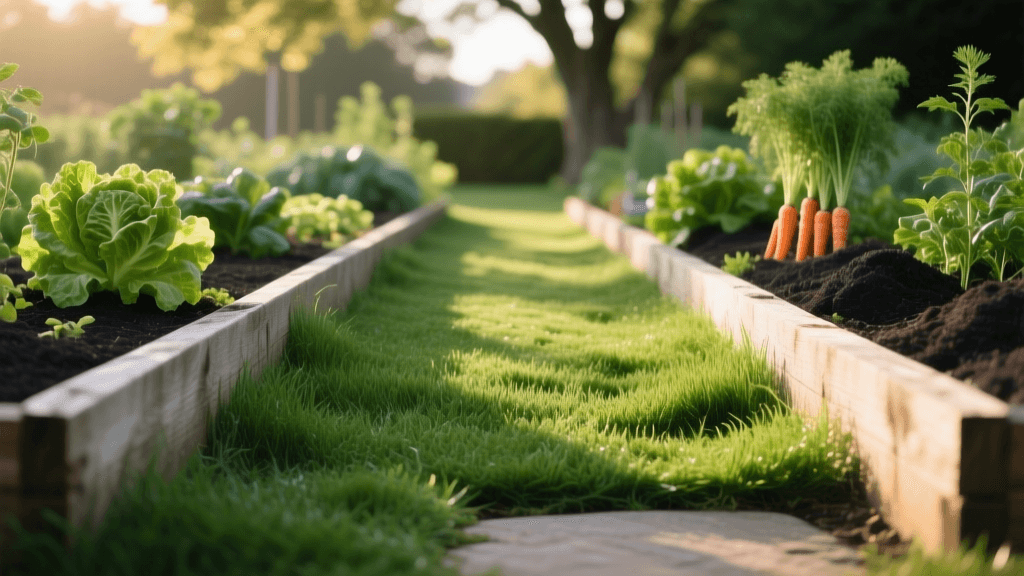
Jonathan Green Black Beauty: 2026 Garden Path Overseeding Tips
The Hidden Challenge of Raised Bed Vegetable Gardening
Raised bed vegetable gardening is often viewed strictly through the lens of soil amendments, crop rotation, and pest management. However, the ecosystem of a productive vegetable garden extends far beyond the wooden, stone, or galvanized steel borders of the beds themselves. The pathways and borders surrounding your raised beds play a critical role in the overall health, cleanliness, and yield of your garden. When these high-traffic areas develop thin spots, they become breeding grounds for weeds, mud, and soil-borne pathogens that can easily splash onto your vegetable crops during heavy rains.
As we navigate the 2026 growing season, maintaining a dense, durable turf in your garden aisles is no longer just an aesthetic choice—it is a vital component of integrated garden management. Overseeding thin spots with Jonathan Green Black Beauty seed has emerged as the premier solution for vegetable gardeners who want to protect their crops from soil splash, reduce mud tracking into the home, and create a cool microclimate around their raised beds. This comprehensive guide will walk you through the exact techniques for revitalizing your garden pathways using this industry-leading tall fescue blend.
Why Jonathan Green Black Beauty is the 2026 Standard for Garden Paths
Garden pathways endure a unique set of stresses that standard front-yard lawns rarely face. You are constantly navigating these spaces with heavy wheelbarrows loaded with compost, stepping on them during daily harvests, and subjecting them to the heavy shade cast by trellised indeterminate tomatoes, corn, and pole beans. Standard Kentucky Bluegrass or Perennial Ryegrass blends simply cannot handle the compaction and shade of a busy vegetable garden.
Jonathan Green Black Beauty, specifically their turf-type tall fescue formulations, is genetically engineered to thrive in these exact conditions. According to Jonathan Green's official Black Beauty turf data, these grasses possess a waxy leaf coating that retains moisture and deep root systems that can plunge up to four feet into the soil. For a raised bed vegetable gardener, this means the grass in your pathways will remain green and resilient even during the peak heat of July and August, requiring significantly less irrigation than your thirsty vegetable crops. Furthermore, the dark green, almost black hue of the Black Beauty turf provides a stunning visual contrast to the bright greens, reds, and yellows of your summer harvest.
Identifying Thin Spots and Soil Compaction in Garden Aisles
Before you begin overseeding, it is crucial to understand why your garden pathways are thinning out. In a raised bed layout, the soil in the pathways is naturally lower and often consists of the native subsoil that was excavated to build the beds. Over time, this subsoil becomes heavily compacted. When soil is compacted, grass roots cannot penetrate deeply, leading to shallow root systems that tear out easily when you drag a hose or push a cart over them.
Additionally, the microclimate created by raised beds can lead to localized drought stress. The soil in the raised beds drains rapidly, but the pathways can become hydrophobic if the organic matter is depleted. Identifying these thin, compacted, and dry spots is the first step toward a successful overseeding project. According to the University of Minnesota Extension's overseeding guidelines, addressing soil compaction prior to seeding is the single most important factor in ensuring seed-to-soil contact and subsequent germination.
Step-by-Step Guide to Overseeding Thin Pathway Spots
Timing is everything. For cool-season grasses like Black Beauty, the optimal window for overseeding garden pathways is late summer to early fall (mid-August through late September). This timing allows the grass to establish deep roots before winter, avoiding the brutal summer heat and aligning with the winding down of your main vegetable harvest. Follow these precise steps for 2026:
Step 1: Clear, Mow, and Rake
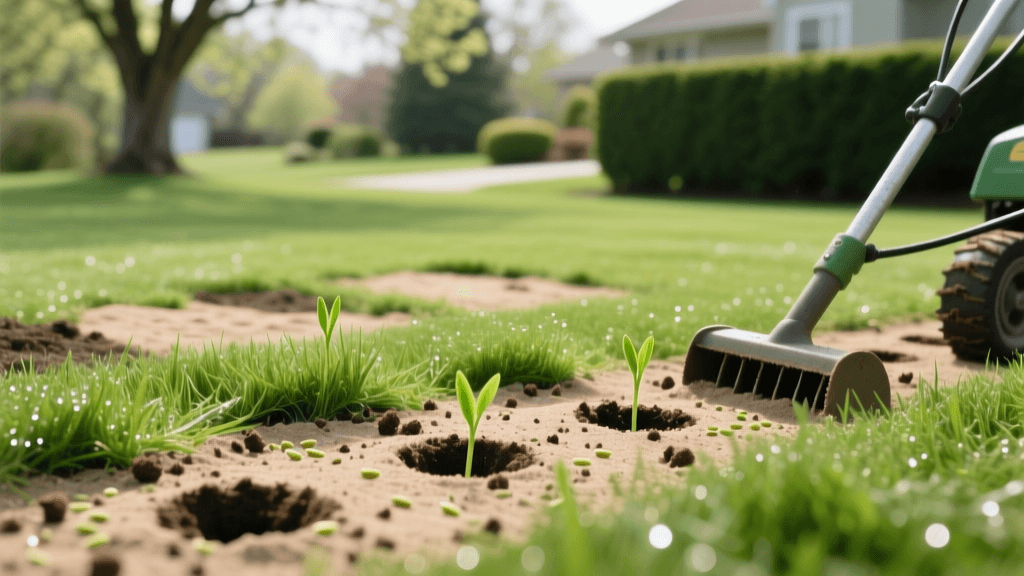
Mow the existing pathway grass as low as your mower will safely allow (around 1.5 inches). Use a stiff metal thatch rake to aggressively scratch the surface of the thin spots. You must remove dead organic matter and expose the bare soil. Since these are narrow garden paths, a manual rake is often more practical than a mechanical dethatcher.
Step 2: Alleviate Soil Compaction
For narrow paths between raised beds, a standard core aerator might be too wide to maneuver. Instead, use a manual step-aerator or a broadfork to pierce the compacted pathway soil every 4 to 6 inches. This allows water, oxygen, and the new grass roots to penetrate the hardpan layer.
Step 3: Apply the Jonathan Green Black Beauty Seed
For overseeding thin spots, you do not need the full new-lawn application rate. Apply the Black Beauty seed at a rate of 4 to 5 pounds per 1,000 square feet. Use a small handheld broadcast spreader to ensure even coverage across the narrow aisles. Gently drag a piece of chain-link fence or a leaf rake upside down over the seeded area to lightly work the seed into the top 1/8 inch of soil.
Step 4: Topdress and Maintain Moisture
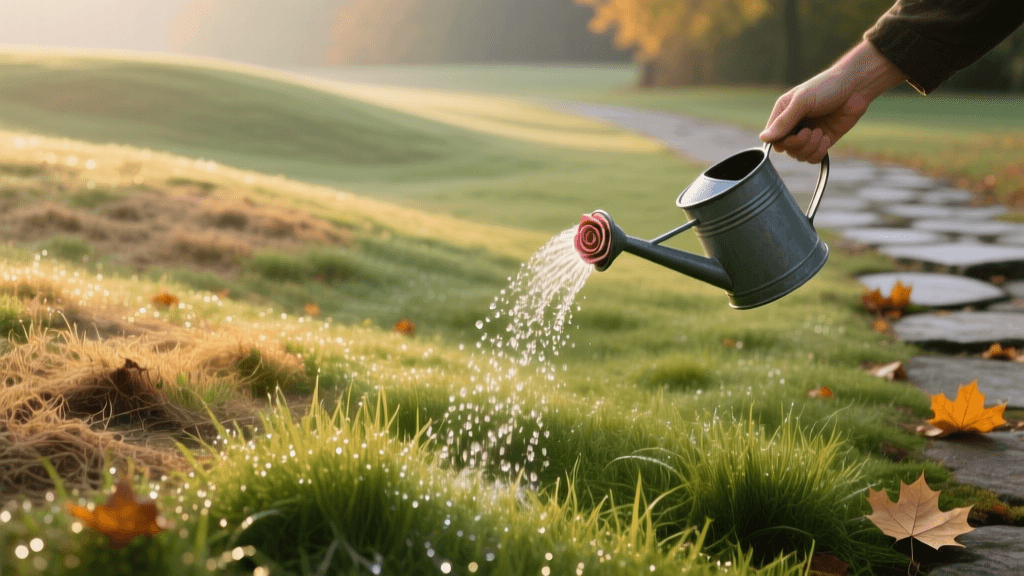
Apply a thin layer (about 1/4 inch) of finely screened compost over the seeded pathways. This topdressing retains moisture and provides a gentle, organic nutrient boost that won't burn the delicate new seedlings. Water the pathways lightly two to three times a day for the first 14 days to keep the seed consistently moist. Avoid heavy soaking, which can wash the seed into the drainage ditches at the ends of your beds.
2026 Seed Application and Pathway Prep Chart
| Preparation Step | Tool Required | Target Depth/Rate | Purpose |
|---|---|---|---|
| Scalping/Mowing | Push or String Mower | 1.5 inches | Reduce competition from existing weak turf |
| De-thatching | Stiff Metal Thatch Rake | Expose bare soil | Ensure direct seed-to-soil contact |
| Aeration | Manual Step-Aerator | 3 to 4 inches deep | Relieve wheelbarrow and foot traffic compaction |
| Seeding | Handheld Spreader | 4-5 lbs / 1,000 sq ft | Overseeding rate for thin spots and ruts |
| Topdressing | Garden Trowel / Rake | 1/4 inch compost | Moisture retention and organic nutrient base |
Preventing Turf Encroachment into Vegetable Beds
One of the primary concerns vegetable gardeners have when introducing turfgrass to their garden layout is the fear of the grass invading the rich, amended soil of the raised beds. Tall fescue is a bunch-type grass, meaning it spreads primarily through vertical tillering rather than aggressive horizontal rhizomes like Bermuda or Quackgrass. However, it can still spill over the edges if left unchecked.
To maintain a clean boundary, install a physical root barrier or metal edging along the interior perimeter of your raised beds before overseeding. If your beds are already built, commit to edging the pathways with a half-moon edger or a string trimmer equipped with an edging wheel every three weeks during the peak 2026 spring and fall growth flushes. Maintaining a sharp, 2-inch trench between the pathway turf and the wooden border of the raised bed will act as a natural moat, stopping the grass from creeping into your vegetable soil. For more on optimizing garden layouts and boundaries, refer to The Old Farmer's Almanac raised bed layout strategies.
2026 Cost Breakdown for a Standard 4-Bed Layout
Investing in your garden pathways is highly cost-effective when compared to the annual expense of laying down straw, wood chips, or gravel that must be constantly replenished. Let us look at the estimated 2026 costs for overseeding a standard backyard setup featuring four 4x8 foot raised beds with 3-foot-wide pathways.
- Total Pathway Area: Approximately 450 square feet.
- Jonathan Green Black Beauty Seed (3 lb bag): $28.00 (More than enough for overseeding 450 sq ft).
- Screened Compost for Topdressing (5 cubic feet): $35.00.
- Manual Step-Aerator (One-time purchase): $45.00.
- Starter Fertilizer (Organic, small bag): $22.00.
- Total Project Cost: $130.00 (or $85.00 if you already own the aerator).
When you factor in the reduction of weed seeds blowing into your vegetable beds, the elimination of mud-borne fungal diseases on your lower tomato leaves, and the sheer ease of navigating the garden after a heavy rain, the return on investment for overseeding your pathways with Black Beauty is undeniable. By treating your garden borders with the same care and agronomic science as your front lawn, you create a holistic, beautiful, and highly productive vegetable garden ecosystem that will thrive for years to come.