
Landscaping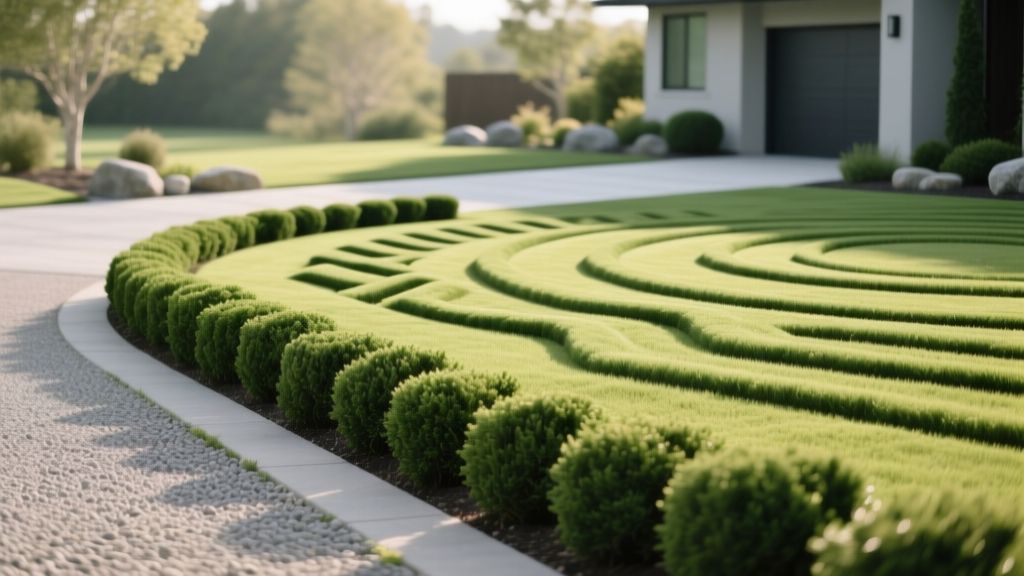
Mastering Mowing Patterns For Juniper Driveway Borders 2026
Sarah ChenPublished
Introduction to Driveway Border Landscaping in 2026
In 2026, the landscaping industry has fully embraced sustainable, low-maintenance hardscape and softscape transitions. One of the most prominent trends in curb appeal is replacing high-maintenance annual flower beds and fragile turf strips with driveway border landscaping using low-growing juniper. While this evergreen groundcover solves the dreaded "strip of death"—that narrow, hard-to-water band of grass between the driveway and the road—it introduces unique challenges for lawn care professionals and homeowners alike. Mowing techniques and patterns must be adapted to protect the creeping foliage while maintaining a crisp, manicured turf edge. This guide explores the precise mowing strategies, striping patterns, and modern equipment adjustments required to perfectly maintain lawns adjacent to juniper driveway borders this year.
Why Low-Growing Juniper is the 2026 Standard
Low-growing junipers, specifically cultivars of Juniperus horizontalis such as 'Blue Rug', 'Bar Harbor', and 'Prince of Wales', have become the gold standard for driveway edging. According to the NC State Extension Plant Database, these varieties typically grow only 4 to 6 inches tall but can spread horizontally up to 8 feet. Their dense, scale-like foliage suppresses weeds, requires minimal irrigation once established, and provides year-round color. However, their low, sprawling growth habit means that creeping branches often reach toward the turfgrass. If mowing techniques are not carefully managed, mower wheels can crush the outer branches, and string trimmers can whip the foliage, causing permanent brown scarring that takes months to recover.
Establishing the Turf-to-Juniper Transition Zone
Before discussing mowing patterns, the physical transition zone between the lawn and the juniper bed must be properly established. In 2026, landscape architects strongly recommend a physical barrier rather than a simple trench edge. Installing a 4-inch steel landscape edging or a poured concrete mow strip creates a definitive boundary. This allows the front wheels of your mower to ride securely on the border without dropping into the soil and scalping the lawn. A clean transition zone is the foundational canvas for any advanced mowing pattern, ensuring that the geometric lines of your turf contrast beautifully against the organic, sprawling texture of the juniper.
Core Mowing Techniques for Driveway Borders
Mowing adjacent to a juniper driveway border requires a departure from standard open-lawn mowing. The primary goal is to achieve a clean cut without allowing the mower deck to overlap and damage the juniper's leading edges.
The Perimeter Pass Protocol
Always begin your mowing session with a perimeter pass. When mowing the boundary line next to the juniper bed, disengage the blade clutch before turning at the end of the driveway to prevent turf tearing. Keep the right wheels of the mower precisely on the edge of the mow strip or steel edging. According to turf management guidelines from the University of Minnesota Extension, maintaining a consistent perimeter pass not only defines the edge but also provides a clear turnaround zone for subsequent striping passes, preventing the mower from needing to make tight, damaging zero-point turns near the delicate juniper branches.
Navigating the Driveway Crown and Deck Pitch
Driveways are intentionally crowned (sloped to the sides) for water drainage. When mowing parallel to the driveway border, the mower's deck will naturally tilt toward the concrete or the juniper bed. If the deck tilts toward the juniper, the spinning blades can create a vacuum that sucks up mulch and debris, throwing it into the evergreen foliage. To counteract this in 2026, adjust your mower's deck pitch. Slightly raise the skirt on the juniper-facing side of the deck, or utilize modern deck-leveling systems found on 2026 commercial zero-turn models to ensure an even cut that directs the grass clippings away from the border and back onto the lawn.
2026 Robotic Mowers and RTK Boundary Management
The landscaping landscape has shifted dramatically with the widespread adoption of RTK (Real-Time Kinematic) GPS robotic mowers. Models like the Husqvarna Automower NERA series and the Worx Landroid Vision no longer require buried boundary wires, which historically caused issues when roots from creeping junipers shifted the soil. When programming your RTK mower for a juniper driveway border, it is critical to set a virtual "exclusion zone" or setback of at least 3 inches from the physical edge of the juniper bed. This prevents the robotic mower's drive wheels from tracking over the creeping tips of the 'Blue Rug' juniper, which can cause soil compaction and branch dieback over time. Utilizing the satellite-precision boundaries available in 2026 ensures the turf is cut perfectly to the edge without a single wheel touching the softscape.
Striping Patterns That Highlight Juniper Borders
Mowing patterns are not just for aesthetic pleasure; they dictate how the eye travels along the landscape. When dealing with a long driveway bordered by low-growing juniper, the striping pattern can either enhance the architectural lines of the property or create visual chaos. Because juniper has a highly textured, somewhat wild appearance, the turfgrass should feature structured, predictable patterns to create a balanced contrast.
| Striping Pattern | Visual Effect on Driveway Border | Best Juniper Cultivar Pairing | Mowing Difficulty |
|---|---|---|---|
| Diagonal Lines | Draws the eye toward the home, softening the rigid straight line of the driveway and juniper edge. | 'Blue Rug' (Silvery-blue contrast) | Moderate |
| Parallel Straight Lines | Creates a formal, structured look that emphasizes the length of the driveway and the uniformity of the border. | 'Bar Harbor' (Deep green uniformity) | Easy |
| Checkerboard | Highly manicured; best for wide lawn areas adjacent to the driveway rather than narrow strips. | 'Prince of Wales' (Bright green accent) | High |
For most residential driveways in 2026, the Diagonal Striping Pattern is highly recommended. By mowing at a 45-degree angle to the driveway edge, you minimize the number of times the mower must turn near the juniper border, reducing the risk of turf damage and juniper crushing. Furthermore, diagonal stripes reflect light in a way that makes the turf appear thicker and healthier, providing a lush green backdrop that makes the blue or deep-green tones of the juniper pop.
String Trimming: Protecting the Foliage
Even with the most precise mowing patterns, the extreme edge where the turf meets the driveway concrete and the juniper bed will require string trimming. The greatest threat to a juniper driveway border is nylon string trimmer damage. Juniper branches do not regenerate from old wood; if the string whips the bark off the main creeping stems, that section of the plant will die and leave a permanent gap in your border.
To prevent this, professional landscapers in 2026 utilize specialized edging attachments with physical debris shields or switch to steel-blade edgers for the concrete boundary. When trimming near the juniper, always position yourself so that the trimmer head spins away from the plant bed. This ensures that any accidental over-extension of the nylon string is directed toward the concrete driveway rather than into the delicate evergreen foliage. Additionally, keeping the turf slightly lower than the juniper bed (by about half an inch) allows the trimmer line to pass cleanly under the lowest juniper branches without making contact.
Seasonal Maintenance and Pattern Adjustments
As the seasons change, so must your mowing approach. In early spring, juniper borders often trap wind-blown debris and winter snow mold. Before initiating your first mowing pattern of the year, use a backpack blower on a low setting to clear the turf edge. During the peak growing season of late spring and early summer, raise your mowing height by a quarter-inch. Taller grass shades the soil, reducing water competition between the turf and the shallow-rooted juniper. In the autumn, adjust your mowing pattern to ensure that grass clippings are never discharged into the juniper bed, as trapped clippings can smother the evergreen foliage and promote fungal diseases over the winter.
Conclusion
Driveway border landscaping with low-growing juniper is a hallmark of modern, sustainable landscape design in 2026. However, its beauty relies entirely on the precision of the adjacent lawn care. By mastering the perimeter pass, adjusting your deck pitch to account for the driveway crown, leveraging RTK robotic mower boundaries, and selecting the right striping pattern, you can create a stunning visual transition between hardscape, softscape, and turf. Treat the transition zone with respect, protect the creeping branches from trimmer damage, and your juniper driveway border will remain a pristine, low-maintenance asset to your property's curb appeal for decades to come.

