Lawn Care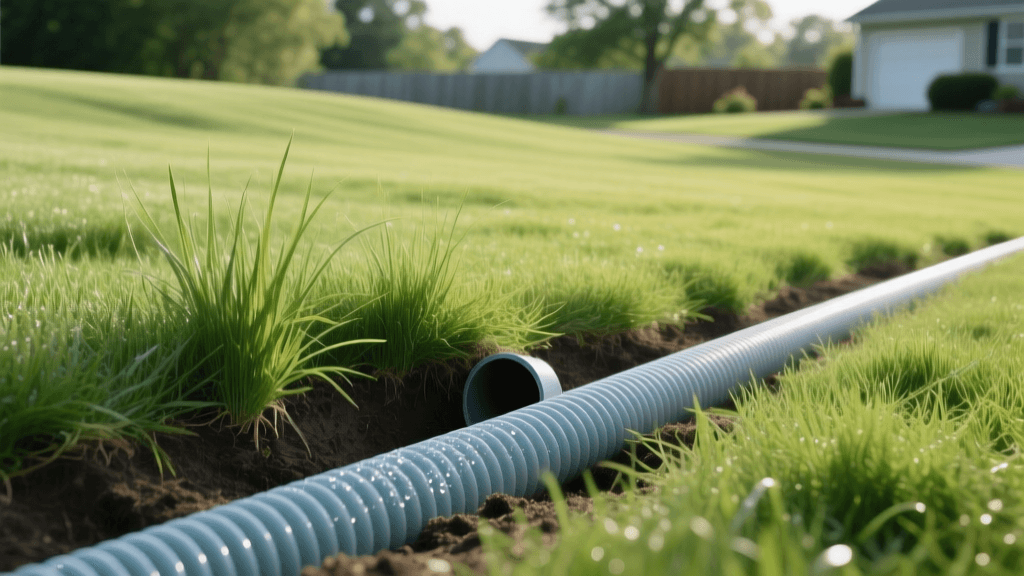
Kentucky Bluegrass vs Tall Fescue Mowing Heights 2026
The Hidden Challenge: Mowing Over Landscape Drainage Pipes in 2026
As extreme weather patterns and heavier spring downpours continue to define the 2026 landscaping season, proper subsurface water management has never been more critical. Homeowners are increasingly installing landscape drainage pipes, such as French drains, catch basins, and corrugated PVC systems, to protect their foundations and prevent yard flooding. However, a crucial aspect of lawn care that directly impacts the longevity and functionality of these subsurface systems is often overlooked: your mowing height settings. When managing cool-season lawns, specifically Kentucky Bluegrass (KBG) and Tall Fescue, understanding how mowing heights interact with the soil above your drainage infrastructure is essential for a healthy, erosion-free landscape.
The connection between your mower deck and your underground drainage pipes might not be immediately obvious, but it is rooted in soil physics and turfgrass physiology. When a landscape drainage pipe is installed, a trench is dug, lined with geotextile fabric, filled with gravel, and topped with topsoil. Over the first year or two, the backfilled soil naturally settles, creating a slight depression or "dip" along the path of the subsurface pipe. If you mow your lawn at a uniform, low height, your mower wheels will drop into this settled trench line, causing the blade to scalp the grass directly above the drainage pipe. This scalping creates a cascade of problems that can ultimately clog and ruin your drainage system.
The Erosion Threat to Subsurface Drainage Systems
According to turf experts at the University of Minnesota Extension, maintaining proper mowing height is the primary defense against turf stress and soil exposure. When grass over a drainage trench is scalped, the turf canopy is destroyed, exposing the bare soil beneath. During the heavy rain events that your landscape drainage pipes were designed to handle, this exposed soil is highly susceptible to surface runoff erosion. Mud, silt, and organic debris are washed down into the settled trench, bypassing the geotextile fabric and infiltrating the gravel bed. Once silt enters the gravel surrounding your corrugated landscape drainage pipe, it severely restricts water percolation and can permanently clog the system, rendering your expensive drainage infrastructure useless.
To prevent this, you must maintain a taller mowing height that allows the grass blades to bridge the minor depressions over the drainage lines, keeping the mower blade high enough to avoid scalping. However, the ideal height and the turf's ability to hold the soil together depend heavily on whether you are growing Kentucky Bluegrass or Tall Fescue.
Kentucky Bluegrass (KBG) Mowing Guidelines for 2026
Kentucky Bluegrass is a premium cool-season grass known for its lush, carpet-like appearance and its ability to spread laterally via underground stems called rhizomes. In 2026, newer drought-tolerant KBG cultivars remain highly popular for their dense turf formation. For KBG, the ideal mowing height ranges from 2.5 to 3.5 inches, depending on the season.
KBG Interaction with Drainage Lines
The rhizomatous growth habit of Kentucky Bluegrass is a massive advantage when it comes to protecting landscape drainage pipes. The dense mat of rhizomes acts like a biological net, binding the topsoil together over the drainage trench. Even if the soil settles slightly, this thick root and rhizome matrix holds the earth in place, preventing it from washing into the gravel bed of the French drain during heavy storms. However, this protective mat is entirely dependent on proper mowing. If you cut KBG below 2.5 inches, you severely stress the plant, expose the rhizomes to direct sunlight, and thin out the turf canopy. A thin KBG lawn over a drainage pipe will quickly succumb to erosion, allowing soil to infiltrate the drainage pipe gravel.
- Spring (2026): Maintain at 2.5 to 3.0 inches to encourage deep rooting before summer heat.
- Summer (2026): Raise the deck to 3.0 to 3.5 inches. Taller grass shades the soil over the drainage trench, retaining moisture and preventing the shallow rhizomes from drying out.
- Fall (2026): Return to 2.5 to 3.0 inches as growth slows and temperatures drop.
Tall Fescue Mowing Guidelines for 2026
Tall Fescue is a bunch-type cool-season grass prized for its deep root system, heat tolerance, and durability. Unlike KBG, Tall Fescue does not spread via rhizomes; it grows in individual clumps or "bunches." For the 2026 season, turfgrass scientists recommend maintaining Tall Fescue at a taller mowing height, strictly between 3.0 and 4.0 inches.
Tall Fescue Interaction with Drainage Lines
Because Tall Fescue is a bunchgrass, it lacks the lateral soil-binding rhizomes of Kentucky Bluegrass. If the soil over your landscape drainage pipe settles and your mower scalps the turf in that depression, the grass will not naturally spread sideways to fill the bare spot. Instead, you will be left with a distinct, bare trench line running through your yard. This bare soil is a direct pathway for silt to enter and clog your subsurface drainage pipes. Furthermore, Tall Fescue's deep taproots often seek out the moisture that naturally accumulates near the gravel beds of landscape drainage pipes. While this keeps the grass green, it also means the roots are intertwined with the drainage infrastructure. Mowing too low shocks the plant, causing root dieback, which in turn loosens the soil structure directly above the pipe, increasing the risk of trench collapse and soil infiltration into the drain.
- Spring (2026): Keep at 3.0 to 3.5 inches. Never scalp over known drain lines.
- Summer (2026): Raise to 3.5 to 4.0 inches. The extra leaf surface area is vital for photosynthesis and cooling the soil over the heat-absorbing gravel trenches.
- Fall (2026): Maintain at 3.0 to 3.5 inches to prepare for winter dormancy.
Comparison Chart: KBG vs. Tall Fescue Over Drainage Zones
| Feature | Kentucky Bluegrass (KBG) | Tall Fescue |
|---|---|---|
| Ideal 2026 Mowing Height | 2.5" - 3.5" | 3.0" - 4.0" |
| Root / Spread Structure | Rhizomes (Lateral spreading) | Bunchgrass (Deep taproots) |
| Soil Binding Over Pipes | Excellent (Forms a dense soil-holding mat) | Poor (Leaves gaps if scalped) |
| Erosion Risk if Scalped | Moderate (Mat protects soil initially) | High (Bare soil exposes drain gravel) |
| Recovery Over Trench Dips | High (Spreads to fill minor depressions) | Low (Requires overseeding to fill gaps) |
Equipment Considerations: Protecting Subsurface Pipes from Compaction
Beyond the height of the blade, the weight of your mowing equipment plays a significant role in the health of your lawn and the integrity of your landscape drainage pipes. The 2026 market is filled with heavy, high-horsepower zero-turn mowers that offer incredible speed and striping capabilities. However, driving a 600-pound commercial zero-turn mower over a subsurface drainage trench can be disastrous.
When the soil is saturated after a heavy rain, the ground above the drainage pipe is inherently softer due to the gravel void space beneath the topsoil. The immense point-load pressure from the caster wheels of a heavy zero-turn mower can cause severe soil compaction over the trench, suffocating the grass roots. Worse, if your landscape drainage pipes are shallow-buried corrugated PVC (which is common in residential French drains installed just 6 to 8 inches below the surface), the weight of a heavy mower can literally crush or deform the pipe, collapsing the drainage pathway. Research and guidelines from industry leaders like NDS emphasize the importance of proper burial depth and soil support for drainage systems, but surface compaction remains a homeowner's responsibility.
Actionable Advice: Map out your subsurface drainage lines and mark them with small, discreet landscape flags. When mowing over these zones, especially when the ground is damp, switch to a lightweight push mower or a self-propelled walk-behind mower. If you must use a riding mower, approach the drainage trenches at a perpendicular angle rather than driving parallel along them, which distributes the weight more evenly and prevents the wheels from tracking and compacting the soft soil directly over the pipe.
Seasonal Maintenance and Drainage Inspections
Integrating your mowing schedule with your drainage maintenance is a hallmark of advanced 2026 lawn care. In early spring, before the grass begins its aggressive growth phase, walk your yard and inspect the soil over your landscape drainage pipes. Look for areas where the topsoil has settled significantly, creating deep ruts or depressions. If you find a severe dip over a French drain, do not simply lower your mower blade to compensate. Instead, top-dress the depression with a high-quality, screened topsoil or a sand-soil mix to bring it level with the surrounding grade. This ensures that your mower deck remains flat, allowing you to maintain the strict 3.0 to 4.0 inch height required for Tall Fescue, or the 2.5 to 3.5 inch height for KBG, without risking the scalp-and-erode cycle that destroys drainage systems.
Furthermore, as noted by Penn State Extension, leaving grass clippings on the lawn is generally beneficial for returning nutrients to the soil. However, if you have recently mowed over a bare or thinning spot above a drainage pipe, ensure that clippings do not accumulate in the depression. A thick mat of wet clippings in a trench dip can smother the recovering grass and create a localized anaerobic environment, further weakening the turf's ability to hold the soil away from the drain gravel.
Conclusion
Managing the mowing heights of Kentucky Bluegrass and Tall Fescue requires more than just an eye for aesthetics; it requires an understanding of the hidden infrastructure beneath your feet. By adhering to the 2026 recommended mowing heights—2.5 to 3.5 inches for KBG and 3.0 to 4.0 inches for Tall Fescue—you maintain a robust turf canopy that bridges settled soil depressions and prevents erosion. Protecting the soil above your landscape drainage pipes ensures that silt stays out of your gravel beds, keeping your French drains and corrugated pipes flowing freely for decades. Combine these precise mowing heights with mindful equipment choices, and you will enjoy a pristine, healthy lawn supported by a fully functional, unclogged subsurface drainage system.