Lawn Care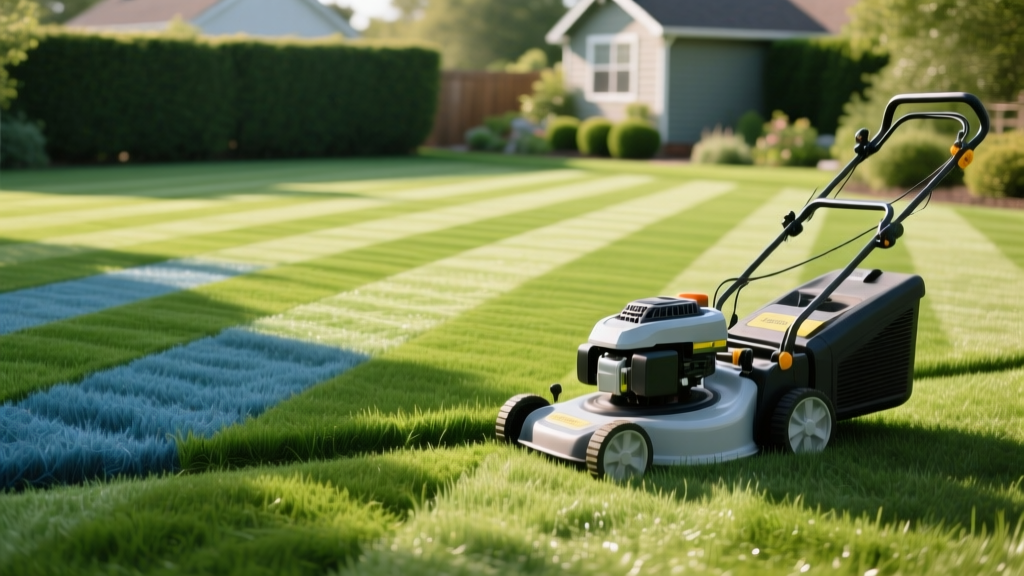
Lawn Striping Heights: Kentucky Bluegrass vs Tall Fescue 2026
Emily WatsonPublished
The Science of Lawn Striping and Aesthetic Patterns
Creating crisp, professional-grade lawn stripes is one of the most rewarding aspects of modern turf management. However, the secret to a flawless checkerboard or diamond pattern is not just the roller you use; it is fundamentally rooted in agronomy and mowing height. Lawn striping is an optical illusion created by light reflecting off the surface of grass blades. When grass is bent away from you, the lighter underside reflects the sun, creating a bright stripe. When bent toward you, the darker top surface absorbs light, creating a deep, rich stripe. To achieve this, the grass blade must be long enough to bend and flexible enough to hold the pattern. In 2026, turfgrass managers and homeowners alike are fine-tuning their mowing heights specifically for cool-season grasses, with Kentucky bluegrass and tall fescue requiring vastly different approaches.
Kentucky Bluegrass: The Gold Standard for Striping
Kentucky bluegrass (KBG) is widely considered the premier cool-season grass for aesthetic lawn patterns. Its fine-to-medium leaf texture, high elasticity, and dense rhizomatous growth habit allow it to bend smoothly and hold a stripe for days. According to Purdue University Turfgrass Science, maintaining the correct canopy height is critical for KBG health and visual appeal.
For standard lawn care, KBG is typically mowed between 2.5 and 3.5 inches. However, if your primary goal in 2026 is deep, high-contrast striping, you must push the mowing height to the upper end of its tolerance. Setting your mower deck to 3.5 or even 4.0 inches provides the grass blade with enough length and leverage to bend completely under the weight of a striping roller. If you attempt to stripe KBG at 2.0 inches, the blades will simply snap back upright or become scalped, ruining the reflective surface. Furthermore, the newer 2026 cultivars of Kentucky bluegrass, such as the advanced drought-tolerant varieties, feature slightly thicker cell walls, meaning a higher cutting deck is essential to ensure the roller can press the blades down without causing cellular damage.
Tall Fescue: Overcoming Stiff Blades for Bold Patterns
Tall fescue presents a unique challenge for lawn striping enthusiasts. Unlike the mat-forming Kentucky bluegrass, tall fescue is a bunch-type grass with significantly wider, stiffer, and more rigid leaf blades. Because of this structural rigidity, tall fescue naturally resists bending, which can result in weak, washed-out stripes if the mowing height is not adjusted correctly.
The NC State TurfFiles database emphasizes that tall fescue requires higher mowing heights to maintain deep root systems and crowd out weeds. Standard maintenance dictates a 3.0 to 4.0-inch cut. For striping, you must elevate your mower deck to a minimum of 4.0 inches, and ideally 4.5 inches during peak spring growth. This extra length is non-negotiable; it provides the necessary leverage for your striping kit to force the stiff blades to lay flat. Attempting to stripe tall fescue at lower heights will result in a messy, uneven appearance, as the thicker blades will fold irregularly or crease, leading to brown tip dieback and a mottled aesthetic.
2026 Mowing Height Comparison Chart
To help you dial in your mower deck for the 2026 season, refer to the comparison table below. These settings are optimized for zero-turn and walk-behind mowers equipped with rear-mounted striping rollers.
| Grass Type | Standard Mowing Height | Optimal Striping Height | Blade Texture & Flexibility | Recommended Roller Weight | Pattern Retention Time |
|---|---|---|---|---|---|
| Kentucky Bluegrass | 2.5" - 3.5" | 3.5" - 4.0" | Fine, highly flexible | 15 - 20 lbs (Water/Sand filled) | 3 - 5 Days |
| Tall Fescue | 3.0" - 4.0" | 4.0" - 4.5" | Wide, rigid, bunch-type | 25 - 35 lbs (Heavy-duty steel) | 2 - 4 Days |
Equipment Selection: Mowers and Rollers for 2026
Achieving stadium-quality stripes requires the right combination of mower deck aerodynamics and roller weight. In 2026, manufacturers have integrated advanced striping technology directly into their flagship models. The Exmark Lazer Z X-Series 2026 features an optimized UltraCut deck that generates superior vacuum lift, standing the grass blades straight up just milliseconds before the blade cuts them. This ensures a perfectly even cut, which is the foundational prerequisite for a crisp stripe.
For the striping mechanism itself, aftermarket kits remain incredibly popular. The Big League Stripe kit and the Checkmate roller systems are top choices for 2026. For Kentucky bluegrass, a standard polymer roller filled with water or dry sand (weighing around 15 to 20 pounds) is sufficient to bend the fine blades without bruising the turf. Tall fescue, however, demands a heavier footprint. Upgrading to a solid steel-core roller or heavily weighted poly-roller (25 to 35 pounds) provides the necessary downward force to crease the stiff fescue blades and lock the pattern into place.
Seasonal Adjustments for Cool-Season Grasses
Mowing heights for aesthetic patterns must fluctuate with the seasons to protect turf health. The University of Minnesota Extension advises adjusting your cutting height based on environmental stress.
- Spring (April - May): Cool-season grasses experience a massive flush of growth. This is the prime time for intricate patterns like checkerboards and diamonds. Keep KBG at 3.5 inches and Tall Fescue at 4.0 inches. Mow frequently (every 3-4 days) to prevent removing more than 1/3 of the blade length at a time.
- Summer (June - August): Heat and drought stress are the enemies of striping. Raising the mowing height to 4.0 inches for KBG and 4.5 to 5.0 inches for Tall Fescue is vital for survival. While the grass will still stripe at these heights, the patterns may appear less defined as the grass conserves water and loses some turgor pressure (cellular water pressure that keeps blades rigid enough to snap back).
- Fall (September - November): As soil temperatures drop and moisture returns, cool-season grasses enter their second peak growth phase. You can gradually lower the deck back to the optimal spring striping heights. Fall stripes often look the most dramatic due to the deep, dark green color the grass develops in cooler weather.
Pro Tips for Flawless Execution
Beyond height settings, execution is everything. First, always use high-lift mower blades. Mulching blades chop the grass too finely and fail to generate the airflow needed to stand the grass up before cutting. Second, keep your blades razor-sharp. A dull blade tears the grass tip, leaving a jagged, whitish edge that scatters light and destroys the dark/light contrast of your stripes.
When laying down the pattern, overlap your passes by at least 2 to 3 inches. This ensures there are no uncut or un-rolled "transition" lines between your light and dark stripes. For the ultimate aesthetic, practice "double-cutting." Mow the entire lawn in one direction to establish the base stripe, then immediately mow it again in the exact same lines to deepen the bend and ensure every single blade is pressed firmly into the roller's path. Finally, avoid turning sharply on the turf with a heavy striping roller, as this will cause severe tire scuffing and tear the grass roots, leaving permanent circular blemishes in your otherwise flawless 2026 lawn.